Uncombable Hair Syndrome: Early Signs, Risk Factors, and How It Is Treated
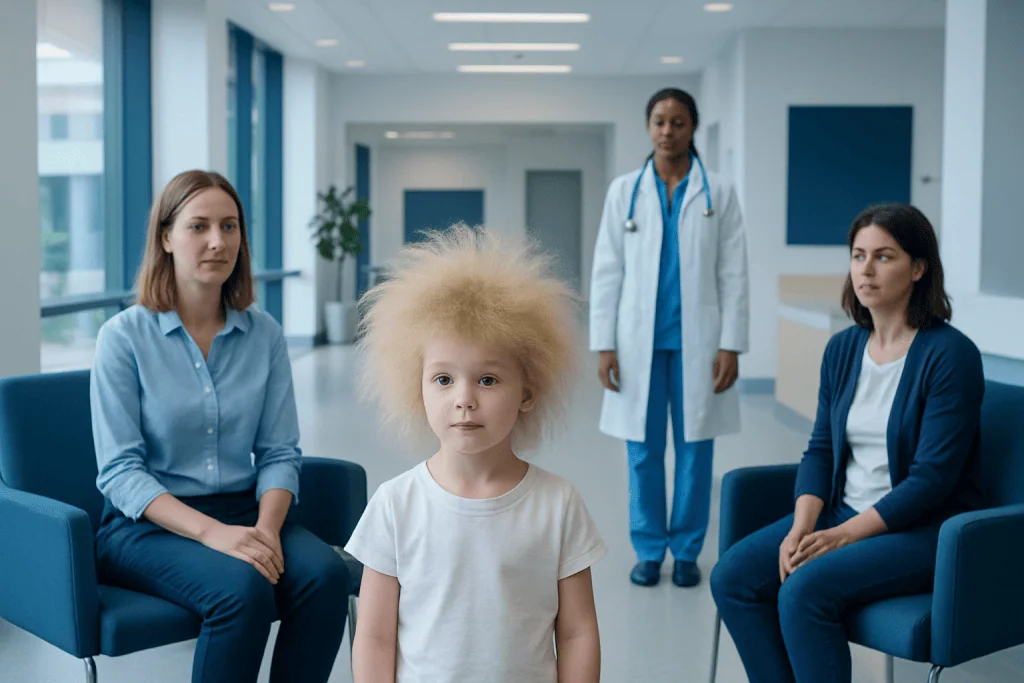
Uncombable hair syndrome affects the structure of the hair shaft rather than the scalp itself. The hair often looks blond or silvery, stands away from the scalp, and resists lying flat even with brushing.
Key Takeaways
- Uncombable hair syndrome affects the structure of the hair shaft rather than the scalp itself.
- The hair often looks blond or silvery, stands away from the scalp, and resists lying flat even with brushing.
- Most children are otherwise healthy, but a doctor may look for rare associated genetic or developmental conditions.
- There is no single curative treatment, but gentle hair care and regular follow-up can help manage the condition.
- Many cases gradually improve during later childhood or adolescence.
Uncombable hair syndrome is a rare, usually harmless hair-shaft condition in which scalp hair becomes dry, light-catching, and difficult to smooth down or comb flat. It most often appears in early childhood, is diagnosed by clinical exam and hair-shaft testing when needed, and commonly improves with age.
Overview: what uncombable hair syndrome is
Uncombable hair syndrome is a rare hair-shaft disorder in which scalp hair grows in a way that makes it stand out from the head, appear dry or shiny, and resist being combed flat. The condition is also known by the medical term pili trianguli et canaliculi, which describes the unusual shape of the hair shaft seen under magnification. It is not caused by poor hair care, and it is usually not painful or dangerous.
This condition most often becomes noticeable in infancy or early childhood, especially between the toddler years and school age. Parents may notice that the hair is difficult to manage no matter which brush or styling routine is used. The hair may grow normally in number, but individual strands reflect light differently and can look straw-like, spiky, or “spun glass” in appearance.
In most cases, uncombable hair syndrome is an isolated finding, meaning the child is otherwise healthy. A doctor may still assess the child carefully because very rare cases can occur alongside other inherited conditions. For many families, the most reassuring point is that the hair often becomes more manageable over time, even without intensive treatment.
Early signs and symptoms

The hallmark sign of uncombable hair syndrome is scalp hair that cannot easily be flattened or aligned with ordinary brushing. The hair often stands away from the scalp in multiple directions. It may look dry, frizzy, or fluffy, but unlike common frizz, it usually has a persistent pattern that does not respond much to conditioners or styling.
Hair color may appear lighter than expected, sometimes with a blond, silvery, or straw-colored sheen because of the way the hair shaft reflects light. The texture can feel coarse, though the hair itself is not always weak. Many children have normal hair growth, and the scalp usually looks healthy without redness, scaling, or scarring.
Symptoms mainly involve appearance and manageability rather than discomfort. Typical features include:
- Hair that sticks out from the scalp
- Difficulty combing or brushing hair into place
- Dry-looking or glistening hair
- Fair, blond, or silvery hair tone in some children
- No itching, pain, or scalp inflammation in most cases
If there is marked hair breakage, bald patches, scaling, or signs of scalp disease, the child may have a different or additional hair condition. In those situations, a dermatologist may consider other causes of abnormal hair texture, including alopecia or other hair-shaft disorders.
What causes it and who is at risk
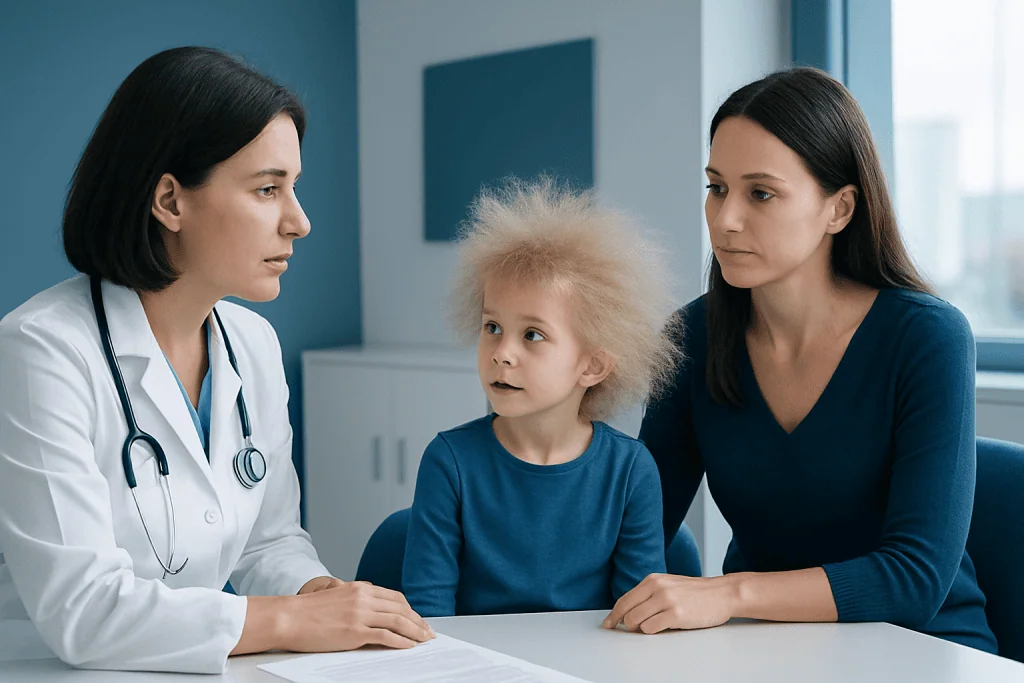
Uncombable hair syndrome is linked to changes in how the hair shaft forms inside the follicle. Research has identified genetic variants in some affected children, especially in genes involved in shaping and strengthening the hair shaft, such as PADI3, TGM3, and TCHH. These changes can alter the cross-section of the hair, making it triangular or kidney-shaped rather than round.
The condition can occur sporadically, meaning there is no known family history, or it may run in families. Inherited patterns may be dominant or recessive depending on the underlying genetic change. Even within the same family, the severity can vary, so one child may have obvious symptoms while another relative has only mildly unusual hair texture.
It is usually first recognized in young children because that is when hair texture differences become easier to see. There are no lifestyle risk factors known to cause uncombable hair syndrome. Nutrition, hygiene, weather, or ordinary brushing do not create the condition, although rough hair practices can worsen tangling and make the hair look more damaged.
Rarely, unusual hair findings may appear together with developmental, dental, eye, or skin features as part of a broader syndrome. This is one reason a clinician may ask about growth, milestones, nails, teeth, and family history rather than focusing only on the hair.
How doctors diagnose uncombable hair syndrome
Diagnosis usually begins with a medical history and physical examination. A dermatologist or pediatrician will ask when the hair changes began, whether there is a family history of similar hair, and whether the child has any other health concerns. The doctor will also examine the scalp to make sure there is no inflammation, infection, or scarring.
In many cases, the appearance is suggestive enough that the diagnosis can be strongly suspected during the office visit. To confirm it, the doctor may examine hair strands under light microscopy or more specialized imaging. The classic finding is a hair shaft with a triangular shape and a longitudinal groove, which explains why the hair reflects light differently and behaves in an unusual way.
Additional testing is not always necessary, but it may be considered when the picture is unclear or when there are other symptoms. Depending on the child’s overall health, evaluation can include genetic counseling or targeted genetic testing. If the hair abnormality appears to be part of a wider skin or hair issue, the doctor may also assess for related hair loss disorders or scalp conditions.
Because this syndrome is rare, diagnosis can take time, especially if the child is first thought to simply have very frizzy or unruly hair. Specialist review can help distinguish it from hair damage due to chemicals, heat, friction, or nutritional deficiency.
Treatment and day-to-day management
There is no single standard cure for uncombable hair syndrome, and treatment is usually supportive. The main goals are to reduce tangling, limit breakage, and make the hair easier to care for. Families are often advised to use gentle hair routines and to avoid practices that increase dryness or stress on the hair shaft.
Helpful measures may include mild shampoos, soft conditioners, wide-toothed combs, and careful detangling when the hair is damp. Heat styling, harsh chemical processing, repeated straightening, and vigorous brushing are best minimized because they can damage already unusual hair shafts. Some clinicians may discuss biotin or other supportive approaches in selected cases, but any supplement should be used only on a doctor’s advice.
Management often overlaps with supportive dermatology care, especially when there is uncertainty about diagnosis or coexisting scalp concerns. If a specialist evaluation is needed, families may be referred for dermatology care or further assessment in pediatric dermatology.
The overall outlook is generally positive. Many children experience gradual improvement in hair texture and manageability with age, particularly during later childhood or adolescence. Even when the hair remains distinctive, it does not usually affect general health, growth, or intelligence.
Living with the condition: self-care and practical tips
Daily care can make a meaningful difference even though it does not change the underlying hair-shaft structure. A simple routine is often best. Washing too often may increase dryness in some children, while heavy products may weigh the hair down unevenly or leave residue, so routines may need adjustment based on the child’s hair type and comfort.
Parents can help by focusing on manageability rather than trying to force the hair into a smoother appearance. Protective habits include gently patting the hair dry instead of rubbing with a towel, sleeping on a smooth pillowcase, and choosing hair accessories that do not pull. Shorter or layered styles may reduce tangling for some children, although style choices are personal.
Because the condition is visible, children may sometimes feel self-conscious, especially at school age. Calm, age-appropriate explanations can help normalize the difference in hair texture. Reassurance is important: the child has done nothing wrong, and unusual hair does not mean poor health or poor hygiene.
If there are broader concerns about skin, nails, or scalp health, follow-up with a specialist can help. In some settings, clinicians with expertise in medical genetics may also be involved when there is a question of an inherited syndrome.
When to seek medical care
Medical review is a good idea if a child develops persistently unusual hair texture early in life, especially when the hair stands out from the scalp and resists grooming despite gentle care. A doctor can confirm whether this is uncombable hair syndrome or another hair or scalp condition. Early assessment also helps rule out inflammation, infection, nutritional problems, or a more complex inherited disorder.
It is especially important to seek medical care if the hair change is accompanied by other signs such as delayed growth, abnormal teeth, nail changes, skin rashes, bald spots, excessive shedding, or scalp redness and scaling. These features do not necessarily mean a serious problem, but they do justify a fuller evaluation. A pediatrician or dermatologist may then recommend further testing or specialist referral.
Families seeking multidisciplinary assessment may benefit from centers that combine pediatrics, dermatology, and genetics. Acibadem International’s multidisciplinary specialists in JCI-accredited hospitals diagnose and treat hair and skin conditions for international patients when a broader evaluation is needed.
Outlook and long-term expectations
The long-term outlook for uncombable hair syndrome is usually very good. In many children, the hair becomes softer, darker, flatter, or easier to manage as they grow older. This improvement may happen gradually, and the timeline can differ from one child to another.
Most affected children do not develop scalp scarring or permanent hair loss from the condition itself. The main challenges are cosmetic and practical rather than medical. With gentle care and periodic review when needed, families can usually manage the condition successfully.
Follow-up is most useful when the diagnosis is uncertain, symptoms are changing, or other health features appear over time. Ongoing communication with a qualified doctor helps ensure that any associated condition is recognized early while avoiding unnecessary worry in children who simply have an isolated, benign hair-shaft difference.
Frequently asked questions
Is uncombable hair syndrome harmful?
Uncombable hair syndrome is usually harmless and mainly affects the look and behavior of the hair. Most children are otherwise healthy, although a doctor may check for rare associated conditions if there are other symptoms.
At what age does uncombable hair syndrome appear?
It usually becomes noticeable in infancy or early childhood. Parents often first see it when the hair grows longer and remains stubbornly upright or difficult to smooth despite routine grooming.
Does uncombable hair syndrome go away?
Many cases improve over time, especially later in childhood or during adolescence. The hair may become easier to manage, although some texture differences can remain.
Can brushing or hair products fix uncombable hair syndrome?
Ordinary brushing does not correct the underlying hair-shaft shape. Gentle conditioners and careful detangling may help with manageability, but they do not cure the condition.
Is uncombable hair syndrome inherited?
It can be inherited, and some cases are linked to genetic changes that affect hair-shaft formation. However, some children have no known family history, so inheritance is not always obvious.
How is uncombable hair syndrome diagnosed?
Doctors diagnose it through a clinical examination and, when needed, microscopic study of the hair shaft. In selected cases, genetic testing may be considered, especially if there are other physical findings or a strong family history.
References
- American Academy of Dermatology
- National Organization for Rare Disorders
- National Institutes of Health
- MedlinePlus
- DermNet
This article is for general information only and is not a substitute for professional medical advice. Please consult a qualified doctor about your individual situation.
Hair transplant in Turkey — costs, graft counts & a free assessment
JCI-accredited · board-certified surgeons · reply within 24h
Add us as a Preferred Source to see more of our trusted health content across Google Search, AI Overviews and Discover.

More from the Health Library



Related Specialists
Prof. Dr. Barış Kılıçaslan
Cardiology
Dr. Erkan Adnan Kelebek
Coronary Intensive Care Unit
Dr. Halil Algan
Treatment of Pain Algology
Fzt. Gizem Karaoğlan
Physical Medicine & Rehabilitation