Understanding Cyst Tummy and Abdominal Swelling

Cyst tummy is a non-medical phrase and does not identify the location or type of a cyst. Some abdominal cysts cause no symptoms and are found during imaging for another reason.
Key Takeaways
- Cyst tummy is a non-medical phrase and does not identify the location or type of a cyst.
- Some abdominal cysts cause no symptoms and are found during imaging for another reason.
- Persistent abdominal swelling, a new lump, pain, or changes in bowel or urinary habits should be medically evaluated.
- Ultrasound, CT, or MRI may help determine whether a finding is a cyst and where it began.
- Urgent assessment is important for severe sudden pain, fever, repeated vomiting, fainting, or a rapidly enlarging abdomen.
“Cyst tummy” is an informal term people may use for a cyst, lump, fullness, or bloating in the abdomen. It is not a diagnosis, and the cause can range from a harmless fluid-filled cyst to a digestive, urinary, gynecological, or abdominal-wall condition that should be assessed by a clinician.
What does “cyst tummy” mean?
“Cyst tummy” is a phrase sometimes used to describe a belly that feels swollen, looks enlarged, or seems to contain a lump thought to be a cyst. In medical terms, a cyst is usually a closed sac containing fluid, air, or other material. However, not every abdominal swelling is a cyst, and a person cannot reliably identify a cyst by touch or appearance alone.
A cyst-related swelling may arise from an organ in the abdomen or pelvis, such as the ovaries, kidneys, liver, pancreas, or intestines. It may also come from the skin or abdominal wall. Bloating from gas, constipation, weight changes, pregnancy, hernias, fibroids, and other conditions can feel similar, so an accurate diagnosis depends on a medical history, examination, and sometimes imaging.
Many cysts are benign and may not require treatment. Still, a new or persistent abdominal lump, ongoing fullness, or unexplained enlargement deserves attention, particularly when it occurs with pain, fever, loss of appetite, vomiting, or changes in bowel or bladder function.
Where can abdominal cysts develop?
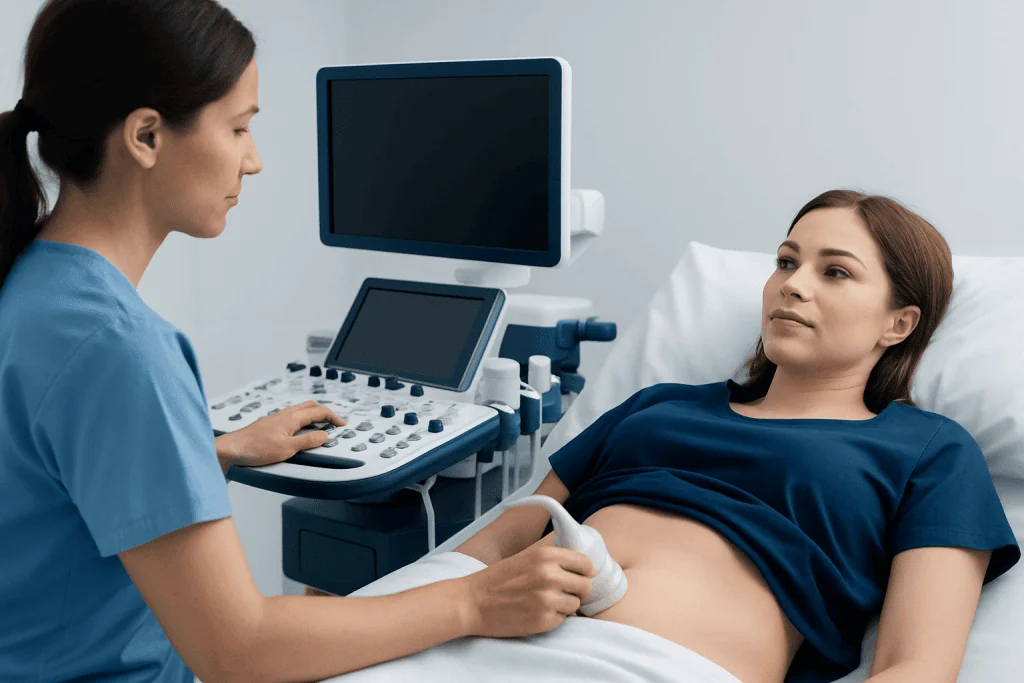
The possible location of a cyst helps guide evaluation. In women and people with ovaries, ovarian cysts are a common cause of pelvic discomfort or a feeling of lower-abdominal pressure. Many are linked to the menstrual cycle and resolve without intervention, while others need follow-up because of their size, appearance, symptoms, or persistence.
Cysts may also develop in the liver, kidneys, pancreas, spleen, or within the tissues of the abdomen. Some simple liver or kidney cysts are found incidentally and never cause problems. Pancreatic cysts and complex cystic findings often need more detailed assessment because their management varies according to their features and the person’s health history.
A lump close to the surface of the tummy may instead be a skin cyst, lipoma, scar-related change, or hernia. A hernia is not a cyst: it occurs when tissue pushes through a weak area in the abdominal wall. Because the same visible symptom can have different explanations, imaging should not be delayed when a clinician recommends it.
Symptoms that may occur with a cyst tummy

Small cysts often cause no symptoms. When symptoms occur, they depend more on a cyst’s location, size, growth rate, and whether it presses on nearby organs than on the word “cyst” itself. Some people notice a localized lump, abdominal fullness, pressure, or clothing becoming tighter around the waist.
Possible associated symptoms include dull or intermittent abdominal or pelvic pain, bloating, early fullness after eating, nausea, constipation, urinary frequency, or discomfort during movement. Ovarian cysts may be associated with pelvic pain, menstrual changes, or pain during sex. Kidney or liver cysts can occasionally cause discomfort in the side or upper abdomen when they become large.
Symptoms such as severe pain, fever, repeated vomiting, yellowing of the skin or eyes, blood in urine or stool, unexplained weight loss, or a firm and enlarging mass are not specific to cysts, but they require prompt medical review. These features can indicate complications or another condition that needs timely care.
Why cysts and abdominal swelling happen
There is no single cause of a cyst tummy. Some cysts develop during normal body processes. For example, functional ovarian cysts can form as part of ovulation. Others may be congenital, meaning a person is born with a tendency to develop them, or may arise after inflammation, infection, injury, surgery, or blockage of a gland or duct.
Genetic and family factors can play a role in certain kidney and liver cyst disorders. In other cases, the cause is not clear. A prior history of pancreatitis can be relevant to pancreatic fluid collections or cyst-like changes, while infections and parasites are uncommon but possible causes of certain cysts in some regions of the world.
Risk factors depend on the suspected source. Age, hormonal status, menstrual history, previous abdominal surgery, family history, chronic liver or kidney disease, and past inflammation may all be relevant. Importantly, bloating alone does not prove that a cyst is present. Dietary factors, constipation, food intolerance, and functional digestive conditions are much more common explanations for intermittent bloating.
How clinicians investigate an abdominal lump or suspected cyst
A clinician will begin by asking when the swelling started, whether it changes over time, and whether there is pain, fever, altered bowel habits, urinary symptoms, menstrual changes, appetite changes, or unintentional weight loss. They may also ask about medications, past operations, pregnancy possibility, personal medical history, and family history of kidney, liver, or gynecological conditions.
A physical examination can help distinguish generalized bloating from a localized mass and may identify tenderness, a hernia, or signs of fluid in the abdomen. However, examination alone often cannot establish the origin of a deep abdominal or pelvic finding. Blood tests, urine tests, and pregnancy testing may be appropriate in selected situations.
Ultrasound is often the first imaging test for pelvic, abdominal, liver, kidney, and superficial soft-tissue concerns because it can show whether a structure is fluid-filled or solid. CT or MRI may be used when more detail is needed. If imaging identifies a cyst, the report may describe its size, wall, contents, and whether it appears simple or complex; these details help determine monitoring, referral, or treatment.
Treatment, monitoring and self-care
Management is based on the cause rather than the term cyst tummy. A simple, small, symptom-free cyst may only need observation and repeat imaging. Some cysts resolve on their own, especially certain functional ovarian cysts. Others require review by a gynecologist, gastroenterologist, urologist, surgeon, or another specialist depending on where they arise.
Treatment may be considered when a cyst causes ongoing symptoms, grows, becomes infected, twists, bleeds, blocks an organ, has uncertain imaging features, or carries concern for cancer. Options can include symptom relief, treatment of an underlying condition, drainage in carefully selected circumstances, or surgery. The safest approach varies significantly by cyst type, so drainage or removal should not be assumed to be necessary.
Until a diagnosis is clear, it can help to keep a record of symptoms, including the location of discomfort, relation to meals or periods, bowel and bladder changes, and whether the abdomen is visibly changing. Regular meals, hydration, gentle activity, and managing constipation can reduce ordinary bloating, but home measures cannot treat a growing mass. Avoid repeatedly pressing on a painful lump or using unproven remedies to try to “dissolve” a cyst.
When to seek medical care
A non-urgent medical appointment is appropriate for a new abdominal lump, persistent abdominal enlargement, recurring pelvic or abdominal discomfort, or bloating that does not settle and has no clear explanation. Assessment is also sensible if symptoms interfere with eating, sleep, activity, or daily life. Early evaluation can provide reassurance when findings are harmless and can identify conditions that need follow-up.
Urgent medical care is needed for sudden severe abdominal or pelvic pain, pain with fever, repeated vomiting, fainting, dizziness, a rigid abdomen, heavy vaginal bleeding, or an inability to pass stool or gas with marked swelling. These symptoms can occur with cyst complications such as rupture or twisting, but they may also signal other urgent abdominal conditions.
People with a known cyst should follow the monitoring plan provided by their clinician and report new or worsening symptoms. At Acibadem International, multidisciplinary specialists in JCI-accredited hospitals can assess abdominal and pelvic symptoms and coordinate imaging, specialist review, and treatment planning for international patients when needed.
Frequently asked questions
Is cyst tummy a real medical condition?
No. Cyst tummy is an informal phrase rather than a medical diagnosis. It may refer to a suspected cyst, a visible or felt abdominal lump, or bloating, and medical assessment is needed to determine the actual cause.
Can a cyst make the stomach look bigger?
Some larger cysts in the abdomen or pelvis can cause visible enlargement, fullness, or pressure. However, most abdominal enlargement is not caused by a cyst, and causes such as gas, constipation, fluid retention, weight changes, or other medical conditions should also be considered.
Can an abdominal cyst go away by itself?
Some cysts can resolve without treatment, including many functional ovarian cysts. Other cysts tend to remain stable or grow slowly, so follow-up depends on the organ involved, imaging appearance, size, and symptoms.
How is a cyst in the tummy diagnosed?
A clinician usually combines a medical history and physical examination with imaging, often an ultrasound. CT or MRI may be used to clarify the cyst’s location and characteristics, while blood or urine tests may help assess related conditions.
Are abdominal cysts usually cancerous?
Most cysts found in the abdomen are benign. Even so, a cyst should be evaluated when it is complex, enlarging, painful, persistent, or associated with concerning symptoms, because imaging features and clinical context determine the appropriate next step.
What is the difference between a cyst and a hernia?
A cyst is a sac-like structure that contains fluid or other material. A hernia occurs when tissue pushes through a weak point in the abdominal wall, often creating a bulge that may become more noticeable with coughing, straining, or standing.
References
- National Institutes of Health
- National Health Service
- American College of Obstetricians and Gynecologists
- National Institute of Diabetes and Digestive and Kidney Diseases
- Radiological Society of North America
This article is for general information only and is not a substitute for professional medical advice. Please consult a qualified doctor about your individual situation.
Persistent digestive symptoms? Get evaluated in Turkey
JCI-accredited · board-certified surgeons · reply within 24h
Add us as a Preferred Source to see more of our trusted health content across Google Search, AI Overviews and Discover.
Check your numbers in seconds
BMI, calories, due date, blood pressure and 30+ more clinical calculators — free, instant, doctor-reviewed ranges.