Understanding Hydronephrosis: A Complete Patient Guide

Hydronephrosis means urine is backing up and stretching the kidney. It can affect one kidney or both and may be temporary or persistent.
Key Takeaways
- Hydronephrosis means urine is backing up and stretching the kidney.
- It can affect one kidney or both and may be temporary or persistent.
- Common causes include kidney stones, enlarged prostate, pregnancy, strictures, and congenital urinary tract problems.
- Diagnosis usually involves urine tests, blood tests, and imaging such as ultrasound or CT.
- Treatment depends on the cause and may range from observation to drainage procedures or surgery.
- Prompt medical review is important if hydronephrosis is linked to pain, fever, vomiting, or reduced urine output.
Hydronephrosis is swelling of one or both kidneys caused by urine not draining normally. It is a sign of an underlying problem rather than a disease itself, and treatment focuses on relieving the blockage or correcting the cause to protect kidney function.
Overview: what hydronephrosis means
Hydronephrosis is the medical term for swelling of a kidney when urine cannot drain as it should. Instead of flowing freely from the kidney into the ureter and bladder, urine backs up and stretches the kidney’s collecting system. This can happen in one kidney or both, and the severity may range from mild to significant.
Importantly, hydronephrosis is not a diagnosis on its own. It is a visible sign that something is interfering with normal urine flow. In some people, the problem is brief and resolves once the cause passes, while in others it needs prompt treatment to reduce pressure on the kidney and help preserve kidney function.
The condition can occur at any age, from before birth to older adulthood. Some cases are found by chance during imaging for another reason, especially when hydronephrosis is mild and causes no symptoms. Other cases come to attention because of pain, urinary symptoms, infection, or abnormal kidney blood test results.
Because the outlook depends largely on the cause, a careful evaluation matters. Hydronephrosis may be related to kidney stones, urinary tract narrowing, prostate enlargement, pregnancy, or other structural or functional problems in the urinary tract.
How hydronephrosis affects the body
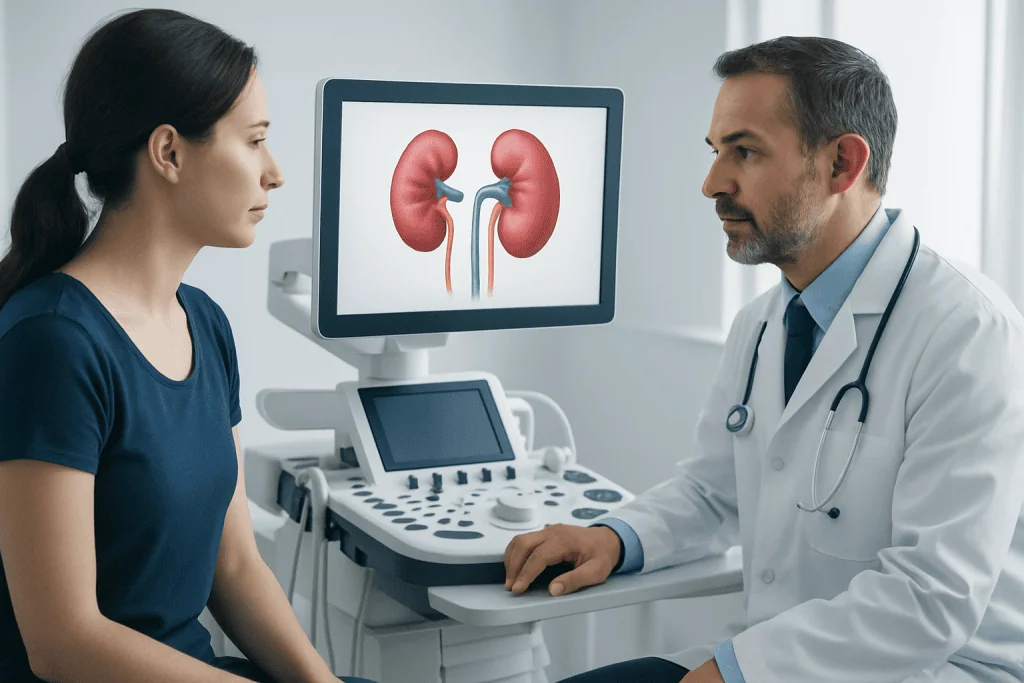
The kidneys continuously filter blood and produce urine. Urine normally travels from each kidney through a ureter into the bladder, then leaves the body through the urethra. When this pathway is blocked or urine flows backward, pressure builds up behind the obstruction.
That pressure can stretch the renal pelvis and calyces, the parts of the kidney that collect urine. If pressure remains high for too long, it may affect how well the kidney filters waste and balances fluid and minerals. A single healthy kidney can often compensate to some degree, but blockage affecting both kidneys can become more urgent.
Hydronephrosis may be acute or chronic. Acute hydronephrosis develops over a short period and may cause sudden pain, especially if a stone is involved. Chronic hydronephrosis develops more gradually and may be quieter, sometimes only detected on imaging or through changes in kidney function tests.
Doctors also describe hydronephrosis by severity, often as mild, moderate, or severe. This description helps guide monitoring and treatment, but the most important question remains why urine flow is impaired and whether the kidney is at risk.
Symptoms and possible complications

Hydronephrosis does not always cause symptoms. When it does, symptoms can vary depending on how quickly it develops, where the blockage is, and whether infection is present. Some people notice only vague discomfort, while others experience more intense symptoms.
Possible symptoms include:
- Pain in the side, back, lower abdomen, or groin
- Nausea or vomiting, especially with sudden obstruction
- Frequent urination or an urgent need to urinate
- Pain or burning with urination
- Difficulty passing urine or a weak stream
- Blood in the urine
- Fever or chills if infection is present
In infants or children, hydronephrosis may be found before birth on ultrasound or may present with urinary tract infections, poor feeding, abdominal swelling, or irritability. In adults, symptoms often reflect the underlying cause, such as stone pain or urinary problems from an enlarged prostate.
If hydronephrosis is not addressed when significant blockage persists, complications can include repeated urinary tract infections, reduced kidney function, and in some cases permanent kidney damage. This is why new urinary symptoms, severe pain, or signs of infection deserve timely medical attention.
Common causes and risk factors
Hydronephrosis happens when urine flow is blocked or altered anywhere along the urinary tract. The cause may be inside the urinary tract, pressing on it from outside, or related to abnormal urine flow mechanics. Identifying the exact source is central to treatment planning.
Common causes in adults include kidney stones, ureteral strictures, enlarged prostate, bladder outlet obstruction, pelvic masses, scar tissue, and tumors affecting the urinary system or nearby organs. Pregnancy can also cause temporary hydronephrosis because the growing uterus may compress the ureters, especially later in pregnancy.
In children, hydronephrosis is often linked to congenital conditions. These may include narrowing where the kidney joins the ureter, vesicoureteral reflux, in which urine moves backward from the bladder toward the kidney, or other structural urinary tract differences present from birth. Many cases detected before birth are mild and improve over time, but they still require monitoring.
Risk factors depend on the cause and may include a history of stones, recurrent urinary infections, prior urinary tract surgery, neurologic conditions affecting bladder emptying, prostate enlargement in older men, and certain pelvic or abdominal conditions. People with known urinary tract infections or repeated stones may be more likely to undergo testing that reveals hydronephrosis.
How doctors diagnose hydronephrosis
Diagnosis begins with a medical history and physical examination. A doctor asks about pain, urinary symptoms, infections, kidney stone history, pregnancy, surgeries, and other conditions that might affect urine flow. The exam may include checking for abdominal tenderness, bladder distention, fever, or signs of dehydration.
Testing usually includes urine and blood work. A urine test can look for blood, infection, or crystals, while blood tests may assess kidney function and signs of inflammation. These results help show whether the blockage is affecting overall kidney health or whether infection is also present.
Imaging is the main way hydronephrosis is confirmed. Ultrasound is often the first test because it can show swelling in the kidney without radiation. Depending on the situation, doctors may also use CT scans, MRI, or specialized studies to look for stones, masses, reflux, or narrowing. In some cases, imaging of the bladder or procedures that examine the urinary tract directly are needed.
Diagnosis focuses on more than simply confirming a swollen kidney. The key clinical questions are whether the blockage is complete or partial, whether one or both kidneys are involved, whether infection is present, and how urgently pressure needs to be relieved. For a fuller assessment, specialists may recommend urology care or advanced diagnostic imaging when the cause is not immediately clear.
Treatment options and what recovery depends on
Hydronephrosis treatment is based on the cause, the severity of obstruction, symptoms, and kidney function. Mild cases without infection or major blockage may only need monitoring, especially if they are expected to resolve, such as some pregnancy-related or prenatal cases. In other situations, the priority is to restore urine drainage promptly.
If urine flow needs urgent relief, doctors may place a ureteral stent or a nephrostomy tube to drain the kidney. These approaches reduce pressure and can help protect kidney function while the underlying cause is treated. Antibiotics may be needed if infection is present, but infection combined with obstruction often requires drainage as well as medication.
Definitive treatment depends on the reason for the blockage. Kidney stones may pass on their own or require procedures such as kidney stone treatment. Strictures, congenital narrowing, prostate-related obstruction, or tumors may need surgical or procedural management. When bladder emptying is the issue, treatment may focus on the bladder or prostate rather than the kidney itself.
Recovery depends on how long the obstruction has been present and whether kidney tissue has been affected. Many people improve once drainage is restored, especially when treatment is timely. Follow-up imaging and kidney function tests are often used to confirm that swelling has reduced and the kidney is recovering as expected.
Prevention, self-care, and living with hydronephrosis
Not every case of hydronephrosis can be prevented, because some causes are congenital or related to anatomy. Still, reducing the risk of common triggers may help. Staying well hydrated, addressing urinary symptoms early, and following care plans for stone disease or prostate problems can lower the chance of ongoing obstruction.
For people with a history of stones, prevention may include dietary changes and medical guidance based on stone type. Those with recurrent infections should seek review rather than repeatedly self-treating symptoms, because untreated or repeated infections can complicate urinary tract problems. People with neurologic bladder issues may need regular follow-up to protect kidney health over time.
Self-care should never replace medical evaluation when hydronephrosis is suspected. Pain medicines, hydration, and rest may ease discomfort, but they do not solve a meaningful blockage. A person should avoid delaying care if symptoms are severe, if they have only one functioning kidney, or if they have fever, vomiting, or reduced urine output.
Near the end of the treatment journey, some people benefit from coordinated specialist follow-up, especially if hydronephrosis is recurrent or linked to a complex urinary disorder. Acibadem International’s multidisciplinary specialists in JCI-accredited hospitals diagnose and treat hydronephrosis for international patients, including evaluation through urology care when appropriate.
When to seek medical care
Medical review is important for new flank pain, persistent urinary symptoms, visible blood in the urine, or repeated urinary tract infections. Even when discomfort is mild, hydronephrosis can sometimes be silent while still affecting kidney function, so unexplained urinary changes deserve attention.
Urgent care is especially important if a person has fever, chills, severe side or back pain, vomiting, difficulty passing urine, or very little urine output. These features can suggest a blocked urinary system, infection, dehydration, or a need for prompt drainage.
People who are pregnant, have a single kidney, known kidney disease, diabetes, or a weakened immune system should be particularly cautious. Parents should also seek review if a child has fever with urinary symptoms, poor feeding, repeated infections, or if prenatal scans have shown kidney swelling that needs follow-up.
Early assessment can help clarify whether symptoms are due to hydronephrosis or another urinary condition and can reduce the risk of avoidable kidney damage. A qualified doctor can decide whether observation, further testing, or treatment is the safest next step.
Frequently asked questions
Is hydronephrosis serious?
Hydronephrosis can be mild and temporary, but it can also become serious if urine remains blocked and pressure damages the kidney. The level of concern depends on the cause, how severe the blockage is, whether one or both kidneys are affected, and whether infection is present.
Can hydronephrosis go away on its own?
Yes, some cases resolve on their own, especially when the cause is temporary, such as pregnancy-related pressure or a small stone that passes. Even so, follow-up may still be needed to make sure kidney swelling improves and kidney function remains normal.
What does hydronephrosis feel like?
Some people feel nothing at all, while others have pain in the side, back, or lower abdomen. Symptoms may also include nausea, urinary urgency, burning with urination, or blood in the urine, depending on the cause.
How is hydronephrosis different from a kidney stone?
A kidney stone is one possible cause of hydronephrosis, but the two terms do not mean the same thing. Hydronephrosis describes swelling of the kidney from backed-up urine, while a stone is a solid deposit that may or may not block urine flow.
Can hydronephrosis damage the kidneys permanently?
It can, particularly if a significant blockage is left untreated for too long. Early diagnosis and relief of obstruction improve the chance that kidney function will recover well.
How is hydronephrosis treated during pregnancy?
Pregnancy can cause temporary kidney swelling because the growing uterus may press on the ureters. Treatment often focuses on monitoring, symptom relief, and checking for infection, but more urgent treatment may be needed if pain is severe, infection develops, or drainage is significantly impaired.
References
- National Institute of Diabetes and Digestive and Kidney Diseases
- American Urological Association
- National Kidney Foundation
- Mayo Clinic
- Merck Manual Consumer Version
This article is for general information only and is not a substitute for professional medical advice. Please consult a qualified doctor about your individual situation.
Hydronephrosis in Turkey — costs, top hospitals & a free quote
JCI-accredited · board-certified surgeons · reply within 24h
Add us as a Preferred Source to see more of our trusted health content across Google Search, AI Overviews and Discover.

Urology
Treatment of the urinary system and male reproductive health, including robotic and laser procedures.
63 specialists in this unit