Vastus Lateralis: A Complete Medical Overview

The vastus lateralis is a major outer thigh muscle and part of the quadriceps group. Its main job is to extend the knee and help stabilize the leg during movement.
Key Takeaways
- The vastus lateralis is a major outer thigh muscle and part of the quadriceps group.
- Its main job is to extend the knee and help stabilize the leg during movement.
- Pain or tightness in the vastus lateralis can result from strain, overuse, muscle imbalance, or referred pain from the hip, knee, or lower back.
- Diagnosis usually depends on a physical examination and, when needed, imaging or other tests to rule out tendon, joint, or nerve problems.
- Treatment commonly includes activity modification, physical therapy, gradual strengthening, and addressing the underlying cause.
- Persistent pain, weakness, swelling, or difficulty walking should be assessed by a qualified doctor.
The vastus lateralis is the largest part of the quadriceps on the outer thigh. It plays a central role in straightening the knee, stabilizing movement, and supporting walking, climbing, standing, and sports, while pain in this area is often linked to muscle strain, overuse, or nearby hip, knee, or nerve conditions.
Overview: what the vastus lateralis is and why it matters
The vastus lateralis is one of the four quadriceps muscles at the front of the thigh. It sits on the outer side of the thigh and is the largest of the quadriceps group. Together with the other quadriceps muscles, it helps straighten the knee and supports many everyday actions such as standing up, walking, climbing stairs, and getting out of a chair.
This muscle begins on the upper thigh bone, called the femur, and connects through the quadriceps tendon and kneecap to the patellar tendon below the knee. Because of this connection, the vastus lateralis contributes not only to movement but also to knee tracking and leg stability. It is especially active during stepping, squatting, running, and jumping.
People often search for the vastus lateralis because of pain, tightness, sports injury, or because it is a common site for intramuscular injections. In medicine, understanding symptoms in this area matters because outer thigh discomfort may come from the muscle itself or from the knee joint, hip, tendons, or nearby nerves. A careful assessment helps identify the true cause and guide proper treatment.
Anatomy and function of the vastus lateralis
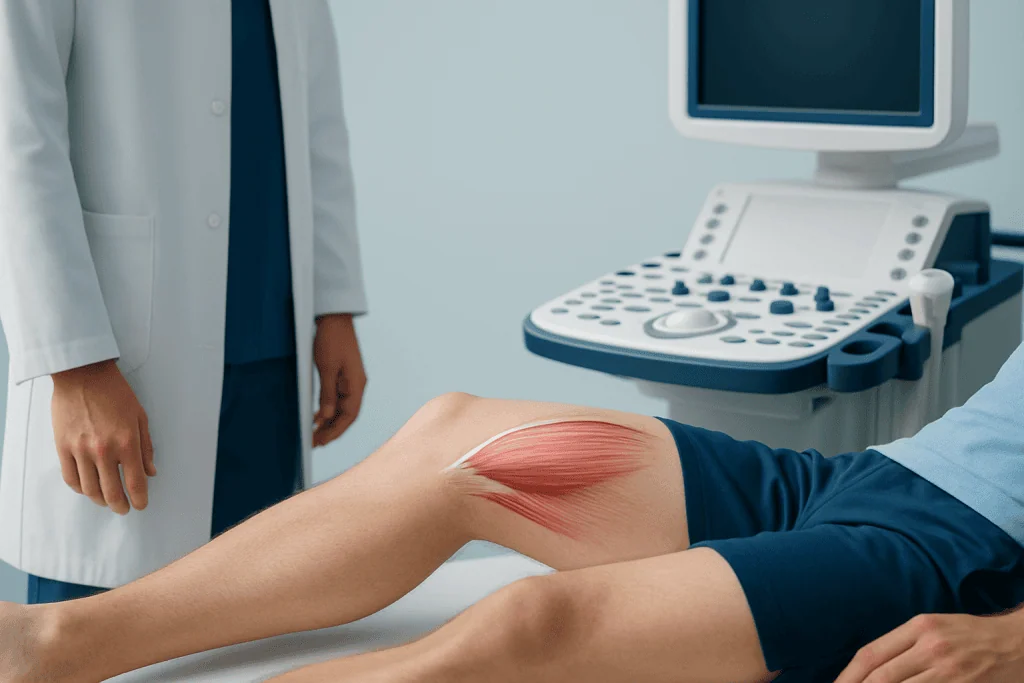
The quadriceps consist of the rectus femoris, vastus medialis, vastus intermedius, and vastus lateralis. The vastus lateralis lies on the outer front side of the thigh and has broad muscle fibers that generate strong knee extension. It is supplied by the femoral nerve and receives blood from branches of the lateral circumflex femoral artery and other thigh vessels.
Its primary function is extending, or straightening, the knee. This action is essential for walking forward, standing from a seated position, rising from a squat, and pushing off during athletic activities. The muscle also plays an important role in controlling movement when the knee bends under load, such as when walking downhill or lowering into a chair.
The vastus lateralis works in balance with the other quadriceps muscles and the hamstrings. If it becomes too tight, weak, fatigued, or injured, this balance can be affected. In some people, altered quadriceps mechanics may contribute to kneecap tracking symptoms or overload around the knee. For related knee conditions, a doctor may also consider knee pain as part of the evaluation.
Common symptoms and what they can mean

Symptoms involving the vastus lateralis can vary from mild soreness to more limiting pain. People may notice aching or tenderness on the outer thigh, stiffness after exercise, discomfort when climbing stairs, or a pulling sensation during sprinting or squatting. Some experience localized cramping, muscle tightness, or a feeling of weakness when straightening the knee.
After a strain or overuse injury, there may be swelling, bruising, or pain that worsens with activity and improves with rest. If the muscle is significantly irritated, walking or changing direction may become uncomfortable. A person may also find it difficult to kneel, lunge, or sit down in a controlled way.
Not all outer thigh pain comes from the vastus lateralis itself. Similar symptoms may be caused by a tendon problem, iliotibial band irritation, hip disorders, lower back nerve irritation, or a knee condition such as patellofemoral pain syndrome. This is why the exact location, timing, and triggers of pain are important in diagnosis.
- Outer thigh soreness after new or intense activity
- Pain when straightening the knee
- Tightness during running, cycling, or squatting
- Tenderness to pressure over the muscle
- Weakness, limping, or reduced exercise performance
Causes and risk factors
The most common direct cause of vastus lateralis pain is muscle strain. This can happen when the muscle is overstretched or forced to contract powerfully, especially during sprinting, kicking, jumping, or sudden direction changes. Strains may range from mild fiber irritation to partial tearing. Delayed-onset muscle soreness after exercise can also affect this area, especially after unfamiliar workouts.
Overuse is another frequent cause. Repetitive training without enough recovery, rapid increases in exercise intensity, poor warm-up habits, or muscle fatigue can overload the quadriceps. Biomechanical factors such as weakness elsewhere in the leg, limited hip mobility, poor movement patterns, or training on hills may place extra demand on the outer thigh.
Other causes are indirect. Referred pain may come from the hip, the knee, or the lower back. Nerve compression, tendon irritation, or inflammation around the thigh can produce symptoms that feel muscular. In some cases, broad thigh symptoms may need evaluation for sciatica or other nerve-related causes if pain radiates, burns, or is associated with numbness.
- Sudden acceleration, sprinting, kicking, or jumping
- Exercise overload or inadequate recovery
- Muscle imbalance, poor technique, or weak hip support muscles
- Previous quadriceps injury
- Inflexibility or reduced warm-up
- Referred pain from the hip, knee, or lower back
How doctors diagnose vastus lateralis problems
Diagnosis begins with a medical history and physical examination. A doctor will ask where the pain is felt, what activities trigger it, whether there was a sudden injury, and whether there are symptoms such as swelling, bruising, numbness, or weakness. During the examination, the clinician may assess tenderness, muscle strength, flexibility, knee movement, walking pattern, and whether symptoms change with resisted knee extension or stretching.
Many mild muscle strains can be identified clinically. However, if symptoms are severe, persistent, recurrent, or unclear, further testing may be needed. Ultrasound or MRI can help evaluate muscle tears, tendon injury, or other soft-tissue problems. X-rays may be considered when bone or joint disease is suspected, especially if trauma occurred or knee symptoms are prominent.
Doctors also try to rule out conditions that can mimic muscle pain. These include tendon injuries, hip pathology, kneecap disorders, and nerve irritation from the lower back. If the main issue involves joint damage, persistent instability, or sports injury, treatment planning may include specialty care such as orthopedic rehabilitation or, in selected cases, knee arthroscopy depending on the confirmed diagnosis.
Treatment options and recovery
Treatment depends on the cause. For uncomplicated muscle soreness or mild strain, the first steps usually include reducing activities that worsen pain, using short-term rest, and returning to movement gradually as symptoms allow. A clinician may recommend cold packs early after an acute injury, followed later by gentle range-of-motion work and progressive strengthening. Complete immobilization is rarely helpful for simple strains.
Physical therapy is often central to recovery. A therapy plan may focus on restoring flexibility, improving quadriceps strength, correcting muscle imbalance, and retraining movement patterns. Hip and core strengthening can also be important because leg mechanics depend on the whole kinetic chain. If symptoms are linked to overuse or sports technique, training errors should be addressed to prevent recurrence.
When pain is not truly muscular, treatment targets the underlying condition. That may include care for a knee problem, nerve irritation, or a tendon disorder. In selected cases, a doctor may suggest physical therapy and rehabilitation or referral to specialists in sports medicine, orthopedics, or neurology. Recovery time varies widely, so return to sport or strenuous exercise should be guided by symptom improvement, strength, and function rather than by the calendar alone.
Prevention and self-care
Many vastus lateralis problems can be reduced with a balanced exercise approach. Gradual progression is important, especially after a break from activity or when starting a new training plan. Warm-up routines, adequate recovery between sessions, and good technique during running, lifting, or jumping can lower the chance of strain and overuse.
Strength and flexibility both matter. A preventive program often includes quadriceps conditioning, hamstring and hip strengthening, and mobility work for the hips and knees. People who sit for long periods or exercise intensely may notice that regular stretching and movement breaks help reduce stiffness, although flexibility work should not be painful.
Self-care is best viewed as supportive rather than a substitute for diagnosis. If symptoms are mild, temporary activity modification and gentle home exercises may help. However, persistent or recurrent pain deserves assessment to make sure there is not a more specific problem involving the knee, hip, or spine. Near the end of the care journey, some international patients may seek evaluation at centers such as Acibadem International, where multidisciplinary specialists in JCI-accredited hospitals diagnose and treat musculoskeletal conditions.
- Increase exercise load gradually
- Warm up before sports and cool down afterward
- Include hip, core, and leg strengthening
- Allow time for recovery and sleep
- Address footwear, technique, and training surface when relevant
When to seek medical care
Medical care is advisable if outer thigh pain is severe, does not improve after several days of reduced activity, or keeps coming back. A doctor should also assess symptoms that limit walking, standing, or climbing stairs, or if there is visible swelling, bruising, or a sudden loss of strength after an injury.
Urgent assessment is important if there is significant trauma, inability to bear weight, marked weakness, numbness, fever, or pain associated with chest symptoms or other whole-body concerns. These features may point to problems beyond a simple muscle strain. A qualified clinician can identify whether the vastus lateralis is the true source of symptoms and recommend the most appropriate next steps.
Frequently asked questions
What is the vastus lateralis?
The vastus lateralis is a large muscle on the outer front part of the thigh. It is one of the four quadriceps muscles and helps straighten the knee and support stable leg movement.
Why does the vastus lateralis hurt?
Pain in the vastus lateralis commonly comes from strain, overuse, tightness, or exercise-related soreness. Sometimes the pain is actually referred from the knee, hip, or lower back, so persistent symptoms should be checked by a doctor.
How long does a vastus lateralis strain take to heal?
Recovery depends on how mild or severe the strain is and whether the diagnosis is correct. Minor injuries may improve in days to a few weeks, while more significant strains or underlying conditions can take longer and may need structured rehabilitation.
Can tight vastus lateralis muscles affect the knee?
Yes. Because the vastus lateralis is connected to the quadriceps tendon and kneecap mechanism, tightness or imbalance may influence knee mechanics in some people. This does not always cause a problem, but it can contribute to discomfort during activities such as stairs, squatting, or running.
Is outer thigh pain always a muscle injury?
No. Outer thigh pain may come from the muscle, but it can also be related to tendon problems, knee disorders, hip conditions, or nerve irritation. A medical evaluation is useful if the cause is not clear or symptoms do not settle.
What helps vastus lateralis pain at home?
For mild symptoms, reducing aggravating activity, using brief rest, and starting gentle movement can be helpful. A gradual return to exercise, along with stretching and strengthening advised by a professional, is often more effective than prolonged rest.
References
- American Academy of Orthopaedic Surgeons
- National Institute of Arthritis and Musculoskeletal and Skin Diseases
- MedlinePlus
- National Library of Medicine
- American Physical Therapy Association
This article is for general information only and is not a substitute for professional medical advice. Please consult a qualified doctor about your individual situation.
Joint and spine care in Turkey — expert assessment & treatment
JCI-accredited · board-certified surgeons · reply within 24h
Add us as a Preferred Source to see more of our trusted health content across Google Search, AI Overviews and Discover.

More from the Health Library

Ear Popping — Explained by Medical Evidence, Not Myths

Ozempic Teeth: A Complete Medical Overview

Pulmonary Artery: What Patients Need to Know

Blurred Vision: An Evidence-Based Guide for Patients

Pinworm Medicine: An Evidence-Based Guide for Patients