Vcug Procedure: An Evidence-Based Patient Guide

A VCUG evaluates the bladder, urethra and the direction of urine flow during urination. The test requires temporary placement of a small urinary catheter and usually takes about 30 to 60 minutes.
Key Takeaways
- A VCUG evaluates the bladder, urethra and the direction of urine flow during urination.
- The test requires temporary placement of a small urinary catheter and usually takes about 30 to 60 minutes.
- Most babies and children do not need sedation, although comfort measures and preparation can make the experience easier.
- Mild burning with urination or brief discomfort after the test can occur, while serious complications are uncommon.
- VCUG findings can help clinicians decide whether monitoring, infection prevention or urology treatment is appropriate.
A VCUG procedure, short for voiding cystourethrogram, is an imaging test that uses contrast material and X-rays to observe the bladder and urethra as they fill and empty. It is most commonly performed in children when clinicians need to investigate recurrent urinary infections, possible urinary blockage, or urine flowing backward toward the kidneys.
VCUG Procedure Overview
A voiding cystourethrogram (VCUG) is a specialized X-ray examination of the lower urinary tract. During the VCUG procedure, a radiology team gently fills the bladder with contrast material through a thin catheter, then takes images while the bladder fills and while the patient urinates. The contrast makes the bladder and urethra visible on X-ray images.
The test can show whether urine moves backward from the bladder into one or both ureters and kidneys, a condition called vesicoureteral reflux. It may also help identify narrowing, blockage, an unusual bladder shape, or problems with emptying the bladder. A VCUG is commonly used in pediatric care, but adults may need one after certain urinary tract injuries, surgeries, neurological conditions, or persistent voiding symptoms.
VCUG evidence-based practice aims to use the test selectively rather than routinely. Clinicians consider the person’s symptoms, age, infection history, ultrasound findings and risk of urinary tract abnormalities before recommending imaging. The test is not the same as a standard abdominal X-ray or ultrasound because it provides dynamic information during bladder filling and urination.
Who May Need a VCUG Procedure?
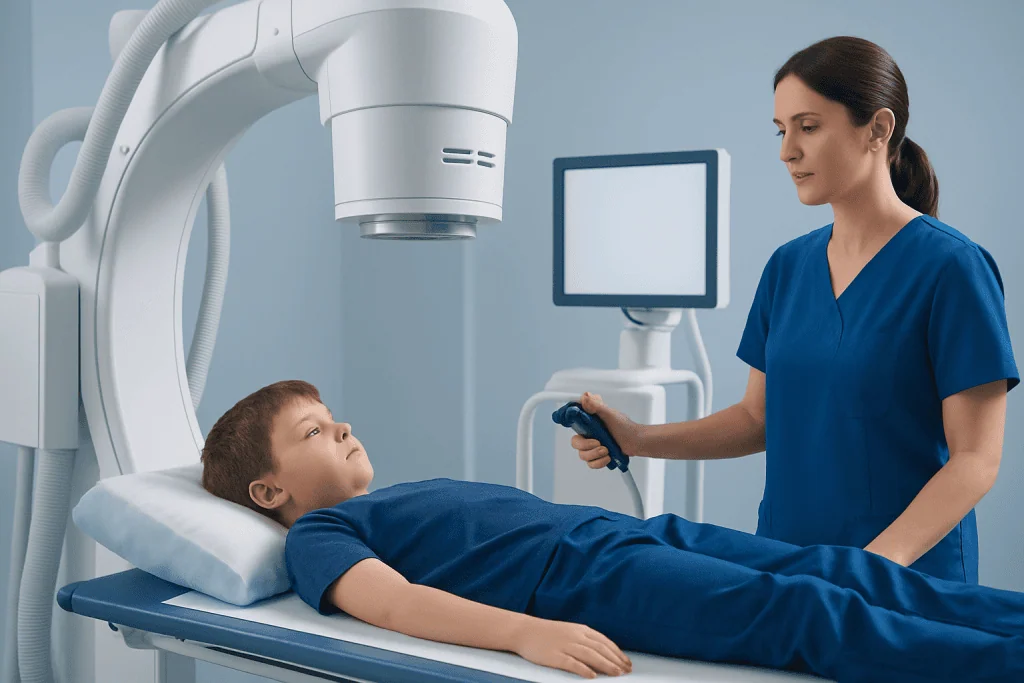
A clinician may recommend a VCUG after a febrile urinary tract infection (UTI), especially when there are recurrent infections, an abnormal kidney or bladder ultrasound, poor urine flow, or concern for an anatomical urinary tract difference. In young children, the purpose is often to check for vesicoureteral reflux, which can increase the likelihood of infections reaching the kidneys in some patients.
Other possible reasons include suspected posterior urethral valves in boys, difficulty emptying the bladder, urinary leakage, prior urinary tract surgery, trauma, or follow-up of a known urinary condition. The decision is individualized. Not every child with a first UTI needs a VCUG, and current VCUG guidelines generally support targeted use based on clinical risk and prior test results.
Before scheduling the examination, the referring clinician and radiology team should review relevant medical history, current symptoms, allergies, previous urinary procedures and the possibility of pregnancy in adolescents or adults. If there are symptoms of an active UTI, such as fever, pain with urination, cloudy urine or new urinary urgency, the team may need to assess and treat the infection before proceeding.
What Are the Steps Involved in a VCUG Procedure?

The exact process can vary slightly by hospital and age, but the VCUG procedure generally follows a predictable sequence. Families may be asked to arrive early to allow time for registration, discussion of consent, and preparation. Most patients can eat and drink normally unless the care team gives different instructions.
- Preparation: The patient changes into a gown and lies on an X-ray table. The genital area is cleaned using an antiseptic solution.
- Catheter placement: A clinician inserts a soft, narrow catheter through the urethra into the bladder. This is usually the most uncomfortable part of the test, but it is brief.
- Bladder filling: Contrast material flows through the catheter into the bladder. The radiologist uses low-dose fluoroscopy, a moving X-ray technique, to take images as the bladder fills.
- Voiding images: When the bladder feels full, the patient urinates into a container, absorbent pad, or bedpan while images are taken. This allows the urethra and urine flow to be assessed.
- Completion: The catheter is removed, and additional images may be taken after the patient finishes urinating to check how well the bladder has emptied.
The test commonly takes 30 to 60 minutes, though younger children may need more time for reassurance and positioning. A parent or caregiver can often remain nearby, subject to radiation safety procedures. The radiologist interprets the images and sends a report to the referring clinician, who discusses the meaning of the results and next steps.
Do They Sedate Babies for VCUG?
Most babies do not receive sedation for a VCUG. The examination depends on observing natural bladder filling and urination, and deeper sedation may make it harder for a baby or child to void normally. In addition, sedation has its own risks and requires extra monitoring, so it is not routinely needed for this short test.
Instead, radiology teams commonly use comfort-focused approaches. These may include feeding or soothing an infant before the test, swaddling when appropriate, allowing a caregiver to stay close, using a pacifier, distraction with toys or videos, and explaining each step in age-appropriate language. Child-life specialists may also help children cope with unfamiliar equipment and sensations.
In selected circumstances, a clinician may discuss medication for severe anxiety or a situation in which a child is unable to cooperate despite supportive measures. This decision should be individualized and coordinated with the radiology and pediatric teams. Parents should ask in advance what comfort options are available and whether any preparation is needed.
Why Are VCUGs Traumatic?
Some children and adults describe a VCUG as stressful because it involves a private body area, catheter placement, unfamiliar imaging equipment, and the need to urinate while being observed. Children may also be frightened by separation from routines, physical restraint for safe positioning, or uncertainty about what will happen. These reactions are understandable and do not mean that a child has done anything wrong.
A difficult experience is not inevitable. Clear preparation, a calm caregiver, honest but simple explanations, privacy, pain-reducing catheter techniques, and developmentally appropriate distraction can reduce distress. Caregivers can tell the team about previous medical fears, sensory sensitivities, developmental needs, trauma history, or communication preferences before the appointment.
Afterward, it can help to validate the child’s feelings rather than dismiss them. Offering fluids, comfort, quiet time and a familiar activity may be useful. If a child has persistent distress, nightmares, intense fear of medical settings, or changes in behavior after any medical procedure, parents can discuss this with the child’s pediatrician or a qualified mental health professional.
How Painful Is a VCUG?
A VCUG is generally described as uncomfortable rather than severely painful. The brief placement of the catheter may cause pressure, stinging or a pinching sensation. As the bladder fills, patients can feel fullness and a strong urge to urinate. Young children may cry because the experience is unfamiliar, uncomfortable, or difficult to understand.
After the catheter is removed, mild burning during the first one or two urinations and temporary urinary urgency may occur. Drinking fluids after the examination can help dilute the urine and may ease mild irritation. Parents should follow the care team’s instructions about comfort measures and any medicines that are appropriate for the child.
Severe pain is not expected. Pain that is worsening, persistent, or accompanied by fever, chills, inability to urinate, significant blood in the urine, or marked lethargy should be assessed promptly. These symptoms may indicate an infection or another complication that needs medical attention.
Benefits, Risks and Recovery After a VCUG
The main benefit of a VCUG is that it can clarify how urine travels through the lower urinary tract in real time. This information can support decisions about follow-up, infection prevention, bladder management or referral to a pediatric urologist. If reflux is found, the report may describe its grade, which helps the clinical team consider the likely course and appropriate monitoring.
Risks are usually small but include temporary discomfort, minor urethral irritation, a small amount of blood in the urine, and urinary tract infection. The examination also uses ionizing radiation. Imaging teams follow radiation-safety principles and seek to use the lowest radiation exposure reasonably achievable while obtaining diagnostic images. Contrast used for a VCUG is placed into the bladder rather than injected into a vein, and serious reactions are uncommon.
Most people return to regular activities immediately after the test. Mild urinary discomfort generally improves within a day or two. The care team may recommend drinking extra fluids, unless there is a medical reason to limit intake. Results should be reviewed with the referring clinician, who can explain whether further observation, urine testing, ultrasound, or specialist care is needed.
When evaluation identifies reflux or another urinary tract concern, a clinician may discuss ongoing vesicoureteral reflux care and whether pediatric urology follow-up is appropriate. Acibadem International’s multidisciplinary specialists and JCI-accredited hospitals provide diagnostic evaluation and treatment planning for international patients with urinary tract concerns.
When to Seek Medical Care
Contact the clinical team after a VCUG if there is fever, chills, worsening pain with urination, inability to pass urine, vomiting, new flank or abdominal pain, or urine that remains visibly bloody. These symptoms are uncommon, but they may require a urine test or timely medical assessment, particularly in infants and young children.
Medical advice is also important before the test if the patient develops signs of a possible UTI or becomes unwell. The procedure may need to be postponed until an infection has been evaluated. Families should not stop prescribed antibiotics or other medicines unless the prescribing clinician advises them to do so.
The VCUG CPT code used for billing can vary according to the imaging services performed and local coding practices. Patients or families who need administrative information should ask the imaging center, insurer, or hospital billing office rather than relying on a code found online. Clinical recommendations should be based on the patient’s medical needs, not billing terminology.
Frequently asked questions
What is a VCUG procedure used for?
A VCUG procedure is used to examine the bladder and urethra while the bladder fills and empties. It can help identify vesicoureteral reflux, urinary blockage, abnormal urine flow, or incomplete bladder emptying. It is often requested after recurrent urinary infections or an abnormal urinary tract ultrasound.
How long does a VCUG procedure take?
The imaging portion commonly takes about 30 to 60 minutes. The total visit may be longer because of registration, preparation, waiting time and discussion with the radiology team. Children may need additional time for reassurance and comfort.
Do they sedate babies for VCUG?
Sedation is not routinely used for babies undergoing a VCUG because the test requires natural urination. Care teams usually rely on feeding, swaddling when suitable, caregiver support and other comfort measures. Sedation may be considered only in unusual circumstances after an individualized clinical discussion.
Why are VCUGs traumatic for some children?
A VCUG can feel stressful because catheter placement, unfamiliar equipment and urinating in a clinical setting may feel uncomfortable or embarrassing. Children may also react to uncertainty or being asked to stay still. Preparation, caregiver presence, clear communication and child-focused distraction can help reduce distress.
How painful is a VCUG?
Most patients experience brief discomfort during catheter placement and pressure as the bladder fills. Mild burning during urination afterward can occur for a short time. Severe or lasting pain is not expected and should be reported to a clinician.
What happens after a VCUG?
Most people can go home shortly after the examination and resume normal activities. Drinking fluids may help with temporary urinary irritation, unless a clinician has advised fluid restriction. The referring clinician reviews the radiology report and explains whether follow-up testing or treatment is needed.
References
- American Academy of Pediatrics
- American College of Radiology
- Radiological Society of North America
- National Institute of Diabetes and Digestive and Kidney Diseases
- European Association of Urology
This article is for general information only and is not a substitute for professional medical advice. Please consult a qualified doctor about your individual situation.
Explore treatments in Turkey — costs, top hospitals & a free quote
JCI-accredited · board-certified surgeons · reply within 24h
Add us as a Preferred Source to see more of our trusted health content across Google Search, AI Overviews and Discover.