Villi: A Complete Medical Overview

Villi increase the surface area of the small intestine to improve nutrient absorption. Healthy villi help absorb vitamins, minerals, fats, proteins, and carbohydrates.
Key Takeaways
- Villi increase the surface area of the small intestine to improve nutrient absorption.
- Healthy villi help absorb vitamins, minerals, fats, proteins, and carbohydrates.
- Damage to villi may occur in conditions such as celiac disease, infections, inflammation, or other digestive disorders.
- Symptoms of villi-related problems can include diarrhea, bloating, weight loss, and signs of nutrient deficiency.
- Diagnosis often involves blood tests, stool tests, endoscopy, and sometimes a biopsy of the small intestine.
- Treatment focuses on the underlying cause and may include dietary changes, medicines, and nutritional support.
Villi are tiny finger-like projections that line the small intestine and help the body absorb nutrients from food. When villi are healthy, digestion and nutrition work more efficiently; when they are damaged, symptoms such as diarrhea, weight loss, or nutrient deficiencies can develop.
Overview: what villi are and why they matter
Villi are tiny, finger-like projections that cover the lining of the small intestine. Their main job is to increase the intestine’s surface area so the body can absorb nutrients more effectively. Without villi, much of the nutrition from food would pass through the digestive tract without being fully used.
Each villus contains blood vessels and lymphatic channels that carry absorbed nutrients to the rest of the body. Carbohydrates and proteins are largely absorbed into the bloodstream, while many fats enter the lymphatic system first. This highly organized structure allows the digestive system to process food efficiently after it leaves the stomach.
Villi work closely with even smaller structures called microvilli, which sit on the surface of intestinal cells. Together, villi and microvilli form a specialized absorptive lining often called the “brush border.” This is why damage to the intestinal lining can affect energy levels, growth, weight, and overall health.
How villi support digestion and nutrient absorption
After food is broken down in the stomach and small intestine, nutrients must pass through the intestinal lining to enter the body. Villi make this possible by providing a large, efficient contact area between digested food and the intestinal wall. The larger the surface area, the more nutrients can be absorbed.
Different parts of the small intestine specialize in absorbing different nutrients, and villi play a role throughout this process. They help absorb iron, calcium, folate, vitamin B12, fats, amino acids, and sugars. Water and electrolytes are also handled carefully by the intestinal lining to help maintain hydration and balance.
When villi are flattened, inflamed, or injured, the body may not absorb nutrients well. This is called malabsorption. Over time, malabsorption can lead to fatigue, anemia, bone weakness, unintended weight loss, or poor growth in children, even if a person appears to be eating enough.
What happens when villi are damaged
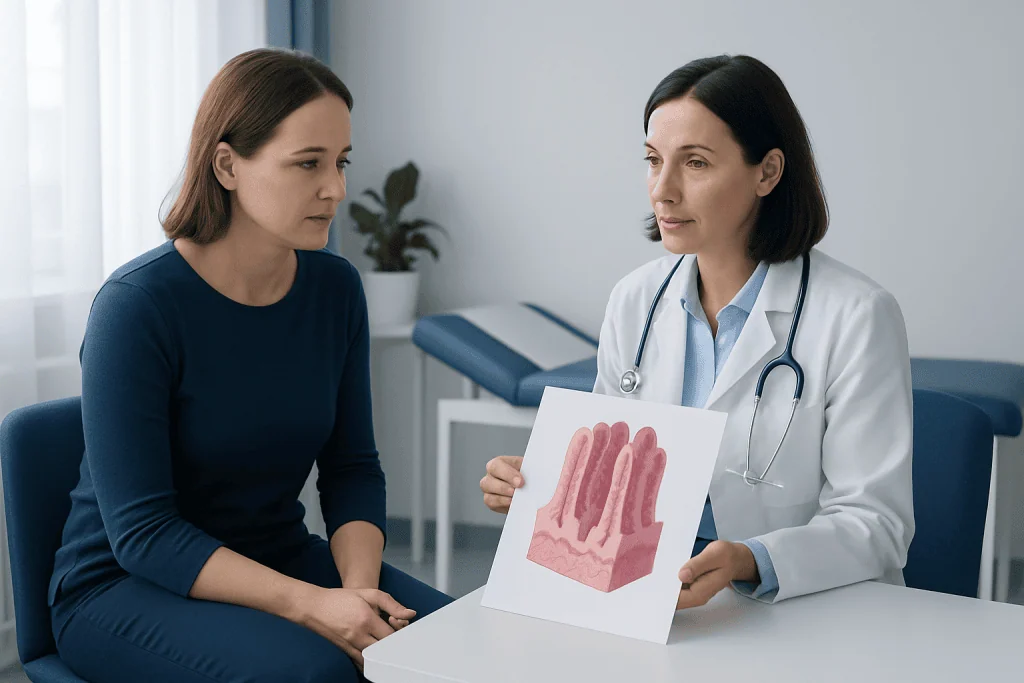
Damage to villi can reduce the intestine’s ability to absorb nutrients. In some conditions, villi become shortened or flattened, a change sometimes called villous atrophy. This can affect a person gradually or lead to more noticeable symptoms over a shorter period, depending on the cause.
Common symptoms linked to damaged villi include chronic diarrhea, loose stools, bloating, abdominal discomfort, excess gas, nausea, and weight loss. Some people instead notice less obvious signs such as tiredness, brittle nails, mouth ulcers, tingling in the hands or feet, or difficulty concentrating because nutrient deficiencies may develop slowly.
Children with villi-related disorders may have poor growth, delayed puberty, irritability, or problems gaining weight. In adults, long-term poor absorption can affect bone health, fertility, and general wellbeing. Because these symptoms overlap with many digestive problems, evaluation by a qualified doctor is important.
- Digestive symptoms: diarrhea, bloating, gas, abdominal pain
- Nutritional symptoms: fatigue, anemia, weight loss, vitamin deficiencies
- Children: poor growth, delayed development, low weight gain
- Long-term concerns: bone thinning, weakness, chronic malnutrition
Causes and risk factors for villi problems
One of the best-known causes of villi damage is celiac disease, an immune reaction to gluten that can inflame and flatten the villi of the small intestine. In people with celiac disease, eating gluten may trigger ongoing intestinal injury unless it is removed from the diet. This is a common reason doctors consider villous atrophy when symptoms of malabsorption are present.
However, celiac disease is not the only possible cause. Villi may also be affected by intestinal infections, inflammatory bowel conditions, autoimmune disorders, certain medications, severe malnutrition, immune deficiencies, and some rare inherited diseases. In tropical or travel-related settings, infections and environmental factors may sometimes contribute to chronic intestinal inflammation and poor absorption.
Risk factors depend on the underlying condition. A family history of autoimmune disease, long-standing digestive symptoms, unexplained anemia, unintentional weight loss, or nutrient deficiencies may all prompt further testing. Doctors may also look at recent travel, antibiotic use, diet history, and any chronic medical conditions that could affect the digestive tract.
How doctors diagnose villi-related conditions
Diagnosis starts with a careful medical history and physical examination. A doctor will usually ask about bowel habits, weight changes, diet, abdominal symptoms, medications, family history, and signs of nutrient deficiency. Blood tests may check for anemia, low iron, vitamin deficiencies, inflammation, or antibodies linked to conditions such as celiac disease.
Stool tests can help identify infection, inflammation, fat malabsorption, or other digestive problems. If doctors need a closer look at the small intestine, they may recommend an endoscopy, often an upper endoscopy, to examine the lining and take small tissue samples. A biopsy can show whether villi are healthy, inflamed, shortened, or flattened.
Additional tests may be used based on the suspected cause. These can include imaging, breath tests, allergy or immune studies, or specialized nutritional assessments. The goal is not only to confirm that villi are affected, but also to identify why the injury is happening so treatment can be targeted appropriately.
Treatment options and recovery of villi
Treatment depends on the underlying cause of the villi damage. For celiac disease, the main treatment is a strict gluten-free diet, which allows the intestinal lining to heal over time in many people. If infection is responsible, treatment may involve appropriate antimicrobial therapy and supportive care. In inflammatory or immune-related conditions, medicines to reduce inflammation may be needed.
Nutritional support is often an important part of treatment. Doctors may recommend replacing iron, folate, vitamin B12, vitamin D, calcium, or other nutrients if deficiencies are present. Some people also benefit from guidance on meal planning, hydration, and temporary dietary adjustments while the intestine recovers.
When symptoms are severe, specialists may coordinate care through a broader digestive evaluation, sometimes involving gastroenterology and nutrition experts. If a more complex intestinal disorder is suspected, further assessment for Crohn’s disease or other causes may be appropriate. Near the end of the care journey, follow-up testing can help confirm that symptoms and nutritional markers are improving. Acibadem International’s multidisciplinary specialists and JCI-accredited hospitals diagnose and treat villi-related digestive conditions for international patients.
Self-care, prevention, and when to seek medical care
Because villi problems are usually caused by an underlying medical condition, prevention focuses on protecting digestive health and addressing symptoms early. It can help to follow a balanced diet, maintain food hygiene, stay hydrated, and avoid starting restrictive diets without medical advice. If celiac disease is suspected, people should not remove gluten before testing unless a doctor recommends it, because this can affect results.
Self-care should also include watching for signs of poor absorption, such as ongoing diarrhea, fatigue, weight loss, or frequent nutrient deficiencies. Keeping a simple symptom and food diary may help a doctor see patterns. People with known digestive disorders may benefit from regular follow-up and nutritional monitoring.
Medical care should be sought if symptoms last more than a few weeks, keep returning, or interfere with daily life. Prompt evaluation is especially important for blood in the stool, severe abdominal pain, dehydration, persistent vomiting, fever, unexplained weight loss, or signs of significant weakness or anemia. A doctor can decide whether testing such as lab work, colonoscopy, or endoscopy is needed based on the person’s symptoms and history.
Frequently asked questions
What are villi in simple terms?
Villi are tiny finger-like projections inside the small intestine. They help the body absorb nutrients from food by creating a much larger surface area for digestion and absorption.
Can damaged villi heal?
Yes, villi can often heal if the underlying cause is found and treated. For example, in celiac disease, avoiding gluten usually allows the intestinal lining to recover over time, although healing speed varies from person to person.
What symptoms can damaged villi cause?
Damaged villi may cause diarrhea, bloating, abdominal discomfort, weight loss, and fatigue. Some people mainly notice signs of nutrient deficiency, such as anemia, weakness, or bone-related problems.
Are villi and microvilli the same thing?
No. Villi are larger finger-like projections on the intestinal lining, while microvilli are much smaller structures on the surface of the cells that cover each villus. Both help increase surface area and support absorption.
Does celiac disease always damage villi?
Celiac disease can damage villi, especially if gluten exposure continues. However, the severity varies, and not everyone has the same degree of intestinal injury or the same symptoms.
How do doctors check the health of villi?
Doctors may use blood tests, stool tests, and an upper endoscopy with biopsy. The biopsy allows a pathologist to look at the intestinal lining under a microscope and assess whether the villi are normal or damaged.
This article is for general information only and is not a substitute for professional medical advice. Please consult a qualified doctor about your individual situation.
Medical weight-loss options in Turkey — costs & eligibility
JCI-accredited · board-certified surgeons · reply within 24h
Add us as a Preferred Source to see more of our trusted health content across Google Search, AI Overviews and Discover.

More from the Health Library

Allergy Test: An Evidence-Based Guide for Patients

Salt Water Rinse: An Evidence-Based Guide for Patients

Bulbourethral Gland: What Patients Need to Know

Mutual Mastur: A Complete Medical Overview

Burn Blisters on Fingertips: An Evidence-Based Guide for Patients