Vocal Cord Dysfunction: What Patients Need to Know

Vocal cord dysfunction happens when the vocal cords narrow the airway during breathing, most often during inhalation. It can cause sudden shortness of breath, throat tightness, noisy breathing, and symptoms that may resemble asthma.
Key Takeaways
- Vocal cord dysfunction happens when the vocal cords narrow the airway during breathing, most often during inhalation.
- It can cause sudden shortness of breath, throat tightness, noisy breathing, and symptoms that may resemble asthma.
- Common triggers include exercise, reflux, irritants, stress, and upper airway sensitivity.
- Diagnosis often involves reviewing symptoms carefully and examining the vocal cords with laryngoscopy.
- Treatment usually focuses on breathing retraining, trigger control, and management of related conditions.
Vocal cord dysfunction is a condition in which the vocal cords close when they should open, making breathing feel difficult, especially during inhalation. It can be frightening, but it is usually treatable once it is correctly identified and distinguished from asthma and other airway conditions.
Overview
Vocal cord dysfunction is a breathing disorder in which the vocal cords move abnormally and partly close during breathing, especially while breathing in. This temporary narrowing at the level of the voice box can create a feeling of not getting enough air, throat tightness, or a high-pitched sound during inhalation. Although the symptoms can be intense, the episodes are often brief and the condition is usually manageable with the right care.
This condition is also called paradoxical vocal fold motion or inducible laryngeal obstruction in some settings. It is different from structural diseases of the vocal cords, because the problem is typically functional: the vocal cords are present and can appear normal between episodes, but they react in an unhelpful way to certain triggers. Many patients are initially told they may have asthma, and some have both asthma and vocal cord dysfunction at the same time.
A clear diagnosis matters because treatment for vocal cord dysfunction is different from treatment for lower-airway diseases. Instead of relying mainly on inhalers, care often centers on breathing techniques, speech-language therapy, and identifying triggers such as exercise, reflux, irritants, or stress. Understanding this pattern can help patients feel more in control and reduce repeated emergency visits or unnecessary medications.
How Vocal Cord Dysfunction Feels and Why It Is Often Misunderstood
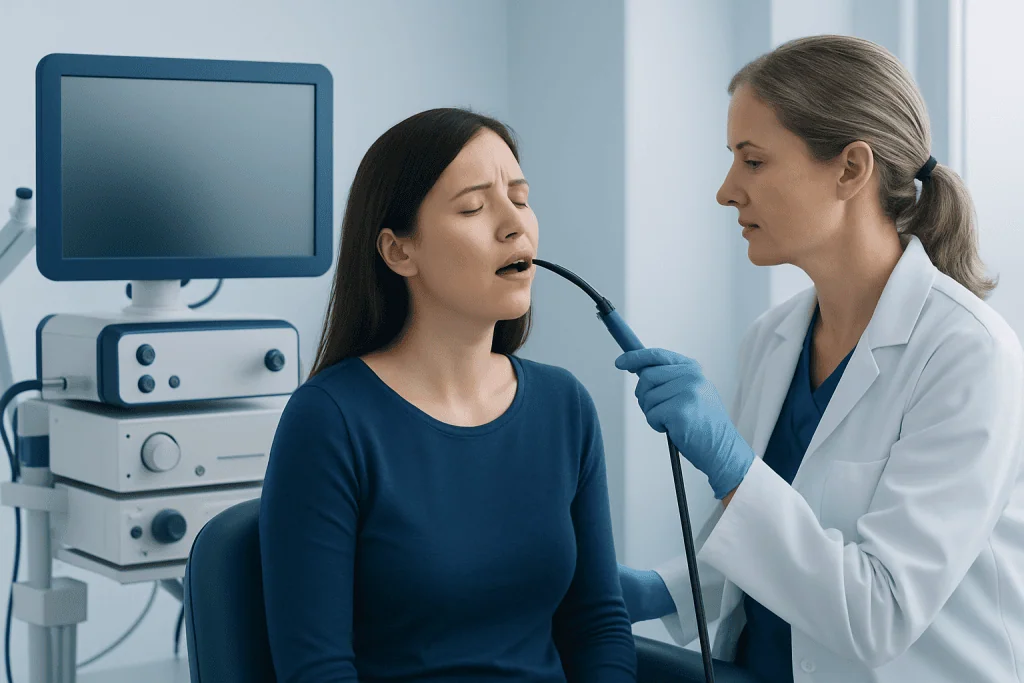
People with vocal cord dysfunction often describe a sudden sense of air hunger or the feeling that the throat is closing. Breathing in may feel harder than breathing out, and there may be noisy breathing, sometimes called stridor, coming from the throat rather than the chest. Symptoms may begin during exercise, exposure to strong smells, cold air, laughing, coughing, or emotional stress.
One reason the condition is misunderstood is that it can look very similar to asthma. Both can cause breathing difficulty, coughing, and chest discomfort. However, asthma mainly affects the lower airways in the lungs and often causes wheezing during exhalation, while vocal cord dysfunction usually causes more trouble during inhalation and a sensation centered in the throat or upper chest.
Another challenge is that symptoms may come and go quickly. A patient may seem completely well during a routine office visit, and standard lung tests may be normal between attacks. Because of this, careful listening to the symptom pattern is often as important as testing. In some patients, doctors also consider other conditions that can overlap with or resemble it, such as asthma or reflux-related throat irritation.
Symptoms and Common Triggers

Symptoms vary from person to person, but many episodes follow a recognizable pattern. They often start suddenly, feel alarming, and improve once the triggering exposure ends or the person uses a breathing technique. Voice changes may or may not be present.
- Shortness of breath, especially when breathing in
- Throat tightness or the feeling of choking
- Noisy breathing or a high-pitched sound from the throat
- Coughing or frequent throat clearing
- Hoarseness or voice fatigue
- Chest tightness that does not fully improve with asthma medicine
- Symptoms during exercise, especially high-intensity activity
Triggers commonly include exercise, viral upper respiratory infections, postnasal drip, gastroesophageal reflux, smoke, perfumes, chemical fumes, cold air, and strong emotions. Some patients have a particularly sensitive upper airway and react to even mild exposures. Others mainly notice symptoms during sports, sometimes referred to as exercise-induced laryngeal obstruction.
Not every breathing symptom means vocal cord dysfunction. Severe allergic reactions, asthma attacks, infection, and other airway problems can also cause breathing distress. That is why persistent, recurring, or unexplained symptoms should be assessed by a qualified clinician rather than self-diagnosed.
Causes and Risk Factors
There is not always one single cause of vocal cord dysfunction. In many people, the larynx, or voice box, becomes overly reactive. This means the vocal cords close more than they should in response to irritation, exertion, or stress. The abnormal motion is real, but it is not usually due to a dangerous blockage or a tumor. Instead, it reflects a problem in how the airway muscles and protective reflexes are being triggered.
Several factors can raise the likelihood of symptoms. Reflux can irritate the throat and larynx. Allergies, sinus drainage, and recent respiratory infections may do the same. Athletes, especially those training in cold or dry air, can develop symptoms during intense exertion. Anxiety does not cause all cases, but stress can worsen the pattern by changing breathing rhythm and increasing throat muscle tension.
Some patients also have coexisting conditions that make diagnosis more complex. These may include asthma, chronic cough, reflux, or sleep-related breathing problems. When the upper airway is inflamed or sensitive, even normal breathing can feel uncomfortable. Identifying these associated issues is an important part of treatment because control usually improves when all contributing factors are addressed together.
How Doctors Diagnose It
Diagnosis starts with a detailed history. Clinicians ask when symptoms happen, whether inhaling or exhaling is more difficult, what triggers episodes, how quickly symptoms come on, and whether asthma medicines help. A pattern of abrupt throat-centered breathing difficulty, especially during inhalation, often raises suspicion for vocal cord dysfunction.
The most useful test is usually laryngoscopy, in which a specialist looks at the vocal cords with a thin flexible camera passed through the nose. If this is done during symptoms, the vocal cords may be seen narrowing the airway when they should be opening. Because episodes can be intermittent, some patients need evaluation during exercise or after exposure to a trigger to capture the abnormal movement.
Doctors may also perform breathing tests to rule out or identify lung disease. In some cases, these include pulmonary function tests or spirometry to assess airflow patterns. Depending on the symptoms, the workup may also include evaluation for reflux, allergy, sinus disease, or conditions affecting the voice box and throat, sometimes through an ENT examination. The goal is not only to confirm vocal cord dysfunction, but also to exclude more serious causes of breathing difficulty and find any overlapping disorders.
Treatment Options and Breathing Retraining
Treatment for vocal cord dysfunction is usually conservative and highly individualized. The cornerstone is breathing retraining, often guided by a speech-language pathologist or clinician experienced in upper-airway disorders. Patients learn techniques that relax the throat, reduce unnecessary vocal cord closure, and shift breathing patterns during an episode. These methods can be very effective once practiced regularly.
Therapy often includes relaxed throat breathing, diaphragmatic breathing, posture work, and strategies to reduce throat tension during exercise or stress. Patients may also learn how to recognize the earliest signs of an episode and respond before symptoms become intense. If exercise is a major trigger, the care plan may include sport-specific modifications, warm-up strategies, and coaching on recovery breathing.
Trigger management is another important part of care. This may include treatment of reflux, hydration support, allergy control, and avoiding smoke or strong chemical irritants. If another airway condition is present, that should be treated as well. Some patients benefit from a coordinated review by pulmonology and ENT specialists when the diagnosis is uncertain or symptoms are persistent. In selected cases, speech and language therapy helps improve symptom control, voice efficiency, and confidence in daily life.
Self-care, Daily Management, and Prevention
Self-care does not replace medical evaluation, but it can make a meaningful difference. Many patients improve when they understand that the sensation, though distressing, is often temporary and related to upper-airway muscle behavior. Calm, steady breathing tends to work better than forceful attempts to pull in air, which can worsen throat narrowing.
Helpful habits may include staying well hydrated, limiting exposure to smoke and strong fragrances, following reflux advice if recommended, and warming up gradually before exercise. If a clinician has identified stress as a trigger, relaxation training or counseling may be useful. For people whose symptoms occur with sports, practicing breathing techniques outside of exercise can make them easier to use during activity.
Keeping a symptom diary can also help. Noting when episodes happen, what was being done, and which exposures were present may reveal patterns that are not obvious at first. For international patients who need coordinated evaluation, Acibadem International’s multidisciplinary specialists and JCI-accredited hospitals diagnose and treat vocal cord dysfunction and related airway conditions with a team-based approach.
When to Seek Medical Care
Medical care should be sought whenever breathing symptoms are new, severe, recurrent, or unclear. Even if vocal cord dysfunction is suspected, it is important not to assume that every episode is harmless. Shortness of breath can have many causes, including asthma flare-ups, infection, allergic reactions, and heart or lung conditions that need prompt attention.
Urgent assessment is especially important if symptoms are accompanied by blue lips, fainting, swelling of the face or throat, chest pain, high fever, or symptoms that do not improve. People with known asthma should also seek care if their usual asthma action plan is not working. A proper diagnosis can reduce worry, prevent unnecessary treatments, and lead to more effective long-term control.
If symptoms are mild but keep returning, scheduling an evaluation with a primary care doctor, pulmonologist, or ENT specialist is a sensible next step. Early assessment can help clarify whether the problem is vocal cord dysfunction alone, an overlapping airway condition, or another cause entirely.
Frequently asked questions
Is vocal cord dysfunction the same as asthma?
No. Vocal cord dysfunction affects the vocal cords in the throat, while asthma affects the airways in the lungs. However, the two conditions can look similar and sometimes occur together, which is why proper evaluation is important.
Can vocal cord dysfunction be cured?
Many people achieve very good control of symptoms, especially when they learn breathing techniques and address triggers. Some continue to have occasional episodes, but these are often less frequent and less severe over time.
What usually triggers vocal cord dysfunction?
Common triggers include exercise, reflux, smoke, strong odors, cold air, stress, and throat irritation from allergies or infections. Triggers vary by person, so identifying individual patterns can be very helpful.
How is vocal cord dysfunction diagnosed?
Doctors usually start with a detailed history and may use laryngoscopy to watch how the vocal cords move. Breathing tests may also be done to check for asthma or other lung conditions and to rule out other causes of symptoms.
What should a person do during an episode?
Staying as calm as possible and using a clinician-taught breathing technique can help the throat relax and reduce symptoms. If the episode is severe, unusual, or not improving, medical attention should be sought promptly.
Can children and athletes get vocal cord dysfunction?
Yes. It can affect children, teenagers, and adults, and it is often noticed in athletes during intense exercise. In younger patients, assessment is especially useful because symptoms may otherwise be mistaken for poor fitness or uncontrolled asthma.
This article is for general information only and is not a substitute for professional medical advice. Please consult a qualified doctor about your individual situation.
Explore treatments in Turkey — costs, top hospitals & a free quote
JCI-accredited · board-certified surgeons · reply within 24h
Add us as a Preferred Source to see more of our trusted health content across Google Search, AI Overviews and Discover.

More from the Health Library

Black Eye: A Complete Medical Overview

Blood Clotting in Skin: An Evidence-Based Guide for Patients

Tick with White Dot: A Complete Medical Overview

Pubic Hair: An Evidence-Based Guide for Patients

Bacon Burger: An Evidence-Based Guide for Patients