Wall Sit: A Complete Medical Overview

A wall sit is a low-equipment isometric exercise that mainly challenges the quadriceps, glutes, and core. Proper alignment matters: the back stays supported on the wall, knees track over the feet, and the hold should be pain-free.
Key Takeaways
- A wall sit is a low-equipment isometric exercise that mainly challenges the quadriceps, glutes, and core.
- Proper alignment matters: the back stays supported on the wall, knees track over the feet, and the hold should be pain-free.
- Wall sits may help improve muscular endurance and support everyday activities such as sitting, standing, and climbing stairs.
- People with knee pain, recent injury, or balance limitations may need modifications or medical guidance before trying wall sits.
- Sharp pain, swelling, instability, or symptoms that continue after exercise should be assessed by a qualified doctor or physiotherapist.
A wall sit is an isometric exercise performed by sliding the back against a wall and holding a seated position without a chair. It can strengthen the thighs, hips, and core, but good form and gradual progression are important to reduce strain on the knees and lower back.
Overview: what a wall sit is and why people do it
A wall sit is a static strengthening exercise. A person stands with the back against a wall, slides down until the hips and knees are bent, and then holds that position for a set time. Unlike exercises that involve repeated movement, a wall sit is an isometric exercise, meaning the muscles work without the joints moving through many repetitions.
This exercise is commonly used in general fitness, rehabilitation programs, and sports training because it requires little space and no special equipment. The main goal is to build muscular endurance in the legs and improve control around the hips, knees, and trunk. For many people, it is an accessible way to challenge the lower body at home or during a gym session.
Even though a wall sit looks simple, technique has an important effect on comfort and safety. Position, depth, hold time, and the person’s current strength all influence how the exercise feels. A wall sit should create effort and muscle fatigue, but it should not cause sharp pain, joint instability, or lingering swelling afterward.
Which muscles a wall sit works
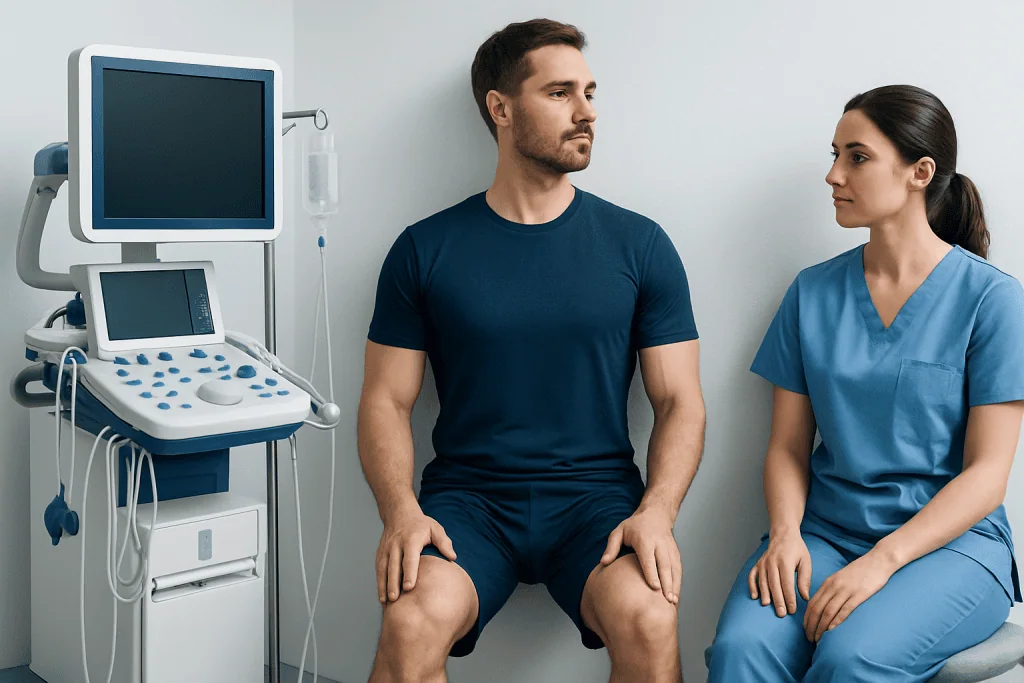
The wall sit mainly works the quadriceps, the large muscles at the front of the thighs. These muscles help control knee position and are important for walking, stair climbing, getting up from a chair, and many sports movements. Because the knees stay bent during the hold, the quadriceps remain under steady tension.
The exercise also recruits the gluteal muscles, hamstrings, calves, and core muscles to maintain posture and stability. The abdominal and back muscles help keep the trunk steady against the wall, while the hips and ankles contribute to balance and alignment. Depending on foot placement and depth, some muscles may work harder than others.
For this reason, a wall sit is not only a “thigh exercise.” It can be part of a broader lower-body conditioning program that supports joint control and endurance. People who need more individualized strengthening because of knee or back symptoms may also benefit from assessment for knee pain or a tailored rehabilitation plan.
Benefits of wall sits and who may find them useful
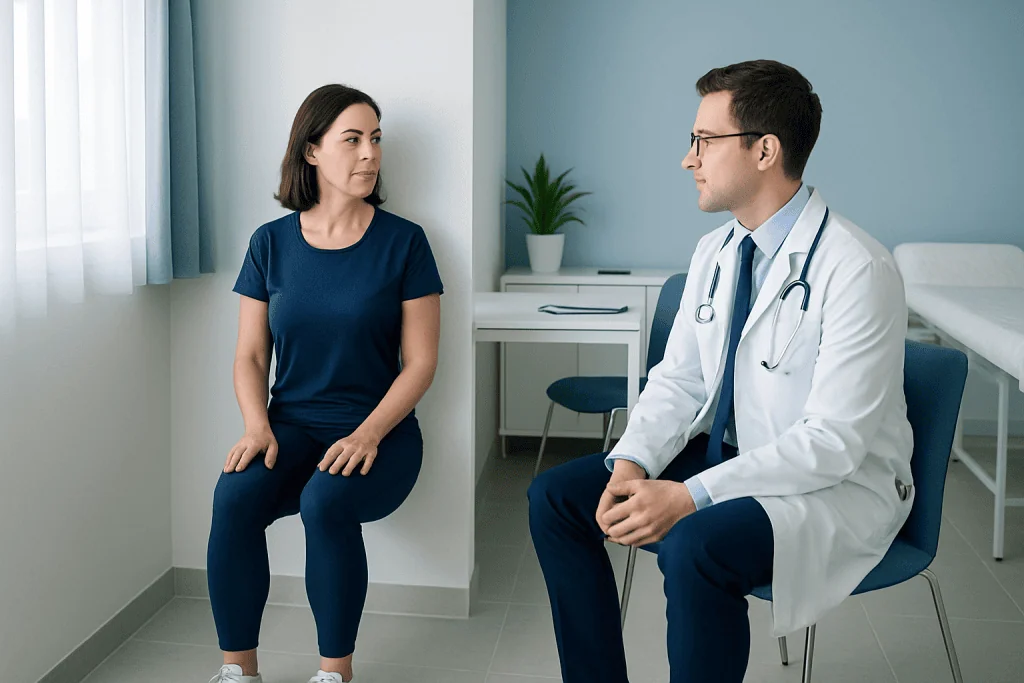
When performed correctly, wall sits may help improve muscular endurance, postural control, and confidence with lower-body exercise. Because they are simple to set up, they can be added to a home routine, warm-up, or supervised rehabilitation program. They are often used by people who want to strengthen the legs without jumping or lifting heavy weights.
A wall sit may be useful for adults returning to exercise, office workers who want a short strengthening break, and athletes looking to add time-under-tension training. It can also support functional tasks such as sitting down, standing up, and managing stairs by challenging the muscles that help stabilize the knees and hips.
That said, benefits depend on individual needs. A wall sit is not the best choice for every person or every goal. Some people need a more dynamic program, while others may need guided care such as physical therapy and rehabilitation if pain, weakness, or poor movement patterns are limiting activity.
- May improve lower-body muscular endurance
- Requires no major equipment
- Can be modified by changing depth or hold time
- May fit home exercise and supervised rehab plans
Proper wall sit form and common mistakes
To perform a basic wall sit, a person stands with the head, shoulders, and back resting against a wall. The feet are placed slightly in front of the body, usually about hip-width apart. The person then slowly slides down the wall until reaching a comfortable partial or near-right-angle seated position, depending on strength, symptoms, and professional advice.
The knees should generally track in line with the feet rather than collapsing inward or flaring too far outward. The feet stay flat, and the person should avoid shifting all the weight into the toes. The spine should remain supported against the wall, with the shoulders relaxed and breathing steady throughout the hold.
Common mistakes include going too low too soon, holding the breath, letting the knees move inward, or pushing through pain in the front of the knee or lower back. A very deep hold is not automatically better. For many beginners, a shallower wall sit held with good control is more appropriate than a long, uncomfortable hold done with poor alignment.
Using time goals can help, but the exercise should be guided by quality rather than by competition. Stopping when form starts to break down is usually wiser than forcing the position. If recurring joint discomfort develops, evaluation by a specialist in orthopedics may help identify whether technique, mobility, or an underlying problem is contributing.
Risks, side effects, and who should be cautious
A wall sit is generally safe for many healthy adults, but it is not risk-free. Because the exercise places sustained demand on the knee and hip joints, some people may feel discomfort if they have weakness, poor alignment, limited flexibility, or a pre-existing joint condition. Muscle burning during the hold is common; sharp pain is not.
People with current knee injuries, significant arthritis, recent surgery, severe balance problems, or uncontrolled pain should be cautious. Those with low back symptoms may also need adjustments in posture, depth, or exercise choice. In some cases, another strengthening method may be more suitable than a wall sit.
Potential issues include temporary muscle soreness, aggravation of kneecap-related pain, or strain if the person holds too long or uses poor form. If the knee becomes swollen, catches, locks, or feels unstable, this deserves medical attention. Some people with persistent symptoms may ultimately need imaging or further management for problems such as meniscus tear or other structural causes of knee pain.
How to start safely, progress gradually, and modify the exercise
For beginners, it is usually best to start with a short hold and a moderate bend in the knees rather than aiming immediately for a deep 90-degree position. A person might begin with several brief holds separated by rest and increase total time gradually over days or weeks. Warm muscles and a brief mobility routine can make the exercise feel more comfortable.
Simple modifications can make wall sits more manageable. These include holding a higher position, reducing the duration, widening the stance slightly for comfort, or using a therapy ball behind the back under professional guidance. More advanced variations, such as single-leg holds or adding weight, should be introduced carefully and only after solid basic control is established.
Wall sits work best as one part of a balanced program. Combining them with walking, flexibility work, hip strengthening, and movement training often provides more complete support for the legs and spine. If an exercise plan is being built around pain recovery or post-injury function, guided sports injury care or rehabilitation can be helpful.
Near the end of a care journey, some people seek structured assessment and exercise planning through multidisciplinary teams. Acibadem International’s specialists in JCI-accredited hospitals diagnose and treat musculoskeletal conditions for international patients when more personalized evaluation is needed.
When to seek medical care
Medical advice is appropriate if a wall sit causes sharp pain, joint swelling, a feeling that the knee may give way, numbness, or symptoms that continue well after exercise. Pain that repeatedly returns during everyday activities such as walking, standing up, or climbing stairs should also be assessed rather than ignored.
A doctor or physiotherapist can help determine whether the issue relates to form, overuse, muscle imbalance, or an underlying condition. Assessment may include a physical examination and, when needed, imaging or referral to a specialist. Early review is especially important after trauma, a twisting injury, or a sudden change in function.
People should also seek guidance before starting wall sits if they have a recent knee or hip operation, significant arthritis, chronic back pain, or a known neurological or balance disorder. Individual advice helps ensure the exercise matches the person’s health status, mobility, and recovery goals.
Frequently asked questions
Is a wall sit a good exercise for beginners?
A wall sit can be a good beginner exercise because it needs little space and no special equipment. The key is to start with a comfortable depth and short hold times rather than forcing a deep position. If pain or instability is present, medical or physiotherapy advice is sensible before continuing.
How long should a person hold a wall sit?
There is no single ideal time for everyone. Beginners often do better with short, controlled holds and gradual progression, while more experienced people may tolerate longer holds. Good form and comfort are more important than reaching a specific number of seconds.
Do wall sits hurt the knees?
A wall sit should create muscle effort, but it should not cause sharp or worsening knee pain. Some people with poor technique or existing knee problems may find the exercise aggravating. Adjusting depth, stance, and hold time can help, but persistent pain should be assessed.
Are wall sits better than squats?
Wall sits and squats train the legs in different ways. Wall sits are isometric and emphasize holding strength and endurance, while squats involve movement and can build strength across a range of motion. One is not universally better; the best choice depends on goals, symptoms, and fitness level.
Can wall sits help with everyday function?
They may help support activities such as sitting down, standing up, and using stairs by strengthening muscles around the hips and knees. However, everyday function usually improves best with a broader exercise plan that includes movement, balance, and flexibility. Pain or mobility limits may require a personalized program.
Who should avoid wall sits or get medical advice first?
People with recent injury, significant knee or hip arthritis, recent surgery, severe back pain, or balance problems should be cautious. Anyone who experiences swelling, locking, giving way, or persistent pain with the exercise should seek professional assessment. A clinician can suggest safer modifications or an alternative exercise.
This article is for general information only and is not a substitute for professional medical advice. Please consult a qualified doctor about your individual situation.
Joint and spine care in Turkey — expert assessment & treatment
JCI-accredited · board-certified surgeons · reply within 24h
Add us as a Preferred Source to see more of our trusted health content across Google Search, AI Overviews and Discover.

More from the Health Library

Tapioca Starch Substitute — Explained by Medical Evidence, Not Myths

Superbeets: A Complete Medical Overview

Throat Calcium: An Evidence-Based Guide for Patients

Nails That Are Brittle — Explained by Medical Evidence, Not Myths

Frontal: What Patients Need to Know