

What Cushions the Ends of Bones at the Joint?

Articular cartilage covers the ends of bones where they meet in a joint. This cartilage reduces friction and helps absorb shock during movement.
Key Takeaways
- Articular cartilage covers the ends of bones where they meet in a joint.
- This cartilage reduces friction and helps absorb shock during movement.
- Cartilage damage can lead to pain, stiffness, swelling, and reduced mobility.
- Age, injury, excess weight, and repetitive stress can increase wear on joints.
- Diagnosis may include a medical history, physical examination, and imaging tests.
- Early care and joint-friendly habits can help protect cartilage and support function.
The ends of bones at a joint are cushioned by articular cartilage, a smooth, slippery tissue that helps joints move with less friction and absorb impact. When this cartilage is healthy, everyday movement is easier and less painful.
Overview
The structure that cushions the ends of bones at a joint is called articular cartilage. It is a smooth, resilient tissue that covers the bone surfaces inside many joints, including the knees, hips, shoulders, and ankles. Its main job is to help bones glide over one another with minimal friction.
Articular cartilage also helps distribute force across the joint. When a person walks, bends, lifts, or lands from a jump, the cartilage acts like a protective buffer, reducing stress on the underlying bone. In healthy joints, this cushioning makes movement feel smooth and comfortable.
Unlike some tissues in the body, cartilage has a limited ability to repair itself. That is why protecting joint health early and addressing symptoms promptly can be important for long-term mobility.
Symptoms of Cartilage Problems
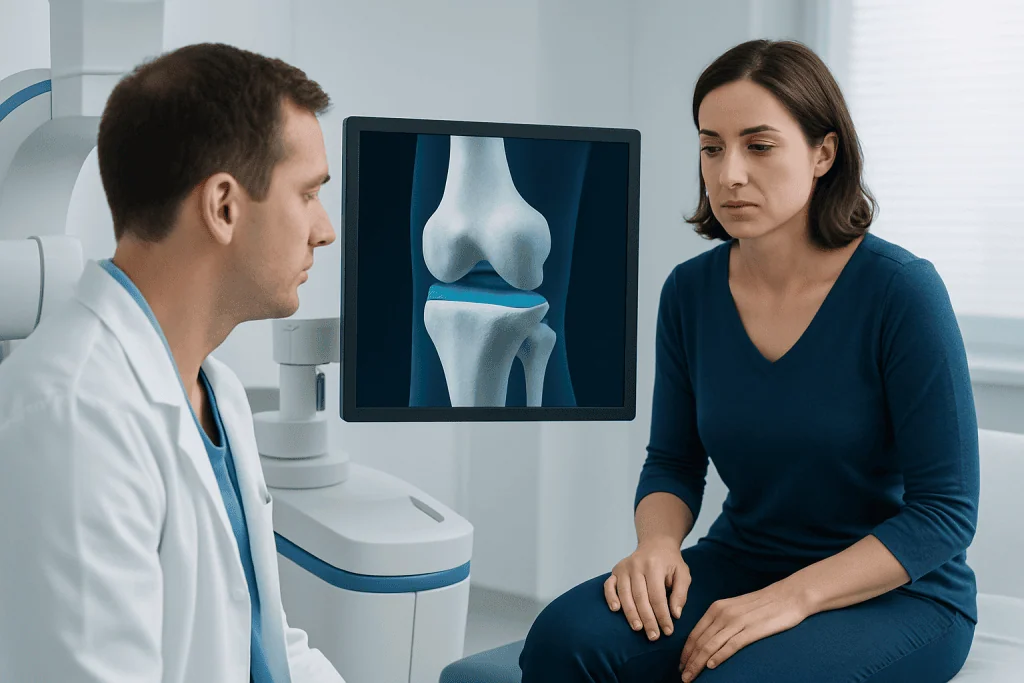
When articular cartilage is damaged or worn down, the joint may no longer move as smoothly. Symptoms often develop gradually, though they can also appear after an injury. Common signs include pain with activity, stiffness after rest, and a feeling that the joint is less flexible than before.
Some people notice swelling, tenderness, or a grinding or clicking sensation during movement. The affected joint may feel weak or unstable, especially during weight-bearing activities such as climbing stairs or standing for long periods.
Symptoms can vary depending on which joint is involved and how much cartilage is affected. Early changes may be mild, but they can become more noticeable over time if the joint continues to be stressed.
Causes & Risk Factors
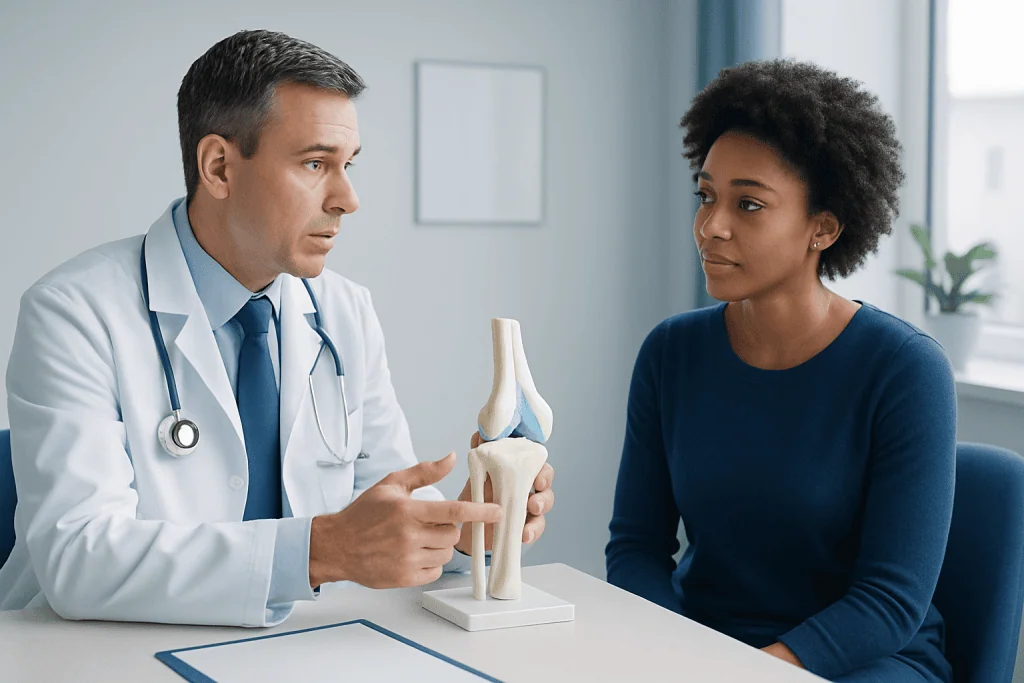
Cartilage can wear down for several reasons. The most common is gradual degeneration over time, which is often associated with osteoarthritis. Repeated stress on a joint, previous injury, or abnormal joint alignment can also increase wear and tear.
Risk factors may include aging, excess body weight, sports injuries, repetitive occupational strain, and a family history of joint disease. Joints that have had fractures or ligament injuries are sometimes more vulnerable because the normal movement pattern may change.
- Age-related cartilage wear
- Past joint injuries
- Repetitive impact or overuse
- Extra body weight placing more load on joints
- Poor joint alignment or instability
While not all risk factors can be changed, many can be managed. Reducing excess stress on the joints can help slow further damage and support day-to-day function.
Diagnosis
A doctor usually begins with a discussion of symptoms, activity level, past injuries, and any pattern of pain or stiffness. A physical examination can help assess swelling, range of motion, tenderness, and joint stability. These findings help the clinician understand whether cartilage damage or another joint problem may be present.
Imaging tests may be used to look more closely at the joint. X-rays can show joint space narrowing or other signs of arthritis, while MRI scans can provide a more detailed view of cartilage and surrounding soft tissues. In some situations, additional tests are needed to rule out other causes of pain.
Diagnosis is important because joint symptoms may come from several different conditions, not only cartilage wear. A clear diagnosis helps guide the most appropriate care plan.
Treatment Options
Treatment depends on the cause, location, and severity of cartilage damage. For many people, the first approach includes activity modification, physical therapy, and pain-relief measures recommended by a clinician. The goal is to reduce pain, improve movement, and protect the joint from further strain.
In some cases, doctors may suggest anti-inflammatory medicines, supportive braces, or injections, depending on the joint and the person’s overall health. If symptoms remain significant or the damage is advanced, surgical options may be considered. These can include procedures to smooth damaged cartilage, stimulate repair in selected cases, or replace a severely damaged joint.
For people with larger joint problems, specialist care may include orthopedic evaluation and, when appropriate, procedures such as knee replacement or hip replacement if the joint is badly worn and daily function is limited. The best treatment is individualized and based on a careful assessment by a qualified doctor.
Prevention & Self-care
Healthy habits can help protect joint cartilage and support comfort. Regular low-impact exercise such as walking, cycling, or swimming can strengthen the muscles around a joint and reduce stress on the cartilage. Maintaining a healthy body weight also lowers the load on weight-bearing joints.
It is helpful to balance activity with rest, especially after repetitive use or exercise. Good posture, proper footwear, and warm-up routines can also reduce unnecessary strain. When returning to sports or physical work after an injury, a gradual return is usually safer than sudden intense activity.
- Stay physically active with joint-friendly movement
- Strengthen muscles that support the joints
- Use proper technique during sports and lifting
- Avoid repeated high-impact stress when possible
- Seek early care for persistent joint pain
Self-care cannot replace medical treatment when cartilage damage is advanced, but it often plays an important role in easing symptoms and preserving joint function.
When to See a Doctor
Medical evaluation is advisable if joint pain lasts more than a few days, keeps returning, or interferes with walking, work, sleep, or exercise. Swelling, locking, catching, instability, or a noticeable loss of motion are also reasons to seek assessment.
Prompt care is especially important after a joint injury or when pain is accompanied by redness, warmth, fever, or an inability to bear weight. These signs may indicate a problem that needs timely attention. A clinician can help determine whether the issue involves cartilage, ligaments, bone, or another joint structure.
For international patients, Acibadem International’s multidisciplinary specialists and JCI-accredited hospitals can help diagnose and treat joint conditions with coordinated care. A qualified doctor can explain the findings and recommend the most suitable next steps.
Frequently asked questions
What cushions the ends of bones at the joint?
Articular cartilage cushions the ends of bones where they meet in a joint. It provides a smooth surface that reduces friction and helps absorb shock during movement.
Is cartilage the same in every joint?
No, cartilage can vary depending on the joint and the type of cartilage involved. The cushioning tissue on bone ends in synovial joints is articular cartilage, which is designed for smooth movement and load sharing.
Can damaged cartilage grow back?
Cartilage has a limited ability to repair itself because it does not have a strong blood supply. Some treatments can relieve symptoms or support joint function, but the best option depends on the extent of damage.
Does cartilage damage always mean arthritis?
Not always. Cartilage damage can happen after injury, overuse, or misalignment, and osteoarthritis is one common condition associated with cartilage wear.
What helps protect joint cartilage?
Low-impact exercise, muscle strengthening, healthy weight management, and avoiding repeated joint stress can all help protect cartilage. Early evaluation of persistent pain is also important.
When is surgery considered for cartilage problems?
Surgery may be considered when pain and stiffness are severe, other treatments are not helping, or the joint is significantly damaged. A specialist will recommend surgery only after reviewing symptoms, imaging, and overall health.
References
- American Academy of Orthopaedic Surgeons
- Arthritis Foundation
- Mayo Clinic
- National Institute of Arthritis and Musculoskeletal and Skin Diseases
- Merck Manual Consumer Version
This article is for general information only and is not a substitute for professional medical advice. Please consult a qualified doctor about your individual situation.
Joint and spine care in Turkey — expert assessment & treatment
JCI-accredited · board-certified surgeons · reply within 24h
Add us as a Preferred Source to see more of our trusted health content across Google Search, AI Overviews and Discover.

More from the Health Library



Related Specialists

Assoc. Prof. Dr. Şafak Yılmaz Baran
Gynecology & Obstetrics
Dr. Mehmet Murat Çuhadaroğlu
Nuclear Medicine
Dr. Ebru Yılmaz
Emergency Service
Assoc. Prof. Dr. Tayfun Yoldaş
General Surgery