What Do Contractions Feel Like? A Doctor-Reviewed Answer

Contractions can feel like tightening, cramping, pressure, or back pain that comes in waves. Braxton Hicks contractions are usually irregular and often ease with rest, hydration, or changing position.
Key Takeaways
- Contractions can feel like tightening, cramping, pressure, or back pain that comes in waves.
- Braxton Hicks contractions are usually irregular and often ease with rest, hydration, or changing position.
- True labor contractions become more regular, stronger, longer, and closer together over time.
- Doctors assess contractions by asking about timing, intensity, associated symptoms, and gestational age.
- Urgent medical advice is needed for heavy bleeding, suspected water breaking, severe pain, fever, or decreased fetal movement.
Contractions often feel like the abdomen tightening or hardening, sometimes with menstrual-like cramps, back pressure, or a wave of pain that builds and fades. Many episodes are harmless practice contractions, but regular, intensifying contractions or symptoms such as bleeding, fluid leakage, or reduced fetal movement should be checked by a doctor.
Overview: what contractions usually feel like
For many pregnant people, contractions feel like the uterus tightening and hardening for a short period, then relaxing again. The sensation can range from mild menstrual-like cramps to stronger waves of pressure or pain that spread across the lower abdomen, pelvis, lower back, or thighs. The exact feeling varies from person to person and even from one pregnancy to another.
In many cases, contractions in pregnancy are not a sign of immediate danger. Practice contractions, often called Braxton Hicks contractions, are common and usually harmless. They tend to be irregular, less intense, and more likely to settle with hydration, rest, or a change in activity.
What matters most is the pattern. True labor contractions usually become more rhythmic, last longer, feel stronger, and come closer together over time. A doctor or midwife looks not only at how the sensation feels, but also when it started, how often it happens, and whether it is accompanied by bleeding, fluid loss, or changes in fetal movement.
How people describe contractions
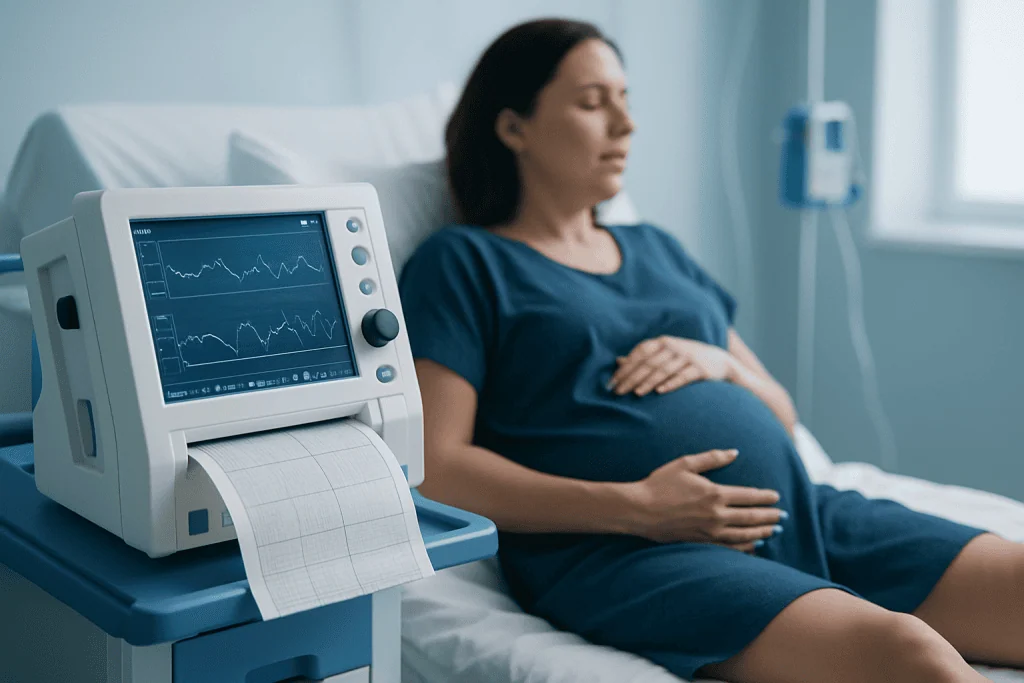
There is no single “right” description of a contraction. Some people say it feels like strong period cramps. Others describe a band-like tightening across the belly, a pulling sensation low in the pelvis, or pressure that starts in the back and moves forward. During a contraction, the abdomen may feel noticeably firm to the touch.
Early contractions may be uncomfortable rather than sharply painful. As labor progresses, they often become more intense and harder to ignore. Between contractions, there is usually a pause when the uterus relaxes and the discomfort improves before the next wave begins.
Common descriptions include:
- Tightening or hardening of the belly
- Menstrual-like cramping
- Pressure in the pelvis or rectum
- Lower back ache or back pain that comes and goes
- Pain radiating into the hips or thighs
- A wave that builds, peaks, and fades
Because these sensations can overlap with normal late-pregnancy discomforts, pattern and progression are often more useful than pain alone when deciding whether labor may be starting.
Braxton Hicks vs. true labor contractions
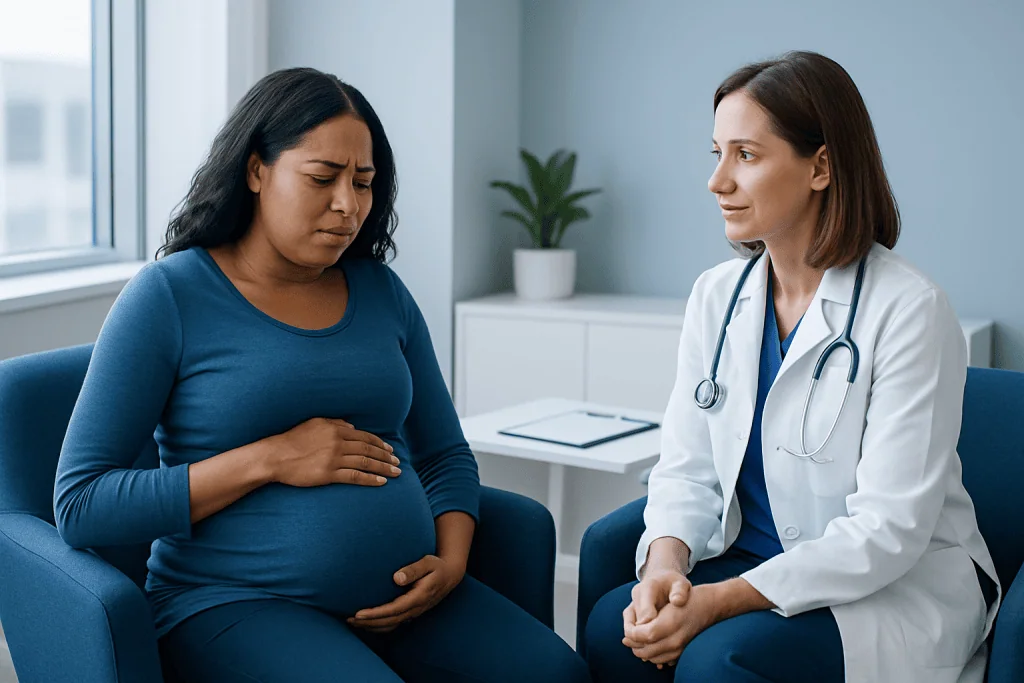
Braxton Hicks contractions are sometimes called “practice contractions.” They often appear in the second or third trimester and may feel like brief tightening across the front of the abdomen. They are usually irregular, do not steadily intensify, and may stop if the person drinks water, empties the bladder, rests, or changes position.
True labor contractions are different because they tend to follow a pattern. They gradually become stronger, more frequent, and longer-lasting. Rather than fading with rest, they continue and often become more noticeable over time. They may also be accompanied by other signs of labor, such as the passing of the mucus plug, water breaking, or increasing pelvic pressure.
A simple comparison can help:
- Braxton Hicks: irregular, unpredictable, often mild, may ease with rest or hydration
- True labor: regular, increasing in strength, lasting longer, and coming closer together
- Braxton Hicks: usually felt mainly in the front of the abdomen
- True labor: may begin in the back or pelvis and move across the abdomen
If there is uncertainty, especially before full term, medical advice is important to rule out preterm labor.
What can cause contractions or contraction-like sensations
The most common cause of contractions is the uterus preparing for labor or progressing through labor. Near the end of pregnancy, the uterine muscle naturally becomes more active. Not every contraction means birth is about to happen, especially if the episodes are infrequent or irregular.
Several factors may trigger or worsen uterine tightening even when labor is not established. Dehydration, physical activity, a full bladder, stress, sexual activity, or carrying multiples can make contractions or cramp-like sensations more noticeable. Some people also confuse fetal movement, round ligament pain, digestive cramping, or back strain with contractions.
Doctors also consider whether there could be a medical cause that needs attention, such as infection, placental problems, or labor starting too early. When contractions occur with abdominal pain, vaginal bleeding, leaking fluid, fever, or reduced fetal movement, prompt review is important. A clinician may also assess pregnancy-related concerns discussed on pages such as high-risk pregnancy when relevant to the individual situation.
How a doctor tells what the contractions mean
When someone reports contractions, the first step is a careful history. A doctor or midwife will ask when the contractions began, how long they last, how far apart they are, whether they are getting stronger, and if anything makes them better or worse. They will also ask about gestational age, vaginal bleeding, fluid leakage, fever, urinary symptoms, and fetal movement.
A physical examination may include checking the abdomen, assessing uterine activity, and listening to the fetal heart rate. In some situations, a pelvic or cervical exam is done to see whether the cervix is thinning or opening. Depending on the stage of pregnancy and symptoms, the team may use fetal monitoring, laboratory tests, or ultrasound to look for changes that suggest true labor or another cause of pain.
If the pregnancy is near term and labor appears to be progressing, care focuses on monitoring the parent and baby and planning delivery. If symptoms happen early or do not clearly fit labor, the doctor may recommend observation, hydration, or further tests. Some patients also need review by specialists in obstetrics and gynecology to confirm whether the contractions are harmless practice contractions or a sign that treatment is needed.
What to do at home and when to seek medical care
If contractions seem mild, irregular, and not progressive, it is often reasonable to pause and observe. Drinking water, resting on the left side, changing position, taking a warm shower, and emptying the bladder may reduce practice contractions. Timing each episode can also help show whether there is a clear pattern.
Medical advice should be sought promptly if contractions become regular, increasingly painful, or start coming closer together. Immediate review is especially important before 37 weeks of pregnancy, because early labor may need assessment and treatment. Other warning signs include vaginal bleeding, suspected water breaking, severe constant abdominal pain, fever, dizziness, or reduced fetal movement.
In general, a person should contact their maternity team or go for urgent evaluation if they notice:
- Contractions that become regular and stronger over time
- Fluid leaking or a sudden gush from the vagina
- Heavy bleeding or bleeding like a period
- Marked decrease in fetal movement
- Severe headache, vision changes, or swelling with abdominal pain
- Contractions before 37 weeks
Many episodes turn out not to be active labor, but checking is the safest option when red flags are present.
Treatment and support if contractions are true labor
If contractions are confirmed to be true labor, treatment depends on how far labor has progressed and how the parent and baby are doing. Care usually includes monitoring the contraction pattern, checking the fetal heart rate, and assessing cervical change. The aim is to support a safe delivery while keeping the person as comfortable as possible.
Pain relief options may include breathing techniques, movement, water-based comfort measures, local support from the care team, or medical pain relief depending on the setting and stage of labor. If labor is not progressing normally or if there are concerns about the baby’s wellbeing, doctors may recommend additional interventions. In some cases, delivery by cesarean section may be advised.
When contractions happen too early, treatment may focus on identifying the cause, monitoring the baby, and deciding whether medicines, rest, or hospital care are needed. The exact plan is individualized. Near the end of care, patients who travel for treatment may wish to know that Acibadem International’s multidisciplinary specialists and JCI-accredited hospitals diagnose and treat pregnancy and labor-related conditions for international patients.
Frequently asked questions
Do contractions always hurt?
Not always. Early contractions and Braxton Hicks contractions may feel more like tightening, pressure, or cramping than severe pain. As true labor progresses, contractions often become stronger and more uncomfortable.
Can contractions feel like period cramps?
Yes. Many people describe contractions, especially early labor, as cramps similar to a menstrual period. The difference is that true labor cramps usually become more regular, stronger, and closer together.
How do I know if it is Braxton Hicks or labor?
Braxton Hicks contractions are usually irregular and may settle with rest, hydration, or a change in position. True labor contractions tend to continue, become more regular, last longer, and increase in intensity over time.
Can contractions be felt in the back instead of the belly?
Yes. Some people feel contractions mainly in the lower back, while others feel them in the front of the abdomen or pelvis. Back labor can happen when the baby’s position places more pressure on the lower back.
When should I call a doctor about contractions?
A doctor or maternity team should be contacted if contractions are regular, getting stronger, or coming closer together. Immediate advice is important if there is bleeding, leaking fluid, severe pain, fever, reduced fetal movement, or contractions before 37 weeks.
Can dehydration cause contractions?
Yes, dehydration can sometimes irritate the uterus and lead to tightening or cramp-like sensations. Drinking fluids and resting may help, but persistent contractions still need medical review.
References
- American College of Obstetricians and Gynecologists
- National Institute for Health and Care Excellence
- March of Dimes
- World Health Organization
This article is for general information only and is not a substitute for professional medical advice. Please consult a qualified doctor about your individual situation.
Explore treatments in Turkey — costs, top hospitals & a free quote
JCI-accredited · board-certified surgeons · reply within 24h
Add us as a Preferred Source to see more of our trusted health content across Google Search, AI Overviews and Discover.