What Is a Gene? A Doctor-Reviewed Answer

Genes are made of DNA and help guide how the body develops, functions, and repairs itself. People inherit two copies of most genes, one from each parent.
Key Takeaways
- Genes are made of DNA and help guide how the body develops, functions, and repairs itself.
- People inherit two copies of most genes, one from each parent.
- Many gene variations are harmless, while some are linked to disease risk or inherited conditions.
- Doctors may suggest genetic testing when there is a strong family history, early-onset disease, or unexplained symptoms.
- Genetic results are interpreted alongside personal history, family history, and other medical tests.
- Genetic counseling can help people understand what a result may mean for them and their relatives.
A gene is a small section of DNA that contains instructions the body uses to make proteins and regulate how cells work. Most gene differences are normal and harmless, but some changes can affect health or increase the chance of certain inherited conditions.
Overview: what is a gene?
A gene is a segment of DNA that gives cells instructions. These instructions help the body make proteins, which do much of the work inside cells, or help control when and how other genes are used. In simple terms, genes are part of the body’s biological blueprint.
Most people ask this question out of curiosity, after seeing a family member diagnosed with a genetic condition, or before having a blood test. In many cases, learning about genes is simply a way to better understand normal biology. Having a gene variation does not automatically mean a person will become ill, and many genetic differences are harmless.
Genes are organized on structures called chromosomes. Humans usually have 23 pairs of chromosomes, and each chromosome contains many genes. Together, genes help influence traits such as eye color and blood type, as well as how the body grows, repairs tissue, processes nutrients, and responds to illness.
How genes work with DNA, chromosomes, and proteins
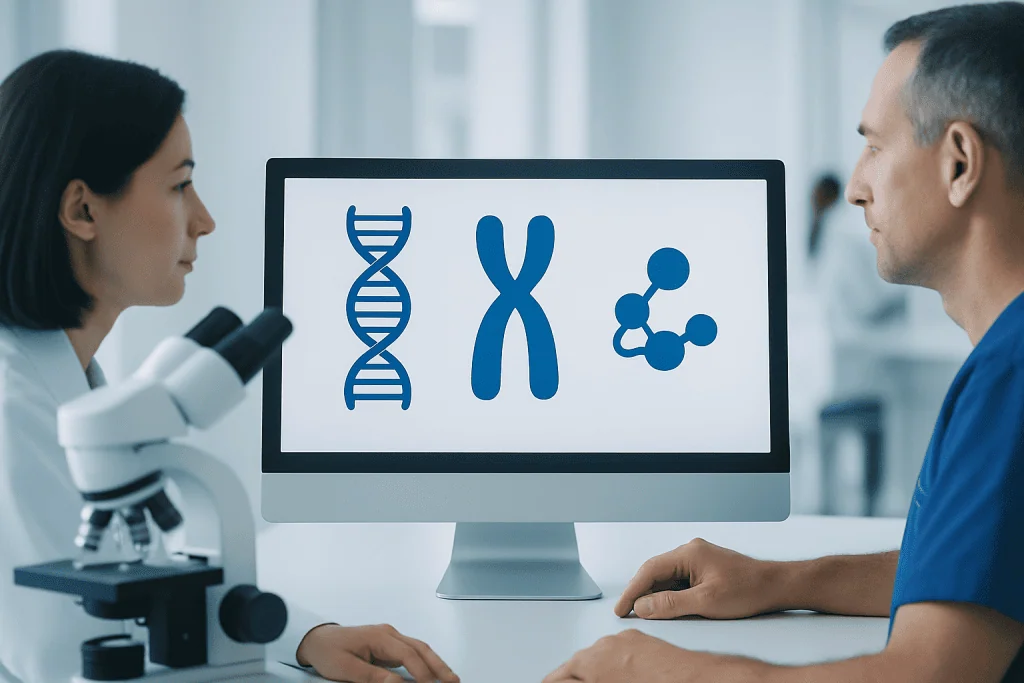
DNA, or deoxyribonucleic acid, is the chemical material that stores genetic information. A gene is one specific section of that DNA. DNA is packaged into chromosomes, which are found in nearly every cell of the body.
Genes work by providing coded instructions. Cells read those instructions to build proteins, and proteins support countless body functions, from carrying oxygen to helping nerves send signals. Some genes do not directly code for a protein but instead help regulate how, when, and where other genes are turned on.
Each person usually inherits one copy of a gene from each parent. Sometimes both copies work as expected. In other cases, a change in one or both copies may alter how a protein is made or how well it functions. That is one reason genes can affect health, although environment, age, and lifestyle also play important roles.
Gene activity is also not fixed in the same way in every cell. A liver cell and a skin cell contain the same DNA, but they use different sets of genes. This selective use of genes helps explain how the body creates many different tissues from the same genetic code.
What kinds of gene changes can happen?

Genes can vary slightly from person to person. These differences are often called variants. Most variants are a normal part of human diversity and do not cause disease. They may simply help explain why people look different or respond differently to certain foods or medicines.
Some variants can affect health. A harmful change may disrupt how a protein is made or how it works, which can contribute to an inherited disorder or raise the risk of developing a condition later in life. A person may inherit such a variant from a parent, or it may arise for the first time in that individual.
Not every variant has a clear meaning. Some test results show a variant of uncertain significance, which means there is not yet enough evidence to know whether it is harmless or important. In these situations, doctors do not rely on the gene result alone. They consider symptoms, examination findings, family history, and sometimes repeat or expanded testing.
Genetic changes can affect a single gene, multiple genes, or larger sections of chromosomes. Depending on the pattern, they may be linked to conditions such as cancer, blood disorders, neurologic diseases, or developmental syndromes. However, genes are only one part of the picture, and a result must be interpreted in the full clinical context.
How genes are inherited
Inheritance describes how gene changes pass from one generation to the next. In many cases, a person inherits two copies of a gene, one from each biological parent. The effect of a variant may depend on whether it is present in one copy or both copies.
Some conditions follow an autosomal dominant pattern, meaning a change in just one copy of a gene may be enough to increase the chance of disease. Others are autosomal recessive, meaning both copies usually need to be affected. There are also X-linked, mitochondrial, and more complex inheritance patterns.
Genes do not determine everything with certainty. A person can carry a variant and never develop symptoms, while another person with the same variant may be more clearly affected. This can happen because of age, sex, other genes, environmental factors, or chance.
Family history can offer useful clues. When several relatives have the same condition, when disease appears at a young age, or when uncommon disorders occur in a family, doctors may think more carefully about a genetic contribution and whether formal evaluation is appropriate.
When genes matter for health
Genes are relevant to health in several ways. Some inherited conditions result directly from changes in a single gene. Others involve many genes working together with lifestyle and environmental factors. This is why genes may influence risk without acting as destiny.
Doctors may consider genetics when there are unexplained symptoms, repeated pregnancy losses, developmental concerns in a child, unusual reactions to medications, or a strong family history of certain diseases. Genetics is also important in some cancers, where testing may help clarify inherited risk or guide treatment decisions.
Examples of conditions with a genetic component include some forms of breast cancer, colon cancer, inherited heart disorders, and rare metabolic or neurologic diseases. In addition, some people seek genetic information before pregnancy to understand possible carrier status.
In clinical practice, the most useful question is often not only “what is a gene?” but “does this genetic information change care?” Sometimes the answer is yes, by helping with diagnosis, screening, treatment selection, or family planning. In other situations, testing may provide limited practical information, so doctors weigh the benefits and limits carefully.
How doctors evaluate genetic concerns
If a genetic condition is suspected, a doctor usually begins with a detailed medical and family history. They may ask about relatives with similar symptoms, cancer diagnoses at young ages, birth defects, developmental differences, miscarriages, or unexplained deaths. A physical examination and standard laboratory or imaging tests may also help narrow the possibilities.
Genetic testing is not a single test but a group of methods. Depending on the situation, a doctor may recommend single-gene testing, a multi-gene panel, chromosome analysis, or broader sequencing. Testing often uses a blood or saliva sample. In some cases, results can help confirm a diagnosis, estimate future risk, or identify whether relatives may also wish to be tested.
Before testing, many people benefit from genetic counseling. Counseling can explain what the test can and cannot show, whether a result may affect family members, and how likely it is to change medical care. After testing, the same team can help interpret positive, negative, or uncertain results in plain language.
When treatment or surveillance is needed, care may involve different specialists. Depending on the diagnosis, this might include genetic diagnosis and counseling, oncology services, or advanced imaging such as MRI when doctors are assessing related organ changes. The goal is not just to identify a gene change, but to use the information safely and meaningfully.
When to seek medical care
Questions about genes are often educational rather than urgent, and many people who read about genetics do not have a serious health problem. Still, medical review is sensible if there is a strong family history of the same illness, disease appearing unusually early in life, multiple affected relatives across generations, or symptoms that do not have a clear explanation.
It is also wise to speak with a doctor if a child has developmental delay, unusual growth patterns, congenital differences, or repeated unexplained medical problems. Adults may seek advice if they have recurrent blood clots, early heart disease in the family, repeated miscarriages, or several relatives with the same type of cancer.
Anyone who has received a genetic test result and does not understand it should ask for professional guidance rather than making assumptions. Results described as “pathogenic,” “likely pathogenic,” or “variant of uncertain significance” can be confusing, and the right interpretation depends on the whole clinical picture.
Near the end of the care pathway, some patients choose support from centers with multidisciplinary teams. Acibadem International’s specialists in JCI-accredited hospitals diagnose and treat genetic and inherited conditions for international patients, coordinating evaluation with relevant departments when needed.
Living with genetic information: prevention, screening, and self-care
Learning about genes can be empowering when it leads to thoughtful prevention and follow-up. For some people, this means routine health screening based on age and family history. For others, it may mean earlier or more frequent checks, such as cancer surveillance or heart evaluation, because a known inherited risk is present.
Healthy habits still matter, even when genes influence risk. Not smoking, staying physically active, eating a balanced diet, sleeping well, protecting mental health, and attending regular checkups can support overall wellbeing. These steps may not change an inherited variant, but they can improve health outcomes and reduce other risk factors.
Family communication is often part of genetic care. Since relatives may share the same variant, doctors or genetic counselors can advise on whether family members should consider their own evaluation. This should be approached respectfully, with attention to privacy and personal choice.
It can also help to keep copies of test results, pathology reports, and a written family health history. If treatment is needed, records may help specialists decide whether options such as chemotherapy or other targeted management strategies are relevant, especially in conditions where genetics can guide care.
- Ask what the result means for current health and future risk.
- Discuss whether close relatives should consider counseling or testing.
- Follow the screening plan recommended by the care team.
- Seek support if genetic information causes anxiety or difficult decisions.
Frequently asked questions
What is a gene in simple terms?
A gene is a section of DNA that contains instructions used by the body. These instructions help cells make proteins or control important body processes.
Are genes the same as DNA?
Not exactly. DNA is the material that stores genetic information, while a gene is one specific part of DNA with a particular function. Many genes are packaged together on chromosomes.
Does having a gene change mean someone will get a disease?
No. Many gene changes are harmless, and even some risk-related variants do not guarantee disease. Health outcomes often depend on other genes, age, environment, and lifestyle as well.
Why would a doctor recommend genetic testing?
A doctor may suggest testing if there is a strong family history, early-onset disease, unexplained symptoms, or concern about an inherited condition. Testing can sometimes help confirm a diagnosis, guide screening, or inform family planning.
Can genetic conditions be treated?
Some genetic conditions can be treated directly, while others are managed by monitoring, symptom control, and prevention of complications. The best approach depends on the exact condition and how it affects the person.
What is genetic counseling?
Genetic counseling is a medical service that helps people understand genetic risks, testing options, and results. It can also help families think through next steps, screening, and whether relatives may be affected.
References
- National Human Genome Research Institute
- MedlinePlus Genetics
- Centers for Disease Control and Prevention
- American College of Medical Genetics and Genomics
- World Health Organization
This article is for general information only and is not a substitute for professional medical advice. Please consult a qualified doctor about your individual situation.
Explore treatments in Turkey — costs, top hospitals & a free quote
JCI-accredited · board-certified surgeons · reply within 24h
Add us as a Preferred Source to see more of our trusted health content across Google Search, AI Overviews and Discover.