What Is AI in Healthcare? How It Supports Diagnosis and Treatment
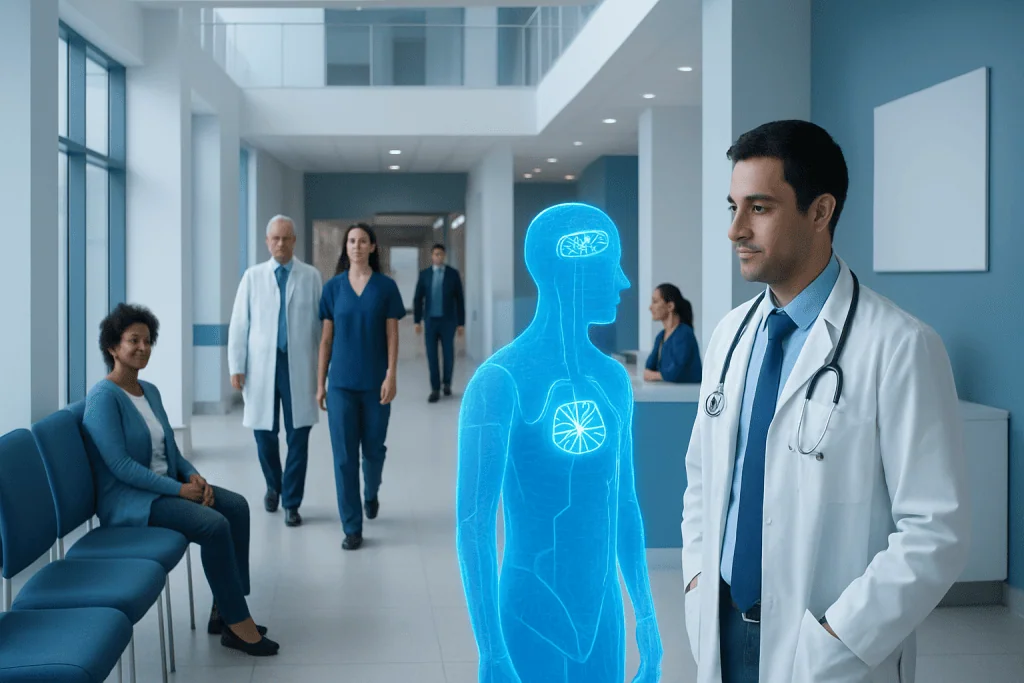
AI in healthcare is designed to support clinicians, not replace human judgment. It can help analyze images, lab data, health records, and real-time patient information.
Key Takeaways
- AI in healthcare is designed to support clinicians, not replace human judgment.
- It can help analyze images, lab data, health records, and real-time patient information.
- Potential benefits include earlier detection, more personalized care, and greater efficiency.
- Safe use depends on data quality, privacy protection, fairness, and medical oversight.
- Patients should feel comfortable asking how AI is used in their care.
AI in healthcare refers to computer systems that help clinicians analyze medical information, recognize patterns, and support decisions. It does not replace doctors, but it can improve diagnosis, treatment planning, monitoring, and hospital workflow when used carefully and ethically.
Overview: What AI in Healthcare Means
AI in healthcare describes the use of computer systems that can process large amounts of medical information, identify patterns, and provide insights that may help healthcare professionals make decisions. These systems are often built using methods such as machine learning, natural language processing, and computer vision. In simple terms, AI can help turn complex health data into information that is easier for doctors and care teams to review.
AI is not a doctor, and it does not have human understanding, empathy, or responsibility. Instead, it acts as a support tool. A clinician still interprets the results, considers the patient’s symptoms and history, explains options, and makes the final medical decision together with the patient.
Today, AI may be used in many parts of healthcare, including medical imaging, risk prediction, treatment planning, hospital operations, remote monitoring, and administrative tasks. Its role is growing because modern healthcare generates enormous amounts of data, and AI can help organize and analyze that data more quickly than manual review alone.
How AI Supports Diagnosis
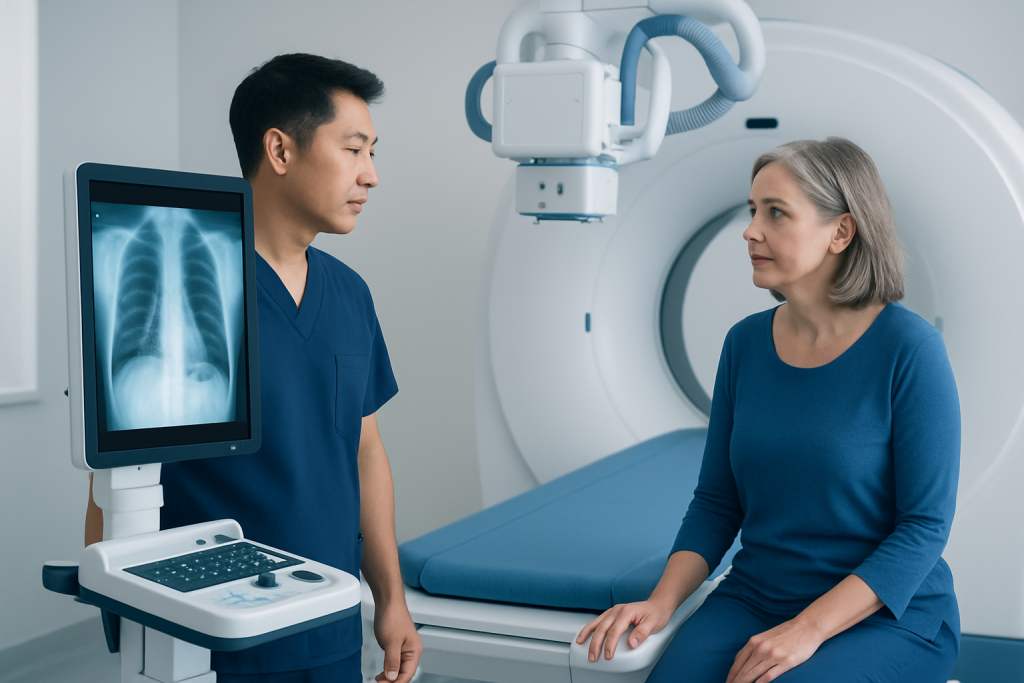
One of the best-known uses of AI in healthcare is diagnosis support. AI systems can review information such as X-rays, CT scans, MRI images, pathology slides, heart rhythm tracings, laboratory values, and notes from electronic health records. By recognizing patterns that may be difficult or time-consuming to detect, these tools can help clinicians identify possible abnormalities earlier.
For example, AI may be used to highlight suspicious areas on a scan, flag unusual laboratory trends, or estimate the likelihood of a condition based on several pieces of data together. In specialties that rely heavily on imaging, such as radiology and cancer care, AI can serve as an extra set of eyes during review. It may also help prioritize urgent cases so that patients who need rapid attention are seen sooner.
Even when AI performs well, it does not give a final diagnosis on its own. A finding suggested by AI must be interpreted in the full clinical context. Symptoms, physical examination, prior medical history, medications, and additional tests all remain essential. AI can improve efficiency and consistency, but diagnosis still depends on trained professionals.
- Analyzing medical images for possible abnormalities
- Detecting patterns in laboratory or monitoring data
- Helping identify patients who may be at higher risk
- Supporting review of large and complex medical records
How AI Supports Treatment Planning and Patient Care
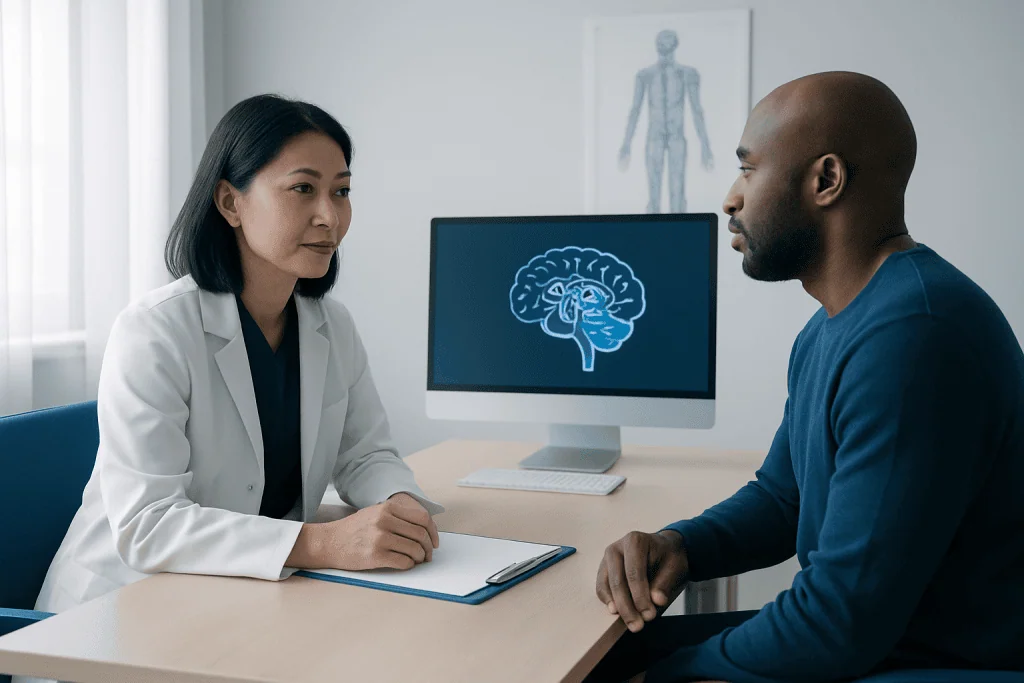
AI can also help with treatment planning by bringing together different types of medical information. A system may compare a patient’s imaging, pathology, blood tests, and medical history to help clinicians consider likely diagnoses, treatment pathways, or next steps for testing. This can be especially useful in complex care, where decisions often depend on many factors at the same time.
In some settings, AI contributes to more personalized medicine. By analyzing patterns across large datasets, it may help identify which patients are more likely to respond to a certain therapy or who may need closer follow-up. In cancer care, for example, AI can assist teams as they review scans and pathology information while discussing cancer treatment options. In imaging-based specialties, it may work alongside advanced MRI scans or CT scans to support interpretation.
AI is also used after treatment decisions are made. It may help monitor patients remotely, detect changes in vital signs, remind patients about follow-up, or support rehabilitation plans. These applications can make care more continuous and responsive, especially for people managing long-term conditions. Even so, treatment should always be individualized by qualified healthcare professionals.
Common Uses of AI Across Healthcare
AI is not limited to one hospital department. It can be used in clinical care, research, and daily healthcare operations. Some tools are visible to patients, while others work in the background by helping staff organize information or improve workflow.
In diagnostics, AI can assist with reading medical images, spotting urgent findings, and comparing current results with previous studies. It may also support digital pathology, electrocardiogram analysis, and symptom-checking systems. In hospitals and clinics, AI can help manage scheduling, documentation, and triage so clinicians have more time for direct patient care.
Another area of growth is preventive and remote care. Wearable devices and home monitoring tools can collect heart rate, sleep, oxygen levels, blood pressure, or activity data. AI may analyze these streams of information and alert care teams if concerning changes appear. Some centers also combine AI-supported review with advanced PET-CT and other diagnostic tools to give specialists a more complete picture when evaluating serious or complex conditions.
- Medical imaging and scan interpretation
- Pathology and laboratory data review
- Clinical documentation and workflow support
- Remote monitoring and digital health tools
- Risk prediction and preventive care planning
- Research and drug development support
Benefits and Limitations of AI in Healthcare
The potential benefits of AI in healthcare are significant. It can help clinicians process large amounts of data quickly, reduce repetitive manual tasks, and support more consistent review of tests. In some cases, it may help detect abnormalities earlier, improve triage, and guide more personalized treatment decisions. For healthcare teams, this may mean better use of time and resources.
However, AI also has clear limitations. An AI system is only as reliable as the data used to train and test it. If the data is incomplete, unbalanced, or not representative of different patient groups, the system may perform less accurately for some people. AI may also make errors, miss important context, or produce suggestions that seem confident but are not medically appropriate.
For these reasons, AI should be viewed as a tool rather than an authority. Safe healthcare depends on clinician oversight, careful validation, and open communication with patients. The best results usually come when AI supports a skilled medical team instead of trying to replace one.
Safety, Privacy, and Ethics
As AI becomes more common in medicine, questions about safety, privacy, and fairness are increasingly important. Health data is highly sensitive, so hospitals and technology providers must protect confidentiality and follow data security standards. Patients may reasonably want to know what information is being used, how it is stored, and who can access it.
Another important issue is bias. If an AI system is trained mostly on one population, it may not work equally well for others. That can lead to differences in accuracy across age groups, sexes, ethnic backgrounds, or people with rare conditions. Responsible AI development includes testing across diverse populations and ongoing review in real clinical settings.
Transparency also matters. Clinicians should understand the role of an AI tool, its strengths, and its limitations. Patients can ask whether AI was used in their diagnosis or treatment planning and how their doctor interpreted the results. Ethical care means keeping people informed, respecting consent, and ensuring that final decisions remain accountable to qualified healthcare professionals.
What Patients Should Know and Ask
For patients, AI in healthcare can sound complicated, but the practical question is simple: how does this tool help care? In many situations, AI works quietly in the background and may never change the human relationship at the center of medicine. A doctor still listens, examines, explains, and recommends the next step. AI may simply help by organizing information or drawing attention to findings that deserve closer review.
Patients may find it helpful to ask a few clear questions during appointments. These might include whether AI was used to review an image or test, whether the result was checked by a specialist, and how the AI-supported finding fits with symptoms and other test results. Asking these questions can improve understanding and confidence in the care process.
It is also sensible to remember that AI is one part of a broader diagnostic and treatment pathway. If a case is complex, a multidisciplinary review may be needed. Near the end of the care journey, some patients seek evaluation at centers with advanced diagnostic technology and specialist teams. Acibadem International’s multidisciplinary specialists in JCI-accredited hospitals diagnose and treat complex conditions for international patients, combining expert clinical review with modern medical technologies where appropriate.
The Future of AI in Medicine
AI is likely to become more integrated into everyday healthcare in the coming years. Future systems may help doctors combine imaging, genetics, pathology, wearable data, and electronic records into a more complete view of each patient. This could support earlier detection of disease, more tailored treatment plans, and closer follow-up after treatment.
At the same time, progress will depend on careful regulation, strong evidence, and responsible implementation. New AI tools need to be tested for safety, usefulness, and fairness before they are widely adopted. Hospitals also need training, technical support, and clear policies so that these systems are used thoughtfully rather than automatically.
For patients, the most important point is reassuring: the goal of AI in healthcare is to support better care, not to remove the human side of medicine. When used well, AI can strengthen clinical decision-making, improve efficiency, and help care teams focus more attention on the person behind the data.
Frequently asked questions
What is AI in healthcare in simple terms?
AI in healthcare means using computer systems to analyze medical data and support healthcare decisions. It can help doctors review scans, lab results, records, and monitoring information more efficiently, but it does not replace clinical judgment.
Can AI diagnose diseases on its own?
AI can suggest patterns or findings that may support diagnosis, but it should not make a final diagnosis by itself. A qualified clinician must interpret the results in the context of symptoms, examination findings, and other tests.
How does AI help with treatment?
AI can help organize complex medical information and support treatment planning by identifying patterns that may influence care. It may also assist with monitoring, follow-up, and personalized care decisions, especially in chronic or complex conditions.
Is AI in healthcare safe?
AI can be safe and helpful when it is properly tested, clinically validated, and used with medical oversight. Like any medical tool, it has limitations, so doctors should review its output rather than relying on it alone.
Does AI replace doctors or nurses?
No, AI is intended to support healthcare professionals, not replace them. Human clinicians remain essential for communication, empathy, ethical judgment, diagnosis, treatment decisions, and patient safety.
Should patients ask if AI was used in their care?
Yes, it is reasonable for patients to ask whether AI was used to review a test or support a decision. Asking how the result was checked and how it fits the overall clinical picture can help patients feel more informed and involved.
References
- World Health Organization
- U.S. Food and Drug Administration
- National Institutes of Health
- Organisation for Economic Co-operation and Development
- European Medicines Agency
This article is for general information only and is not a substitute for professional medical advice. Please consult a qualified doctor about your individual situation.
Explore treatments in Turkey — costs, top hospitals & a free quote
JCI-accredited · board-certified surgeons · reply within 24h
Add us as a Preferred Source to see more of our trusted health content across Google Search, AI Overviews and Discover.
Check your numbers in seconds
BMI, calories, due date, blood pressure and 30+ more clinical calculators — free, instant, doctor-reviewed ranges.