What Is Neurophysiology? Meaning, Scope, and How It Helps Diagnose Nerve Disorders

Neurophysiology focuses on how the nervous system works rather than only how it looks on scans. Common neurophysiology tests include EEG, EMG, nerve conduction studies, evoked potentials, and sleep-related recordings.
Key Takeaways
- Neurophysiology focuses on how the nervous system works rather than only how it looks on scans.
- Common neurophysiology tests include EEG, EMG, nerve conduction studies, evoked potentials, and sleep-related recordings.
- These tests can help investigate symptoms such as numbness, weakness, seizures, tingling, muscle twitching, and unexplained pain.
- Neurophysiology results are interpreted together with medical history, examination, and imaging when needed.
- Most neurophysiology tests are outpatient procedures and are generally safe and well tolerated.
Neurophysiology is the branch of medicine that studies how the brain, spinal cord, nerves, and muscles function. In clinical care, it plays an important role in diagnosing nerve disorders by measuring electrical activity and signaling within the nervous system.
Overview: what neurophysiology means
Neurophysiology is the medical field that examines how the nervous system functions. This includes the brain, spinal cord, peripheral nerves, neuromuscular junctions, and muscles. While imaging tests such as MRI or CT show structure, neurophysiology looks at performance: how electrical signals travel, how quickly nerves respond, and whether communication between nerves and muscles is working normally.
In practice, clinical neurophysiology helps doctors investigate symptoms that may be linked to the nervous system. Examples include numbness, tingling, muscle weakness, twitching, balance problems, blackouts, seizures, sleep-related movement concerns, and certain types of pain. The goal is not simply to label symptoms, but to identify where a problem may be occurring and how severe it may be.
This field is especially valuable because many nerve disorders cannot be fully understood by symptoms alone. Two people may describe similar problems, yet one may have a nerve compression, another a muscle disease, and another a condition affecting the brain or spinal cord. Neurophysiological testing helps narrow these possibilities in a more objective way.
What does neurophysiology include?
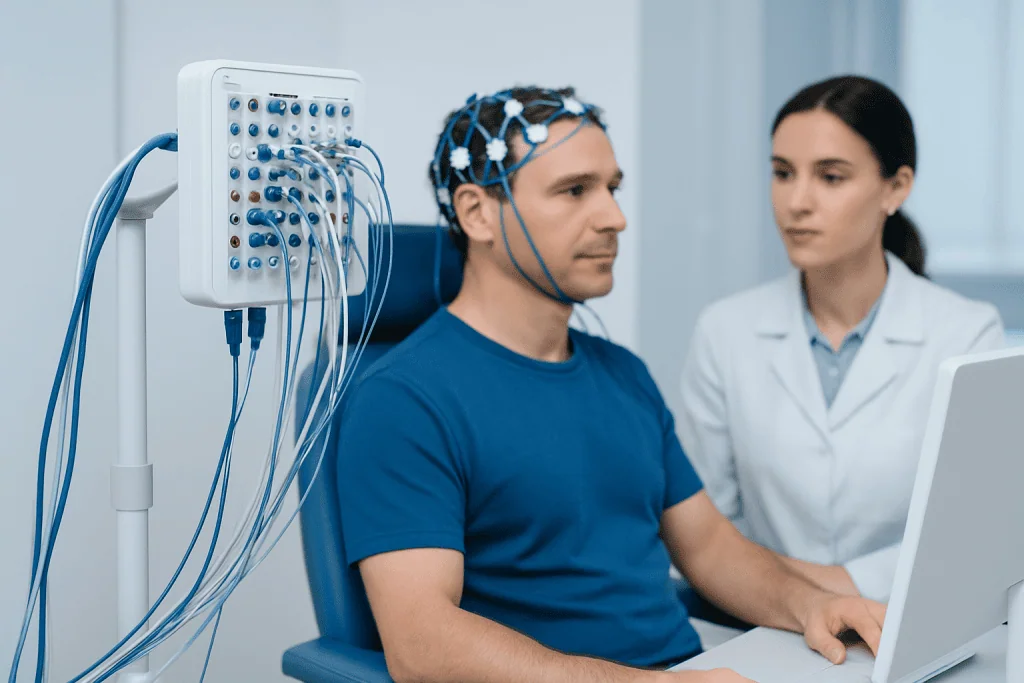
Neurophysiology covers several types of testing and clinical assessment. Some tests record spontaneous electrical activity, while others measure responses to stimulation such as touch, sound, light, or small electrical impulses. Each test answers a different question about the nervous system.
Common areas within neurophysiology include:
- Electroencephalography (EEG): records electrical activity in the brain and is often used when seizures are suspected.
- Electromyography (EMG): assesses muscle electrical activity and helps evaluate muscle and nerve disorders.
- Nerve conduction studies (NCS): measure how fast and how well electrical signals travel along peripheral nerves.
- Evoked potentials: evaluate how the brain responds to sensory input such as visual, auditory, or somatosensory stimulation.
- Sleep neurophysiology studies: may be used to assess abnormal movements, seizures during sleep, or certain sleep disorders.
These methods are used across age groups, from children to older adults. Depending on symptoms, testing may be requested by neurologists, neurosurgeons, rehabilitation specialists, sleep specialists, or other physicians involved in nerve and muscle care.
How neurophysiology helps diagnose nerve disorders
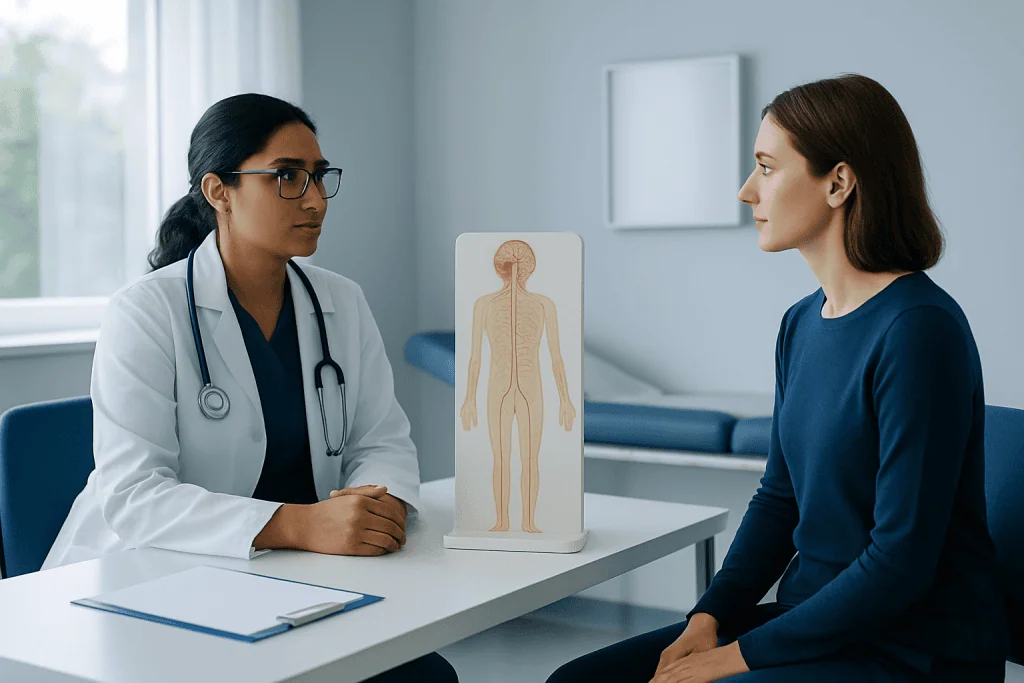
Neurophysiology is often used when a doctor needs more information about whether a symptom comes from the brain, spinal cord, a peripheral nerve, the neuromuscular junction, or the muscle itself. For example, weakness may result from a pinched nerve, a generalized neuropathy, a muscle disease, or a central nervous system disorder. Neurophysiological findings can help separate these possibilities.
One of its greatest strengths is localization. In other words, it can help show where along a pathway a problem is occurring. A person with hand numbness, for instance, may have nerve compression at the wrist, irritation in the neck, or a more widespread nerve disorder. Testing can help point to the most likely source and guide the next steps.
Neurophysiology can also give clues about timing and pattern. Some findings suggest recent nerve injury, while others are more consistent with a long-standing process. It may also help determine whether only sensory fibers are involved, whether motor fibers are affected too, and whether the pattern fits an inherited, inflammatory, metabolic, or compressive cause.
Because of this, neurophysiology is frequently part of the workup for conditions such as peripheral neuropathy, entrapment neuropathies, radiculopathy, motor neuron disorders, myasthenic syndromes, muscle diseases, and seizure-related disorders. In some cases, it may support the diagnosis of epilepsy or help evaluate suspected neuropathy alongside other medical tests.
Common symptoms that may lead to neurophysiology testing
Doctors may recommend neurophysiology tests when symptoms suggest altered nerve, brain, or muscle function. These symptoms are often common and can have many possible causes, so testing is chosen based on an individual’s history and neurological examination.
Examples of symptoms that may prompt evaluation include:
- Numbness or tingling in the hands, feet, face, or limbs
- Muscle weakness or reduced grip strength
- Muscle cramps, twitching, or unexplained muscle wasting
- Burning, shooting, or electrical-type pain
- Episodes of blackout, staring, jerking, or suspected seizures
- Balance problems, gait changes, or unexplained falls
- Visual, auditory, or sensory symptoms when pathway dysfunction is suspected
- Sleep-related abnormal movements or unusual nighttime events
Not every person with these symptoms will need neurophysiology testing. Sometimes a doctor may first recommend blood tests, imaging, or observation, depending on how symptoms began, how severe they are, and whether there are warning signs that need urgent attention.
What happens during neurophysiology tests?
The exact experience depends on the test being performed. EEG usually involves placing small sensors on the scalp to record brain activity. It is painless, though the adhesive or preparation process may be slightly inconvenient. Some EEGs are short outpatient studies, while others may involve prolonged monitoring.
Nerve conduction studies use small electrical stimuli on the skin to measure how nerves respond. These pulses can feel brief and uncomfortable, but they are generally well tolerated. EMG involves inserting a very fine needle electrode into selected muscles to record activity at rest and during movement. This can cause temporary discomfort, but most people complete the test without difficulty.
Evoked potential tests use sensory stimulation such as visual patterns, sound, or mild electrical stimulation to assess how signals travel to the brain. Sleep-related studies may involve sensors placed on the scalp, face, chest, and limbs during an overnight recording. The test chosen depends on the symptom being investigated and the question the doctor needs answered.
Preparation is usually simple. Patients may be advised to come with clean skin and hair, avoid heavy lotions or oils, and continue or pause certain medicines only if instructed by their doctor. It is helpful to bring a list of medications, prior test results, and a description of symptoms, including when they started and what makes them better or worse.
How results are interpreted
Neurophysiology results are not usually interpreted in isolation. A normal test does not always exclude disease, and an abnormal test does not always point to a single diagnosis. Specialists review the findings together with the person’s symptoms, examination results, medical history, and any relevant imaging or laboratory tests.
For example, slowed nerve conduction may suggest damage to the protective myelin layer of a nerve, while low response amplitudes may point more toward loss of nerve fibers. EMG may show whether a muscle is receiving normal nerve input or whether a primary muscle problem is more likely. EEG patterns can help support the evaluation of seizure disorders, but they must be matched with the clinical story.
Sometimes testing provides a clear answer in one visit. In other cases, it helps narrow the possibilities rather than giving a final diagnosis immediately. A doctor may then recommend monitoring over time, additional laboratory tests, imaging, genetic evaluation, or referral to a subspecialist depending on the pattern found.
Benefits, limits, and safety of neurophysiology
One major benefit of neurophysiology is that it provides functional information. It can identify nerve or muscle involvement even when a scan is normal, and it may detect patterns that guide treatment decisions or help estimate recovery. This makes it useful in both new symptoms and follow-up care.
At the same time, these tests have limits. Some disorders affect very small nerve fibers that are not fully assessed by routine nerve conduction studies. Symptoms may also be intermittent, and a test performed between episodes may be less revealing. For this reason, test selection and interpretation by an experienced clinical neurophysiology team are important.
In general, neurophysiology tests are considered safe. EEG and evoked potentials are noninvasive. Nerve conduction studies and EMG may cause temporary discomfort, mild soreness, or skin irritation, but serious complications are uncommon. A doctor should always be informed about bleeding disorders, implanted devices, pregnancy, or medications that could affect planning.
In centers with multidisciplinary neurology services, neurophysiology can be combined with imaging, rehabilitation, and specialist consultations for a more complete evaluation. For international patients, Acibadem International’s multidisciplinary specialists and JCI-accredited hospitals diagnose and treat nervous system disorders using coordinated assessment, which may include tests such as EEG, EMG, or nerve conduction studies when clinically appropriate.
When to see a doctor
It is sensible to seek medical advice for persistent or unexplained neurological symptoms, especially if they are new, progressive, or affecting daily activities. Symptoms such as ongoing numbness, weakness, recurrent falls, episodes of loss of awareness, or repeated muscle twitching deserve professional assessment even when they seem mild at first.
Urgent medical care is important if symptoms develop suddenly or are accompanied by warning signs such as facial drooping, trouble speaking, severe sudden weakness, new confusion, loss of consciousness, or a first seizure. Severe back or neck pain with rapidly changing weakness or bladder and bowel symptoms also requires prompt evaluation.
Early assessment can help identify treatable causes and avoid unnecessary delay. Even when neurophysiology is not ultimately needed, a doctor can decide which tests are most useful and whether referral to a neurologist or clinical neurophysiologist is the best next step.
Frequently asked questions
What is neurophysiology in simple terms?
Neurophysiology is the study of how the nervous system works. In medical care, it usually means testing how the brain, nerves, and muscles send and receive electrical signals.
Is neurophysiology the same as neurology?
No. Neurology is the broader medical specialty that diagnoses and treats disorders of the nervous system, while neurophysiology focuses on testing and interpreting nerve and brain function. The two fields work closely together.
What conditions can neurophysiology help diagnose?
It can help assess seizures, peripheral neuropathy, nerve compression syndromes, radiculopathy, certain muscle disorders, and problems affecting nerve-to-muscle communication. It may also support evaluation of sleep-related neurological events and unexplained weakness or sensory symptoms.
Are neurophysiology tests painful?
Many neurophysiology tests are painless or only mildly uncomfortable. EEG is usually painless, while nerve conduction studies and EMG can cause brief discomfort during stimulation or needle recording, but most people tolerate them well.
How long do neurophysiology tests take?
The duration depends on the test. Some studies take less than an hour, while others, such as prolonged EEG or sleep recordings, may last several hours or overnight.
Do normal neurophysiology results mean nothing is wrong?
Not always. A normal result can be reassuring, but it does not completely rule out every neurological condition. Doctors interpret the results together with symptoms, examination findings, and any other tests.
References
- World Health Organization
- National Institute of Neurological Disorders and Stroke
- American Clinical Neurophysiology Society
- National Institute for Health and Care Excellence
- MedlinePlus
This article is for general information only and is not a substitute for professional medical advice. Please consult a qualified doctor about your individual situation.
Neurophysiology in Turkey — costs, top hospitals & a free quote
JCI-accredited · board-certified surgeons · reply within 24h
Add us as a Preferred Source to see more of our trusted health content across Google Search, AI Overviews and Discover.

More from the Health Library



Related Specialists

Prof. Dr. Coşkun Çeltik
Pediatrics
Dr. Birol Esen
General Surgery
Dr. Münür Selçuk Kendir
Aesthetic Plastic & Reconstructive Surgery
Dr. Sedef Başgönül
Infectious Diseases & Clinical Microbiology