What Is the Hybrid Operating Room and How Does It Work?

A hybrid operating room combines surgery and high-quality imaging in the same room. It is commonly used for complex cardiovascular, vascular, neurosurgical, and trauma-related procedures.
Key Takeaways
- A hybrid operating room combines surgery and high-quality imaging in the same room.
- It is commonly used for complex cardiovascular, vascular, neurosurgical, and trauma-related procedures.
- Real-time imaging helps guide treatment decisions during the operation.
- Some patients may benefit from fewer transfers and, in selected cases, less invasive treatment.
- Hybrid operating rooms require a highly coordinated multidisciplinary team.
A hybrid operating room is a surgical suite that combines a traditional operating theater with advanced imaging technology. It allows doctors to perform open, minimally invasive, and image-guided procedures in one place, which can improve precision and support faster decision-making during complex care.
Overview: What Is a Hybrid Operating Room?
A hybrid operating room, often called a hybrid OR, is a specialized surgical suite that brings together a fully equipped operating room and advanced medical imaging systems. In a standard operating room, imaging may be limited or require moving the patient to another department. In a hybrid setting, surgeons, interventional specialists, anesthesiologists, and radiology teams can work together in the same sterile environment using real-time images during treatment.
The main idea is to combine the strengths of open surgery and minimally invasive procedures. This allows doctors to begin with one technique and, if needed, change their approach without delaying care or transferring the patient. For example, a patient may have a catheter-based procedure guided by imaging and then, if necessary, immediate surgery in the same room.
Hybrid operating rooms are especially helpful for complex cases where precision matters. They are commonly used in heart and vascular care, neurosurgery, trauma care, and some orthopedic and oncologic procedures. The goal is not simply to add more technology, but to support safer planning, clearer visualization, and more efficient teamwork during demanding operations.
How Does a Hybrid Operating Room Work?
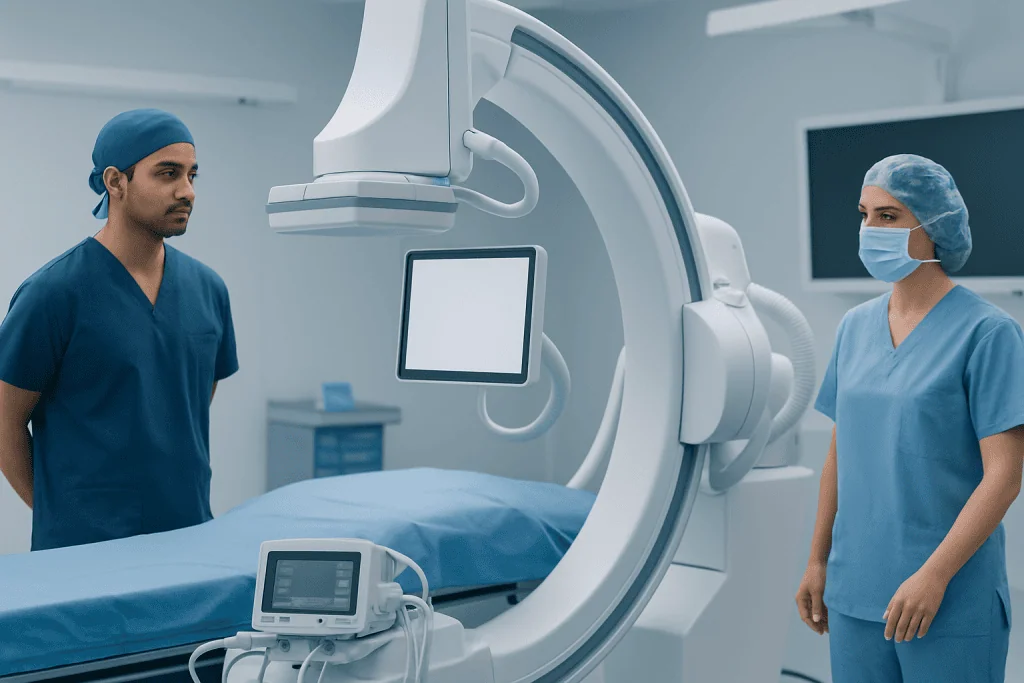
A hybrid operating room works by integrating surgical equipment with high-level imaging technology. Depending on the hospital and specialty, this may include fixed angiography systems, fluoroscopy, 3D imaging, ultrasound, CT-like imaging, or other intraoperative navigation tools. These systems provide live images while the procedure is taking place, helping the medical team see blood vessels, instruments, implants, or anatomy in great detail.
The room is designed so that all essential systems are available without breaking sterility. Surgical lights, anesthesia equipment, patient monitoring, image displays, and specialized operating tables are carefully positioned to allow both imaging and surgery. Digital screens may show the patient’s scans, vital signs, and procedural guidance at the same time, helping the team make rapid and well-informed decisions.
Before the procedure, the team plans how the room will be set up based on the patient’s condition. During the operation, the imaging equipment can be moved into position to guide treatment and then moved away when direct surgical access is needed. This flexible setup is one of the key features of a hybrid OR, because it supports a smoother transition between diagnostic imaging, catheter-based intervention, and conventional surgery.
What Equipment Is Typically Found in a Hybrid OR?

A hybrid operating room includes the same core features as a modern operating theater, such as surgical instruments, anesthesia machines, ventilators, sterile systems, and advanced patient monitoring. What makes it different is the addition of high-performance imaging equipment that can be used during the operation itself.
One of the most common systems is fixed angiography equipment, which produces detailed images of blood vessels using contrast dye and X-ray technology. Other rooms may include surgical navigation platforms, intraoperative ultrasound, or cross-sectional imaging support. The operating table is usually compatible with imaging devices and can be adjusted precisely to give both the surgeon and imaging team the access they need.
Hybrid ORs also rely on integrated digital infrastructure. This can include large displays, image storage systems, communication tools, and software that helps combine preoperative and intraoperative images. Together, these tools help the team monitor progress, confirm the results of a procedure before the patient leaves the room, and adapt the plan if something unexpected is found.
- Advanced imaging system, such as angiography or fluoroscopy
- Radiolucent operating table compatible with imaging
- Anesthesia and intensive patient monitoring equipment
- Surgical instruments for open and minimally invasive procedures
- Large display monitors and digital image integration systems
Which Procedures Are Done in a Hybrid Operating Room?
Hybrid operating rooms are often used for procedures that benefit from both surgery and image guidance. In cardiovascular medicine, they may be used for structural heart interventions, complex vascular repairs, and combined surgical-interventional approaches. Examples include heart valve surgery in selected settings, endovascular procedures, and certain treatments for aortic disease. Real-time imaging can help confirm device placement and blood flow before the procedure ends.
In vascular and neurovascular care, a hybrid OR may be used when a patient has an aneurysm, arterial blockage, or bleeding that requires a flexible approach. Doctors may perform a minimally invasive catheter-based procedure and then continue with surgery if needed. This can be valuable in conditions such as aortic aneurysm or selected cases involving the brain and spinal circulation.
Hybrid rooms are also useful in trauma, neurosurgery, orthopedic surgery, and some cancer procedures. For instance, surgeons may use image guidance during brain surgery or combine advanced imaging with robotic surgery in carefully chosen patients. Not every operation requires a hybrid OR, but it can be particularly helpful when the procedure is complex, anatomy is difficult to access, or immediate imaging feedback can change treatment decisions.
What Are the Benefits and Limitations?
The biggest benefit of a hybrid operating room is that it allows treatment and imaging to happen in one place. This can support more precise procedures, reduce the need to move the patient between departments, and help the team respond quickly if the treatment plan needs to change. For some patients, a hybrid approach may allow a less invasive procedure or a combination approach that would be harder to coordinate elsewhere.
Another advantage is immediate verification. Instead of waiting until after surgery to assess the result, doctors can often check blood flow, device position, or anatomical changes while the patient is still in the operating room. This may reduce the need for repeat procedures in some situations and can improve confidence that the intended treatment goal has been achieved before the operation ends.
At the same time, hybrid ORs are not necessary for every patient. They are complex spaces that require specialized staff training, careful coordination, and strict safety protocols, especially when radiation-based imaging is used. Procedures may also take place in a larger room with more equipment and personnel than a standard operating room. The choice to use a hybrid OR depends on the medical condition, the goals of treatment, and the judgment of the care team.
What Patients Can Expect Before, During, and After a Procedure
Before a procedure in a hybrid operating room, the patient usually has a detailed evaluation. This may include blood tests, heart or lung assessment, and imaging studies to help the team plan the safest and most effective approach. The doctor explains why a hybrid setting is recommended, what type of anesthesia may be used, and whether the procedure is expected to be minimally invasive, open, or a combination of both.
During the procedure, the patient is cared for by a multidisciplinary team. Depending on the treatment, this may include surgeons, interventional cardiologists or radiologists, anesthesiologists, nurses, and imaging specialists. The team uses real-time imaging to guide instruments, monitor anatomy, and confirm treatment results. If circumstances change, the hybrid OR gives the team more flexibility to adapt without unnecessary delay.
Afterward, recovery depends on the type of procedure rather than the room itself. Some patients go to a recovery unit, while others may need intensive monitoring. The doctor will discuss pain control, wound care, activity restrictions, and follow-up imaging or clinic visits. Patients should feel comfortable asking whether the hybrid approach changes recovery time, hospital stay, or the expected benefits of treatment.
Safety, Teamwork, and Why Hospital Experience Matters
A hybrid operating room is most effective when it is supported by strong teamwork and clear protocols. Because multiple specialties may be involved at the same time, planning is essential. Teams review the patient’s diagnosis, procedure steps, imaging needs, anesthesia plan, and possible alternatives before the operation begins. This coordination helps the procedure run smoothly and supports patient safety.
Radiation safety is also an important consideration when X-ray-based imaging is used. Hospitals follow specific measures to protect the patient and staff, including shielding, careful equipment positioning, and limiting exposure as much as possible. Sterility standards remain the same as in any major operating room, with additional attention to how imaging equipment moves in and out of the surgical field.
For patients who need complex care, choosing a center with relevant expertise can be helpful. Experienced hospitals are more likely to have established workflows, trained staff, and access to different specialties in one place. Acibadem International’s multidisciplinary specialists and JCI-accredited hospitals diagnose and treat complex conditions that may require hybrid operating room care for international patients, with treatment plans tailored to individual medical needs.
Frequently asked questions
Is a hybrid operating room the same as a regular operating room?
No. A hybrid operating room includes the features of a regular operating room plus advanced imaging systems that can be used during the procedure. This allows doctors to combine surgery and image-guided treatment in one sterile space.
Why would a doctor choose a hybrid operating room?
A doctor may choose a hybrid operating room when real-time imaging can improve precision or when a procedure may need both minimally invasive and open surgical techniques. It is often used for complex cases where flexibility during treatment is important.
Does a hybrid operating room mean the procedure is less invasive?
Not always. Some procedures performed in a hybrid OR are minimally invasive, while others are open surgeries or a combination of both. The room makes it easier for the team to choose the most appropriate approach based on the patient’s condition.
Are hybrid operating room procedures safer?
A hybrid operating room can support safety by improving visualization, reducing patient transfers, and allowing immediate assessment during treatment. However, safety depends on many factors, including the patient’s health, the type of procedure, and the experience of the medical team.
Will recovery be faster after a procedure in a hybrid OR?
Recovery depends mainly on the specific procedure and the patient’s overall health. In some cases, a less invasive approach made possible in a hybrid OR may support a shorter recovery, but this is not true for every treatment.
Do all hospitals have hybrid operating rooms?
No. Hybrid operating rooms require significant technology, planning, and specialist staffing, so they are usually found in larger or highly specialized hospitals. Patients who may benefit from one are often referred to centers with advanced surgical and imaging capabilities.
References
- World Health Organization
- American College of Surgeons
- Society of Interventional Radiology
- American Heart Association
- Radiological Society of North America
This article is for general information only and is not a substitute for professional medical advice. Please consult a qualified doctor about your individual situation.
Explore treatments in Turkey — costs, top hospitals & a free quote
JCI-accredited · board-certified surgeons · reply within 24h
Add us as a Preferred Source to see more of our trusted health content across Google Search, AI Overviews and Discover.