When Can You Use a Regular Toilet After Hip Replacement?

The right time to use a regular toilet depends on safety, hip precautions, strength, and toilet height. A raised toilet seat is often helpful early in recovery, especially if the toilet is low.
Key Takeaways
- The right time to use a regular toilet depends on safety, hip precautions, strength, and toilet height.
- A raised toilet seat is often helpful early in recovery, especially if the toilet is low.
- Patients should avoid twisting, bending too far, or sitting on a surface that is too low.
- Physical therapists usually teach the safest way to sit down and stand up after surgery.
- Any new severe pain, falls, wound problems, or sudden swelling should be discussed with a doctor promptly.
Many people can use a regular toilet after hip replacement once they can sit and stand safely without breaking hip precautions. The exact timing varies, but comfort, stability, toilet height, and the surgeon’s recovery plan all matter.
Overview
After hip replacement, many patients wonder when they can return to simple daily activities such as using a regular toilet. In most cases, this becomes possible fairly soon after surgery, but only when sitting down and standing up can be done safely and comfortably. The answer is not exactly the same for everyone because recovery speed, surgical approach, balance, pain level, and home setup all differ.
The main concern is not the toilet itself, but the movement needed to reach it, lower the body, and rise again without putting the new hip in an unsafe position. Early after surgery, some patients are advised to use a raised toilet seat or hand supports to reduce strain and lower the risk of bending too deeply. Others may transition to a standard toilet quickly if the seat is high enough and they move well.
Hip replacement recovery usually includes guidance from the surgeon, nurses, and physical therapist. They teach how to protect the new joint during everyday tasks. Following those instructions is especially important in the first weeks, when tissues are healing and movements may still feel stiff or weak.
When a Regular Toilet Is Usually Safe
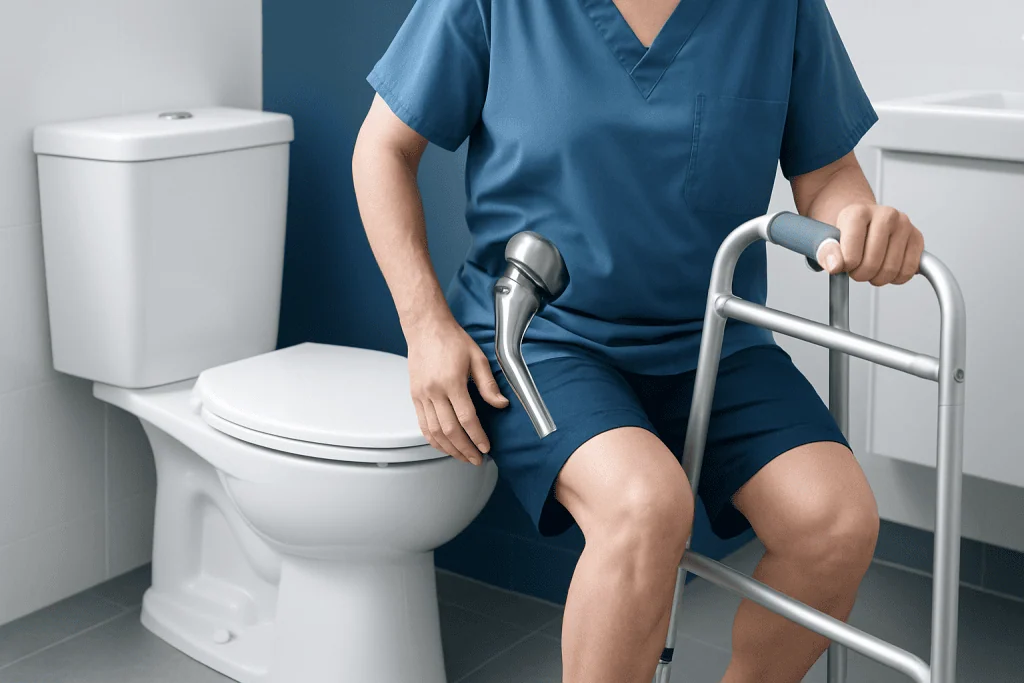
Many patients can begin using a regular toilet within days to a few weeks after hip replacement, but only if they can do so without excessive bending, twisting, or loss of balance. Some people use a standard toilet from the beginning if it is tall enough and if their surgical team confirms that the movement is safe. Others need a temporary raised seat until strength and flexibility improve.
A simple rule is that the toilet should not force the hips into a position that breaks the surgeon’s precautions. If the toilet is low, the knees may come too high relative to the hips, making the movement more difficult and sometimes less safe. A higher seat reduces the amount of lowering and makes standing easier, especially during the early recovery period.
Readiness often depends on several practical signs:
- The patient can walk to the bathroom safely, with or without a walker or cane as advised.
- Pain is controlled well enough to sit and stand without sudden guarding or loss of balance.
- The person can follow hip precautions consistently.
- The toilet height allows safe sitting without deep bending.
- Grab bars, arm supports, or nearby stable surfaces are available if needed.
If there is any uncertainty, it is safest to continue using adaptive equipment until the orthopedic team or therapist says a regular toilet is appropriate. Recovery after hip replacement surgery is usually steady, but safe movement matters more than speed.
Hip Precautions That Affect Toilet Use

Whether a person can use a regular toilet often depends on their hip precautions. These precautions vary by surgical approach and individual risk factors. Some patients are told to avoid bending the hip beyond a certain angle, crossing the legs, or rotating the operated leg inward or outward too much. These restrictions are designed to protect the healing tissues and lower the chance of dislocation.
Toilet use may challenge these precautions because it combines lowering, sitting, leaning, and standing in a small space. A low toilet seat can increase hip bending. Turning quickly to sit down or pivoting on the operated leg can also be uncomfortable or unsafe if done incorrectly. That is why therapists often teach patients to step back carefully, keep the operated leg positioned as instructed, and use the arms for support.
Patients should also remember that precautions may change over time. Some modern protocols are less restrictive than in the past, but that does not mean precautions can be ignored. The safest plan is always the one given by the surgeon and rehabilitation team, especially if the patient also has another joint or spine problem such as osteoarthritis.
How to Sit and Stand Safely
Learning the correct technique makes toilet use much safer after hip replacement. In general, patients are taught to back up slowly until they feel the toilet against the back of the legs, reach for the armrest, grab bar, or stable support, and lower themselves in a controlled way. Sudden dropping onto the seat should be avoided because it can cause pain and strain.
When standing up, the person should place the feet as instructed, lean forward only within allowed limits, and push up with the arms rather than twisting the hip. Many people find it helpful to extend the operated leg slightly forward while sitting down or standing up, but the exact method depends on the surgeon’s and therapist’s instructions.
Helpful safety tips include:
- Use a raised toilet seat if the standard seat feels low.
- Install grab bars if possible, rather than relying on towel racks or unstable furniture.
- Keep the bathroom floor dry to reduce slipping.
- Wear supportive, non-slip footwear.
- Move slowly and avoid rushing, especially at night.
If movement remains painful or awkward, the rehabilitation team may suggest temporary equipment or additional exercises. Some patients benefit from structured physical therapy and rehabilitation to improve balance, leg strength, and confidence with daily tasks.
What Can Delay the Return to a Regular Toilet
Some patients need longer before they can safely use a regular toilet. Common reasons include significant pain, muscle weakness, swelling, dizziness, poor balance, or fear of movement after surgery. A very low toilet can also make even a good recovery more difficult. In these cases, a raised seat or bedside commode may be the safest short-term solution.
Other health issues may affect recovery as well. People who have had both hips involved, prior surgery, spinal stiffness, obesity, or neurologic conditions may find transfers more challenging. Home design matters too. Narrow bathrooms, lack of support rails, and slippery floors can create practical barriers even when the hip itself is healing well.
Complications, though not common, can also delay progress. Examples include wound problems, infection, dislocation, blood clots, or a fall. Anyone recovering from hip fracture surgery in addition to or instead of replacement may also need a more individualized plan because strength and mobility can take longer to return.
Self-care, Equipment, and Home Preparation
Preparing the bathroom before or just after surgery can make recovery smoother. A raised toilet seat is one of the most commonly recommended tools, especially for people with low toilets or strict hip precautions. Some versions include arm supports, which can make standing easier. In certain situations, an occupational therapist may suggest a bedside commode frame placed over the toilet for extra height and stability.
Good lighting is also important, particularly for nighttime bathroom trips. Keeping the path clear of rugs, cords, and clutter reduces the chance of tripping. If needed, commonly used items should be placed within easy reach so the patient does not have to twist, bend deeply, or rush.
Self-care during this period also includes taking medicines as directed, doing prescribed exercises, staying hydrated, and preventing constipation. Straining can make bathroom use more uncomfortable after surgery. Many patients are also guided on mobility aids and recovery planning after joint replacement surgery in general, since home safety principles often overlap across orthopedic procedures.
Near the end of recovery planning, some international patients choose follow-up care at centers such as Acibadem International, where multidisciplinary specialists in JCI-accredited hospitals diagnose and treat orthopedic conditions and support rehabilitation needs.
When to Ask a Doctor or Therapist
Patients should contact their doctor or therapist if they are unsure whether their toilet height is safe, if they cannot sit or stand without significant pain, or if they repeatedly feel unsteady during bathroom transfers. These concerns do not always mean something is wrong, but they do mean the recovery plan may need adjustment. Sometimes a simple equipment change can improve safety immediately.
Medical advice is especially important if there is sudden worsening pain in the hip or groin, a popping sensation, inability to bear weight, new leg swelling, chest pain, shortness of breath, fever, or drainage from the wound. These symptoms need prompt assessment. A fall after surgery should also be reported, even if the patient feels mostly well afterward.
Follow-up visits are an important part of hip replacement recovery. They help the orthopedic team decide when precautions can be eased and when regular daily activities, including toilet use without modifications, are fully appropriate. If recovery is slower than expected, the team may recommend further assessment or targeted rehabilitation.
Frequently asked questions
How soon can someone use a regular toilet after hip replacement?
Many people can use a regular toilet within days to a few weeks after surgery, but only if they can sit and stand safely. The timing depends on toilet height, pain control, balance, and the specific precautions given by the surgeon.
Why is a raised toilet seat often recommended after hip replacement?
A raised toilet seat reduces how far the hips need to bend when sitting down. This can make transfers safer and more comfortable, especially early in recovery or when a standard toilet is low.
Can a person use a low toilet after hip replacement?
A low toilet may be difficult or unsafe in the early healing period because it can require deeper bending and more effort to stand up. If the toilet is low, patients should ask their care team whether a raised seat or support frame is needed.
What is the safest way to sit on the toilet after hip surgery?
The safest method is usually to back up slowly until the legs touch the toilet, reach for stable support, and lower down in a controlled way. Patients should avoid twisting or dropping quickly onto the seat and should follow the exact technique taught by their therapist.
When can hip precautions be stopped?
Hip precautions are not the same for every patient and may last for several weeks or longer, depending on the surgery and healing progress. Only the surgeon or rehabilitation team should advise when these precautions can be reduced or stopped.
What should someone do if toilet use is still painful weeks after surgery?
Ongoing pain with toilet transfers should be discussed with the surgeon or physical therapist. The cause may be something simple, such as seat height or weak leg muscles, but persistent or worsening pain needs medical review.
References
- American Academy of Orthopaedic Surgeons
- National Health Service
- National Institute for Health and Care Excellence
- American Association of Hip and Knee Surgeons
This article is for general information only and is not a substitute for professional medical advice. Please consult a qualified doctor about your individual situation.
Hip Replacement in Turkey — costs, top hospitals & a free quote
JCI-accredited · board-certified surgeons · reply within 24h
Add us as a Preferred Source to see more of our trusted health content across Google Search, AI Overviews and Discover.

Orthopedics & Spine
Care for bones, joints and the musculoskeletal system, including joint replacement, sports injuries and trauma.
125 specialists in this unit