Where Do Lice Come From: A Complete Medical Overview

Head lice are tiny human parasites that spread mainly through head-to-head contact. Lice do not jump or fly, and they are not caused by being unclean.
Key Takeaways
- Head lice are tiny human parasites that spread mainly through head-to-head contact.
- Lice do not jump or fly, and they are not caused by being unclean.
- Pets do not spread head lice to people because human lice live only on humans.
- Itching is common, but some people have lice without obvious symptoms at first.
- Treatment usually involves careful combing and, when needed, medicated products recommended by a healthcare professional.
Where do lice come from? Lice come from direct contact with an infested person or, less often, from shared personal items such as hats, brushes, or bedding. They do not arise from dirt, poor hygiene, or pets, and anyone can get them.
Overview: where do lice come from?
Where do lice come from? In most cases, head lice come from close contact with another person who already has lice. The insects crawl from one scalp to another during activities such as hugging, playing, sharing a bed, or sitting with heads close together. Less often, they spread through personal items that touch the hair, such as hats, hairbrushes, scarves, or pillowcases.
Head lice are small parasitic insects that live on the human scalp and feed on tiny amounts of blood. They lay eggs, called nits, on the hair shaft close to the scalp, where warmth helps the eggs develop. Because lice survive best on human hair and scalp, they do not come from the environment in the same way as many common infections.
A common misunderstanding is that lice are linked to poor hygiene. In reality, clean hair and unwashed hair can both get lice. Another myth is that lice come from animals. Human head lice do not live on dogs, cats, or other household pets, so pets are not the source.
Head lice are especially common in school-age children because they often play in close contact. However, lice can affect people of any age. When concerns involve persistent scalp symptoms or uncertainty about the diagnosis, evaluation by a doctor can help rule out other causes, including scalp irritation or eczema.
How lice spread from person to person
Lice do not jump, hop, or fly. They move by crawling. This is why direct head-to-head contact is the main route of spread. Children may pass lice to one another during play, sports, sleepovers, or while taking selfies or looking at a shared screen with their heads touching.
Shared objects can sometimes play a role, although this is less common than direct contact. Lice may transfer through items that have recently touched the hair, including combs, brushes, hair ties, hats, helmets, headphones, bedding, and towels. Because lice do not survive long away from the scalp, spread this way is possible but not the usual source.
People often worry that lice come from classrooms, carpets, furniture, or swimming pools. In general, lice are not well adapted to survive in these settings for long periods. A child with lice may have picked them up in a social setting, but the insects almost always began with another person rather than the room itself.
There are several kinds of lice that affect humans, including head lice, body lice, and pubic lice. This article focuses on head lice, which are the type most people mean when they ask where lice come from. Although uncomfortable and inconvenient, head lice are not a sign of serious illness in most cases.
What lice look like and the symptoms they cause
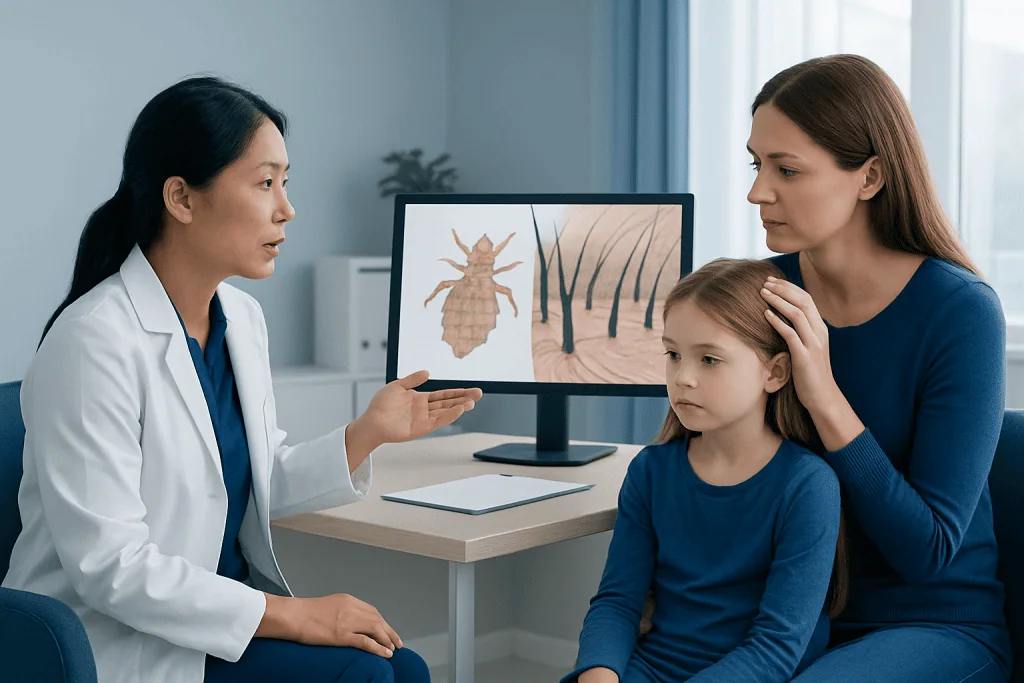
The most common symptom of head lice is itching of the scalp. This happens because the skin reacts to lice bites. Itching may begin soon after infestation in some people, but in others it can take several weeks to develop, especially if it is the first time they have had lice.
Not everyone notices symptoms right away. Some children and adults have very little itching and may only learn they have lice when nits or live insects are seen during a routine hair check. Lice are small, move quickly, and may be hard to spot, especially in thick hair. Nits are tiny oval eggs attached firmly to the hair shaft, usually close to the scalp.
Other possible signs include a tickling feeling in the hair, irritability, trouble sleeping, and small red bumps on the scalp or neck. Repeated scratching can irritate the skin and may occasionally lead to a secondary skin infection. If there is crusting, swelling, or significant tenderness, a doctor should assess the scalp.
Several scalp conditions can look similar to lice. Dandruff, hair product residue, and dry scalp can all resemble nits at first glance, but these usually slide off more easily than lice eggs. If symptoms are persistent or the diagnosis is unclear, a dermatologist may also consider other conditions such as seborrheic dermatitis.
Why some people get lice more easily: causes and risk factors
The direct cause of head lice is exposure to another person who has them. Lice do not appear spontaneously, and they are not caused by poor cleanliness, a certain diet, or a weak immune system. Anyone with hair can get head lice if the insects have a chance to crawl onto the scalp.
Certain situations make transmission more likely. Young children are at higher risk because they often have close contact during play and may share personal items without realizing it. Household members of an infested person are also at greater risk because they spend more time in close physical contact and may share bedding or hair accessories.
Long hair does not cause lice, but it can make lice easier to miss and may increase opportunities for hair-to-hair contact. Crowded settings, camps, slumber parties, and team activities can also increase spread. The presence of lice in one person does not mean a home or school is dirty.
Knowing the true risk factors helps families focus on practical prevention rather than blame. Careful checking of close contacts, avoiding shared hair items, and prompt treatment are more useful than excessive cleaning or using home remedies that may irritate the scalp without effectively killing lice.
How doctors diagnose head lice
Head lice are diagnosed by finding live lice or viable nits on the scalp or hair. Doctors usually examine the scalp closely, especially behind the ears and at the back of the neck, where lice and nits are often easier to find. A fine-toothed lice comb can improve detection by helping pull lice or eggs from the hair.
Finding live crawling lice confirms an active infestation. Nits alone can be more difficult to interpret because empty egg casings may remain attached to the hair after treatment, and some particles can be mistaken for eggs. The location matters: nits close to the scalp are more likely to be viable than those far down the hair shaft.
Accurate diagnosis is important because many people treat for lice when they do not actually have them. This can lead to unnecessary use of medicated products and ongoing worry. If there is uncertainty, a pediatrician, family doctor, or dermatologist can help confirm the diagnosis and advise on the best next steps.
In some cases, a specialist may evaluate persistent scalp itching or skin changes to exclude other causes. If scratching has caused significant skin irritation, a clinician may discuss gentle scalp care or, when appropriate, dermatology assessment for associated skin problems.
Treatment options and home management
Treatment aims to kill live lice, remove nits, and prevent them from spreading to others. The usual approach combines a lice treatment product with careful wet combing using a fine-toothed nit comb. Because some eggs may survive the first treatment, repeating treatment at the recommended time is often necessary.
There are over-the-counter and prescription treatment options, and the right choice depends on age, scalp sensitivity, local resistance patterns, and whether previous treatment has failed. It is safest to use products exactly as directed and to avoid mixing treatments unless a healthcare professional advises it. Home remedies such as oils or harsh chemicals are not reliably effective and may irritate the skin.
At home, close contacts should be checked, especially household members and bed-sharing partners. Clothing, hats, pillowcases, and recently used bedding can be washed in hot water and dried with heat if the care label allows. Combs and brushes can be cleaned in hot water. Extensive house cleaning or insect sprays for furniture are usually unnecessary.
Sometimes scalp irritation continues after lice are gone because of scratching, dryness, or treatment-related sensitivity. If symptoms linger or the scalp appears inflamed, clinicians may assess for skin complications. In selected cases, support from skin care and dermatology services can help manage ongoing discomfort or confusion about whether the infestation is truly active.
Prevention and self-care after exposure
The most practical way to prevent head lice is to reduce direct hair-to-hair contact and avoid sharing items that touch the hair. Children can be reminded not to share combs, brushes, hair ties, hats, helmets, scarves, or headphones. Long hair may be tied back during school or group activities, which can modestly reduce opportunities for contact.
Routine scalp checks can be helpful when there is a known exposure at school, camp, or home. Early detection can limit spread and shorten the time lice remain on the scalp. During a check, good lighting and a fine-toothed comb are useful, and attention should be paid to the nape of the neck and behind the ears.
Self-care also includes avoiding stigma. Lice are common and do not reflect personal hygiene or parenting quality. Calm, practical management is usually more effective than repeated cleaning of the home or keeping a child out of normal activities longer than necessary.
If there are repeated infestations, it may help to review all possible contacts and make sure treatment instructions were followed fully. Persistent or recurrent cases sometimes need medical reassessment to confirm whether there are still live lice or whether another scalp condition is present.
When to seek medical care
Medical care is appropriate if there is uncertainty about whether the problem is really lice, if symptoms continue after recommended treatment, or if lice keep coming back. A doctor can confirm the diagnosis, review whether treatment was used correctly, and recommend other options when standard measures have not worked.
It is also sensible to seek care if the scalp becomes very red, swollen, painful, or crusted, or if there are signs of infection such as pus or enlarged tender lymph nodes. Babies, pregnant people, or anyone with significant skin disease should ask a healthcare professional before using certain lice treatments.
Medical advice is important if itching is severe, sleep is affected, or the person has a history of allergies or scalp sensitivity. In these situations, doctors can help balance effective lice treatment with protection of the skin barrier and comfort.
For people who need specialist input, Acibadem International’s multidisciplinary specialists in JCI-accredited hospitals diagnose and treat scalp and skin conditions for international patients. When symptoms overlap with broader skin concerns, evaluation through dermatology and cosmetology services may be helpful.
Frequently asked questions
Do lice come from poor hygiene?
No. Head lice are not caused by poor hygiene, and they can affect people with clean or unwashed hair alike. They spread mainly through close contact with someone who already has lice.
Can pets give people head lice?
No. Human head lice live on humans and do not come from dogs, cats, or other pets. Pets do not need treatment for human head lice.
Can lice jump or fly from one person to another?
No. Lice cannot jump or fly. They spread by crawling, which is why direct head-to-head contact is the most common way they move from one person to another.
How long can lice live away from the scalp?
Head lice usually survive only a short time away from a human scalp because they need warmth and regular blood meals. This is one reason direct contact is a much more important source of spread than furniture or floors.
What is the difference between lice and dandruff?
Dandruff is loose skin flaking from the scalp, while nits are lice eggs firmly attached to the hair shaft. Dandruff usually brushes off easily, but nits tend to stay stuck in place unless removed with fingernails or a fine comb.
Should everyone in the household be treated for lice?
Not always. Household members and close contacts should be checked carefully, but treatment is generally recommended for those with confirmed live lice or likely active infestation. A doctor can advise on the best approach if there is uncertainty.
References
- Centers for Disease Control and Prevention
- American Academy of Pediatrics
- National Health Service
- Mayo Clinic
- American Academy of Dermatology
This article is for general information only and is not a substitute for professional medical advice. Please consult a qualified doctor about your individual situation.
Hair transplant in Turkey — costs, graft counts & a free assessment
JCI-accredited · board-certified surgeons · reply within 24h
Add us as a Preferred Source to see more of our trusted health content across Google Search, AI Overviews and Discover.

More from the Health Library

Starviness — Explained by Medical Evidence, Not Myths

Male Ejaculation: What Patients Need to Know

Ear Feels Clogged: A Complete Medical Overview
Rolfing: An Evidence-Based Guide for Patients

Hepatobiliary Tract Anatomy: An Evidence-Based Guide for Patients