White Bumps on Face: What Patients Need to Know

White bumps on face have several possible causes, and many are harmless. Milia are small, firm, white cysts that often do not go away with squeezing or scrubbing.
Key Takeaways
- White bumps on face have several possible causes, and many are harmless.
- Milia are small, firm, white cysts that often do not go away with squeezing or scrubbing.
- Acne, closed comedones, irritation, and some rashes can also look like white facial bumps.
- Avoid picking or popping bumps, as this can irritate the skin and increase the risk of scarring or infection.
- A doctor should evaluate bumps that persist, spread, become painful, or are associated with redness, swelling, or other symptoms.
White bumps on face are commonly caused by milia, clogged pores, acne, or other benign skin conditions. Most are not dangerous, but the right diagnosis matters because treatment depends on whether the bump is a cyst, keratin-filled lesion, irritation-related rash, or another skin problem.
Overview: what white bumps on face usually mean
White bumps on face are usually caused by harmless skin changes such as milia, closed comedones, or tiny cysts. In simple terms, these bumps often form when keratin, oil, or dead skin cells become trapped near the surface of the skin. They may feel smooth, firm, or slightly raised, and they can appear around the eyes, cheeks, forehead, or chin.
Although many people assume every white bump is acne, that is not always the case. Some bumps are related to blocked hair follicles, while others are caused by skin irritation, sun damage, inflammation, or less common skin conditions. The appearance alone can be similar, which is why self-diagnosis is not always reliable.
In many cases, white facial bumps are more of a cosmetic concern than a medical emergency. Still, it is helpful to identify the cause before trying home products or extraction. Treatments that help acne may not help milia, and aggressive scrubbing can make some conditions worse rather than better.
What different types of white facial bumps can look like
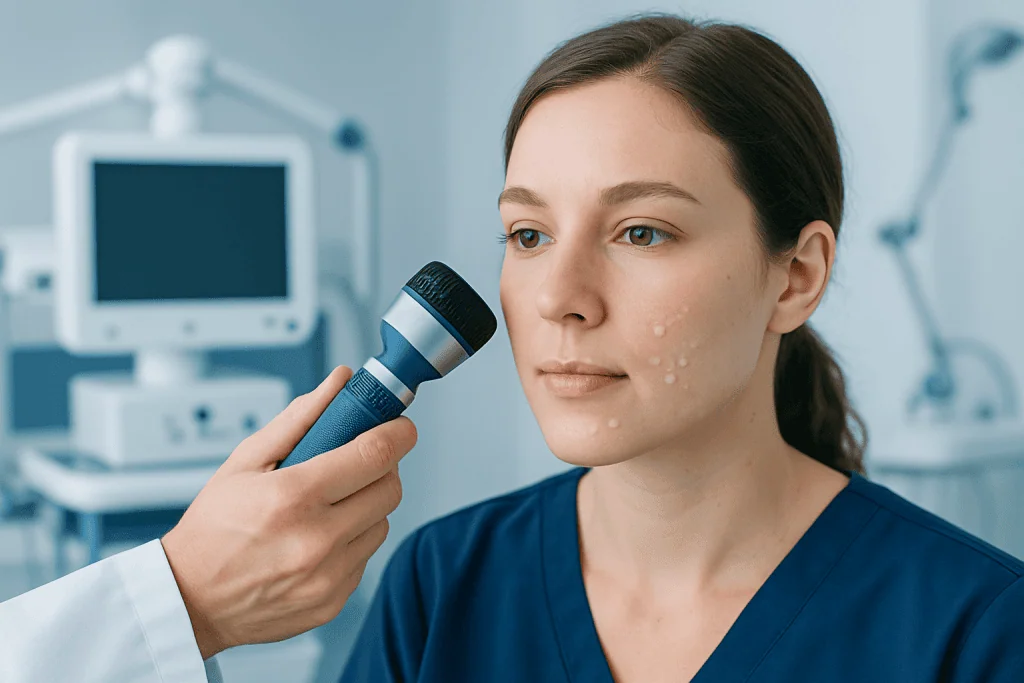
Milia are among the most common causes of tiny white bumps on the face. These are small, firm, pearl-like cysts made of trapped keratin. They often appear around the eyelids, cheeks, and nose. Unlike pimples, milia usually do not have a visible opening and cannot be easily squeezed out.
Closed comedones, sometimes called whiteheads, are a form of acne. They develop when oil and dead skin cells block a pore. These bumps may be flesh-colored or white, and they are often seen on the forehead, chin, or jawline. Whiteheads may occur alongside blackheads, inflamed pimples, or oily skin.
Other possibilities include sebaceous hyperplasia, tiny epidermoid cysts, contact irritation, heat rash, and folliculitis. Some rashes can create clusters of very small white or skin-colored bumps, especially after using heavy creams or after sweating. A dermatologist may also consider other skin conditions if the bumps are itchy, red, widespread, or long-lasting.
When the diagnosis is unclear, a specialist may compare these lesions with related conditions such as acne or rosacea, especially if the bumps are accompanied by facial redness or recurrent breakouts.
Common causes and risk factors

The most common causes of white bumps on face include trapped keratin, blocked pores, and excess oil production. Milia can appear after skin injury, irritation, sun exposure, or the use of very heavy skin products. In babies, milia are especially common and usually clear on their own. In adults, they may persist longer.
Acne-related white bumps are more likely in people with oily skin, hormonal changes, frequent makeup use, or products that clog pores. Friction from helmets, masks, or tight clothing can also contribute. If bumps appear after a new cream, sunscreen, or cosmetic product, irritation or pore blockage may be part of the problem.
Less commonly, white facial bumps may be linked to inflammation around hair follicles, chronic sun damage, or skin conditions that affect how the outer layer of skin sheds. Family tendency, age, and underlying skin type can also play a role. People who try to scrub the skin too aggressively may disrupt the skin barrier, which can trigger irritation and make bumps seem more noticeable.
Persistent or unusual bumps should be assessed professionally because several different conditions can overlap. In some cases, a doctor may recommend specialist evaluation through dermatology care to confirm the cause and choose the most suitable treatment.
How doctors diagnose white bumps on face
Diagnosis usually begins with a close skin examination and a discussion of symptoms, skin-care products, and timing. A doctor will look at the size, shape, texture, location, and pattern of the bumps. They may ask whether the bumps are itchy, painful, inflamed, or associated with acne, redness, or sensitivity.
In many cases, the diagnosis can be made clinically without testing. Milia, whiteheads, and folliculitis often have recognizable features. However, if the bumps are persistent, recurrent, or unusual in appearance, a dermatologist may use magnification or perform a small procedure to confirm what they are.
Rarely, if a lesion looks atypical, changes over time, or does not respond to usual treatment, a sample may be examined more closely. This helps rule out less common causes and guides treatment. Patients should avoid trying to cut, puncture, or repeatedly squeeze bumps at home, since this can interfere with the skin’s appearance and increase irritation before an exam.
Treatment options: what helps and what to avoid
Treatment depends on the cause. Milia sometimes resolve on their own, but persistent milia may be removed by a trained professional using sterile techniques. Whiteheads and other acne-related bumps may improve with gentle cleansing, non-comedogenic skin care, and ingredients that support normal skin turnover. Because the face is sensitive, treatment plans are usually introduced gradually.
If the bumps are caused by acne, doctors may recommend a broader acne-management approach rather than focusing on one lesion at a time. This may include prescription creams, changes in skin-care routine, or selected procedures. Some patients benefit from acne treatment when bumps are recurrent, widespread, or leaving marks.
For irritation-related bumps, the main step is often to stop the triggering product and allow the skin barrier to recover. For folliculitis or inflamed lesions, a doctor may suggest targeted treatment based on whether bacteria, yeast, friction, or shaving plays a role. If a bump is actually a small cyst, management can differ from acne care, and in select cases doctors may discuss minor skin cyst removal.
What should be avoided is just as important. Popping, picking, harsh exfoliation, lemon juice, toothpaste, and other home remedies can damage facial skin. These methods can cause redness, post-inflammatory darkening, scarring, or infection without removing the underlying cause.
Skin care, prevention, and self-care
Good daily skin care can reduce the chance of some white bumps returning. A gentle cleanser, a light moisturizer, and sunscreen that does not clog pores are often useful starting points. Products labeled non-comedogenic are designed to be less likely to block pores, though no product works the same for every person.
People who are prone to acne or clogged pores may benefit from simplifying their routine. Heavy oils, thick occlusive creams, sleeping in makeup, and frequent touching of the face can make some bumps more likely. It is usually better to introduce one new product at a time so that any reaction can be recognized early.
Exfoliation should be careful and limited. Over-cleansing and rough scrubs can irritate the skin barrier and worsen roughness, redness, or breakouts. Shaving gently, cleaning makeup tools, and changing pillowcases regularly may also help. If bumps tend to recur despite consistent skin care, medical assessment is more useful than repeatedly trying new products.
When care is needed, some patients may be referred for medical dermatology services to develop a long-term plan tailored to sensitive, acne-prone, or combination skin.
When to seek medical care
Medical care is recommended if white bumps on face do not improve, keep returning, or spread over time. A doctor should also assess bumps that are painful, red, swollen, draining, or associated with significant itching. These features may suggest inflammation, infection, or a condition that needs more specific treatment.
It is also sensible to seek advice if the diagnosis is uncertain, especially when a bump changes in size, shape, or color, or if it bleeds or crusts repeatedly. Any new growth that behaves differently from typical acne deserves attention. Early evaluation can help avoid unnecessary treatments and reduce the chance of scarring.
Children, people with very sensitive skin, and anyone using prescription skin products may especially benefit from professional guidance before trying stronger over-the-counter treatments. Near the end of the care pathway, Acibadem International’s multidisciplinary specialists in JCI-accredited hospitals diagnose and treat skin conditions for international patients when further assessment is needed.
Frequently asked questions
Are white bumps on face usually serious?
Most white bumps on face are not serious and are often caused by milia, whiteheads, or other benign skin changes. However, persistent, painful, inflamed, or changing bumps should be assessed by a qualified doctor.
What is the difference between milia and whiteheads?
Milia are tiny keratin-filled cysts that sit under the surface of the skin and usually feel firm. Whiteheads are a type of acne caused by clogged pores, and they are more closely linked with oil production and breakouts.
Can white bumps on face go away on their own?
Some can. Milia may clear without treatment, and acne-related white bumps may improve with gentle skin care and time, but persistent lesions often need targeted treatment based on the exact cause.
Should a person pop or squeeze white facial bumps?
No. Squeezing can irritate the skin, push material deeper, and increase the risk of infection, discoloration, or scarring, especially on the face. Professional extraction is safer when removal is appropriate.
Which skin-care products can make white bumps worse?
Heavy creams, oily cosmetics, and products that clog pores may worsen some types of white bumps. Harsh scrubs and overuse of active ingredients can also irritate the skin and make bumps more noticeable.
When should someone see a dermatologist for white bumps on face?
A dermatologist visit is a good idea if bumps last for weeks, recur often, spread, or do not respond to basic skin care. Medical review is also important if there is pain, redness, swelling, drainage, or uncertainty about what the bumps are.
References
- American Academy of Dermatology
- National Health Service
- Mayo Clinic
- MedlinePlus
- Cleveland Clinic
This article is for general information only and is not a substitute for professional medical advice. Please consult a qualified doctor about your individual situation.
Explore treatments in Turkey — costs, top hospitals & a free quote
JCI-accredited · board-certified surgeons · reply within 24h
Add us as a Preferred Source to see more of our trusted health content across Google Search, AI Overviews and Discover.