White Spots on Face: What Patients Need to Know

White spots on face can result from several conditions, including pityriasis alba, vitiligo, tinea versicolor, post-inflammatory hypopigmentation, and sun-related changes. The appearance of the spots, whether they itch or scale, and whether they spread over time can help doctors narrow the diagnosis.
Key Takeaways
- White spots on face can result from several conditions, including pityriasis alba, vitiligo, tinea versicolor, post-inflammatory hypopigmentation, and sun-related changes.
- The appearance of the spots, whether they itch or scale, and whether they spread over time can help doctors narrow the diagnosis.
- Many causes are treatable with skin care, antifungal treatment, or prescription anti-inflammatory medicines, depending on the diagnosis.
- Sudden spreading depigmentation, white patches with hair color change, or spots linked to other symptoms should be assessed by a doctor.
- Sun protection and gentle skin care can help reduce contrast and prevent some forms of pigment change from becoming more noticeable.
White spots on face are a common concern and are usually linked to changes in skin pigment, inflammation, mild infection, or past irritation rather than a dangerous illness. The most helpful next step is identifying the pattern, timing, and associated symptoms so treatment can be matched to the cause.
Overview: what white spots on face usually mean
White spots on face usually mean that part of the skin has lost some of its normal color, a process called hypopigmentation or depigmentation. This can happen for different reasons, including dryness and eczema-related changes, fungal overgrowth on the skin, inflammation after a rash or injury, or conditions that affect pigment-producing cells. In many people, the cause is not serious, but the correct treatment depends on identifying the exact reason.
These spots may look faint and dry, sharply defined and bright white, or slightly scaly. They can appear on the cheeks, around the mouth, near the eyes, on the forehead, or along the jawline. Some remain stable for months, while others gradually fade or spread.
Because several different skin conditions can look similar at first, it is best not to assume all white facial patches are the same. A careful clinical examination by a doctor, often a dermatologist, helps distinguish a harmless pigment change from a condition that needs medical treatment.
How white spots can look and feel
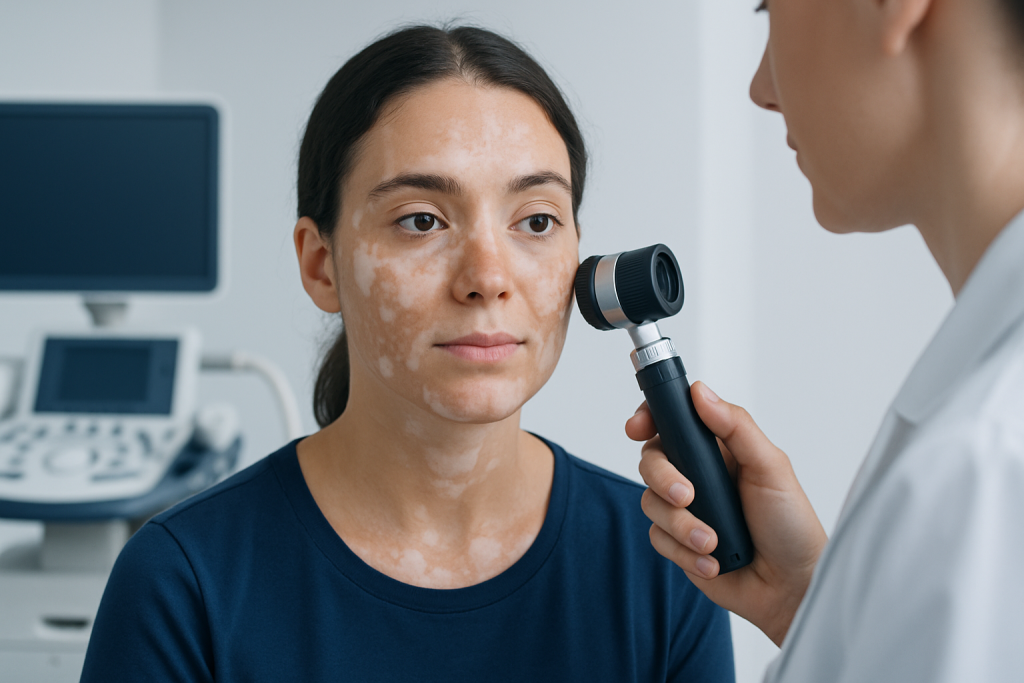
The way white spots appear often provides important clues. Some are lighter than the surrounding skin rather than completely white, and they may have soft borders. Others are milky white with clear edges. A few have fine scaling, especially if the skin is dry or if a superficial fungal condition is present.
Symptoms can vary. Many people have no discomfort at all, while others notice dryness, mild itching, rough texture, or increased visibility after sun exposure. White patches may stand out more in summer because the surrounding skin tans and the lighter areas do not.
Doctors often ask about details such as:
- When the spots first appeared
- Whether they are spreading or staying the same
- Whether there is itching, flaking, or redness
- Whether there was a rash, acne, burn, or cosmetic irritation beforehand
- Whether similar changes are present on the neck, chest, hands, or other body areas
These features help separate common childhood dryness-related patches from pigment loss conditions such as vitiligo or from infections that need different treatment.
Common causes of white spots on face

One common cause is pityriasis alba, a mild skin condition often linked to dry skin or eczema. It tends to cause pale, slightly scaly patches on the cheeks, especially in children and adolescents. The spots are not truly white in most cases, and they often become more noticeable after sun exposure.
Another cause is post-inflammatory hypopigmentation. This happens when skin becomes lighter after inflammation from acne, eczema, dermatitis, a minor injury, cosmetic irritation, or procedures. The pigment usually returns gradually, but recovery can take weeks to months depending on skin type and the depth of inflammation.
Vitiligo causes more distinct depigmented patches due to loss of pigment-producing cells. The patches are often sharply bordered and may occur around the eyes, mouth, and other body sites. Hair within the area can sometimes turn white as well. If this pattern is suspected, doctors may evaluate for a pigment loss disorder such as vitiligo and discuss treatment options early.
White spots may also be caused by tinea versicolor, a superficial fungal overgrowth that more often affects the trunk but can involve the face, especially in children or in warm, humid environments. It may produce pale or light patches with fine scale. Less commonly, conditions such as idiopathic guttate hypomelanosis, certain autoimmune skin disorders, nutritional issues, or side effects from irritation can contribute to facial pigment changes.
Risk factors and triggers
Different causes have different triggers, but several factors can make white spots on face more likely or more noticeable. Dry or sensitive skin, a personal or family history of eczema, repeated rubbing, use of harsh skin products, and prior rashes are common contributors to hypopigmented patches.
Sun exposure does not usually cause the white spots directly, but it often increases contrast. When surrounding skin darkens, lighter patches become easier to see. This is why many people first notice them after a holiday, outdoor sports, or the summer season.
Warm climates, sweating, oily skin, and humidity can encourage the yeast overgrowth associated with tinea versicolor. Autoimmune tendency may play a role in vitiligo, and a family history can be relevant. In some cases, cosmetic procedures, acne picking, or contact with irritating products can trigger inflammation followed by temporary pigment changes.
Knowing these patterns helps people avoid self-treatment that may worsen irritation. For example, strong exfoliants or unprescribed steroid creams may mask or aggravate the problem rather than solve it.
How doctors diagnose the cause
Diagnosis begins with a skin examination. A doctor will look at the color, shape, edge, scale, and distribution of the spots and ask about dryness, itch, recent rashes, sun exposure, and products used on the face. This history is often enough to identify common causes such as pityriasis alba or post-inflammatory hypopigmentation.
In some cases, a Wood’s lamp examination may be used. This special light can help show whether pigment is reduced or absent and may make vitiligo easier to distinguish from other lighter patches. If a fungal cause is suspected, the doctor may gently scrape the skin for microscopic testing.
Patch testing, blood tests, or rarely a small skin biopsy may be considered when the diagnosis is unclear or when a broader inflammatory or autoimmune condition is suspected. Imaging is not usually needed. Because facial skin is sensitive and visible, accurate diagnosis matters before starting treatment.
If a person has more extensive skin symptoms, specialists may also evaluate for related conditions such as eczema or other causes of inflammatory skin change.
Treatment options and what to expect
Treatment depends entirely on the cause. For pityriasis alba and mild post-inflammatory hypopigmentation, gentle skin care, regular moisturizing, and daily sun protection are often the main steps. If there is active inflammation or eczema, a doctor may recommend a short course of prescription anti-inflammatory treatment, sometimes including specialist dermatology care to confirm the diagnosis and protect the skin barrier.
If the white spots are due to tinea versicolor, antifungal treatment may be advised. This may include a topical antifungal cream, lotion, or shampoo used as directed by a doctor. Even after the yeast is treated, normal skin color may take time to return because pigment recovers more slowly than the infection clears.
For vitiligo, treatment may involve topical anti-inflammatory medicines, light-based therapy, or other tailored options depending on the extent and location of the patches. In selected cases, doctors may discuss phototherapy to support repigmentation. Early evaluation can be useful, especially if the spots are spreading.
Patients should avoid trying multiple over-the-counter products at once. Skin-lightening creams, abrasive scrubs, lemon juice, or strong peels may irritate facial skin and make pigment problems harder to manage. Improvement often takes time, so realistic expectations and follow-up are important.
Prevention and self-care
Not all white spots can be prevented, but consistent skin care can reduce irritation and make patches less noticeable. A mild cleanser, fragrance-free moisturizer, and broad-spectrum sunscreen are sensible basics for most people. Sunscreen helps limit contrast between affected and unaffected skin and protects the skin barrier.
People with dry or eczema-prone skin should avoid over-cleansing, very hot water, and products that sting or burn. If acne or a rash has recently healed, gentle care is especially important because inflamed skin is more likely to develop temporary color change afterward.
When fungal overgrowth is a recurring issue, keeping skin clean and dry after sweating and following the doctor’s instructions for maintenance treatment may help reduce recurrence. Cosmetics should be non-irritating, and any new product should be introduced gradually rather than all at once.
If the cause is chronic or uncertain, a dermatology review is helpful. Near the end of the care pathway, some patients may benefit from coordinated assessment through dermatology services, and Acibadem International’s multidisciplinary specialists in JCI-accredited hospitals diagnose and treat skin conditions for international patients.
When to seek medical care
Medical advice is recommended if white spots on face are new and spreading, sharply defined, completely white, or associated with white hair, because these features can suggest a more specific pigment disorder. Assessment is also sensible if the spots itch significantly, scale persistently, recur often, or do not improve with gentle skin care.
Parents should consider a medical review for children with facial white patches that last for weeks, especially if there is eczema, discomfort, or uncertainty about the cause. Adults should seek care if pigment changes develop after a rash, procedure, or cosmetic product and continue to worsen.
Urgent evaluation is usually not necessary, but prompt medical attention is appropriate if skin changes are accompanied by severe inflammation, facial swelling, signs of infection, or symptoms elsewhere in the body. A clinician can confirm the diagnosis and, if needed, guide treatment such as light-based therapy or care for related inflammatory skin disease.
Frequently asked questions
Are white spots on face usually serious?
Most white spots on face are not serious and are often related to dry skin, prior inflammation, mild fungal overgrowth, or pigment change. However, some causes, such as vitiligo, benefit from a proper diagnosis so treatment can begin early if needed.
Can sun exposure cause white spots on face?
Sun exposure often makes white spots easier to notice because surrounding skin becomes darker while the lighter areas do not tan in the same way. It may also highlight pre-existing dry patches or post-inflammatory hypopigmentation.
How can someone tell if white spots are vitiligo?
Vitiligo often causes clearly defined, milky white patches that may slowly enlarge over time. The skin is usually not scaly, and hair in the area can sometimes lose color too. A doctor may use a Wood's lamp examination to help confirm the diagnosis.
Do white spots on face go away on their own?
Some do. Pityriasis alba and post-inflammatory hypopigmentation often improve gradually, especially with moisturizers and sun protection. Recovery can take time, so the spots may persist for weeks or months even after the original trigger has settled.
Should antifungal cream be used for all white facial patches?
No. Antifungal treatment only helps if a fungal cause such as tinea versicolor is present. Because several different conditions can look similar, using the wrong cream may delay correct treatment or irritate the skin.
Can makeup or skin care products cause white spots?
They can contribute indirectly if they irritate the skin and trigger inflammation, after which lighter patches may remain temporarily. Harsh exfoliants, strong acids, and untested home remedies can also worsen sensitive facial skin.
References
- American Academy of Dermatology
- National Health Service
- Mayo Clinic
- DermNet
- National Institute of Arthritis and Musculoskeletal and Skin Diseases
This article is for general information only and is not a substitute for professional medical advice. Please consult a qualified doctor about your individual situation.
Explore treatments in Turkey — costs, top hospitals & a free quote
JCI-accredited · board-certified surgeons · reply within 24h
Add us as a Preferred Source to see more of our trusted health content across Google Search, AI Overviews and Discover.

More from the Health Library

Raw Meat: What Patients Need to Know

AST Sgot Blood Work: An Evidence-Based Guide for Patients

Constant Phlegm in Throat: An Evidence-Based Guide for Patients

Prenuvo Scan Cost — Explained by Medical Evidence, Not Myths

Pomegranate Wine: A Complete Medical Overview