Whitening Strips: What Patients Need to Know

Whitening strips usually help with mild to moderate external tooth stains, especially from foods, drinks, and smoking. They do not whiten fillings, crowns, veneers, or every kind of deep internal tooth discoloration.
Key Takeaways
- Whitening strips usually help with mild to moderate external tooth stains, especially from foods, drinks, and smoking.
- They do not whiten fillings, crowns, veneers, or every kind of deep internal tooth discoloration.
- Temporary tooth sensitivity and gum irritation are the most common side effects.
- Following package directions closely lowers the chance of overuse and enamel or soft-tissue irritation.
- A dentist should assess pain, damaged teeth, uneven color change, or discoloration that does not improve.
Whitening strips are a common at-home option for lightening tooth color, and they can work well for many surface stains when used correctly. They are not suitable for every type of discoloration, and people with sensitive teeth, gum disease, cavities, or dental restorations may need professional advice before using them.
Overview: What Whitening Strips Do
Whitening strips are thin, flexible strips coated with a bleaching gel, usually containing peroxide-based ingredients. They are placed directly on the teeth for a set period of time and are designed to lighten stains on the enamel, which is the outer surface of the tooth. For many people, whitening strips offer a convenient way to improve the appearance of teeth at home.
These products work best on common surface stains linked to coffee, tea, red wine, tobacco, and normal aging. They are less effective for discoloration that begins inside the tooth, such as changes related to trauma, certain medications, or developmental conditions. They also do not change the color of dental restorations like fillings, crowns, bridges, or veneers, so the final result may look uneven if these are present.
From a patient perspective, the most important point is that whitening strips are cosmetic products rather than treatments for dental disease. A brighter smile can improve confidence, but whitening should not replace care for cavities, gum inflammation, or tooth pain. If discoloration appears suddenly, affects only one tooth, or is accompanied by symptoms, a dental evaluation is more appropriate than self-treatment.
How Whitening Strips Work and What Results to Expect
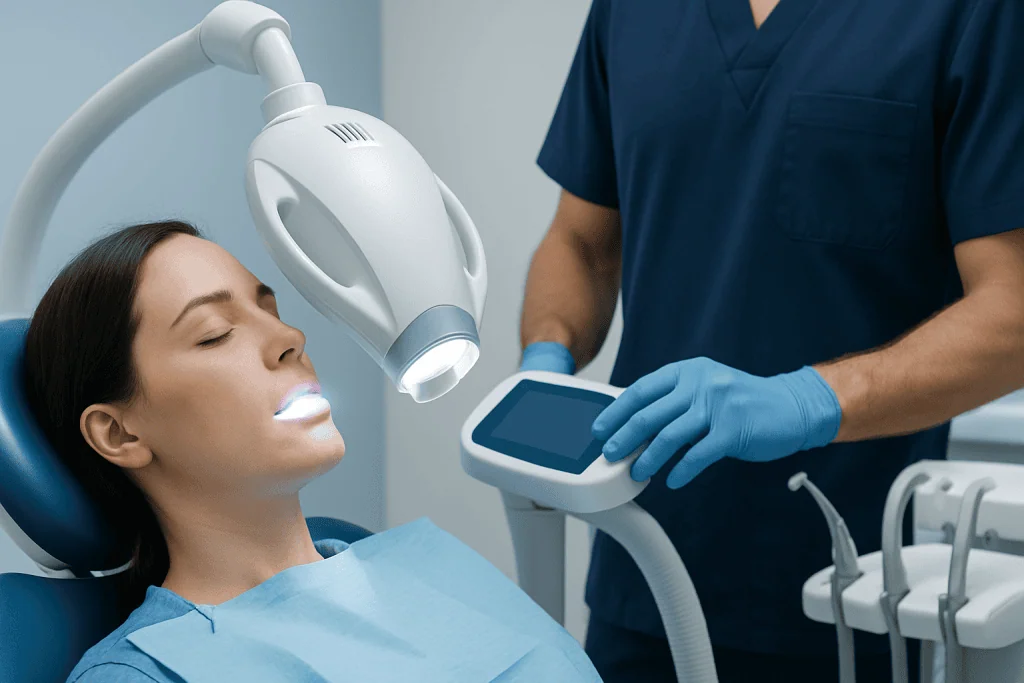
The bleaching agents in whitening strips release oxygen molecules that break apart stain compounds in the tooth surface. This process can gradually make teeth look lighter over days to weeks, depending on the product, the starting tooth shade, and the type of staining. Results are usually modest and progressive rather than dramatic after a single use.
People often notice the best improvement when stains are on the outer enamel. Yellow-toned teeth may respond better than gray, brown, or patchy discoloration caused by deeper internal factors. If staining comes from tartar buildup or poor oral hygiene, professional cleaning may be needed before any whitening product can work as intended.
Expectations matter. Whitening strips can brighten teeth, but they do not make teeth uniformly white in every case. Natural teeth vary in color, and the result may not be completely even if some areas are more porous, if there are white spots, or if restorations are visible. For people considering broader cosmetic dental care, a dentist may discuss other options such as dental veneers or smile design when whitening alone is unlikely to achieve the desired appearance.
Who May Benefit and Who Should Be Cautious

Whitening strips may be suitable for adults with generally healthy teeth and gums who want to reduce mild to moderate staining. They can be a reasonable choice for people who do not have active tooth decay, cracked enamel, untreated gum disease, or significant tooth sensitivity. Good candidates usually have realistic expectations and are willing to follow directions carefully.
Extra caution is needed for people with sensitive teeth, receding gums, exposed tooth roots, braces, mouth ulcers, or recent dental work. Bleaching agents can irritate soft tissues and may worsen discomfort if the enamel is worn or the dentin is exposed. Patients with multiple crowns or fillings on front teeth should know that these materials will not whiten and may stand out more after treatment.
Children and teenagers may need individualized guidance because tooth development, sensitivity, and oral habits differ from adults. Pregnant or breastfeeding patients often choose to postpone elective whitening, not because severe harm is established, but because nonessential cosmetic treatment is commonly delayed during these periods. Anyone with a history of dental problems, including gum disease, should speak with a dental professional before starting home whitening.
Possible Side Effects and Safety Concerns
The most common side effect of whitening strips is temporary tooth sensitivity. This may feel like a brief zing, heightened sensitivity to cold, or general tooth discomfort during or shortly after treatment. In many cases it improves after stopping the product or spacing out applications, but persistent pain should not be ignored.
Another frequent issue is gum or cheek irritation when the bleaching gel touches soft tissues. This can happen if the strips overlap the gumline or do not fit well. Mild irritation often settles once exposure stops, but more severe redness, whitening of the gums, soreness, or peeling indicates that the product should be discontinued and the mouth should be checked by a clinician.
Overuse is a preventable problem. Using strips more often or longer than directed does not necessarily produce better whitening and may increase sensitivity, enamel surface changes, or soft-tissue irritation. Patients should also understand that whitening strips do not treat underlying conditions such as tooth decay or infection. Pain, swelling, bad taste, or a loose tooth points to a dental problem that needs diagnosis rather than cosmetic whitening.
How to Use Whitening Strips Safely
Safe use starts with reading the instructions for the specific product. Different whitening strips contain different peroxide concentrations and have different wear times. Teeth should usually be clean before application, and the strips should be placed carefully on the front surface of the teeth without pressing excessive gel onto the gums.
Patients should avoid using whitening strips longer than recommended or combining them with multiple bleaching products at the same time unless a dentist advises this. If sensitivity develops, it may help to pause treatment, increase the interval between uses, or switch to a lower-strength product after professional guidance. A soft toothbrush and a toothpaste formulated for sensitivity may also make the process more comfortable.
During a whitening course, it is sensible to reduce foods and drinks that stain teeth, such as coffee, tea, red wine, and tobacco. Very hot or very cold items may also feel uncomfortable if the teeth become sensitive. Continued daily oral care remains essential, including brushing with fluoride toothpaste and cleaning between the teeth. If there is uncertainty about safe technique or expected results, professional dental assessment and planning can help tailor the approach.
Alternatives if Whitening Strips Are Not the Right Choice
Not all tooth discoloration responds well to strips. A professional dental cleaning may be the best first step when stains are caused by plaque or tartar. Removing buildup can brighten the smile on its own and also allows the true tooth shade to be assessed before considering cosmetic whitening.
Dentist-supervised whitening may be more appropriate for people with uneven staining, a history of sensitivity, or a need for a more individualized plan. In-office treatments and custom trays are sometimes used when the patient needs closer monitoring or more precise application. These approaches may reduce some of the fit problems seen with one-size-fits-all strips, though they still require professional evaluation and proper use.
For discoloration related to tooth injury, internal staining, shape concerns, or mismatched restorations, other cosmetic or restorative options may be discussed. Depending on the situation, treatment may involve repairing decay, replacing old restorations, or considering procedures such as dental implants when missing or severely damaged teeth are part of the broader dental picture. The best option depends on oral health, cosmetic goals, and a dentist’s examination.
When to Seek Medical or Dental Care
A dental professional should assess symptoms that go beyond mild, short-lived sensitivity. This includes severe tooth pain, throbbing, pain when biting, swelling, bleeding gums, mouth sores that do not heal, or sensitivity that lasts after stopping whitening strips. These signs may point to cavities, gum disease, exposed roots, cracks, or infection rather than a simple reaction to whitening.
Evaluation is also wise when discoloration is unusual. One dark tooth, sudden color change, patchy gray or brown discoloration, or staining that does not improve may have an underlying cause that whitening strips cannot fix. A dentist may check for enamel defects, old trauma, dead nerve tissue, or other conditions that need targeted treatment.
Patients who want guidance on safe whitening alongside overall dental health can benefit from a professional consultation. Near the end of the care pathway, it may help to know that Acibadem International’s multidisciplinary specialists and JCI-accredited hospitals diagnose and treat dental concerns for international patients. The priority remains identifying the reason for discoloration and choosing the safest, most appropriate option.
Frequently asked questions
Do whitening strips really work?
Whitening strips can work well for many common surface stains, especially those related to foods, drinks, smoking, and aging. They are less effective for deep internal discoloration and will not change the color of crowns, fillings, or veneers.
Are whitening strips safe for enamel?
When used as directed, whitening strips are generally considered safe for many adults with healthy teeth and gums. Problems are more likely when the product is overused, applied incorrectly, or used on teeth with cracks, cavities, exposed roots, or significant sensitivity.
Why do my teeth hurt after using whitening strips?
The most common reason is temporary sensitivity caused by the bleaching agent passing through the enamel and irritating the inner part of the tooth. If pain is strong, lasts for days, or occurs in one specific tooth, a dentist should check for cavities, cracks, or other dental problems.
Can whitening strips damage gums?
They can irritate gums if the gel sits on the soft tissue or if the strips do not fit properly. Mild irritation often improves quickly after stopping use, but more severe soreness, whitening of the gums, or peeling should be assessed by a dental professional.
How long do whitening strip results last?
Results vary from person to person and depend on diet, smoking, oral hygiene, and the type of stains present. The effect is usually temporary, and touch-up use may be needed later, but this should still follow product instructions and not become excessive.
Who should avoid whitening strips?
People with untreated cavities, gum disease, cracked teeth, severe sensitivity, mouth sores, or many visible restorations should avoid starting whitening strips without dental advice. They may also be a poor choice when discoloration is due to trauma, medication effects, or internal tooth problems.
This article is for general information only and is not a substitute for professional medical advice. Please consult a qualified doctor about your individual situation.
Explore treatments in Turkey — costs, top hospitals & a free quote
JCI-accredited · board-certified surgeons · reply within 24h
Add us as a Preferred Source to see more of our trusted health content across Google Search, AI Overviews and Discover.

More from the Health Library

Doxycycline and Alcohol — Explained by Medical Evidence, Not Myths

And Halal — Explained by Medical Evidence, Not Myths

Will a UTI Cause Bloating — Explained by Medical Evidence, Not Myths

Quadriceps: An Evidence-Based Guide for Patients

Scolipain: An Evidence-Based Guide for Patients