Why Is Your Dog Licking Its Lips?
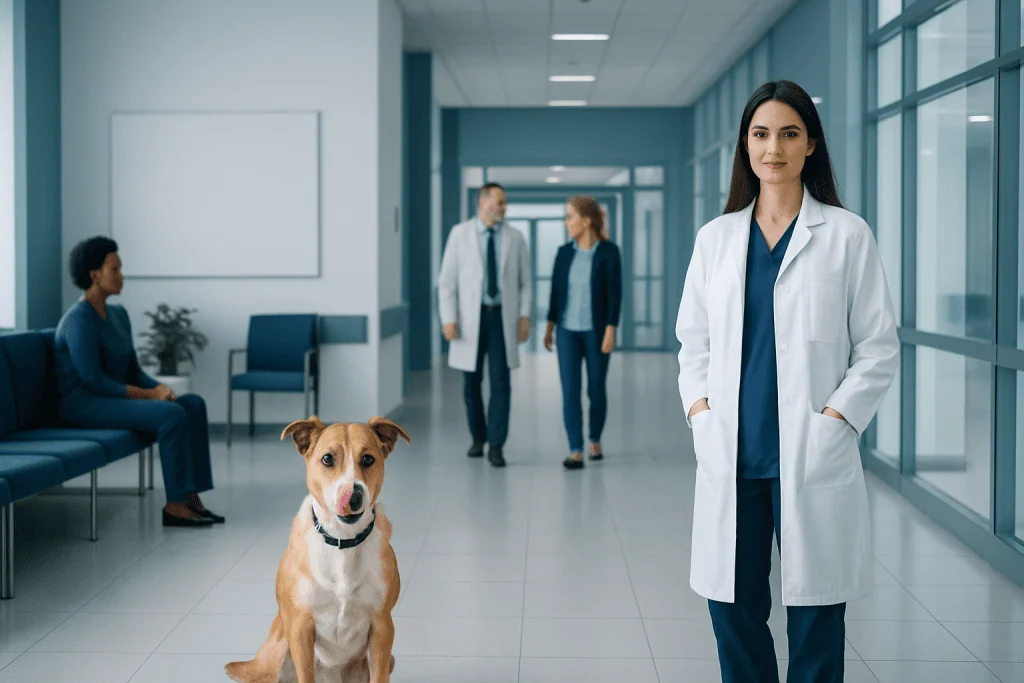
Lip licking after eating, drinking, smelling food, or grooming is commonly normal. Context matters: body language, timing, frequency, and accompanying symptoms help explain the behavior.
Key Takeaways
- Lip licking after eating, drinking, smelling food, or grooming is commonly normal.
- Context matters: body language, timing, frequency, and accompanying symptoms help explain the behavior.
- Repeated lip licking can be associated with nausea, oral discomfort, irritation, stress, or certain medications.
- It is not possible to diagnose a medical problem from lip licking alone.
- Urgent veterinary care is important if lip licking occurs with breathing difficulty, swelling, repeated vomiting, weakness, or suspected poisoning.
Dog licking lips is usually a normal behavior when a dog has eaten, smells food, or is expecting a treat. However, frequent or unusual lip licking—especially with changes in appetite, behavior, vomiting, drooling, or mouth discomfort—can be a sign that a veterinary assessment is needed.
Dog Licking Lips: The Evidence-Based Answer
Dog licking lips is a common behavior with several possible explanations. In many situations, it is harmless: a dog may lick its lips after eating, when food is nearby, after drinking, or while cleaning food from around the mouth. Dogs may also lick their lips briefly during grooming or after waking from sleep.
The meaning changes when the behavior is new, repetitive, or occurs alongside other signs of discomfort. Veterinary medicine recognizes increased lip licking as a possible sign of nausea, mouth pain, irritation, anxiety, or a learned response to a situation. It should not be interpreted as a diagnosis by itself; instead, the full picture—including timing, body language, appetite, stool, vomiting, and oral health—matters most.
A useful first step is to observe when the dog licking lips occurs. If it happens only after meals and the dog otherwise behaves normally, it is usually not concerning. If it happens repeatedly at rest, before vomiting, during chewing, or when approached in certain situations, a veterinarian may help identify whether a physical or behavioral factor is involved.
Normal Reasons a Dog May Lick Its Lips
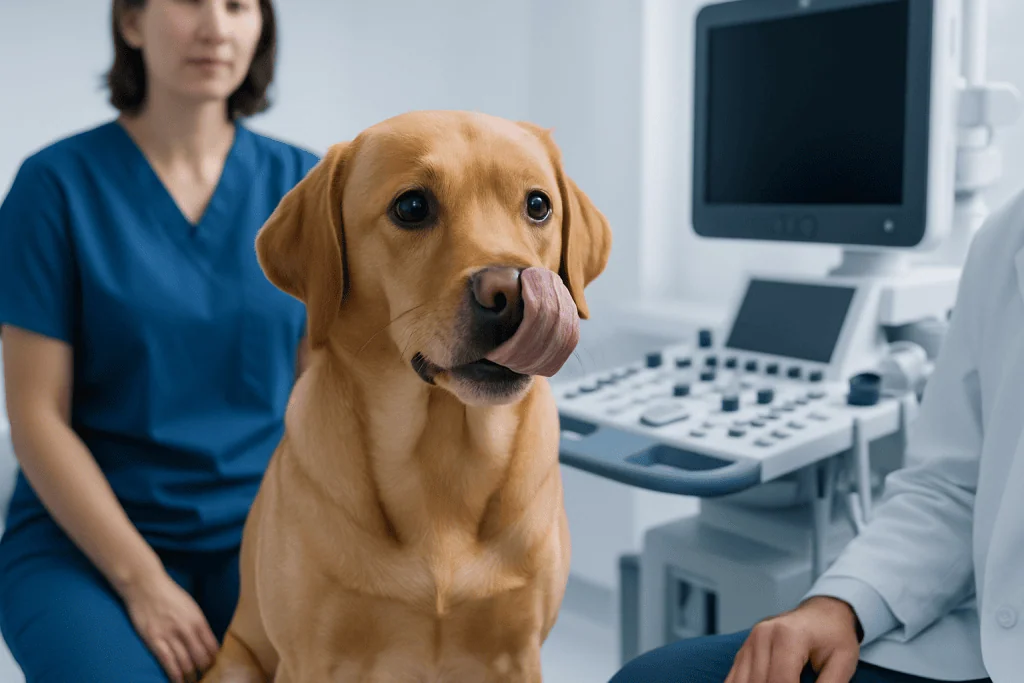
Saliva and lip movements are part of normal digestion. The sight, smell, or expectation of food can stimulate salivation, so some dogs lick their lips while watching a meal being prepared or waiting for a treat. Licking after eating may simply remove remaining food or moisture from the muzzle.
Dogs can also lick their lips after drinking water, following exercise, or during self-grooming. Short-lived licking in these settings is generally a normal part of daily behavior. Brachycephalic dogs, such as Pugs and Bulldogs, may appear to lick around the mouth more often because of facial folds, drooling, or the shape of their jaws.
Occasionally, lip licking is part of social communication. A dog may briefly lick its lips during an uncertain interaction, such as when meeting an unfamiliar person, hearing a raised voice, or being handled. This can be a subtle sign of unease rather than aggression. Giving the dog space and avoiding punishment is usually more helpful than trying to stop the behavior.
When Lip Licking May Suggest a Health Problem
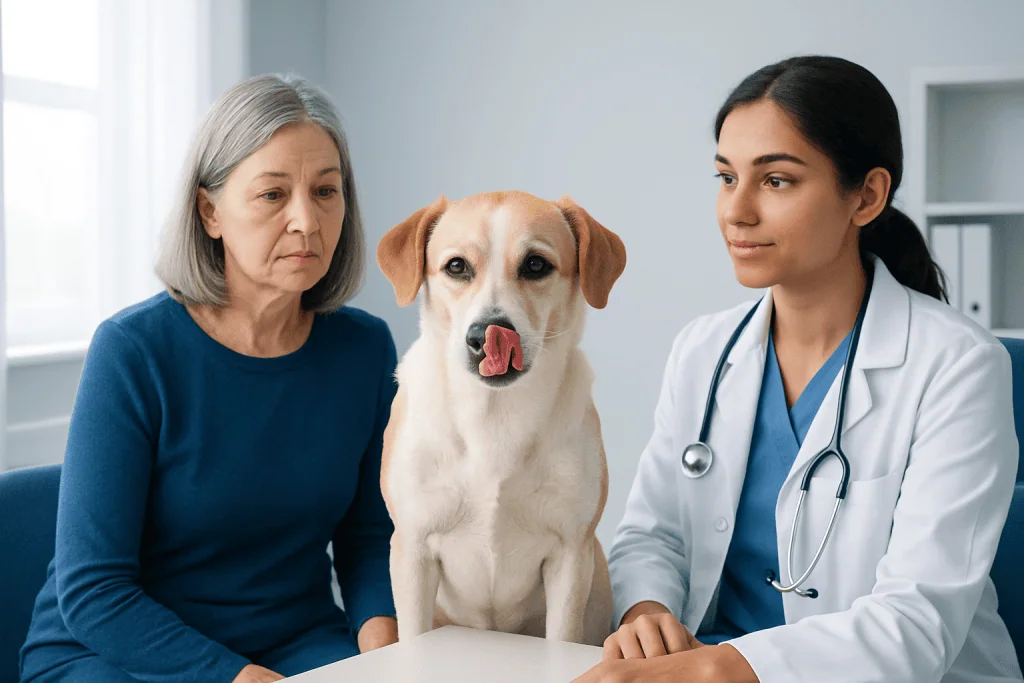
Repeated dog licking lips can occur with nausea. Some dogs lick their lips, swallow repeatedly, drool, eat grass, or seem restless before vomiting. Nausea may have many causes, including dietary upset, motion sickness, gastrointestinal illness, pancreatitis, medication effects, or ingestion of something irritating. A veterinarian can assess the pattern and look for the underlying cause.
Dental and mouth problems are another important consideration. Gum disease, a broken tooth, an oral injury, an object stuck in the mouth, inflammation, or a growth can make swallowing and chewing uncomfortable. A dog may lick its lips, paw at the face, chew on one side, drop food, avoid dry kibble, have bad breath, or resist having the mouth touched.
Less commonly, irritation around the lips or tongue may lead to increased licking. This can follow contact with a chemical, plant material, a bitter-tasting substance, or an insect sting. Dogs can also show lip licking with reflux-like symptoms or excessive salivation. Because many conditions can overlap, persistent changes should be assessed rather than treated at home with human medicines.
Stress, Fear, and Learned Behavior
Lip licking may be one of several subtle behaviors seen when a dog feels uncertain or uncomfortable. It can appear during grooming, veterinary visits, close hugging, handling by strangers, loud household activity, or interactions with another animal. Other signs that may occur at the same time include turning the head away, yawning, lowering the body, showing the whites of the eyes, tucked tail, or moving away.
These signals do not prove that a dog is anxious, and they should not be used to label a dog’s temperament. They are best understood as cues to pause and consider the environment. A calm approach, predictable routines, gradual positive training, and allowing the dog to move away can reduce pressure. For dogs with persistent fear, separation-related distress, or behavior changes, a veterinarian or qualified veterinary behavior professional can advise on a tailored plan.
Some dogs develop a repeated lip-licking habit when it has previously led to attention, food, or removal from an uncomfortable situation. Even then, it is sensible to first exclude discomfort or illness, particularly if the behavior began suddenly. A behavior pattern and a medical problem can also exist at the same time.
How Veterinarians Evaluate Frequent Lip Licking
A veterinarian will usually begin with questions about the timing and pattern of the behavior. Helpful details include whether licking occurs before meals, after meals, in the car, at night, during handling, or before vomiting. Information about diet changes, access to rubbish or toxins, current medications, recent travel, dental care, and changes in thirst, appetite, stools, or energy can also be relevant.
The examination may include checking the mouth, teeth, gums, tongue, throat, skin around the lips, abdomen, hydration, and overall condition. Some dogs need additional testing if there are signs of digestive disease, dental disease, infection, pain, or another underlying condition. Depending on the findings, this may include blood or urine testing, stool testing, dental imaging, or abdominal imaging.
A short video can be particularly useful because dogs may not show the behavior during an appointment. Recording the episode from a safe distance, along with noting what happened immediately before and after it, can help distinguish normal food-related licking from a pattern associated with nausea, discomfort, or stress.
What Owners Can Do at Home
For a dog that is otherwise well, owners can monitor the behavior for several days and look for clear triggers. Keeping a simple note of meal times, treats, travel, new foods, licking episodes, vomiting, bowel movements, and behavior changes may provide useful information for a veterinary visit. A balanced, appropriate diet and regular access to clean water support general digestive health.
Regular dental care is also important. Owners can check for obvious changes such as foul breath, visible tartar, bleeding gums, swelling, drooling, food dropping, or reluctance to chew. However, a painful mouth should not be forced open, and fingers should not be placed inside a distressed dog’s mouth. Veterinary dental examinations remain the safest way to identify problems below the gumline or in the back of the mouth.
It is best not to give human antacids, pain medicines, anti-nausea medicines, or home remedies unless a veterinarian specifically recommends them. Some common human medicines are unsafe for dogs, and treatment can mask signs that would otherwise help identify the cause. If stress seems to be a trigger, reducing pressure, using reward-based training, and avoiding known triggers may be more appropriate than correcting the dog for lip licking.
When to Seek Medical Care
Contact a veterinarian promptly if a dog licking lips is frequent, new, or paired with reduced appetite, repeated swallowing, drooling, bad breath, chewing difficulty, pawing at the mouth, vomiting, diarrhea, weight loss, or a noticeable change in energy or personality. These signs may reflect nausea, oral pain, gastrointestinal disease, or another condition that needs professional assessment.
Urgent veterinary care is needed if lip licking occurs with difficulty breathing, swelling of the face or tongue, repeated unproductive retching, severe or repeated vomiting, collapse, marked weakness, seizures, a swollen painful abdomen, or possible exposure to a toxin or foreign object. These symptoms can have serious causes and should not be monitored at home.
If the behavior appears mainly linked to fear or handling but is persistent, a routine veterinary appointment is still worthwhile. Pain and illness can influence behavior, and a veterinarian can help determine whether medical evaluation, dental care, environmental changes, or behavioral support is most appropriate.
Frequently asked questions
Is dog licking lips always a sign of nausea?
No. Dogs commonly lick their lips after eating, drinking, smelling food, or grooming. Nausea is more likely when lip licking is repeated and occurs with drooling, swallowing, grass eating, restlessness, reduced appetite, or vomiting.
Why is my dog licking its lips but not eating?
A dog may lick its lips but avoid food because of nausea, dental pain, a mouth injury, or another illness. A veterinarian should assess a dog that refuses food, especially if the change lasts beyond a meal or is accompanied by vomiting, weakness, or discomfort.
Can anxiety make a dog lick its lips?
Yes. Some dogs lick their lips when they feel uncertain, pressured, or uncomfortable. This behavior should be interpreted together with the setting and other body-language signals, while remembering that medical causes should also be considered if the behavior is new or frequent.
Should owners look inside a dog's mouth when it keeps licking its lips?
A gentle visual check may be reasonable only if the dog is calm and allows it safely. Owners should not force the mouth open or put fingers inside, as pain can cause even a normally gentle dog to bite. A veterinarian can perform a more complete oral examination safely.
Why does my dog lick its lips in the car?
Lip licking during travel can occur with motion sickness, anticipation, or stress. If it is accompanied by drooling, repeated swallowing, yawning, whining, or vomiting, discussing travel-related nausea or anxiety with a veterinarian is appropriate.
When is lip licking an emergency in dogs?
It becomes urgent when it occurs with breathing problems, swelling of the face or tongue, collapse, severe weakness, repeated vomiting, suspected poisoning, or signs of a swallowed object. In these situations, the dog should receive urgent veterinary care.
References
- American Veterinary Medical Association
- American Animal Hospital Association
- Merck Veterinary Manual
- British Small Animal Veterinary Association
- Veterinary Information Network
This article is for general information only and is not a substitute for professional medical advice. Please consult a qualified doctor about your individual situation.
Explore treatments in Turkey — costs, top hospitals & a free quote
JCI-accredited · board-certified surgeons · reply within 24h
Add us as a Preferred Source to see more of our trusted health content across Google Search, AI Overviews and Discover.

More from the Health Library

Proprioception — Explained by Medical Evidence, Not Myths

Soft Palate: What Patients Need to Know

Imitrex: An Evidence-Based Guide for Patients

Shoulder Blade Tenderness — Explained by Medical Evidence, Not Myths
Central Diabetes Insipidus: What Patients Need to Know