Work Environment for a Surgeon: An Evidence-Based Patient Guide

Surgeons work in clinical, procedural and emergency settings, often as part of a large multidisciplinary team. A surgeon’s day includes patient assessment, operations, follow-up care, documentation and communication.
Key Takeaways
- Surgeons work in clinical, procedural and emergency settings, often as part of a large multidisciplinary team.
- A surgeon’s day includes patient assessment, operations, follow-up care, documentation and communication.
- Schedules can be demanding, particularly in acute-care specialties that include night, weekend or on-call work.
- Surgeon income varies greatly by country, specialty, seniority, employment model and workload.
- Political affiliation cannot be reliably inferred from a surgeon’s profession and does not define individual clinical care.
The work environment for a surgeon spans operating rooms, outpatient clinics, hospital wards, emergency departments and multidisciplinary meetings. Although surgeons perform operations, much of their work involves evaluating patients, planning care, communicating with families and supporting recovery.
Overview: the work environment for a surgeon
The work environment for a surgeon is a combination of highly structured clinical spaces and fast-changing patient-care settings. Surgeons may work in operating theatres, outpatient consultation rooms, inpatient wards, intensive care units, emergency departments and procedure suites. Their role includes deciding whether surgery is appropriate, performing or supervising operations, monitoring recovery and coordinating care with other health professionals.
For patients, it can be helpful to know that surgery is rarely delivered by one person alone. A surgeon works closely with anaesthesiologists, nurses, surgical technologists, radiologists, pathologists, physiotherapists and doctors from other specialties. This team-based approach supports safe preparation, accurate diagnosis, carefully planned treatment and follow-up after an operation.
The exact environment depends on the surgical specialty. For example, an orthopaedic surgeon may spend substantial time in theatre and fracture clinics, while a general surgeon may manage abdominal emergencies and elective procedures. A neurosurgeon, cardiac surgeon or transplant surgeon may work with particularly complex technology and intensive-care teams.
What is the work environment like for a surgeon?
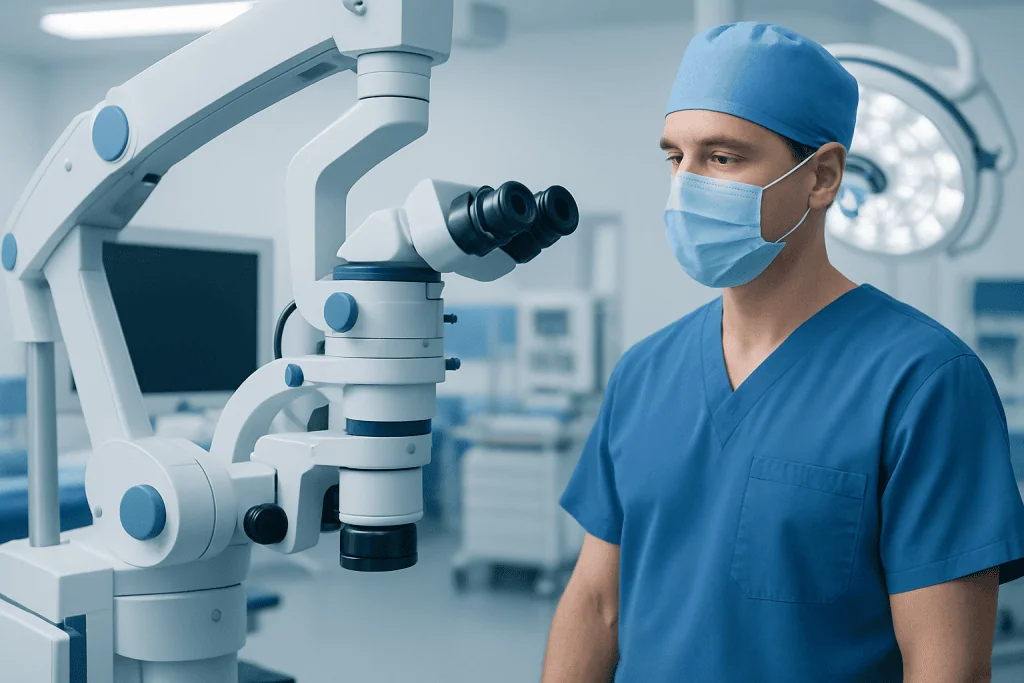
A surgeon’s workplace is patient-centred, technically demanding and closely regulated for safety. Operating rooms are controlled environments with sterile procedures, specialised equipment and clear team roles. Before an operation, teams commonly confirm the patient’s identity, planned procedure, consent, relevant imaging, allergies and safety requirements through formal checks.
Outside the operating room, surgeons assess symptoms, review scans and laboratory results, explain treatment choices and obtain informed consent. They also visit hospitalised patients, manage complications, discuss pathology findings and arrange rehabilitation or follow-up. This means that communication and clinical judgment are as important as technical operative skills.
Many surgeons have a mixed schedule of elective work and urgent care. Elective operations are planned in advance, while trauma, bleeding, infection or organ-related emergencies may require prompt review. Some specialties therefore include on-call duties at night, on weekends or during public holidays. Workload and hours vary by hospital, country, specialty and career stage.
- Operating theatre: surgery, safety checks and coordination with the anaesthesia and nursing teams.
- Clinic: diagnosis, discussions about options, pre-operative assessment and post-operative review.
- Hospital wards: daily monitoring, wound care, discharge planning and management of recovery.
- Meetings and teaching: multidisciplinary case reviews, audit, training and quality-improvement work.
How surgeons plan and deliver an operation

Surgery is a process rather than a single event. It begins with a clinical assessment, which may include a medical history, physical examination, blood tests, imaging and discussions with relevant specialists. The surgeon considers the diagnosis, likely benefit of an operation, non-surgical alternatives, the patient’s general health and personal priorities.
A person may be considered a candidate for surgery when an operation is expected to improve symptoms, function, survival or diagnostic certainty, and when the anticipated benefits outweigh the risks. Suitability also depends on factors such as heart and lung health, medicines that affect bleeding, infection risk, nutritional status and the ability to take part in recovery. In some circumstances, prehabilitation, smoking cessation, treatment of anaemia or better control of long-term conditions may be recommended before surgery.
On the day of surgery, the team completes safety checks and provides anaesthesia or sedation where needed. The surgeon performs the planned procedure using open, minimally invasive, endoscopic or robotic techniques when appropriate. After the operation, the surgical and nursing teams monitor pain, mobility, wound healing, eating and drinking, and signs of complications before planning discharge.
For patients considering an operation, the most useful questions are often practical: why is surgery recommended, what are the alternatives, what type of anaesthesia is expected, what recovery support is needed and which symptoms require urgent contact after discharge. A clear discussion with the surgical team helps patients make informed decisions.
Benefits, limitations and risks of surgical care
When appropriately recommended, surgery can remove or repair diseased tissue, relieve obstruction, stabilise injuries, obtain a diagnosis or improve function and quality of life. Some procedures are urgent or life-saving, while others are planned to address persistent symptoms or reduce future health risks. The expected benefit differs widely between operations and between individuals.
No operation is free of risk. Potential complications can include bleeding, infection, blood clots, reactions to anaesthesia, pain, scarring, injury to nearby structures and a need for additional treatment. Risks may be higher with more complex procedures or in people with certain medical conditions, but the surgical team evaluates these factors and takes preventive measures whenever possible.
Recovery also varies. A minor outpatient procedure may allow a return home the same day, whereas major surgery can require several days in hospital and weeks or months of rehabilitation. The surgeon’s work environment includes close collaboration with recovery-room staff, ward nurses, pharmacists, dietitians and rehabilitation professionals to help patients progress safely.
Patients should receive individual information about expected outcomes and risks rather than relying on general descriptions online. A surgeon can explain what is most relevant to the specific diagnosis, procedure and personal health situation.
Can doctors make $1,000,000 a year?
Some doctors may earn $1,000,000 or more in a year, but this is not typical and should not be assumed for surgeons or physicians generally. Income can vary substantially according to country, specialty, years of experience, public or private employment, practice ownership, workload, on-call commitments, teaching or leadership roles, and local healthcare systems.
Highly specialised physicians may have higher earning potential in some settings, but professional income is not a measure of clinical quality or suitability for a patient’s care. Many surgeons work in salaried hospital roles, academic institutions or public health systems where pay structures differ from private practice models.
Patients choosing a surgeon may find it more useful to ask about relevant specialist training, experience with the planned procedure, multidisciplinary support, expected recovery and how complications are managed. Clear communication and appropriate credentials are more meaningful indicators than assumptions about earnings.
Are most surgeons Republican or Democrat?
There is no appropriate or reliable way to describe most surgeons as belonging to one political party. Surgeons, like other professionals, have individual beliefs and may choose not to disclose political views. Political affiliation also varies by country, region, age, personal background and many other factors.
Clinical care should be guided by professional standards, evidence, informed consent, patient safety and respect for each patient’s values. A patient’s relationship with a surgeon is best evaluated through communication, qualifications, shared decision-making and whether the care plan addresses the patient’s needs.
If a patient has concerns about feeling heard or respected, they can ask for another discussion, involve a trusted family member or interpreter, seek a second opinion, or request care from a different qualified clinician. Healthcare organisations generally have patient-relations services that can help address concerns constructively.
What are the best resources for surgery interns?
Useful resources for surgery interns combine local hospital guidance with respected educational organisations. The most important starting point is the hospital’s orientation material, escalation policies, medication and prescribing systems, infection-control procedures, handover standards and emergency-response pathways. Interns should know how to obtain timely senior support whenever they are uncertain.
Established professional bodies and accredited training programmes provide learning materials on surgical principles, patient safety, ethics, communication and technical development. Resources from national surgical colleges, accredited medical education programmes, hospital libraries and peer-reviewed clinical guidelines can help interns build knowledge while keeping practice aligned with current standards.
Interns also benefit from structured feedback, supervised operating-room experience, simulation training and regular case discussion. Safe surgical practice depends on recognising personal limits, asking for help early and using team communication effectively. Rest, mental-health support and attention to fatigue are also important for clinicians working demanding schedules.
When to seek medical care
Patients should seek prompt medical care for severe or worsening pain, heavy bleeding, trouble breathing, chest pain, fainting, sudden weakness, confusion, a high fever with significant illness, or symptoms after an operation that feel rapidly worse. Emergency services should be contacted immediately for potentially life-threatening symptoms rather than waiting for a routine appointment.
After surgery, patients should follow the discharge instructions from their own surgical team. They should contact the team promptly if they develop increasing redness, swelling, drainage or separation of a wound; persistent vomiting; fever; worsening pain not controlled by the prescribed plan; new calf swelling; or other concerns specifically identified at discharge.
For planned surgery or a second opinion, a qualified surgeon can review the diagnosis, available treatments and likely recovery. Acibadem International’s multidisciplinary specialists and JCI-accredited hospitals diagnose and treat a broad range of surgical conditions for international patients, with care plans tailored to the individual diagnosis and procedure.
Frequently asked questions
Do surgeons only work in operating rooms?
No. Surgeons also work in clinics, hospital wards, emergency departments, intensive care settings and multidisciplinary meetings. They assess patients before surgery, oversee recovery and coordinate care with other healthcare professionals.
How many hours do surgeons work?
Working hours vary by specialty, country, hospital and career stage. Some surgeons have regular planned operating lists and clinic sessions, while others also provide urgent or emergency on-call care during evenings, nights or weekends.
What makes operating rooms safe?
Operating rooms use defined safety processes, sterile technique, specialised equipment and clear team communication. Surgical checklists and confirmation procedures help teams verify the patient, operation, site, equipment and anticipated risks before surgery begins.
Do all patients need surgery for the same condition?
No. Suitability for surgery depends on the diagnosis, severity of symptoms, expected benefit, alternative treatments and the person’s overall health. A surgeon should explain why an operation is or is not recommended in the individual situation.
Can a patient ask for a second surgical opinion?
Yes. A second opinion can be particularly helpful when surgery is major, complex, elective or when there are several reasonable treatment options. It can help a patient understand the diagnosis, compare approaches and make an informed decision.
What should patients ask before an operation?
Patients may ask about the purpose of surgery, alternatives, expected benefits, important risks, anaesthesia, hospital stay and recovery timeline. It is also reasonable to ask who will be involved in the operation and how to contact the team after discharge.
References
- World Health Organization
- American College of Surgeons
- Royal College of Surgeons of England
- Agency for Healthcare Research and Quality
- National Institute for Health and Care Excellence
This article is for general information only and is not a substitute for professional medical advice. Please consult a qualified doctor about your individual situation.
Explore treatments in Turkey — costs, top hospitals & a free quote
JCI-accredited · board-certified surgeons · reply within 24h
Add us as a Preferred Source to see more of our trusted health content across Google Search, AI Overviews and Discover.