Zolgensma Gene Therapy: How It Works, Results and What to Expect

Zolgensma is a one-time gene therapy used for certain children with spinal muscular atrophy caused by SMN1 gene changes. Treatment is given as a single intravenous infusion, with careful testing before and close monitoring afterward.
Key Takeaways
- Zolgensma is a one-time gene therapy used for certain children with spinal muscular atrophy caused by SMN1 gene changes.
- Treatment is given as a single intravenous infusion, with careful testing before and close monitoring afterward.
- Earlier treatment, ideally before symptoms become severe, is associated with better motor outcomes in clinical studies.
- Potentially serious risks include liver injury, low platelet counts, thrombotic microangiopathy and heart-related effects, so follow-up is essential.
- The long-term durability of benefit continues to be studied, and children still need ongoing neuromuscular care and developmental support.
Zolgensma gene therapy is a one-time intravenous gene replacement treatment for eligible children with spinal muscular atrophy (SMA). It aims to provide a functional copy of the SMN1 gene, helping the body make a protein needed for motor neuron survival, but it does not reverse nerve cells already lost.
Overview: what Zolgensma gene therapy does
Zolgensma gene therapy is a one-time intravenous treatment for eligible children with spinal muscular atrophy (SMA), a genetic neuromuscular condition that causes progressive muscle weakness. It works by delivering a functional copy of the survival motor neuron 1 (SMN1) gene, helping cells produce the SMN protein that motor neurons need.
SMA is usually caused by changes in both copies of the SMN1 gene. Without enough SMN protein, motor neurons in the spinal cord are damaged over time, affecting movement, breathing, swallowing and feeding. Zolgensma, also called onasemnogene abeparvovec, does not remove the underlying genetic changes and cannot restore motor neurons that have already been lost. Its goal is to preserve remaining motor neurons and support motor development.
It is an important treatment option within the wider care plan for spinal muscular atrophy. Decisions about treatment are individualized and should be made with a pediatric neuromuscular team experienced in SMA, gene therapy safety monitoring, respiratory care, nutrition and rehabilitation.
How Zolgensma works in the body
Zolgensma uses a modified adeno-associated virus type 9 (AAV9) as a delivery vehicle. The virus is altered so it cannot cause disease. After the infusion, it carries a working copy of the SMN1 gene into target cells, including motor neurons, where the introduced gene can support production of SMN protein.
The treatment is not designed to permanently change a child’s own DNA. Instead, the delivered gene remains mainly outside the chromosomes within cells. Because motor neurons generally do not divide, the treatment may provide sustained gene activity in these cells. However, the exact duration of benefit over a person’s lifetime is still being monitored through long-term follow-up studies.
Gene therapy addresses one part of SMA biology, but it does not replace regular clinical care. Children may continue to need respiratory assessment, feeding and swallowing support, physiotherapy, orthopaedic monitoring, vaccinations and management of complications related to muscle weakness.
Who may be a candidate for Zolgensma?

Zolgensma is approved in different countries for specific age and weight groups, so eligibility depends on local regulations as well as the child’s clinical circumstances. It is generally considered for infants and young children with genetically confirmed SMA caused by SMN1 gene changes. Newborn screening can identify SMA before symptoms begin, allowing families and specialists to discuss treatment promptly.
Before treatment, the medical team confirms the genetic diagnosis and evaluates the child’s overall health. Assessments commonly include liver function tests, platelet counts, cardiac markers, screening for antibodies to AAV9, and evaluation of feeding, breathing and motor function. High levels of antibodies to AAV9 may mean a child is not eligible for treatment because the immune system could prevent effective delivery.
Eligibility also requires careful discussion of alternative or additional disease-modifying treatments, expected benefits, safety considerations and follow-up needs. A child with significant infection, unstable medical illness or abnormal laboratory results may need treatment delayed or further evaluation first.
- Genetic confirmation of SMA is essential.
- Early referral to a specialist team is particularly important after a positive newborn screen.
- Families should share all medicines, supplements, infections and prior medical history with the treating team.
What happens during the Zolgensma procedure?
Planning begins well before infusion day. The care team reviews test results, calculates the treatment amount based on body weight, discusses consent and organizes monitoring. Children are usually prescribed corticosteroid treatment before the infusion to reduce the immune response and help protect the liver. The exact medicine schedule is determined by the treating specialist.
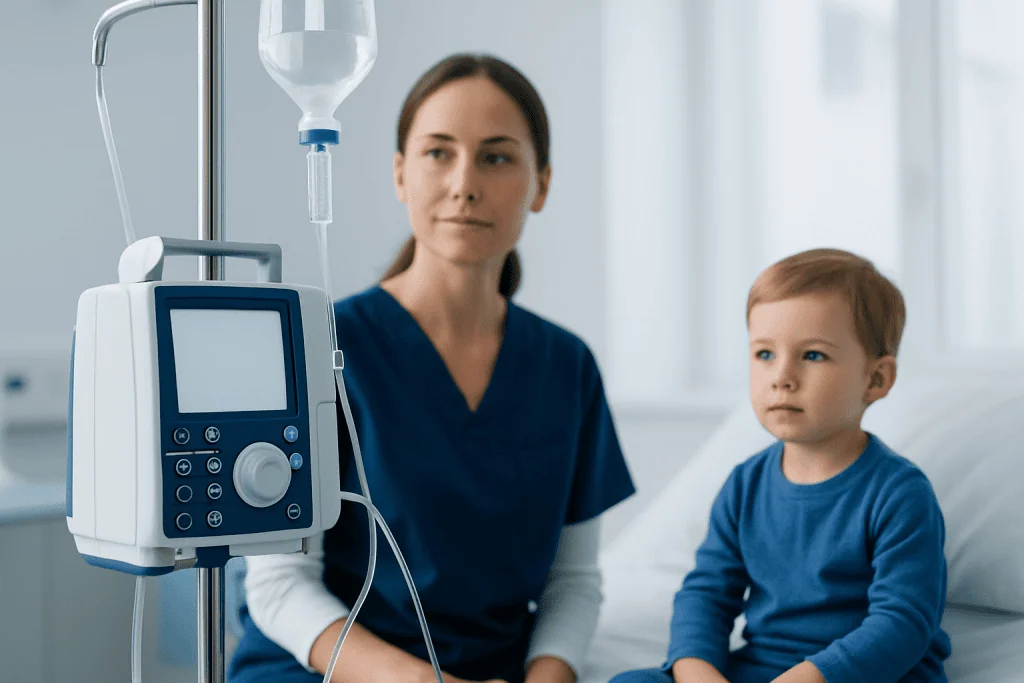
On the day of treatment, Zolgensma is administered once through a vein over approximately one hour. The infusion itself is generally performed in a hospital or specialist infusion setting where the child can be observed for reactions. Depending on the child’s medical condition and local practice, monitoring may continue for several hours or require a short hospital stay.
Afterward, families receive a detailed plan for medication, blood testing, symptom monitoring and follow-up visits. As the therapy uses a viral vector, caregivers are also advised on careful hand hygiene and safe handling of diapers or stool for a period after infusion, because small amounts of vector material may be shed in body waste.
Benefits, results and realistic expectations
Clinical studies have shown that many treated infants achieved meaningful outcomes that are uncommon in untreated infantile-onset SMA, including improved survival without permanent ventilation and acquisition of motor milestones such as sitting. Outcomes vary substantially between children, however. Age at treatment, symptoms before treatment, the number of SMN2 gene copies, respiratory status and the amount of motor neuron loss can all influence results.
In general, treatment before symptoms develop or soon after symptoms begin offers the greatest opportunity to protect motor neurons. Even with early treatment, development may not follow the same pattern as in children without SMA. Some children need ongoing mobility, feeding, respiratory or speech support, and progress may be gradual.
Zolgensma is not a cure in the sense of eliminating SMA from the body. Families should view it as a disease-modifying therapy that may change the expected course of the condition. Regular standardized motor assessments help the team understand each child’s progress and adjust supportive care accordingly.
What is the success rate of Zolgensma?
There is no single success rate that accurately applies to every child. Studies use different outcomes, such as survival without permanent ventilation, achievement of sitting or walking milestones, and changes in motor scores. Available evidence supports meaningful benefit for many eligible children, especially when treated early, but individual results cannot be predicted with certainty and should be discussed with the child’s SMA specialist.
Risks, side effects and safety monitoring
Zolgensma can cause side effects, and some can be serious. The most important recognized risks include liver injury, low platelet counts, thrombotic microangiopathy (a rare condition involving blood vessels and blood cells), and elevations in cardiac markers. Fever, vomiting, reduced appetite and raised liver enzyme levels may also occur.
Liver monitoring is especially important. Blood tests are performed before treatment and regularly afterward, often for several months, to check liver enzymes, bilirubin, platelet counts and other relevant markers. Corticosteroids are used to help reduce inflammation, but they can also have side effects, including irritability, sleep changes, raised blood pressure, increased appetite and greater susceptibility to infection.
Parents and caregivers should contact the medical team promptly if the child develops persistent vomiting, jaundice, unusual bruising or bleeding, reduced urine output, marked lethargy, fever, new weakness, breathing difficulty or other concerning symptoms. The specialist team will explain which symptoms require urgent assessment and where to seek help.
Before and after treatment, supportive physical therapy and rehabilitation planning can help a child make the best use of their abilities, support comfortable positioning and reduce complications of reduced mobility.
Recovery timeline, follow-up and long-term outlook
Recovery from the infusion itself is usually short, but the monitoring period is much longer. In the first days and weeks, families focus on corticosteroid treatment, attending blood tests and watching for symptoms of infection or treatment-related complications. The frequency of testing is gradually reduced only when the treating clinician is satisfied that laboratory results and the child’s condition are stable.
Motor changes do not necessarily appear immediately. Children may gain skills gradually over months, and their care team tracks head control, rolling, sitting, standing, walking and hand function as appropriate for age and baseline ability. Respiratory and nutritional needs are reviewed regularly, because these needs may continue even when motor abilities improve.
How long will Zolgensma last?
Zolgensma is administered once, and research shows that treated children can maintain benefit for years of follow-up. However, long-term durability across the full lifespan is not yet known. The body may develop antibodies to the AAV9 vector after treatment, which generally means repeat dosing with the same vector is not currently an option. Ongoing follow-up remains important to understand each child’s health and development over time.
Acibadem International’s multidisciplinary specialists and JCI-accredited hospitals can assess and support international patients with SMA, coordinating neuromuscular, pediatric, respiratory, nutrition and rehabilitation care.
Insurance, life expectancy and when to seek medical care
Will insurance cover Zolgensma?
Insurance coverage varies by country, insurer, policy terms, treatment eligibility and prior-authorization requirements. Some health systems or insurers may cover Zolgensma for eligible patients, while others may have specific clinical criteria or documentation requirements. Families can ask the treating hospital’s financial counseling or international patient services team to help clarify authorization steps, coverage documents and available local support pathways. No one should delay specialist assessment while coverage questions are being resolved.
What is the average life expectancy for someone with SMA 1?
SMA type 1 has historically been associated with severe weakness beginning in infancy and a high risk of early death or need for permanent ventilation without disease-modifying treatment and intensive supportive care. It is no longer appropriate to rely on older average life-expectancy figures alone, because gene-targeted treatments, newborn screening, noninvasive ventilation, cough support and nutrition management have changed outcomes. Life expectancy is individual and depends on disease severity, timing of treatment, response to therapy and access to comprehensive care.
When to seek medical care
Parents should seek prompt medical assessment for an infant with poor head control, reduced movement, weak cry, difficulty feeding, choking, breathing that appears labored, recurrent chest infections or loss of previously gained motor skills. A positive newborn screening result for SMA should be treated as urgent: families should contact a pediatric neuromuscular specialist without delay, even if the baby appears well. For a child already receiving treatment, urgent care is needed for breathing problems, blue or pale color, dehydration, unusual bruising, jaundice, persistent vomiting or marked decrease in alertness.
Frequently asked questions
Is Zolgensma a cure for spinal muscular atrophy?
Zolgensma is not considered a cure because it does not remove the inherited SMN1 gene changes or restore motor neurons that have already been lost. It is a disease-modifying gene replacement therapy that can help the body produce SMN protein and may improve the course of SMA, particularly when given early.
How is Zolgensma given?
Zolgensma is given once through an intravenous infusion, usually over about one hour in a specialist hospital or infusion setting. The child needs testing before treatment and repeated blood tests and clinical monitoring afterward.
Can a child receive Zolgensma after developing SMA symptoms?
Some symptomatic children may be eligible, depending on their age, weight, health status and local approval criteria. Earlier treatment is generally associated with better outcomes, so rapid assessment by an SMA specialist is important.
Why are steroids needed with Zolgensma?
Corticosteroids are used before and after infusion to help reduce immune-related inflammation, particularly in the liver. The clinical team provides an individualized plan and monitors for both treatment-related effects and steroid side effects.
Can Zolgensma be given more than once?
Zolgensma is currently designed as a one-time treatment. After exposure to the AAV9 delivery vector, the immune system usually develops antibodies, which makes repeat administration with the same vector difficult.
Will a child still need therapy after Zolgensma?
Yes, many children benefit from continued multidisciplinary care after gene therapy. This may include physiotherapy, respiratory support, feeding assessment, orthopaedic care and regular developmental monitoring, tailored to the child’s needs.
References
- U.S. Food and Drug Administration
- European Medicines Agency
- Cure SMA
- Muscular Dystrophy Association
- National Institute of Neurological Disorders and Stroke
This article is for general information only and is not a substitute for professional medical advice. Please consult a qualified doctor about your individual situation.
Joint and spine care in Turkey — expert assessment & treatment
JCI-accredited · board-certified surgeons · reply within 24h
Add us as a Preferred Source to see more of our trusted health content across Google Search, AI Overviews and Discover.