

After Discharge in Turkey: Warning Signs That Mean You Should Contact Your Hospital
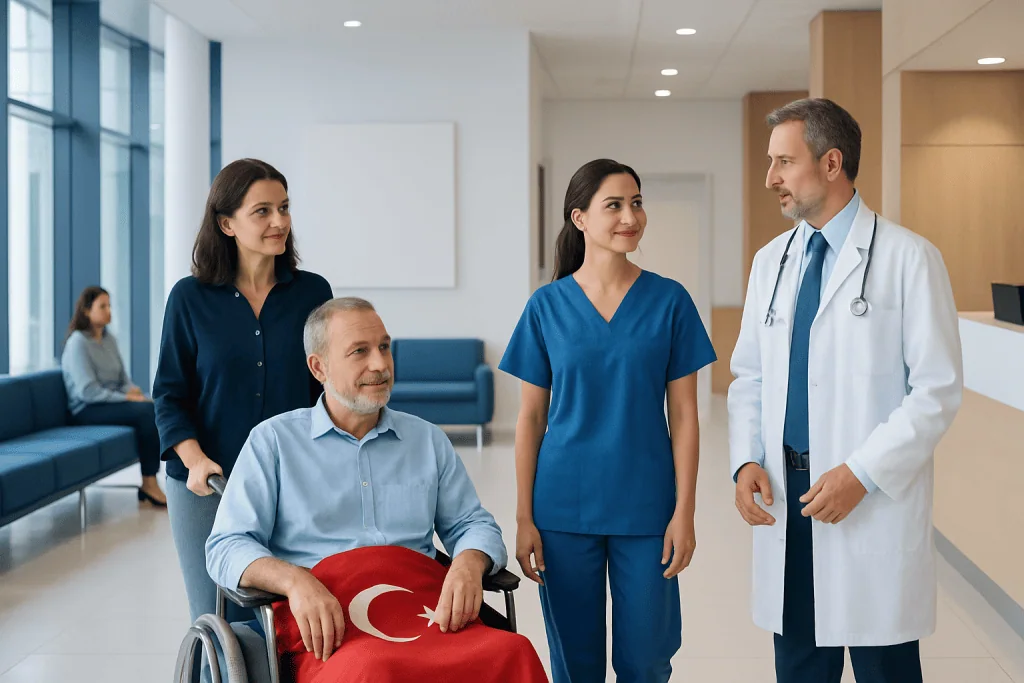
After discharge in Turkey, tiredness, mild swelling and manageable pain that improve day by day are usually part of healing. Symptoms clinicians treat as urgent include high fever with chills, bleeding that soaks dressings, spreading wound redness, one-sided leg swelling, chest pain, breathlessness and confusion. What matters most is direction: a symptom that is worsening deserves prompt medical assessment, not watchful waiting.
You are back at your hotel or apartment, the hospital is a taxi ride away, and you notice something that was not there yesterday — a warmer patch around the wound, a temperature, pain that feels different. Is this normal healing, or something that needs a doctor’s eyes on it? That question keeps a lot of international patients awake, and it deserves a clearer answer than “trust your instincts”.
This guide explains what usually counts as expected recovery after discharge in Turkey, which symptoms clinicians treat as urgent, how post-discharge concerns are typically assessed, and how the Turkish emergency system works. It cannot tell you what your specific symptom means — no article can — but it can show you how doctors sort these situations, so that you recognise the categories when you meet them.
At a glance
- Best for: Patients recovering in Turkey in the first days after treatment or surgery
- Main purpose: Explain which symptoms are usually expected, which are treated as urgent, and how assessment works
- Symptoms clinicians treat as emergencies: Chest pain, severe breathlessness, heavy bleeding, stroke-like signs, confusion or being hard to wake
- Keep ready: Discharge summary, medication list, hospital contact details, passport
- Practical support: A companion, interpreter services, hotel staff, international patient coordinators
- Emergency number in Turkey: 112, the single national number for ambulance services
What is normal after discharge in Turkey — and what is not
Some discomfort after treatment is expected. Tiredness, mild swelling, light bruising, manageable pain, reduced appetite and broken sleep are all common in the first days. If you had a general anaesthetic, grogginess and mild nausea can linger briefly too. None of this means something has gone wrong.
The single most useful measure is direction, not severity on any given hour. Recovery is rarely a smooth line — you may feel worse in the evening than the morning — but across a day or two the trend should be towards better. Slightly less pain, slightly more energy, slightly more appetite. A symptom that is stable and was mentioned in your discharge instructions is usually reassuring. A symptom that is new, escalating, or clearly different from what you were told to expect belongs in a different category.
This is why your paperwork matters more than most patients realise. A good discharge summary sets out your medication schedule, wound care instructions, activity limits, follow-up plan and the contact route for questions — in effect, it defines your personal “normal”. If any part of it is unclear before you leave the ward, that is the moment to ask; our guide on what a discharge summary should include walks through it section by section. Hospitals with international patient programmes typically go through these documents in English and can arrange interpreter support, which matters when you are recovering far from home and cannot lean on a familiar GP.
Warning signs that need urgent medical advice
Certain symptoms sit at the top of every triage list, regardless of what procedure you had. Chest pain, significant shortness of breath, blue-tinged lips, fainting, a seizure, sudden weakness on one side of the body, slurred speech, severe confusion, or difficulty staying awake are all treated as potential emergencies in any post-operative setting. Clinicians do not wait to see whether these settle, and the same logic applies outside the hospital.
Heavy bleeding belongs in the same category. That means bleeding that soaks through dressings quickly, vomiting blood, coughing up blood, or black, tarry stools. A small amount of spotting is expected after some procedures and is often mentioned in discharge instructions; bleeding that is heavy or increasing is a different matter and is assessed urgently.
The third urgent group is infection. A high fever, shaking chills, redness that is spreading outwards from a wound, pus, a bad smell from the dressing, or pain that has become much stronger than before are the classic signals. Surgical site infections tend to declare themselves in the first days to weeks after a procedure — exactly the window when an international patient is still recovering after discharge in Turkey — which is why post-discharge teams take fever and wound changes seriously rather than assuming the mild explanation.
Pain deserves one extra note. Pain that is gradually easing on your prescribed medicines is expected. Pain that suddenly changes character, moves to a new location, or stops responding to the medicines you were given is treated as a signal, not a nuisance.
Symptoms that can become serious if you wait
Not every warning sign feels dramatic. Some of the most important ones start quietly, which is precisely why they get missed.
New swelling in one leg — often with calf pain, warmth or redness on that side only — is the pattern doctors associate with a deep vein thrombosis, a blood clot in the leg. Surgery and reduced movement both raise the risk, and long journeys add to it. When new breathlessness follows that kind of leg swelling, clinicians treat the combination as an emergency, because it can mean part of the clot has travelled to the lungs. This is one of the reasons post-operative patients are encouraged to move regularly and why flying is timed carefully; our guide on warning signs worth reporting before you fly home covers that decision in detail.
Dehydration is another slow-building problem. Repeated vomiting, an inability to keep fluids down, severe diarrhoea, or passing much less urine than usual can all lead there — and can also be side effects of medication or a sign of another complication. Dizziness on standing, a very dry mouth and growing weakness are the typical markers that the situation is progressing rather than resolving.
A few other patterns deserve timely medical assessment even when they feel vague:
- New or worsening redness, heat, or discharge from the wound
- Swelling that increases rather than settles over the days
- Pain that suddenly changes in character or location
- A new rash, itching, lip or face swelling, or wheezing after taking a medicine — the pattern of an allergic reaction
- Worsening abdominal swelling, or severe constipation with pain
- An increasing headache, new vision changes, or unusual drowsiness
- Loss of appetite with weakness that is getting worse rather than better
Some of these will turn out to be unrelated to your procedure. That is fine — the team that knows your treatment history is still the right group to make that call, because they can see your operation notes, your medicines and your test results in one place.
How post-discharge concerns are assessed
Hospitals that treat international patients plan for the first week after discharge. Your paperwork should carry a contact number for post-discharge questions, and patients treated through an international programme are usually given a dedicated line staffed by coordinators who work in English. Questions in this window are routine — post-discharge teams field them every day, and an early question about a borderline symptom is exactly what those lines exist for.
When a concern is reported, the person assessing it works from a fairly standard set of facts: your name and patient number, the hospital and department, the date and type of procedure, your current location in Turkey, what the symptom is, when it started, whether it is getting worse, and what medicines you have taken for it. A timeline matters more than a snapshot — “the redness has grown since yesterday” tells a nurse far more than “my wound is red”. Writing these details down before a call makes the conversation faster and the advice more accurate.
Photographs of a wound, swelling or rash can support that assessment, and many teams find them useful — but they are sent through an approved channel, after asking, and they never replace an in-person review when one is advised. Where language is a barrier, interpreter support is the right tool; guessing at half-understood instructions is where avoidable mistakes happen. If a concern arises at night or on a weekend, the routes change slightly — our guide on after-hours medical help in Turkey explains what is available outside office hours.
The outcome of such a call is usually one of three things: reassurance that the symptom is expected, a same-day or next-day review, or advice to seek emergency assessment. Each of those is a good outcome, because each one replaces uncertainty with a plan.
Emergencies and the 112 system in Turkey
Turkey uses a single national emergency number: 112. It covers ambulance services across the country, in cities and smaller towns alike. In a genuine emergency — the chest pain, severe breathlessness, collapse, stroke-like signs and heavy bleeding described above — emergency services are the right first call, not a routine message or a scheduled follow-up. Urgent problems are assessed wherever the patient is, and the treating hospital is informed afterwards.
Practicalities help here. A companion or hotel staff member can place the call and organise transport if you are unwell. Having your discharge summary, medication list, identity documents and any recent test or imaging reports in one place makes emergency triage significantly quicker, because the receiving team can see immediately what was done and what you are taking. This is one of the simplest preparations an international patient can make, and it costs nothing but five minutes of organisation on the day you leave the ward.
Patients are sometimes reluctant to “overreact”. It is worth knowing how clinicians see this: rapidly escalating symptoms are treated as urgent by default, and a patient who arrives early with a problem that turns out to be minor has not wasted anyone’s time. The reverse situation is the one hospitals work hard to avoid.
The first days: habits that keep recovery on track
Most recoveries go well, and the ones that go best tend to follow the discharge plan closely rather than improvising. Medicines are taken on the schedule written in your summary, including any timing and food instructions. Any change — stopping something early, doubling a missed dose, adding an over-the-counter painkiller, herbal product or supplement — is a question for your treating doctor, not a decision to make alone, particularly if you are on pain relief or blood thinners where interactions matter.
Wound care follows the same principle: keep to the instructions you were given about cleaning, dressings and showering, and check the wound once a day in good light so you know what your baseline looks like. Our guide on wound care, dressings and red flags after discharge in Turkey covers the daily routine in more detail.
Beyond the wound, the pattern is unglamorous but effective: move around as advised rather than staying in bed all day, drink enough fluids if your team has not restricted them, eat regular light meals, and resist the temptation to test your limits because you feel well for a few hours. A meaningful share of post-discharge setbacks come from overexertion, skipped meals, or mild symptoms that were ignored out of politeness. Recovery after discharge in Turkey is not a test of stoicism.
Plan the practical layer too: a charged phone, saved contact numbers, clear transport options, and a companion who knows which symptoms matter. If your flight home is approaching, build in time for the pre-travel check your team recommends — and once you are back, a different set of rules applies, covered in our guide on warning signs after you return home from Turkey.
Do local diseases in Turkey change the picture?
Patients sometimes ask what the common diseases in Turkey are, and whether recovering there adds risks that would not exist at home. For most international visitors, the honest answer is reassuring: Turkey does not present an unusual infectious disease profile, and standard travel-health advice — the kind published on the CDC’s destination pages — applies. The most frequent health complaint among travellers anywhere, Turkey included, is a short-lived stomach upset, usually linked to unfamiliar food or water.
For a recovering patient, the risks that genuinely matter are the universal post-operative ones described throughout this guide: wound infection, blood clots, dehydration, bleeding and medication reactions. None of them is specific to Turkey; all of them are the same risks a patient would face after the same procedure in London or Berlin. Sensible food and water habits, good hand hygiene and the discharge plan you were given cover the rest.
Step by step
- Read your discharge papers before symptoms start. Do not wait until you feel unwell. Know your medication times, wound care advice, activity limits, follow-up date and the contact route for questions — that document defines what “normal” means for your recovery.
- Track direction, not just symptoms. A mild symptom that is clearly worsening matters more than a stable one that was expected. Note when it began, your temperature if relevant, and whether your medicines are helping.
- Raise non-emergency concerns early. Post-discharge teams would rather assess a low-grade fever on day two than a spreading infection on day five. Early reports are routine, and they keep small problems small.
- Treat severe or fast-escalating symptoms as emergencies. Chest pain, severe breathing difficulty, collapse, stroke-like signs and heavy bleeding are handled through emergency services — in Turkey, the number is 112 — with the treating hospital informed as soon as practical.
- Keep key documents together. Discharge summary, prescriptions, passport, insurance papers and hospital contact details in one easy-to-reach place. This saves real time if urgent review is needed.
- Use interpreter support when anything is unclear. Partial understanding is not enough when symptoms are changing. Interpreter assistance through international patient services keeps instructions accurate.
Your checklist
- Save the hospital and international patient service numbers in your phone
- Keep your discharge summary and medication list with you
- Know which symptoms were listed as expected and which as urgent
- Check your temperature if you feel feverish or unwell
- Look at your wound daily for redness, discharge or increasing swelling
- Drink fluids and eat as advised unless your team said otherwise
- Avoid driving or long journeys while you feel weak or unwell
- Tell your companion which warning signs matter
Key takeaways
- Mild pain, bruising and tiredness are usually normal — the reassuring pattern is gradual, day-on-day improvement.
- Fever with chills, spreading wound redness, heavy bleeding, repeated vomiting and escalating pain are the signals clinicians assess urgently.
- Chest pain, severe breathlessness, collapse, stroke-like signs and one-sided leg swelling followed by breathlessness are treated as emergencies; Turkey’s emergency number is 112.
- A clear timeline, your discharge summary and your medication list make any assessment faster and more accurate.
- Interpreter and international patient support exist so that language never blurs an important instruction.
Frequently asked questions
How do I know whether pain is normal after discharge?
Pain that is gradually easing on your prescribed medicines is expected after many treatments, especially in the first days. The patterns clinicians treat as signals are different: pain that suddenly becomes severe, spreads, changes character, or stops responding to the medicines you were given. Escalation is the key word — pain heading in the wrong direction is assessed, not endured.
Is a fever always serious after treatment?
Not always, but after a procedure it is never dismissed either. Fever accompanied by chills, worsening pain, spreading redness, discharge from a wound, or feeling generally unwell is the pattern associated with infection, and infections in the post-operative window are easier to treat when they are caught early. That is why post-discharge teams take temperature reports seriously by default.
What are the common diseases in Turkey?
Turkey does not present unusual infectious risks for most international visitors, and routine travel-health guidance applies. The most common complaint among travellers anywhere, Turkey included, is a short-lived stomach upset. For a recovering patient, the risks that actually matter are the universal post-operative ones — wound infection, blood clots, dehydration and medication reactions — none of which are specific to the country.
Can I send photos of my wound to the hospital?
Many teams find photos of redness, swelling or discharge genuinely useful, but they are shared through an approved channel and after asking first. A photo supports an assessment; it does not replace an in-person review when the team advises one. Taking a daily photo in the same light can also help you judge whether a wound is changing.
What information makes a phone assessment work well?
Your full name, patient number if you have one, treatment date, procedure or department, current medications, allergies, and your exact location. Then the symptom itself: when it started, whether it is worsening, and what you have taken for it. A timeline tells the assessing nurse or doctor far more than a single snapshot, so writing these details down before the call is worth the two minutes.
Should I wait until my scheduled follow-up if a new symptom appears?
Follow-up appointments exist for routine review, not for new problems. New or worsening symptoms are assessed when they appear, and post-discharge teams expect to hear about them at that point. Early reports are what keep minor issues minor; waiting for a scheduled date is how small problems get time to grow.
What if I feel worse at night in a hotel?
The contact routes on your discharge paperwork do not stop at office hours, and a companion or hotel staff member can help with a call and transport if you are unwell. Severe symptoms — major breathing trouble, chest pain, heavy bleeding, fainting, confusion — are emergencies at any hour, handled through 112 rather than a message left for the morning.
Is it safe to fly home while I still have symptoms?
That depends on the symptom, the procedure and the timing, which is why unresolved fever, new breathlessness, one-sided leg swelling or wound problems are the findings teams usually review before a flight is confirmed. Cabin conditions and distance from your treating team change the picture, so the pre-travel check exists for a reason.
Add us as a Preferred Source to see more of our trusted health content across Google Search, AI Overviews and Discover.

Update history
- PublishedJuly 8, 2026
- Medical review approvedSeptember 1, 2026
- Last content updateSeptember 1, 2026
References3
- MedlinePlus — After Surgery — medlineplus.gov
- NHS — Deep vein thrombosis (DVT) — nhs.uk
- CDC Travelers' Health — Turkey — wwwnc.cdc.gov
More Patient Guides

Flying After a C-Section: Timing for New Mothers
A C-section is real abdominal surgery that happens to come with a newborn attached — so the flying question has two clocks…

When Can You Drive After Anesthesia or Sedation?
You feel fine an hour after the procedure. You are chatting, you walked to the car unaided, you could obviously drive it.…

Flying After Hip Replacement: When Is It Safe?
Hip replacement recovers famously well — many patients walk further at three weeks than they had in three years. Flying is part…

Flying After Knee Replacement: When Is It Safe?
The knee is new, the physio is going well, and there is a boarding pass with your name on it. Flying after…