

How Pain Control Is Managed After Surgery in Turkey

Pain control after surgery in Turkey is planned before the operation, not improvised afterwards. Your surgeon and anaesthetist review your health history and choose a combination of methods, nurses check your pain regularly on a simple scale, and the plan is adjusted if it is not working. Before discharge, you should understand each medicine, its timing, and the warning signs listed in your instructions.
How much will it hurt, and who will help if it does? Almost every surgical patient asks this, and the question feels sharper when the operation is happening far from home. The honest answer is that pain after surgery is expected, planned for, and managed as part of your treatment — not something you are left to cope with alone.
This guide explains how pain control is managed after surgery in Turkey: what happens before your operation, how your comfort is monitored in hospital, which methods of relief you may receive, and how to manage the days at your hotel or recovery apartment once you are discharged. It will not tell you what your own pain means — that is your treating team’s job — but it will show you how the system works, so nothing about it surprises you.
At a glance
- Best for: International patients planning surgery and a recovery period in Turkey
- Main goal: Pain controlled well enough to rest, breathe deeply, move safely, and recover — not the total absence of all sensation
- Pain plan includes: A pre-operative review, a medication schedule, regular monitoring on a pain scale, and written discharge instructions
- Who is involved: Your surgeon, your anaesthetist, ward nurses, and — for international patients — coordinators and interpreters
- Before you leave hospital: You should understand what each medicine is for, when to take it, and which warning signs your instructions list
How pain control is managed after surgery in Turkey
The first thing to understand is that pain control is managed after surgery in Turkey the way it is in any well-run hospital: it starts before the operation. During your pre-operative assessment, your surgeon and anaesthetist review your health history, your current medicines and supplements, your allergies, and any previous problems with anaesthesia, pain relief, or nausea. This is not a formality. What can be prescribed safely depends heavily on what your body has already shown it tolerates, and on conditions such as asthma, sleep apnoea, kidney or liver disease, or a history of stomach ulcers.
After the operation, nurses check your pain at regular intervals, usually by asking you to rate it on a scale from 0 to 10. This number is recorded alongside your blood pressure, breathing, and other observations, and it drives decisions. If your score stays high despite the plan, the plan changes. You are not expected to tolerate poorly controlled pain, and you are not being difficult by saying so.
It also helps to be clear about the goal. Some soreness after an operation is normal and expected. The aim of a pain plan is not zero sensation — it is pain controlled well enough that you can rest, cough when you need to, breathe deeply, start gentle movement, and follow your aftercare instructions without unnecessary distress. Deep breathing and early movement matter for recovery, and pain that prevents them is treated as a problem to solve, not a rite of passage.
In hospitals that regularly treat international patients, this clinical routine is supported by practical structure: multilingual communication, interpreter support when you need to describe pain precisely, and discharge teaching designed for someone recovering in a hotel rather than at home. Larger groups also run dedicated pain management (algology) departments, whose specialists can be involved when pain is complex or when standard approaches are not enough.
How your pain relief plan is tailored to you
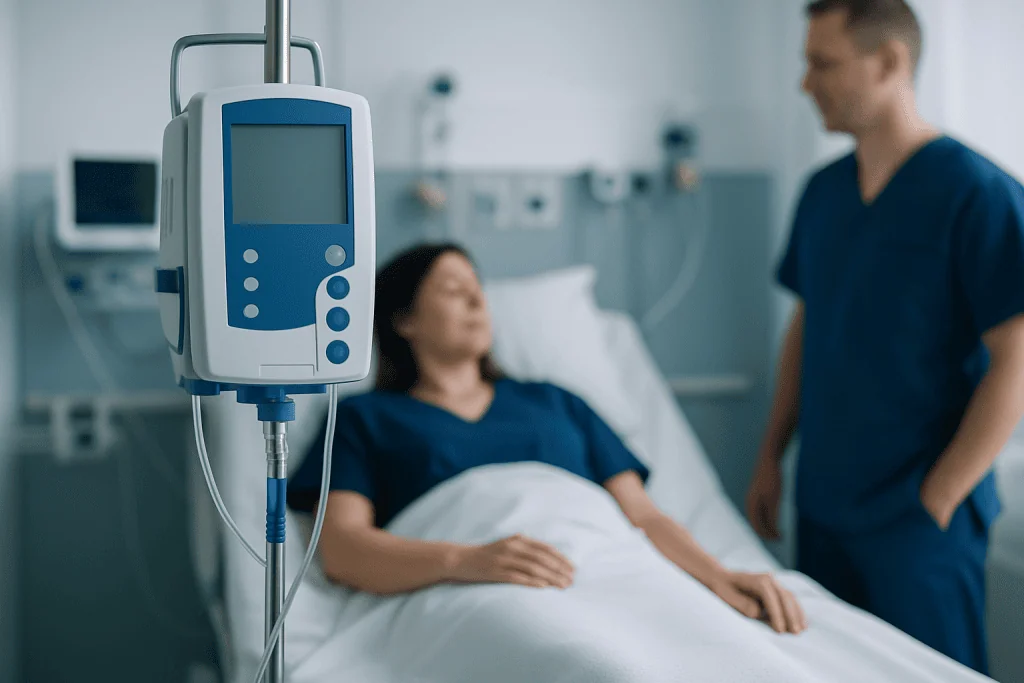
There is no single pain plan for all surgery. Someone having a short day procedure needs a very different approach from someone recovering from major abdominal, chest, or joint surgery. Several factors shape what your team chooses:
- The operation itself: its type and size, how long it takes, and whether it is open or minimally invasive. Keyhole and robotic techniques often mean smaller wounds, but they do not mean no pain.
- Your general health: age, weight, breathing conditions, kidney and liver function, and anything else that affects how your body handles medication.
- Your medication history: regular pain medicines, blood thinners, antidepressants, and supplements can all affect what is safe to prescribe. Mention them early and completely, including anything herbal or over the counter.
- Your previous experience: if a particular medicine made you sick, drowsy, itchy, or confused in the past, that history is useful and worth stating plainly.
One factor patients often underestimate is anxiety. Worry does not just feel bad — it can make pain feel more intense. If you are anxious about pain, say so before the operation. Teams can often help simply by explaining what to expect hour by hour and day by day, which removes the fear of the unknown. If language is a concern, interpreter support exists precisely so that describing pain accurately never depends on your Turkish or your medical vocabulary. If you want a structured way to prepare for that conversation, our guide on questions to ask about pain control after surgery in Turkey lists the points worth raising before your procedure.
The kinds of pain relief you may receive

Modern pain control rarely relies on a single drug. Most patients receive a combination of methods, chosen to work together so that no one medicine has to do all the work at a high dose. Depending on your operation, the combination may include:
- Regular tablets: simple analgesics and anti-inflammatories given on a schedule, often the backbone of the plan.
- Intravenous medicine: given through a drip in hospital, particularly in the first hours and days when swallowing tablets may be difficult or slower-acting.
- Local anaesthetic techniques: nerve blocks, epidurals, or local anaesthetic placed in or around the wound during surgery, which can numb a region for hours or longer.
- Patient-controlled analgesia: for some major operations, a pump that lets you deliver a small, pre-set dose of medicine yourself by pressing a button, within safety limits programmed by the team.
- Supporting medicines: drugs for muscle spasm, inflammation, or nausea where appropriate.
You will also hear two terms worth knowing. Scheduled medicine is given at planned times to stop pain building up in the first place. Breakthrough medicine is the extra dose used when pain rises despite the regular plan. Pain is easier to control early than to chase once it is severe, which is why nurses ask you to report rising pain promptly rather than waiting until it feels overwhelming — the whole system is built around early reporting.
Not everything in the plan is a medicine. Positioning, ice or heat where your team advises it, holding a small pillow against an abdominal wound when coughing, short supervised walks, relaxation breathing, and decent sleep all contribute. For many operations, early movement is itself part of pain management, because stiffness increases discomfort. Even something as small as knowing how to raise the head of your bed properly makes a difference — see our guide to hospital bed controls and safe positioning after surgery in Turkey.
Finally, side effects are part of the picture, not a footnote. Drowsiness, dizziness, itching, nausea, constipation, and confusion can all occur with pain medicines. They are often manageable, and telling your team about them is how they get managed. Safe pain control is a balance: comfort on one side, alertness, breathing safety, and your ability to move on the other. A plan that leaves you comfortable but too sedated to breathe deeply is not a good plan, and your team will treat it accordingly.
What to expect in hospital and before discharge
In the first hours after surgery, expect close monitoring. Nurses check your pain score alongside your breathing, blood pressure, wound area, and mobility, and how well you are managing fluids and food. This is also when local anaesthetic from the operation may wear off, which can make pain rise noticeably — a known and expected pattern that the plan is designed to absorb, not a sign that something has gone wrong.
Before discharge, you should receive instructions that actually make sense to you. At a minimum, that means knowing:
- the name of each medicine and what it is for
- when to take it and whether to take it with food
- which medicine is for regular use and which is only for stronger, breakthrough pain
- which common side effects to expect, and which symptoms your instructions flag as needing attention
- when and how your follow-up will happen
If any of this is unclear, ask for it to be repeated, or written down in simple steps — and in your own language if English is not comfortable for you. This is normal to request, and it matters more than it seems: instructions that were perfectly clear in a hospital room have a way of blurring at 3 a.m. in a hotel.
For international patients, discharge planning stretches further than medicines. Moving around a hotel, climbing stairs, showering with a fresh wound, sleeping positions, and travel timing all come into it. Pain control is only one part of being ready to fly, and the decision involves your wound, your mobility, and the type of operation — our guide on when it is safe to fly home after surgery in Turkey explains how that judgement is made.
Managing pain safely at your hotel or recovery apartment
Once you leave hospital, the main challenge changes. It is no longer whether help is nearby — it is staying ahead of pain while pacing your activity sensibly. A few practical principles help:
- Follow the schedule, not the pain. Take scheduled medicines at their planned times rather than waiting for pain to become intense. Set phone alarms for dose times.
- Keep medicines in their original packaging, with the written instructions alongside, so there is never doubt about which tablet is which.
- Do not add medicines on your own. Over-the-counter pain relievers can interact with your prescriptions or affect bleeding risk after certain operations. Decisions about adding, combining, or stopping any medicine belong with your treating doctor.
- Move a little, regularly. Short walks, light meals if allowed, and good hydration all support recovery. Rest matters, but a full day in bed can leave you stiffer and more uncomfortable, not less.
- Expect constipation to be a possibility. Surgery and pain medication together make it more likely, so ask before discharge what is safe to do about it.
- Stay off the road and away from big decisions while any medicine makes you drowsy, and ask before combining pain medicine with alcohol or sleep aids.
If a companion is travelling with you, walk them through the medicine schedule so a second person knows the plan. If you are alone, keep your phone charged, your written instructions by the bed, and your care coordinator’s details saved before you leave the hospital. Sorting this while you are still on the ward, rested and near the people who wrote the plan, is far easier than sorting it later.
How pain normally behaves in the days after surgery
Pain after surgery rarely follows a smooth downward line. Soreness, pulling, tightness, swelling, bruising, and discomfort with movement can all be part of a normal recovery. Pain often shifts from day to day: it may rise when local anaesthetic wears off, when you reduce a medicine, or when you start moving more. A slightly worse morning after a more active day is a common pattern, and improvement in the first week tends to be gradual rather than dramatic.
What clinicians pay attention to is the overall trend rather than any single reading. Pain that follows the expected course of your operation is treated differently from pain that steadily worsens, changes character, or arrives together with other new symptoms — and your discharge instructions will list the specific warning signs your team wants reported for your particular operation. Those instructions, written for your surgery and your circumstances, always take precedence over anything general you read online. For a fuller picture of how surgical teams think about this distinction, see our guide on when pain, swelling, or fever should prompt an urgent call after surgery in Turkey.
Step by step
- Raise pain concerns before surgery. Tell your team about worries over pain, nausea, constipation, allergies, or past reactions to anaesthesia or pain medicine. Every detail gives your surgeon and anaesthetist more to build with.
- Learn the pain scale and use it early. After surgery you will be asked to rate your pain from 0 to 10 at regular intervals. Reporting rising pain early makes it far easier to control than waiting until it is severe.
- Understand each medicine before discharge. Know what each one is for, its timing, which is scheduled and which is for breakthrough pain, and which side effects your instructions flag. Ask for it in writing, in plain language.
- Build a simple recovery routine. Alarms for doses, water within reach, and short walks and rest periods planned around your medication schedule. A predictable routine lowers stress and makes any change in your condition easier to notice.
- Use non-medicine comfort measures your team approves. Positioning, gentle movement, breathing exercises, and any advised cold or heat therapy can make a real difference between doses.
- Save your follow-up details before you leave the ward. Hospital numbers, your coordinator’s contact, and your follow-up schedule should be in your phone and on paper before discharge — while asking is effortless.
Your checklist
- Bring a complete list of your regular medicines, supplements, and allergies
- Ask how your pain will be monitored after the operation
- Confirm which medicines must not be combined with your prescriptions
- Set alarms for medication times after discharge
- Keep written instructions in English and, if needed, your own language
- Arrange help for the first 24 to 48 hours if you can
- Ask when you can walk, shower, climb stairs, and travel
- Know which warning signs your discharge instructions list for your operation
Key takeaways
- Pain control after surgery in Turkey is planned before the operation and monitored regularly afterwards, with the plan adjusted when it is not working.
- The goal is pain controlled well enough to rest, breathe deeply, and move safely — not the total absence of sensation.
- Most patients receive a combination of methods: scheduled tablets, intravenous medicine, local anaesthetic techniques, and non-drug measures.
- Your medicines, their timing, their side effects, and your operation’s warning signs should all be clear in writing before you leave hospital.
- Recovery pain normally fluctuates; the overall trend, judged against your discharge instructions, matters more than any single difficult hour.
Frequently asked questions
Will I be completely pain-free after surgery?
Usually not, and that is by design. The goal is pain controlled well enough for safe recovery: comfortable enough to rest, move carefully, breathe deeply, and follow your aftercare instructions. Some soreness is a normal part of healing after any operation.
How is pain measured in hospital?
Nurses typically ask you to rate your pain on a scale from 0 to 10 at regular intervals. The score is recorded alongside your other observations and used to decide whether your current plan is working or needs adjusting.
What if I am worried about strong pain medicines?
Say so before surgery. Plans can often be built around a combination of methods — tablets, local anaesthetic techniques, and non-drug measures — rather than relying on one strong medicine, and side effects such as nausea, drowsiness, or constipation can usually be anticipated and managed.
Can I buy extra pain medicine myself in Turkey?
Adding medicines on your own is not advisable. Some over-the-counter pain relievers interact with prescription medicines, affect bleeding risk, or are unsuitable after certain operations. Any change to what you take is a decision for your treating doctor.
How long will I need pain medicine after surgery?
It depends on the type of operation, your general health, and how your recovery progresses. Some patients need only a short course; others reduce their medicine gradually over a longer period under their doctor’s guidance. Your discharge plan will set out what applies to you.
Is it normal for pain to increase when I start moving more?
Mild increases in discomfort are common when you begin walking, coughing, or changing position more often, and pain can also rise when local anaesthetic wears off. Your discharge instructions describe the pattern expected for your operation and list the signs that fall outside it.
What if I do not speak Turkish?
Hospitals experienced in international care provide interpreter and coordination support so you can describe pain accurately and understand your instructions. It is reasonable to ask for written instructions in your own language before discharge.
Can I fly soon after surgery if my pain is controlled?
Pain control is only one part of travel readiness. Your surgeon will also weigh your wound healing, mobility, the type of operation, and its specific risks before advising when travel is appropriate. That advice is individual and should not be assumed from pain levels alone.
Add us as a Preferred Source to see more of our trusted health content across Google Search, AI Overviews and Discover.

Update history
- PublishedJuly 8, 2026
- Medical review approvedSeptember 13, 2026
- Last content updateSeptember 12, 2026
References2
- Cleveland Clinic — Pain Control After Surgery — my.clevelandclinic.org
- MedlinePlus — After Surgery — medlineplus.gov
More Patient Guides

Septoplasty Recovery: Week by Week
Learn what to expect after deviated septum surgery: a week-by-week septoplasty recovery timeline, when it is usually safe to fly home, and…

Gallbladder Surgery Recovery: Week by Week
Learn what to expect after gallbladder surgery: a week-by-week recovery timeline, pain, diet, wound care, when it is safe to fly home…

Robotic Hysterectomy Recovery: Week by Week
Recovery from robotic hysterectomy week by week: pain, lifting, wounds, driving, flying home safely, warning signs and questions to ask before you…

Breast Reconstruction Recovery: Week by Week
DIEP flap recovery week by week: hospital stay, drains, pain, walking, showering, driving, when it is usually safe to fly home, and…