

Pain Management (Algology) Department
Acibadem's Pain Management unit treats chronic and cancer pain with image-guided blocks, radiofrequency and neuromodulation, across algology, physical medicine and neurology; remote review available.
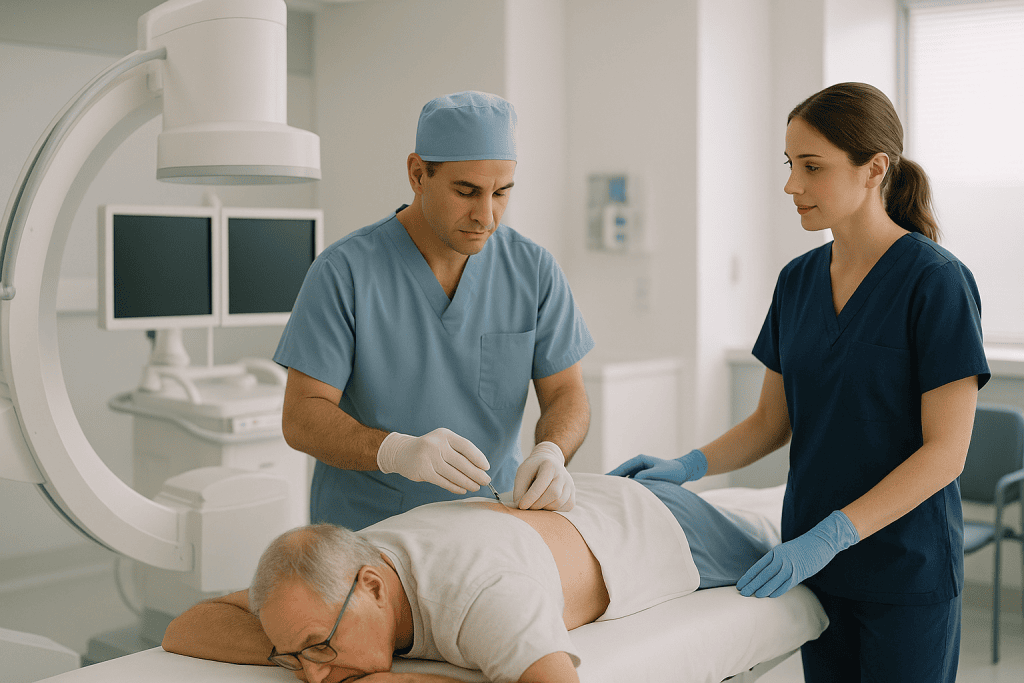
Pain is treated by its source, not by its score
Burning nerve pain, a worn joint and a headache are three different diseases. Which ladder you climb is decided by the assessment, never by a menu.
Nerve & Spine Pain
Sciatica, herniated disc, stenosis, failed back surgery, neuropathic and post-shingles pain, where image-guided blocks do their best work.
- First stepDiagnostic block
- ThenEpidural / transforaminal
- If refractoryNeuromodulation
Joint & Muscle Pain
Facet and sacroiliac joints, knee and shoulder, frozen shoulder, trigger points and myofascial pain, injection to open a window, rehabilitation to keep it open.
- Guided byX-ray or ultrasound
- Longer reliefRadiofrequency
- What makes it lastThe exercise programme
Headache & Cancer Pain
Migraine, cervicogenic and occipital headache, trigeminal neuralgia, and pain from cancer, where the pain unit works inside a wider team.
- Headache admissionRarely required
- Tracked withA daily pain diary
- Cancer painPlexus & sympathetic blocks
Details described here reflect Acibadem's published information and typical cases, not guarantees. What a pain clinic actually does →
Three specialties, one plan
Chronic pain is not owned by a single specialty. This unit deliberately spans algology for interventional procedures, physical medicine and rehabilitation for musculoskeletal and myofascial pain, and neurology for headache and nerve pain, so the treatment matches the source rather than the specialty you happened to reach first.
- ✓A diagnostic block before any radiofrequency treatment, always
- ✓A temporary trial stage before any implanted device
- ✓Image guidance, X-ray, ultrasound or CT, for interventional procedures
- ✓Rehabilitation planned alongside the procedure, not after it
- ✓An honest answer when a needle is not what you need
What an interventional pain unit can actually offer
Each of these is explained in full below, what it is, who it helps, and what it honestly cannot do.
A block that gives only short relief is not a failure: it is the information that decides what comes next. Honest expectations → · When pain needs urgent help →
When a second opinion is worth the week it costs
Pain medicine has real grey zones. Asking again is not disloyalty to your current doctor.
Send your imaging and a list of what you have already tried: you get an honest written assessment back. Request a second opinion →
From your first email to an exercise plan that holds
- Send recordsImaging, reports, and what you have already tried, including what did not work.
- Team reviewIs an interventional approach likely to help, and which specialty should lead?
- Plan & estimateWritten and itemised, with realistic expectations and a visa letter if needed.
- AssessmentExamination on arrival: a plan built on records stays provisional until then.
- Block, then treatThe diagnostic step comes first; its result decides what follows.
- RehabilitationThe exercise programme that turns a window of relief into a lasting change.
What is arranged for you
Everything you want to know, answered below
Quick answer
The Pain Management (Algology) Department diagnoses and treats acute and chronic pain using a multidisciplinary approach that targets the source of pain and improves daily function. At Acibadem in Turkey, algology specialists evaluate pain related to the spine, nerves, joints, cancer, or surgery and manage it with personalized plans that may include medication, image-guided interventions, rehabilitation, and support from other…
Pain that has lasted for months is not the same illness as pain that started yesterday. Once pain outlives the injury that caused it, the nervous system itself changes, and the treatment has to change with it. That is what a pain clinic is for. Acıbadem’s Pain Management (Algology) unit treats chronic and cancer pain with image-guided injections and nerve blocks, radiofrequency and neuromodulation, alongside physical, pharmacological and psychological care. This page explains, plainly, what each of those procedures is, which conditions they help, what the evidence supports, and what pain medicine honestly cannot do.
What a pain clinic actually does
Algology, pain medicine, is a specialty in its own right. Its practitioners come mainly from anaesthesiology, and increasingly from neurology and physical medicine, and they spend their working lives on one problem: pain that has stopped being a useful warning signal.
A pain clinic differs from other specialties in three ways:
- Pain itself is the diagnosis under investigation, not a symptom to be noted on the way to something else. The question is not only “what is damaged?” but “why does this still hurt, and which nerve is carrying it?”
- The tools are targeted. Image-guided injections and nerve blocks reach a specific structure rather than flooding the whole body with medication.
- The plan is multidisciplinary by design. Acıbadem’s own published material on headache describes exactly this model: a pain unit working alongside whichever other specialties are relevant to what is actually driving the pain.
Two honest framings before anything else. First, the goal in chronic pain is usually reduction, not abolitionAcıbadem’s published headache material states the aim as reducing the frequency and severity of pain. Second, a nerve block that relieves pain for a few hours is not a failure; it is diagnostic information telling your doctor which nerve is guilty.
Your pain team
Chronic pain is treated by different specialists depending on its source, which is why this unit deliberately spans three disciplines: algology for interventional pain procedures, physical medicine and rehabilitation for musculoskeletal and myofascial pain, and neurology for headache and nerve pain.
Chronic pain: when pain becomes the disease
Pain is normally an alarm. Tissue is damaged, nerves report it, the brain produces pain, you protect the area, it heals, the alarm stops. Chronic pain is what happens when the alarm keeps sounding after the fire is out.
By international classification, pain is usually called chronic once it has persisted beyond about three months, or beyond the expected healing time of the original injury. Acıbadem’s published material on chronic pelvic pain, for instance, defines that condition as pain lasting more than six months.
What changes in long-standing pain:
- Sensitisation. Pain pathways become more excitable. The same stimulus produces more pain, and stimuli that should not hurt at all, light touch, cool air, begin to.
- Spread. Pain that began in one place may become harder to localise.
- Sleep and mood. Pain disturbs sleep; poor sleep amplifies pain; low mood amplifies it further. This is not weakness and it is not “in your head”: it is measurable neurobiology, and it is treatable.
- Deconditioning. Avoiding movement protects nothing in chronic pain and steadily reduces what you can do.
This is why treatment is rarely one thing. An injection that removes the pain but leaves you deconditioned, sleepless and frightened of movement has solved a third of the problem.
The pain assessment
A first pain consultation is longer than most appointments, because the history is the diagnostic test.
- The story. Where it hurts, when it started, what it feels like. Burning, electric and shooting suggest nerve pain; deep, aching and movement-related suggests musculoskeletal pain; cramping and colicky suggests visceral pain. These are different diseases with different treatments.
- What makes it better and worse.
- Examination. Including sensory testing, movement, and pressing on the structures suspected of generating the pain.
- Imaging, read with care. MRI findings and pain correlate loosely. Disc bulges are common in people with no pain at all. Imaging is used to explain your symptoms, never to replace them.
- Diagnostic blocks. Sometimes the only way to identify the source is to anaesthetise a candidate nerve and see what happens.
- Function and mood. What the pain stops you doing, and how you are sleeping and coping. Both change the treatment plan.
Acıbadem’s published headache material describes a practical follow-up tool worth adopting for any chronic pain: a pain diary, filled in daily, so that the doctor can see the trend rather than the single bad day you happened to attend on.
Which specialist leads which pain
Which of the three disciplines leads depends on where the pain comes from, not on how severe it is. You do not have to work this out yourself: the routing is decided after assessment. It is set out so you can see how the unit is organised and which page is worth reading next.
| Pain pattern | Usually led by | Likely first step |
|---|---|---|
| Migraine, chronic daily headache, facial neuralgia | Neurology, with algology | Pain diary and a preventive plan; nerve block where indicated |
| Myofascial pain, widespread pain, tendon and posture problems | Physical medicine and rehabilitation | Examination, graded exercise, trigger point treatment |
| Radicular pain, facet and sacroiliac pain, nerve entrapment | Algology | Image-guided diagnostic block |
| Joint pain where surgery is being considered | Orthopaedics, with algology | Decision between replacement and injection |
| Cancer pain | Algology with medical oncology | Medication review; plexus block where appropriate |
| Jaw pain, clenching, bite problems | Dental and oral health | Jaw and bite assessment before any injection |
| Pelvic pain | Gynaecology or urology first, then algology | Exclusion of active disease |
Lower back pain: the most common reason people come
Most back pain is not dangerous and improves. The pain clinic sees the fraction that does not.
The useful question is not “is my back damaged?” but “which structure is producing this pain?”, because the answer determines the treatment:
- Discogenic painfrom the disc itself. Typically worse with sitting, bending and flexion.
- Facet joint painfrom the small paired joints at the back of the spine. Typically worse with extension, twisting and standing, and often better sitting.
- Sacroiliac joint painlow, to one side, often pointed to with one finger just below the belt line.
- Radicular pain (sciatica)a compressed or irritated nerve root, producing leg pain that follows a nerve’s territory.
- Myofascial paintrigger points in muscle, tender and referring pain in predictable patterns.
Serious causes are rare but must be excluded first: unexplained weight loss, fever, a history of cancer, night pain that wakes you, progressive weakness, or any disturbance of bladder or bowel control. New numbness between the legs or around the back passage, difficulty passing or controlling urine, loss of bowel control, or sciatica affecting both legs is a surgical emergency, known as cauda equina syndrome. Any one of them on its own is enough to make the diagnosis a possibility.
Sciatica: leg pain that starts in the back
Sciatica is not a diagnosis in itself: it describes pain travelling down the leg along the territory of the sciatic nerve, usually because a nerve root in the lower back is compressed or inflamed.
Typical features are pain below the knee, often worse than the back pain itself, with burning or electric quality, sometimes with numbness, tingling or weakness in a pattern that matches one nerve root.
Most sciatica improves without surgery, though it can take weeks to months, but not all of it can be waited out. New or worsening weakness in the leg or foot, numbness between the legs, loss of bladder or bowel control, or sciatica down both legs is an emergency: these are treated within hours. Where none of those is present, treatment escalates in order, activity modification and physiotherapy, appropriate medication for nerve pain, then a transforaminal or epidural steroid injection placed at the affected root under imaging guidance when pain is severe or slow to settle. Surgery is arranged urgently for progressive weakness, and considered electively for unmanageable pain or failure of everything else, and a pain clinic’s job includes telling you honestly when surgery is the better answer.
Herniated disc: what it means and what it does not
A herniated disc is a disc whose inner material has pushed through its outer ring, sometimes pressing on or inflaming a nearby nerve root.
Three things worth knowing, and one exception that matters:
- A herniation on a scan is not automatically the cause of your pain. Disc herniations are found in people with no symptoms whatsoever, and their frequency rises with age.
- Herniations frequently shrink on their own. The body reabsorbs the extruded material over months. A follow-up scan often looks better than the first.
- Pain relief does not require the herniation to disappear. Much of the pain comes from inflammation around the nerve, which is precisely what a targeted steroid injection addresses.
- But some herniations cannot be waited out. If the herniation presses on the bundle of nerves at the base of the spine it causes numbness between the legs, difficulty passing or controlling urine, bowel incontinence, or weakness in both legs. That is rare, and it is an emergency, repaired within hours rather than weeks.
This is why an experienced pain physician is unimpressed by a dramatic MRI report and much more interested in whether your symptoms match the level shown.
Spinal stenosis and degenerative disc disease
Spinal stenosis is narrowing of the spinal canal, usually from age-related change. Its signature is neurogenic claudication: leg pain, heaviness or weakness that comes on with walking or standing and is relieved by sitting or leaning forward. People often notice they can push a shopping trolley much further than they can walk unaided.
Degenerative disc disease is a poor name for a normal process, discs lose water and height with age in everyone. It becomes a clinical problem only when it produces pain, instability or narrowing. Being told you have it is not a sentence; it is a description of a spine that has aged.
Pain-clinic options include epidural injections for the inflammatory component, facet joint treatment where those joints are the pain source, and a structured exercise programme, which for stenosis is one of the interventions most consistently worth trying, and which helps many people walk further, though how much it helps varies considerably from person to person.
Failed back surgery syndrome
Continuing pain after spine surgery is common enough to have its own name. It does not mean the surgery was done badly. The causes include scar tissue around a nerve, a wrong pain generator identified before surgery, a nerve already permanently sensitised, adjacent segment change, or pain that was never structural in the first place.
This group matters because it is one of the clearest indications for spinal cord stimulation. Acıbadem’s published material on spinal cord stimulation names failed back surgery syndrome explicitly among the conditions for which the method may be used, alongside neuropathic pain, complex regional pain syndrome and chronic pain resistant to medication.
Neck pain, whiplash and cervicogenic headache
The neck refers pain in ways that surprise people: to the shoulder blade, down the arm, into the head. Cervicogenic headache, headache generated by the upper cervical joints, is frequently mistaken for migraine for years.
Pain-clinic approaches include cervical facet joint blocks and, where diagnostic blocks confirm the source, radiofrequency treatment of the small nerves supplying those joints; cervical epidural injection for radicular arm pain; trigger point treatment for the muscular component; and posture and strengthening work, which for desk-based neck pain does more long-term good than any injection.
One pattern is not a pain-clinic problem and needs urgent assessment instead. Neck pain together with clumsy hands, dropping things, difficulty with buttons or picking up coins, heaviness or unsteadiness when walking, electric shocks running down the spine when you bend your neck forward, or any change in bladder control can mean the spinal cord itself is being compressed in the neck. That is a neurosurgical or spinal problem rather than an injection problem.
Trigeminal neuralgia
Trigeminal neuralgia produces some of the most severe pain known in medicine: sudden, electric-shock-like stabs in the face, lasting seconds, often triggered by something trivial, chewing, talking, a breeze, brushing teeth. Between attacks there may be no pain at all.
It is usually caused by a blood vessel compressing the trigeminal nerve where it leaves the brainstem, though it can also arise from multiple sclerosis or, rarely, a tumour, which is why imaging is part of the assessment rather than an optional extra.
The treatment ladder is well established: medication firstspecific anticonvulsant drugs, not ordinary painkillers, which do not work for this condition. When medication fails or is not tolerated, options include percutaneous procedures on the trigeminal ganglion, stereotactic radiosurgery, and microvascular decompression, a neurosurgical operation that addresses the compressing vessel directly. Choosing between them depends on your age, general health, MRI findings and preference, and the conversation belongs jointly to pain medicine and neurosurgery.
If your facial pain is constant, burning and aching rather than sharp and episodic, it is probably not classical trigeminal neuralgia, and the distinction changes the treatment entirely.
Neuropathic pain: when the nerve itself is the problem
Neuropathic pain arises from damage or disease in the nervous system rather than from ongoing tissue injury. It feels different, burning, shooting, electric, with pins and needles, numbness, or skin so sensitive that clothing hurts.
It also responds differently. Ordinary anti-inflammatory painkillers usually do little. The medicines with the best evidence are certain antidepressants and anticonvulsants, used specifically for their effect on nerve pain rather than for depression or epilepsy: a point worth understanding, because being handed an antidepressant for pain feels dismissive until someone explains the pharmacology.
Interventional options include nerve blocks, sympathetic blocks and, in selected refractory cases, neuromodulation.
Diabetic neuropathy
Painful diabetic neuropathy typically begins symmetrically in the feet, burning, tingling, numbness, worse at night, and progresses upward over time. It is one of the most common causes of neuropathic pain in the world.
Two goals run in parallel: glycaemic control, which is the main way of slowing the underlying nerve damage, improved steadily and with your diabetes team, never by tightening it sharply on your own, because a rapid drop can briefly make nerve pain much worse, alongside checking for other treatable contributors such as vitamin B12 deficiency or thyroid disease, and symptom control with nerve-pain medication. Foot care is not a footnote: reduced sensation means injuries go unnoticed, and daily foot inspection catches ulcers that are far harder to treat than the pain itself. A break in the skin, a blister, a blackened area, or a foot that has become red, hot or swollen is a diabetic foot problem rather than a pain problem, and a diabetic foot infection can destroy tissue within days.
Postherpetic neuralgia
Postherpetic neuralgia is pain that persists after a shingles rash has healed, in the same band of skin, burning, itching, and often with skin too sensitive to touch. It becomes more likely with increasing age.
Treatment includes nerve-pain medication, topical agents applied to the affected skin band, and nerve or sympathetic blocks in resistant cases. The most important point is preventive: shingles vaccination in the eligible age groups reduces the risk of both shingles and this complication, and early antiviral treatment during an acute attack matters. Antiviral treatment works only if it is started within about 72 hours of the rash appearing, and starting it reduces the chance of this long-term pain. Shingles involving the eye: a rash on the forehead, the eyelid or the tip of the nose, a red eye or affected vision, can damage sight permanently and is treated urgently.
Complex regional pain syndrome
Complex regional pain syndrome usually follows an injury, fracture or operation in a limb, and is defined by pain far out of proportion to the original event, accompanied by changes you can often see: swelling, colour and temperature difference between the two limbs, sweating changes, altered hair and nail growth, stiffness, and skin so sensitive that a bedsheet is unbearable.
Two principles dominate management. First, early treatment mattersthe longer it is left, the harder it becomes. Second, movement is treatment: physiotherapy and graded desensitisation are central, not optional adjuncts, and much of the interventional work exists to make that movement possible.
Interventional options include sympathetic blocks, stellate ganglion block for the arm, lumbar sympathetic block for the leg, and, in refractory cases, spinal cord stimulation. Acıbadem’s published material on spinal cord stimulation names complex regional pain syndrome among its indications.
Fibromyalgia and myofascial pain
Fibromyalgia is widespread pain with fatigue, unrefreshing sleep and cognitive fog, understood as a disorder of pain processing rather than of the muscles and joints themselves. It is real, it is common, and it is not diagnosed by exclusion alone.
The evidence here points somewhere uncomfortable for anyone hoping for a procedure: the strongest interventions are graded aerobic exercise, sleep management and psychological therapies, supported by specific medications. Injections and opioids perform poorly. A pain clinic that offers you a series of injections for fibromyalgia is not following the evidence.
Myofascial pain syndrome is a different thing that often accompanies it: taut bands and trigger points within muscle that are tender and refer pain in recognisable patterns. Here trigger point injections and dry needling do have a role, alongside stretching, posture correction and treatment of whatever is perpetuating the muscle overload.
Migraine and chronic headache
Headache is where a pain unit and neurology overlap most. Acıbadem’s published headache material states that neurologists lead the assessment, that the treatment goal is to reduce the frequency and severity of attacks, and that hospital admission is rarely required.
The single most useful thing to understand about chronic headache is medication overuse headache: taking acute painkillers too often, for many people more than about ten days a month, can itself convert episodic headache into daily headache. The treatment is withdrawal of the overused medication, which temporarily makes things worse before it makes them better. Plan this with your doctor rather than stopping on your ownsome acute headache medicines contain codeine, tramadol or another opioid, and stopping those abruptly is unsafe. Done with support, it is also far more likely to succeed.
Beyond that: preventive medication taken daily rather than at the time of attack; injectable preventive treatments for chronic migraine in eligible patients; occipital nerve blocks for occipital neuralgia and some cervicogenic and migraine presentations; and treatment of neck contributors. The pain diary described above is the tool that makes all of this measurable.
Cancer pain
Cancer pain deserves its own approach, because the calculus is different: the priority is comfort and function, and the long-term dependence concerns that dominate decades of non-cancer pain are weighed differently. The safety rules do not change: doses are still adjusted only by the prescribing team, and opioids combined with sleeping tablets, sedatives or alcohol can slow breathing dangerously whatever the diagnosis.
Treatment is layered, appropriate analgesia including opioids where indicated, drugs for the neuropathic component of tumour-related nerve pain, radiotherapy for painful bone metastases, and interventional procedures when medication alone is insufficient or its side effects are intolerable.
One pattern must never be managed as ordinary cancer pain. In anyone with a known or suspected cancer, new or worsening back pain, particularly band-like pain, or pain that is worse lying flat or at night, together with leg weakness or heaviness, numbness between the legs, unsteadiness, or any change in bladder or bowel control may mean a deposit in the spine is pressing on the spinal cord. Malignant spinal cord compression is a medical emergency. Treatment given within hours usually preserves the ability to walk; treatment given days later usually does not.
The interventional options include celiac plexus block for pain from pancreatic and upper abdominal malignancy, other sympathetic and plexus blocks by region, and intrathecal drug delivery in selected cases. This work is done alongside medical oncology and radiation oncology, not instead of them.
Shoulder, knee and joint pain
Joint pain reaches a pain clinic when injections are needed, when the joint is not yet ready for replacement, or when surgery is not an option.
Shoulder. Rotator cuff problems, subacromial impingement and calcific tendinitis respond to targeted injection combined with a specific rehabilitation programme: the exercise is what lasts. Frozen shoulder (adhesive capsulitis) is a distinct condition with a long natural history through freezing, frozen and thawing phases; intra-articular injection early can meaningfully reduce pain and shorten the miserable phase, and physiotherapy is essential throughout.
Knee. For osteoarthritis, the foundation is exercise, weight management and appropriate medication. Injections have a role, corticosteroid for a painful flare, other intra-articular agents in selected cases. Genicular nerve blocks, which target the small sensory nerves supplying the knee capsule, are used for knee osteoarthritis pain particularly in people who cannot have or do not want a replacement; a diagnostic block that works can be followed by radiofrequency treatment for longer relief.
Tennis elbow, plantar fasciitis and other tendon problems. These are largely load-management and rehabilitation problems, and repeated corticosteroid injection into a tendon can relieve pain in the short term while worsening the tendon over the longer term.
TMJ pain and facial pain
Temporomandibular joint pain presents as jaw ache, pain in front of the ear, clicking, limited opening, and headache. It is frequently linked to clenching and grinding, and it commonly coexists with neck pain and headache.
One condition must be ruled out before jaw and temple pain is treated as a joint problem. In anyone over 50, a new headache with tenderness over the temple, jaw or tongue ache that comes on while chewing and eases with rest, scalp soreness when brushing the hair, fever or weight loss, and above all any blurring, double vision or loss of vision, may be giant cell arteritis, inflammation of the arteries supplying the eye. It is treated as an emergency: treatment started early usually prevents blindness, and sight already lost is not recovered.
Management usually starts conservatively: a bite splint from dentistry, jaw exercises, heat, and addressing the stress and sleep patterns that drive clenching. Trigger point injection into the chewing muscles helps in selected cases.
Carpal tunnel and other nerve entrapments
Carpal tunnel syndrome, compression of the median nerve at the wrist, causes night-time numbness and tingling in the thumb, index and middle fingers, often relieved by shaking the hand. Nerve conduction studies confirm it.
Early or mild cases respond to night splinting and activity modification. A corticosteroid injection into the carpal tunnel, placed under ultrasound guidance, can relieve symptoms and also serves as useful information: a good response supports the diagnosis. Persistent symptoms, constant numbness or muscle wasting at the base of the thumb are indications to consider surgical release rather than to keep injecting.
The same reasoning applies to other entrapments, ulnar nerve at the elbow, lateral femoral cutaneous nerve in the thigh, tarsal tunnel at the ankle.
Chronic pelvic pain and pudendal neuralgia
Pelvic pain that has outlived its gynaecology or urology workup is core algology. Most people arrive having had a laparoscopy, a cystoscopy and repeated scans, and been told everything looks normal, heard as “there is nothing wrong with you”, when it means only that no visible disease was found. Sensitised nerves, an overactive pelvic floor and a painful scar leave nothing for a camera to see.
Pudendal neuralgia
The pudendal nerve supplies the perineum, the genitals and the skin around the back passage. Irritated or trapped, it burns or stabs like electricity, often with the sensation of sitting on an object that is not there. The pattern is the clue: worse the longer you sit, easier standing or lying down. The diagnosis is clinical, supported by a diagnostic block, no scan makes it.
What this unit can offer
- Pudendal nerve blocklocal anaesthetic with a corticosteroid, placed at the nerve under ultrasound or CT guidance. Relief while it works tells your doctor that nerve carries the pain.
- Superior hypogastric plexus blockfor deep visceral pelvic pain, including pain from pelvic malignancy.
- Ganglion impar blockfor perineal pain and pain at the base of the spine.
- Pelvic floor physiotherapyfor many people this changes more than any injection; the blocks exist partly to make it bearable.
If an active gynaecological or urological cause is still in question, gynaecology or urology leads and pain medicine works alongside.
Sudden severe pelvic pain is a different problem and is never managed as chronic pain. Pain that starts abruptly, pain with fever, pain with faintness or vomiting, any pelvic pain in someone who could be pregnant, sudden severe pain in a testicle, or being unable to pass urine at all belongs to emergency assessment rather than to a pain clinic. Torsion, ectopic pregnancy and pelvic infection are treated in hours.
Persistent pain after surgery and phantom limb pain
Pain still present months after an operation has a name for almost every operation. The mechanism is usually nerve injury, small sensory nerves cut, stretched or caught during a procedure that otherwise went as planned. It is not proof the surgery failed. Recognising it early matters: a nerve sensitised for years is harder to settle than one sensitised for months.
The named syndromes
- After chest surgery. Burning, band-like pain along the scar, often in a strip of skin that is numb at the same time.
- After breast surgery. Pain in the chest wall, armpit or inner upper arm, from injury to the nerve supplying it. Managed with breast health, not separately.
- After hernia repair. Groin pain, burning or dragging, sometimes with one tender point you can put a finger on.
- After amputation. Stump pain in the limb that remains, and phantom pain felt in the part that is gone. Phantom pain has a neurological mechanism and is treated as real, because it is.
What is done about it
Nerve-pain medication is usually the base. Intercostal and paravertebral blocks target chest wall pain; injection into a tender scar or a neuroma is diagnostic and therapeutic at once; radiofrequency is considered only where a block has confirmed the target. For phantom and stump pain, mirror therapy and graded desensitisation are treatment, not an afterthought, and a prosthesis that fits properly does more than any needle.
Before your next operation: if you already have chronic pain, or take opioids or nerve-pain medication, say so at the pre-operative visit. It changes the anaesthetic plan.
New or changing pain at the site of surgery for cancer is never assumed to be post-surgical painit is investigated first. A wound or scar that turns red, hot, swollen or discharging is a sign of infection rather than of persistent post-surgical pain.
Nerve blocks: what they are and what to expect
A nerve block is an injection of local anaesthetic, often with a corticosteroid, placed precisely at a nerve or the structure it supplies, under X-ray, ultrasound or CT guidance.
Blocks do two jobs. Diagnostically, if numbing a specific nerve reliably abolishes your pain, that nerve is very likely to be carrying it, information no scan can give. Single blocks can mislead, which is why a positive result is usually confirmed by repeating it before anything longer-lasting is considered. Therapeutically, reducing inflammation around an irritated nerve can give relief lasting far longer than the anaesthetic, and can open a window in which rehabilitation becomes possible.
Acıbadem’s published material for spinal injections describes the practicalities:
- You may be asked not to eat for around six hours beforehand.
- Bring your imaging, X-rays, CT and MRI, on the day.
- Bring a list of all your medicines, including blood thinners; some may need to be stopped before the procedure.
- Your position during the procedure matters, and monitoring equipment may be attached to follow your heart rate and breathing.
- Afterwards you may need to spend time in a recovery area and be monitored, and you will generally need someone to take you home.
- If the injection site is sore, ice can be applied for 10 to 20 minutes.
The same material lists the possible complications as headache, bleeding (rare) and infection (rare).
How the imaging for an injection is chosen
“Image-guided” is not one thing. Three methods are used, and the target decides which.
- Fluoroscopy, live X-ray. The standard for spinal, facet and sacroiliac work, because it shows bone in real time. Contrast is injected first: where it spreads confirms the needle is in the intended space and not in a blood vessel.
- Ultrasound. Shows nerves, tendons, muscle and vessels, and uses no radiation. Preferred for peripheral nerves, joints, the carpal tunnel and trigger points. It cannot see through bone.
- CT. For targets that are deep and ringed by structures to be avoided, sympathetic and celiac plexus work in particular.
People having repeated fluoroscopic procedures ask about radiation. Screening runs in short bursts, only while the needle is being positioned, and is kept to the minimum the procedure needs. Tell the team if you are or might be pregnant before any X-ray-guided procedure. An injection aimed at these targets by feel alone is not the same procedure.
Epidural and transforaminal steroid injections
An epidural injection places medication into the epidural space around the spinal nerves. Acıbadem’s published material on epidurals describes the technique, local anaesthetic injected into the epidural space to control pain by temporarily blocking nerve conduction, with the patient remaining conscious, and a fine catheter allowing the dose and duration to be adjusted where one is used. It is performed by an anaesthesiology specialist, and the effect begins to be felt within minutes.
In chronic pain the more targeted version is the transforaminal injection, delivered at the specific nerve root under imaging guidance: the usual choice for radicular pain such as sciatica.
The same source lists the recognised risks: headache from leakage of spinal fluid, which can last a few days; a drop in blood pressure producing dizziness and weakness; short-lived numbness or tingling as the local anaesthetic wears off; infection; allergic reaction; and, very rarely, spinal injury or longer-lasting nerve damage. It also notes that an epidural may not be suitable for people with certain conditions, bleeding disorders or active infection.
One warning matters more than all the others. Numbness or tingling from the injection itself wears off within hours. Back pain that becomes steadily worse, leg weakness, spreading numbness or difficulty passing urine appearing or increasing in the hours or days afterwards, fever, or redness and discharge at the injection site, even weeks later, are not part of that course. Bleeding or infection around the spinal cord is rare, but it has to be relieved within hours to avoid permanent damage.
Honest expectations: an epidural steroid injection is generally most useful for radicular pain, pain running down a limb from an irritated nerve root. It is far less useful for isolated mechanical back pain, and it is a treatment for a period of severe pain rather than a cure for the disc.
Facet joint and sacroiliac joint injections
Facet joints are the small paired joints at the back of each spinal level. When they are the pain source, the pattern is typically worse on extension and rotation and better sitting. The joint or the small medial branch nerves supplying it are injected under imaging guidance; because response to a single injection can mislead, a confirmatory second block is often performed before anything longer-lasting is considered.
Sacroiliac joint pain sits low and to one side, often exactly where a person points with one finger. Because the joint is deep and clinical tests are imperfect, an image-guided injection is both treatment and diagnostic confirmation.
If blocks reliably relieve the pain but the relief is short-lived, radiofrequency treatment of the nerves supplying the joint is the usual next step.
Sympathetic blocks: stellate ganglion and celiac plexus
The sympathetic nervous system carries some pain, particularly in nerve-injury syndromes and in pain from internal organs. Blocking it targets pain that ordinary approaches do not reach.
Stellate ganglion blocklocal anaesthetic placed at a sympathetic ganglion in the front of the neck, used for complex regional pain syndrome of the arm, some facial and head pain, and circulatory problems of the upper limb. A drooping eyelid, a small pupil and a stuffy nose on that side afterwards are expected temporary signs that the block reached its target, and they settle within hours. These are not expected: breathlessness, chest pain, hoarseness, or difficulty swallowing or coughing after the injection: the lung can rarely be nicked by the needle, and this can appear several hours after you have gone home.
Celiac plexus blockplaced at the nerve plexus in the upper abdomen, chiefly for pain from pancreatic cancer and other upper abdominal malignancy. Where it works, it can meaningfully reduce the opioid dose needed and the side effects that come with it.
Lumbar sympathetic blockthe leg equivalent of the stellate block, used in complex regional pain syndrome of the lower limb and in some vascular pain.
Radiofrequency treatment
Radiofrequency uses a current delivered through a fine needle to heat and interrupt a small sensory nerve, so that it stops carrying pain from a specific joint. It is not surgery, it does not remove anything, and the nerve regenerates over time, which is why relief is typically measured in months rather than being permanent, and why the procedure can be repeated.
It is used most often for facet joint pain in the neck and lower back, sacroiliac joint pain, and knee osteoarthritis pain through the genicular nerves.
The essential rule: radiofrequency follows a positive diagnostic block, never precedes it. Treating a nerve that was not carrying your pain produces no benefit and is a needle you did not need. A programme that offers radiofrequency without first confirming the target is skipping the step that makes it work.
Spinal cord stimulation
Spinal cord stimulation, sometimes called a pain pacemaker, places fine electrodes near the spinal cord to modify the pain signals reaching the brain.
Who it is for. Chronic neuropathic pain, failed back surgery syndrome, complex regional pain syndrome, and chronic pain that has not responded to medication.
It is done in two stages, and the first stage is a test. Temporary electrodes are placed and a trial stimulation performed; the source describes this trial as critically important in determining how the patient will respond. Only when the trial gives a positive result does the permanent implant proceed. This is the single most patient-friendly feature of the treatment: you find out whether it works for you before committing to it.
How it is placed. Through small incisions using minimally invasive surgical technique, with the electrode placement generally performed under local anaesthesia. The stimulator itself is then placed under the skin, usually in the abdominal or flank region.
Battery and maintenance. Battery life is generally 5 to 10 years depending on how heavily the device is used. When it is exhausted, it is replaced through a short minimally invasive procedure, and the source states that patients are usually discharged the same day.
Recovery. Recovery is described as rapid: patients can generally return to light activity within a few days and adapt fully to normal life in about two to four weeks, avoiding heavy lifting and sudden strenuous movements.
Afterwards. Pain level and device function are followed regularly, settings are optimised at review appointments, and patients are trained to use a remote control unit to adjust the stimulation themselves within limits set by their doctor.
Risks named by the source: infection; bleeding or haematoma; nerve or tissue injury during electrode placement; mild tingling from the device; reduced or increased stimulation if an electrode moves; and muscle spasms or sudden reflexes.
Implanted pumps
An implanted pump delivers medication directly into the fluid around the spinal cord, so that a very small dose achieves what a much larger oral dose would, with fewer systemic side effects.
Acıbadem’s published material describes baclofen pump implantation, and it is worth being precise about what that is: it is a treatment for severe muscle spasm and spasticityin spinal cord injury, cerebral palsy, multiple sclerosis and post-stroke spasticity, in which improved pain control is described as one of the benefits alongside reduced spasm and better quality of life. It is not presented as a treatment for chronic pain in general.
The pattern mirrors spinal cord stimulation: a temporary trial dose first to observe the response, and only then a decision on permanent implantation. The pump is placed under the skin, usually in the abdomen, with a catheter running to the intrathecal space. Refills are performed at intervals of one to six months depending on the dose, and the refill date is not flexible: if the reservoir runs empty, or the catheter blocks or breaks, the drug stops abruptly, and abrupt intrathecal baclofen withdrawal is life-threateninghigh fever, a sudden return of severe spasm, intense itching, confusion. It is treated as an emergency, and the refill schedule is what prevents it. Recovery after a pump implant depends on the individual and on what the pump is treating; your surgical team will tell you what to expect and when it is safe to travel. Specific timings are not something this page can promise.
Intrathecal drug delivery for cancer pain is a related but distinct treatment, considered case by case where medication and blocks have not achieved comfort.
The first 72 hours after an injection
Most of what alarms people after a spinal or joint injection is expected. A small group of things is not, and that group is dangerous.
Why it often hurts more before it hurts less
Two drugs are usually in the syringe, on different clocks. The local anaesthetic acts within minutes and wears off within hours: that early relief is the anaesthetic, not the treatment. The corticosteroid takes days to start and up to about two weeks to reach full effect, and in between there is often a steroid flare: the injected area aches more than before, commonly for the first two or three days. It feels like a failed procedure and it is not one. Judge the result at the review your doctor sets, not on day two.
What is normal
- Soreness and bruising at the puncture site; ice for 10 to 20 minutes helps.
- A heavy, weak or numb leg or arm for a few hours after a spinal injection. Do not drive until it has completely gone.
- A flushed, warm face and chest for a day or two after a corticosteroid.
- Broken sleep or a swing in mood in the first nights.
If you have diabetes
A corticosteroid injection raises blood glucose, sometimes considerably, for several days. Say you have diabetes before the injection is done, test more often than usual over those days, and tell your diabetes team. Do not adjust your diabetes medication yourself.
Write it down while it is happening
The block is also a measurement, lost if nobody records it. Note when the pain changed, how much went, what you could do that you could not before, and the hour it came back. “It helped a bit” cannot be acted on; “almost gone from eleven until the evening” decides what happens next.
What is not expected
Back pain that becomes steadily worse, leg weakness, spreading numbness or difficulty passing urine appearing or increasing in the hours or days afterwards, fever, or redness or discharge at the injection site, even weeks later, are not part of the expected course. Neither is a severe headache far worse sitting or standing than lying flat. Bleeding or infection around the spinal cord is rare and has to be relieved within hours.
Physical, manual and complementary treatments
Interventional procedures buy a window. What you do inside that window determines whether the relief lasts.
Acıbadem’s published material on pain treatment within physical medicine and rehabilitation describes the modalities used: hot and cold applications, electrotherapy, ultrasound and laser therapy and manual therapy. It also names acupuncture, dry needling and taping among frequently used complementary methods.
Some concrete numbers the source does state:
- Acupunctureneedles are generally left in place for 15 to 30 minutes, and a course of treatment averages 5 to 15 sessions, though some situations need more or fewer.
- Dry needlingincreased muscle soreness for 24 to 48 hours afterwards is normal, and any bruising at the treated area typically resolves within a week.
- Neural therapya session generally lasts 15 to 30 minutes, planned once or twice weekly depending on response; it is noted as unsuitable during the first three months of pregnancy.
Beyond these: graded exercise, which is the single most consistently effective long-term treatment for most chronic musculoskeletal pain; sleep work; and psychological approaches to pain, which are not about being told the pain is imaginary but about reducing the amplification that fear, poor sleep and inactivity add to it.
Psychological treatment of pain
Nobody is referred to a pain psychologist to be told the pain is imaginary. Pain is produced by a nervous system, and how loudly it is produced is changed by sleep, fear, mood and how much you move. That is why treatment aimed at those things lowers real pain in real bodies.
What it actually consists of
Pain-focused cognitive behavioural therapy is skills training with homework, structured and finite, not open-ended talking. Sessions cover what makes pain signals louder, the thoughts that spike the alarmthis means damage, I have to stopthe responses that quieten it, then real activities tested in between. Acceptance-based approaches work from the other end: instead of waiting for pain to fall before life resumes, they build up doing what matters to you while the pain is present.
Pacing and graded activity
Long-standing pain settles into boom and bust: a good day clears everything postponed, three bad days pay for it, and the average quietly falls. Pacing replaces “stop when it hurts” with a set quota done every day whatever the day feels like, raised in small steps. It feels like doing less at first. The aim is to raise the average day rather than to win the good ones.
Sleep as a pain treatment
Broken sleep amplifies pain by the next day, and pain breaks sleep: a loop, not a side issue. Consistent times, getting out of bed when you are awake rather than lying in it, cutting daytime naps, and treating sleep apnoea are pain interventions in their own right.
Pain management programmes
Where pain is widespread, long-standing or has resisted intervention, fibromyalgia, continuing pain after spine surgery, long-term opioids without benefit: the strongest option is a multidisciplinary programme: physiotherapy, psychological work and medical review together. It targets function rather than the pain score, and it is offered because the evidence supports it for that group, not as what is left when everything else has failed.
Pain that has brought someone to thoughts of ending their life is an emergency, and it is treatable.
Medication for chronic pain: the classes, named
Most people arrive already taking something, often nothing from the class that fits their kind of pain. Which drug suits you depends on your other conditions, your kidney and liver function, your age and everything else you take.
Tissue, joint and mechanical pain
- Topical agentsanti-inflammatory gels, capsaicin and lidocaine preparations. Less reaches the rest of the body than from a tablet, which makes them a sensible first step in localised joint pain and over a single band of skin in postherpetic neuralgia.
- Paracetamol (acetaminophen)modest effect, few interactions; background rather than the drug that carries the pain.
- NSAIDsibuprofen, naproxen, diclofenac. Useful for inflammatory pain and for flares. Continuous daily use is where the harm sits: stomach ulceration and bleeding, kidney injury, raised blood pressure and cardiovascular risk, and more of all of it in older people, in kidney disease, and on blood thinners. A bleeding ulcer is an emergency treated within hours, and it shows itself as black or tarry stools, vomiting blood or something resembling coffee grounds, or sudden severe abdominal pain.
Why that ladder fails in nerve pain
Neuropathic pain is not inflammation in a tissue; it is signalling in a damaged nerve. Anti-inflammatories and paracetamol do little, and people conclude their pain is untreatable when they are on the wrong shelf. The best-evidenced classes come from epilepsy and depression medicine:
- Gabapentinoidsgabapentin and pregabalin, which quieten excitable nerve signalling.
- Tricyclicsamitriptyline and its relatives, at doses lower than those used to treat depression. Being offered one is not a comment on whether your pain is real. Where low mood has genuinely joined chronic pain, as it often does, the psychiatry unit’s medical-illness work treats it as part of the pain problem rather than a separate file.
- SNRIsduloxetine and similar, with evidence in diabetic neuropathy and some musculoskeletal pain.
- Carbamazepinefirst-line specifically for trigeminal neuralgia, where ordinary painkillers do not work.
Judging them properly
These are started low and raised in steps, and the useful dose is reached over two to four weeks. That is how they are most often abandoned, taken for three days, judged useless, stopped, because the side effects arrive before the benefit: sedation, dizziness, unsteadiness, dry mouth, weight gain. In older people the one that matters is falling.
Do not start, stop, restart or change the dose of any of these on your own. Gabapentinoids are reduced gradually rather than halted, and with opioids, sleeping tablets or alcohol they add to slowed breathing. Muscle relaxants sedate and lose their usefulness, so they are not a long-term answer. Benzodiazepines are not pain relievers at all, dependence builds within weeks, and with opioids they form the combination in which fatal overdose is most likely.
One reaction outranks every side-effect list: a spreading rash, blistering, peeling skin, or ulcers in the mouth or eyes after starting an anticonvulsant, carbamazepine and lamotrigine in particularis a medical emergency.
The honest position on opioids
Opioids are essential drugs. In acute pain, in pain after surgery and in cancer pain, they relieve suffering that nothing else touches, and withholding them there is its own kind of harm.
In long-term non-cancer pain the picture is different, and pretending otherwise has caused enormous damage. The evidence for sustained benefit over years is weak, tolerance develops, and the risks, dependence, cognitive dulling, constipation, hormonal effects, falls in older people, paradoxically increased pain sensitivity, and, most seriously, slowed breathing that can be fatal, accumulate. The danger of a fatal overdose is highest in two situations: when opioids are combined with benzodiazepines, sleeping tablets, gabapentinoids or alcohol, and when a previous dose is restarted after any break in treatment, because tolerance falls within days. Never combine them without telling the prescribing doctor, and never restart an old dose after a gap without medical advice. Unusual drowsiness or confusion, or slow or noisy breathing in someone who cannot be woken, are the signs of opioid overdose.
What this unit does: uses opioids where they are appropriate, at the lowest effective dose, with a clear plan and review; prioritises the alternatives, targeted interventions, nerve-pain-specific medication, physical and psychological treatment; and, where someone is already on high-dose long-term opioids without benefit, offers a supervised, gradual reduction rather than abandonment. Never stop or reduce opioid medication abruptly on your ownwithdrawal from a substantial dose is dangerous and must be planned with a doctor.
What pain medicine can and cannot do
- Not every pain has an identifiable generator. Sometimes the honest conclusion after a full assessment is that no single structure is responsible, and the plan becomes management rather than a hunt for the culprit.
- Injections wear off. Duration varies enormously between people and procedures. Anyone promising you permanent relief from an injection is not telling you the truth.
- A failed block is information. If numbing a nerve does not change your pain, that nerve is not the source, and you have been spared a pointless larger procedure.
- Success is usually measured in function, not in a pain score of zero. Sleeping through the night, walking further, returning to work, playing with a grandchild: these are the outcomes that matter, and a meaningful reduction in pain intensity is a realistic target where abolition is not.
- Chronic pain treatment takes time. Some people improve within weeks; for others, chronic pain means months or years of follow-up and management.
When pain needs urgent assessment
Most chronic pain is not an emergency. A small number of presentations are, and they belong to emergency medicine rather than to a pain clinic: chest pain, or pain with breathlessness, sweating or nausea, which is assessed for cardiac causes regardless of any pain diagnosis already made; a sudden, severe headache reaching maximum intensity within seconds: a “thunderclap” headache; back pain with new difficulty passing or controlling urine, new bowel incontinence, numbness in the saddle area between the legs, or sciatica down both legs, which is assessed and operated on within hours rather than days; rapidly progressing weakness in a limb, or a limb that is becoming numb; back or neck pain with fever, or in someone with a recent infection, injectable drug use or a suppressed immune system; headache with fever and a stiff neck, with new confusion, or with a first-ever seizure; a new severe headache after a head injury, or in someone taking blood-thinning medication; a hot, swollen, exquisitely painful joint, particularly with fever; severe unremitting night pain, unexplained weight loss, or new severe pain in someone with a history of cancer; spreading redness, discharge or fever at the site of an injection or implant, a severe worsening headache when upright, or new weakness or numbness after one; and, in anyone with an implanted baclofen pump, a missed refill, a device alarm, or the sudden return of severe spasm with fever, confusion or intense itching, because baclofen withdrawal can be life-threatening.
Every pain medicine a person takes, and any implanted device, belongs in the history at that point: a stimulator or a pump changes how someone is assessed and treated.
A second opinion on your pain plan
Pain medicine has genuine grey zones, and second opinions are reasonable in several situations: when surgery has been recommended for pain and you are unsure; when injections have been repeated many times without lasting benefit; when you have been offered nothing beyond escalating medication; when a diagnosis has never really been made; or when you have been told nothing more can be done.
You can request a written second opinion on an existing diagnosis or plan. Where the existing plan is right, an honest review says so.
What drives the cost
We do not publish a fixed price list for pain treatment, because the honest answer depends on what you actually need: the assessment, the imaging, which procedure, whether it is a single diagnostic block or a staged programme, and whether an implanted device is involved, which sits in an entirely different bracket from an injection.
What we do: review your records, tell you whether an intervention is likely to help, and provide a written, itemised estimate before you commit, including what is not covered and what would change the figure.
We will not quote a price before reading your case, or recommend a procedure because it is billable.
How long you need to be in Turkey
Block, confirm, then treat is the right way to practise interventional pain medicine and the awkward way to plan a trip.
What cannot be done remotely
The records review, the opinion on whether an intervention is likely to help, the proposed sequence and the written estimate are handled from a free consultation request. The examination is not. What decides which structure gets the needle is pressing on it, sensory testing, and what your pain does when you move, so the first appointment in Istanbul is a full assessment, and the plan can change at it.
A single injection or block
Day-case. You arrive fasted, are positioned and monitored, and the injection takes far less time than the preparation around it; then recovery, then discharge. You will generally need someone to take you home, so bring a companion, and do not treat the day of the procedure as a flying day. Ask when flying is safe before booking the return leg.
The diagnostic-first sequence
A diagnostic block, a confirmatory second block and then radiofrequency are three appointments, not one visit. The gaps exist so something can be observed: whether the pain went, how completely, for how long. Compressing that destroys the information the sequence exists to produce, so the intervals are clinical, not administrative. Whether it fits one trip or splits across two depends on what the first block shows, ask for it set out in nights, in writing.
Implanted devices
Spinal cord stimulation is two procedures with a trial between them, and the trial has to run long enough in ordinary daily life to mean anything. It is not a same-week package. The trial length, the gap before implantation and the stay around each stage are set by the implanting team and given to you as dates before you travel.
Once you are home
You leave with a summary for your own doctors, a medication plan, an exercise programme and a device card if you have an implant. Follow-up, stimulator settings and medication reviews are handled remotely where they can be.
What we will not promise
- We will not promise to eliminate your pain. The realistic goal in chronic pain is meaningful reduction and better function.
- We will not offer a course of injections booked in advance regardless of how the first one goes.
- We will not abandon you if you are already taking long-term opioids.
- We will not tell you your pain is imaginary. Pain you feel is real, whatever the scan shows.
The international patient journey
- Send your records. Imaging, previous reports, a list of what you have already tried and what happened, and a short history, through a free consultation request.
- Team review. An assessment of whether an interventional approach is likely to help, and which specialty should lead.
- Written plan and estimate. With realistic expectations, the number of visits likely required, and a visa invitation letter if needed.
- Assessment on arrival. Examination and any confirmatory tests, because a plan built on records is always provisional until someone examines you.
- Diagnostic block, then treatment. Where the plan is interventional, the diagnostic step comes first and the result determines what follows.
- Rehabilitation. Physiotherapy and the exercise programme that turns a window of relief into a lasting change.
- Home with a plan. A full summary for your doctors, a medication plan, an exercise programme, a device card if you have an implant, and a named contact for questions and follow-up.
Why patients choose Acıbadem for pain management
- A pain unit spanning three disciplinesalgology, physical medicine and rehabilitation, and neurology, so the treatment matches the source of the pain.
- Image-guided interventional procedures, from diagnostic blocks through radiofrequency to neuromodulation, inside a large hospital group that includes seven JCI-accredited hospitals.
- Interpreters in more than 20 languages, so that explanations and consent conversations can take place in a language you understand.
- Written estimates and honest assessments, including the assessment that a procedure is not what you need.
Frequently Asked Questions
What is algology?
Algology is the medical specialty devoted to diagnosing and treating pain, particularly chronic pain. Its practitioners come mainly from anaesthesiology, and work alongside neurology, physical medicine and rehabilitation, neurosurgery and other specialties depending on the source of the pain.
When should I see a pain specialist?
Reasonable triggers are pain lasting beyond about three months or beyond the expected healing time; pain that is not responding to what your doctor has already tried; nerve-type pain that is burning, shooting or electric; pain preventing sleep, work or normal activity; or pain for which no clear cause has been established.
Does a nerve block hurt?
The skin is numbed first, so most people describe pressure rather than sharp pain during the procedure. You may be asked not to eat for around six hours beforehand, your position during the injection matters, monitoring equipment may be attached, and you will generally need someone to take you home afterwards. If the site is sore, ice for 10 to 20 minutes can help.
How long does a nerve block last?
It varies enormously, from hours, when the effect is purely the local anaesthetic, to weeks or months when inflammation around the nerve settles. Short relief is not a failure: it confirms which nerve is carrying the pain and guides what comes next. Nobody can honestly promise you a specific duration.
What are the risks of a spinal injection?
The recognised risks of a spinal injection are headache, bleeding (rare) and infection (rare). For epidural procedures the listed risks are headache from spinal fluid leakage lasting a few days, a fall in blood pressure causing dizziness and weakness, temporary nerve irritation with numbness or tingling, infection, allergic reaction and, very rarely, spinal injury or lasting nerve damage.
Do I need to stop my blood thinners before an injection?
Possibly: this must be decided by your doctors, never by you. Bring a list of all medicines including blood thinners, painkillers, over-the-counter drugs, herbal remedies and supplements: some may need to be stopped before the procedure. Stopping anticoagulation without medical advice carries its own serious risks.
What is the difference between an epidural and a transforaminal injection?
Both place medication around irritated spinal nerves. A transforaminal injection is the more targeted version, delivered precisely at one nerve root under imaging guidance, which is usually preferred for radicular pain such as sciatica. An interlaminar epidural spreads medication more broadly within the epidural space.
Will an epidural cure my herniated disc?
No. It treats the inflammation around the irritated nerve, which is what generates much of the pain, and it can provide a window in which rehabilitation becomes possible. Herniations frequently shrink on their own over months, and pain relief does not require the herniation to disappear.
What is radiofrequency ablation for pain?
A current delivered through a fine needle heats and interrupts a small sensory nerve so that it stops carrying pain from a specific joint, most often the facet joints of the neck or lower back, the sacroiliac joint, or the genicular nerves of the knee. Nothing is removed, the nerve regenerates over time, and relief is typically measured in months. It should always follow a diagnostic block that confirms the target.
Is radiofrequency treatment permanent?
No. The treated nerve regenerates, so pain commonly returns after a period usually measured in months rather than years. The procedure can be repeated. Anyone describing it as permanent is overselling it.
What is a genicular nerve block?
An injection targeting the small sensory nerves that supply the knee joint capsule, used for knee osteoarthritis pain, particularly in people who cannot have or do not want a knee replacement. A diagnostic block that relieves the pain can be followed by radiofrequency treatment of those nerves for longer-lasting relief.
What is a stellate ganglion block used for?
It targets a sympathetic ganglion at the front of the neck, and is used for complex regional pain syndrome affecting the arm, some head and facial pain, and circulatory problems of the upper limb. A temporarily drooping eyelid, small pupil and blocked nose on that side afterwards are expected signs that the block reached its target, and they settle within hours. Breathlessness, chest pain, hoarseness or difficulty swallowing after the injection are not expected: the lung can rarely be nicked by the needle.
Can a nerve block help cancer pain?
Yes, in the right situations. A celiac plexus block is used for pain from pancreatic and other upper abdominal cancers and can substantially reduce the opioid dose needed, which often means fewer side effects. Other plexus and sympathetic blocks are used by region, alongside oncology treatment rather than instead of it.
What is spinal cord stimulation, and who is it for?
Fine electrodes placed near the spinal cord modify the pain signals reaching the brain. It may be used for chronic neuropathic pain, failed back surgery syndrome, complex regional pain syndrome and medication-resistant chronic pain.
Do I have to commit to an implant straight away?
No, and this is the most reassuring feature of the treatment. It is done in two stages: temporary electrodes are placed and a trial stimulation performed, a step described as critically important in determining how you will respond, and only a positive trial leads to permanent implantation.
How long does a spinal cord stimulator battery last?
Battery life is generally 5 to 10 years depending on how heavily the device is used. When it is exhausted it is replaced through a short minimally invasive procedure, with discharge usually on the same day.
How long is the recovery after a stimulator implant?
Recovery is rapid: return to light activity generally within a few days and full adaptation to normal life in about two to four weeks, while avoiding heavy lifting and sudden strenuous movements.
Can I adjust the stimulator myself?
Yes, within limits. Patients are trained to use a remote control unit and can change the device settings within the boundaries their doctor sets, with settings also optimised at regular review appointments.
Is a baclofen pump the same as a pain pump?
No, and the distinction matters. Baclofen pump implantation is a treatment for severe muscle spasm and spasticity, in spinal cord injury, cerebral palsy, multiple sclerosis and after stroke, with improved pain control listed among its benefits. It is not presented as a general treatment for chronic pain. Like a stimulator, it begins with a temporary trial dose, and refills are performed at intervals of one to six months: a schedule that is not flexible, because if the pump runs empty the drug stops abruptly and baclofen withdrawal can be fatal. A device alarm, a missed refill, or a sudden return of severe spasm with fever, intense itching or confusion is treated as an emergency.
What is the best treatment for sciatica?
Most sciatica improves without surgery, though it can take weeks to months. Treatment escalates from activity modification and physiotherapy through nerve-pain medication to a targeted transforaminal or epidural steroid injection when pain is severe or slow to settle. Surgery is considered for progressive weakness, unmanageable pain, or failure of everything else.
Is trigeminal neuralgia treatable?
Yes. The first-line treatment is specific anticonvulsant medication rather than ordinary painkillers, which do not work for it. When medication fails or is not tolerated, options include percutaneous procedures on the trigeminal ganglion, stereotactic radiosurgery, and microvascular decompression surgery. The choice depends on your age, health, MRI findings and preference.
What helps fibromyalgia?
The strongest evidence supports graded aerobic exercise, sleep management and psychological therapies, supported by specific medications. Injections and opioids perform poorly. A clinic offering you a series of injections for fibromyalgia is not following the evidence, though coexisting myofascial trigger points are a separate problem where needling does help.
Why was I given an antidepressant for pain?
Certain antidepressants and anticonvulsants are among the most effective medicines for nerve pain, prescribed specifically for their action on pain pathways rather than for depression or epilepsy. It is not a comment on whether your pain is real, and it is not the same dose or purpose as when they are used psychiatrically.
Can painkillers cause headaches?
Yes, medication overuse headache is one of the most important and most missed causes of daily headache. Taking acute painkillers too frequently, for many people more than around ten days a month, can convert episodic headache into a constant one. Treatment means withdrawing the overused medication, which temporarily worsens things before improving them. Plan it with your doctor rather than stopping on your own, some acute painkillers contain codeine, tramadol or another opioid, where abrupt withdrawal is unsafe, and it is far easier with support either way.
How many acupuncture sessions will I need?
Needles are generally left in place for 15 to 30 minutes, and a course averages 5 to 15 sessions, though some situations need more or fewer.
Is dry needling supposed to make me sore?
Yes, briefly. Increased muscle soreness for 24 to 48 hours afterwards is normal, and any bruising at the treated area typically resolves within a week.
Will I need to stay in hospital?
Usually not. Most pain procedures are day-case, though you may need time in a recovery area and someone to take you home. Hospital admission is rarely required for headache treatment. Implanted devices involve a short admission.
Do you prescribe opioids?
Where they are appropriate, in acute, post-surgical and cancer pain especially, yes, at the lowest effective dose with a clear review plan. For long-term non-cancer pain the evidence for sustained benefit is weak and the risks accumulate, so alternatives are prioritised. If you are already on long-term opioids, any reduction is supervised and gradual. Never stop or reduce them abruptly on your own.
Can chronic pain be cured?
Sometimes the cause is treatable and the pain resolves. Often, chronic pain is managed rather than cured, and managed well, that can mean sleeping through the night, working, and doing things you had given up. The timescale is honest rather than comfortable: some people improve within weeks, while chronic cases may need months or years of follow-up.
How do I get started?
Send your imaging, previous reports, a list of treatments already tried and what happened, and a short history through a free consultation requestor request a written second opinion on an existing plan. The team reviews your case and returns an honest assessment, a proposed plan where one makes sense, and a written estimate. Free, confidential, and without obligation.
Conditions We Treat
Medically reviewed by the Acıbadem International Medical Board September 26, 2026
See our medical review board →
Update history
- PublishedJune 14, 2026
- Medical review approvedSeptember 26, 2026
- Last content updateSeptember 25, 2026
References4
- Pain ninds.nih.gov
- Back Pain niams.nih.gov
- Sciatica nhs.uk
- WHO Guidelines for the pharmacological and radiotherapeutic management of cancer pain in adults and adolescents who.int
Add us as a Preferred Source to see more of our trusted health content across Google Search, AI Overviews and Discover.
Treatments in Pain Management (Algology) Department
Specialists in this Unit





Available at these Hospitals





What patients say about this unit
★★★★★From 2,400+ verified patient reviews“I travelled from abroad for chronic disease management and the whole experience was seamless. Prof. Dr. Çalikuşu is clearly an expert and it showed at every stage. I am deeply grateful for everything.”
“I travelled from abroad for stress-management care and the whole experience was seamless. Dr. Ekşi made a stressful situation feel completely manageable. I have already recommended Acibadem to my family.”
“My daughter's seizure management was handled with such patience and kindness. Assoc. Prof. Aslan was wonderful with our child and so patient. I would recommend this team to anyone.”
“My chronic disease management was handled with real skill and genuine care. Dr. Sağırkaya is clearly an expert and it showed at every stage. The nursing staff were attentive and kind throughout.”
Patient stories from this unit
Speak with our medical team
Share your case and our international patient team will guide you to the right specialist, free of charge.