

At Acibadem, How We Explain Deposits, Payment Steps, and Billing Documents

Deposits, payment steps, and billing documents at Acibadem are explained clearly so you know when to pay, what documents you receive, and whom to ask in Turkey.
If you are planning treatment with Acibadem International, it helps to know how deposits, staged payments, and billing documents are usually handled. This guide walks you through what you may be asked to pay, when documents are shared, and how to stay organized before, during, and after your visit.
At a glance
- Best for: International patients arranging treatment and payment planning
- Covers: Deposits, payment timing, invoices, receipts, and insurance-style documents
- Good to prepare: Passport, treatment plan, quote, payment card or transfer details
- Who can help: Acibadem International patient services and billing teams
- When to ask questions: Before travel, on admission, and before discharge
Why payment details are explained early
When you are traveling for medical care, financial clarity matters just as much as travel timing and medical planning. You need to know what is expected before you leave home, what may be requested when you arrive, and which documents you should keep for your own records, employer, embassy, insurer, or local reimbursement process. A clear explanation reduces surprises and helps you focus on your care.
At Acibadem International, payment conversations are usually connected to your treatment plan and your expected hospital journey. This means deposits, admissions, extra tests, inpatient stays, and discharge paperwork are discussed in a practical sequence rather than as isolated charges. If something changes medically, billing steps may also need to change, so asking for updated explanations along the way is sensible and normal.
Because international patients often manage cross-border transfers, currency questions, and documentation for third parties, the most helpful approach is to ask for information in writing whenever possible. Written confirmations help you compare your quote with the final paperwork and make it easier to explain the costs back home if needed.
What a deposit usually means
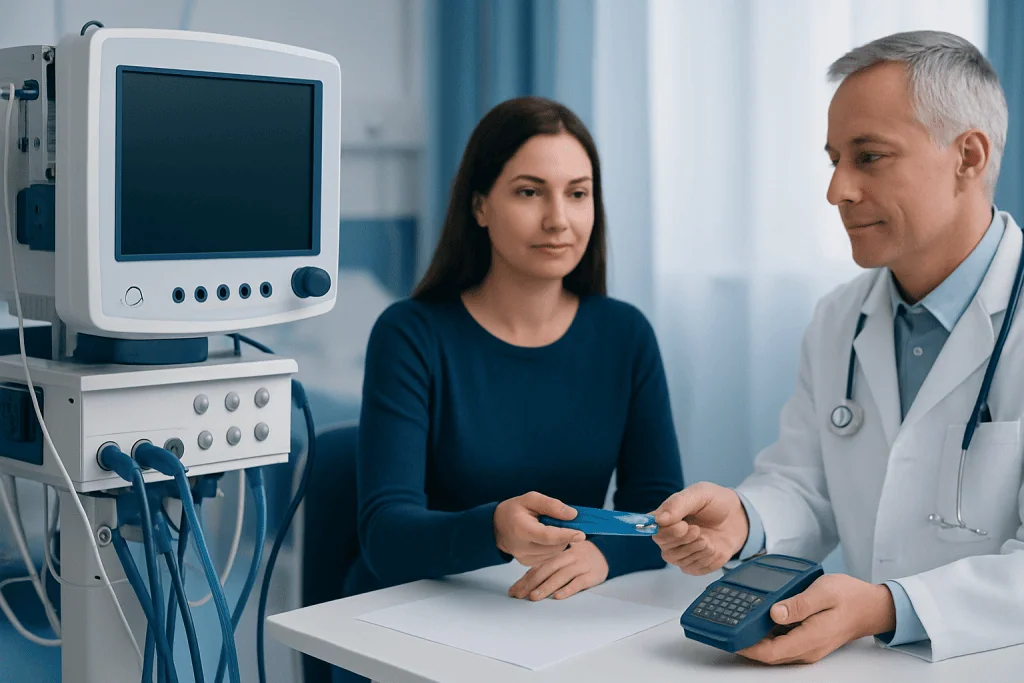
A deposit is usually an advance payment requested before admission, before a scheduled procedure, or at the start of services. In practical terms, it helps activate the financial side of your care plan so hospital admission, scheduling, and related arrangements can move forward smoothly. It is not the same thing as the final bill, and it may cover all or only part of the expected charges.
The amount and timing of a deposit can vary depending on the type of treatment, whether you are having outpatient or inpatient care, and whether additional services such as imaging, laboratory work, or implant-related items are expected. If your medical team recommends a change in the plan after new tests or consultations, the expected financial requirement may also be updated.
If you are unsure what the deposit includes, ask very directly. Useful questions include whether it applies to hospital charges only, whether doctor fees are included, whether pre-operative testing is included, and what happens if the plan changes. A good billing explanation should tell you what the deposit is intended to cover and whether any balance will be added or refunded later according to the final account.
- Ask when the deposit is due.
- Ask which services it is expected to cover.
- Ask whether the amount may change after new medical findings.
- Ask how any remaining balance or refund is handled.
How payment steps usually happen from quote to discharge

For many international patients, the payment journey begins with a treatment estimate or provisional quote based on the medical information shared in advance. This first document is useful for planning, but it is often not the final bill. It reflects the expected treatment path before your in-person examination, final specialist review, and any new test results in Turkey.
Once your plan is confirmed, you may be asked to make a deposit or prepayment. On arrival, the admissions or international patient team may review your identity documents, treatment plan, and payment status with you. If extra tests or consultations are added before treatment starts, the financial team may explain whether these are already included or whether an updated payment step is needed.
During your stay, any medically necessary changes can affect the final total. This is why it is helpful to request interim updates if your hospital stay becomes longer than expected or if additional services are recommended. Before discharge, the billing team generally prepares the closing paperwork, confirms whether there is an outstanding balance or credit, and provides the available billing documents and receipts.
Acibadem International teams can often help coordinate these discussions in a way that is easier for international patients to follow, including support from patient coordinators and interpreters where needed. If English is not your first language, ask for key payment points to be repeated slowly and clearly before you sign or settle anything.
Which billing documents you may receive
Billing documents are there to help you understand what you paid and why. Depending on your care journey, you may receive a quotation or cost estimate, a deposit confirmation, payment receipts, itemized billing paperwork, discharge account documents, and records intended for insurance submission or reimbursement support. Not every patient receives every document in the same format, so it is wise to ask what is available for your case.
An estimate usually shows the expected treatment and related charges before care starts. A receipt confirms that a payment was made, including the amount, date, and payment method. A final invoice or account statement is generally used to show the completed charges after treatment. If you need documents for a private insurer, employer, embassy, or local health authority, mention this early so the team can tell you what standard documentation can be prepared.
Keep in mind that hospital billing documents are not the same as medical reports. You may need both sets of papers before traveling home: one set for clinical follow-up and one for financial reimbursement or accounting. Ask whether your documents will be provided in print, digitally, or both, and check that your full name and passport details are correct on them if required for later use.
- Estimate or quotation before treatment
- Deposit confirmation or advance payment record
- Receipts for each payment made
- Final invoice or discharge billing summary
- Supporting documents for reimbursement requests, where available
What can change the final bill
The final bill may differ from the original estimate for understandable medical and logistical reasons. Additional imaging, laboratory tests, specialist opinions, consumables, medication needs, longer monitoring, or an extended hospital stay can all affect the total. Sometimes the opposite happens: if a planned service is not needed, the final amount may be lower than first expected.
This does not automatically mean there is a problem with your quote. In healthcare, initial estimates are based on the information available before the full in-person assessment. Once your doctors have examined you and reviewed up-to-date results, they may refine the treatment plan. The billing side then follows the medical reality of your care.
The most practical thing you can do is ask for updates as soon as the plan changes. If a new test or procedure is suggested, ask whether it changes your payment responsibility and whether you can receive a revised estimate. At JCI-accredited Acibadem hospitals, teams work within structured processes, but you should still feel comfortable asking for plain-language explanations at each stage.
How to stay organized and avoid last-minute stress
A little preparation makes payment steps much easier. Before you travel, keep one folder with your quote, coordinator emails, passport copy, appointment confirmations, and any insurer or embassy forms you may need. Save both digital and printed copies if possible. This is especially helpful if you are admitted quickly or if a family member needs to help with practical tasks while you focus on treatment.
When you arrive, verify the expected payment schedule rather than assuming it matches your earlier emails exactly. Ask whom to contact outside your appointment time if you have a billing question. If a companion is helping you manage finances, ask whether the hospital can note that person as a communication contact where appropriate.
Before discharge, do not wait until the last few minutes to ask for paperwork. Confirm which financial documents will be ready on the day, which may follow later, and how you will receive any pending documents after you return home. Acibadem International patient services can be particularly helpful here because international patients often need a coordinated handover of travel, medical, and billing information.
If you need reimbursement after returning home, review your documents while you are still in the hospital or hotel. It is much easier to correct a name spelling, passport number, or missing receipt before you leave Turkey than after international travel is complete.
Step by step
- Review your estimate carefully. Before you travel, read the quotation or treatment estimate line by line and compare it with the care plan you were told to expect. If anything is unclear, ask your coordinator to explain what is included, what is not included, and which parts may change after in-person evaluation.
- Confirm the deposit requirement. Ask whether a deposit is needed, how it should be paid, and by what date. Also ask what the deposit is intended to cover and whether it will be reconciled against the final bill at discharge.
- Check payment timing on arrival. When you come for admission or pre-treatment appointments, confirm whether any additional payment step is due that day. This is the right time to ask about extra tests, specialist consultations, or inpatient costs that may affect your account.
- Request updates if the treatment plan changes. If your doctor recommends further tests, a longer stay, or a revised procedure plan, ask for a billing update as well as a medical explanation. A short financial check-in during treatment can prevent confusion later.
- Collect receipts as you go. Keep a copy of every payment record, whether for deposits, top-up payments, or final settlement. This makes it easier to track your total spending and supports any later insurance or reimbursement request.
- Review the discharge account before leaving. Before you leave the hospital, ask the billing team to walk you through the final account summary. Confirm whether the account is fully settled and whether any refund, additional charge, or pending document remains.
- Store documents safely after travel. Once you return home, keep your invoice, receipts, and related billing papers together with your medical records. If a third party needs proof of treatment expenses, having a complete file will save time and reduce stress.
Your checklist
- Passport or ID used for hospital registration
- Treatment estimate or quotation
- Coordinator or patient services contact details
- Payment card, bank transfer proof, or approved payment method details
- Receipts for each payment already made
- Insurance, embassy, employer, or reimbursement forms if relevant
- A printed and digital folder for invoices and account summaries
- A companion's contact details if someone will help you manage paperwork
Key takeaways
- A deposit is usually an advance payment, not the final total.
- Your original estimate may change after in-person assessment or added services.
- Ask for receipts, updated estimates, and a final billing summary in writing.
- Keep billing documents separate from medical reports so you can find them easily later.
- Acibadem International patient services can help international patients coordinate payment questions and paperwork.
Frequently asked questions
Is the deposit the same as the final bill?
Usually no. A deposit is commonly an advance payment based on the expected care plan, while the final bill reflects the treatment and services actually provided. If your plan changes medically, the final amount may be higher or lower than the original estimate.
When should you ask questions about payment?
The best times are before travel, at admission, whenever the treatment plan changes, and before discharge. Asking early gives you time to understand the process and avoid last-minute surprises when you are trying to focus on travel or recovery.
What documents should you ask for before leaving the hospital?
At a minimum, ask for receipts for payments made and the final billing or account summary available for your case. If you need paperwork for insurance or reimbursement, mention that clearly and ask which supporting documents can be prepared.
Can the final amount change after tests in Turkey?
Yes, it can. New examinations, imaging, laboratory results, or specialist reviews may lead your doctors to adjust the treatment plan, and the billing may be updated accordingly. This is why revised estimates or interim explanations are useful during your stay.
Who can help if English is not your first language?
International patient services can often help coordinate communication, and interpreter support may be available depending on your needs. If you do not fully understand a payment explanation, ask for it to be repeated in simpler terms before you agree or sign anything.
Should you keep billing documents after you return home?
Yes. Keep them together with your travel and medical records in case your insurer, employer, tax adviser, embassy, or local health authority asks for proof of payment or treatment expenses later. Digital copies are useful in case paper versions are misplaced.
Add us as a Preferred Source to see more of our trusted health content across Google Search, AI Overviews and Discover.
More Patient Guides

At Acibadem, How We Explain Expected Clinical Outcomes and Treatment Success Information
Expected clinical outcomes at Acibadem are explained in clear, realistic terms so you understand likely benefits, limits, risks, and next steps in…
9 min read
At Acibadem, How Families and Companions Are Supported During Treatment Travel
At Acibadem, family support during treatment travel in Turkey includes interpreters, planning help, visitor guidance, and practical support for companions.
9 min read
At Acibadem, What Happens If Your In-Person Evaluation Changes the Initial Plan
In-person evaluation plan changes at Acibadem can happen if new findings appear in Turkey. Your team explains why, what changes, and your…
9 min read