

At Acibadem, How We Support Family Members During Your Treatment Journey

Acibadem supports family members with the practical side of a treatment journey: interpreter support for non-clinical conversations, hospital orientation, guidance on visiting arrangements, help coordinating accommodation and transfers, and clear points of contact for logistics. The aim is a companion who knows where to go, who to ask, and what the day is likely to look like — so they can focus on supporting you.
Who is coming with you, and what will they actually do all day? For many international patients, that question causes more quiet worry than the treatment itself. When you travel abroad for medical care, the person beside you is navigating a new country, a new hospital, and a lot of uncertainty — all at once.
This guide explains, in practical terms, how we support family members during your treatment journey at Acibadem: what companions can expect before arrival, at the hospital, during treatment days, and around discharge. It is about logistics, communication and comfort — not medical decisions, which stay between you and your care team.
At a glance
- Best for: Patients travelling with a spouse, parent, adult child, sibling, or close friend
- What families get: Practical help with communication, hospital orientation, accommodation planning, and day-to-day logistics
- Support style: International patient services, interpreter support for non-clinical conversations, and coordination across your stay
- When it helps most: Before arrival, on admission day, during long treatment days, and before discharge
- What it is not: A substitute for medical discussions, consent conversations, or clinical decisions — those remain with you and your doctors
How we support family members during your treatment journey
When people search for how we support family members during your treatment journey, they usually want to know three things: will my companion be lost in a foreign hospital, will language be a problem, and who answers the everyday questions that come up between appointments. The honest answer is that companion support is mostly unglamorous, practical work — and that is exactly what makes a treatment trip feel manageable.
At Acibadem, family support means your companion is not left to figure everything out alone while you are focused on tests, procedures, or recovery. In practice, that covers four areas:
- Communication: interpreter support and a named coordinator, so your companion can follow practical updates and ask non-clinical questions without guessing.
- Orientation: knowing which building, which desk, which waiting area, and roughly how long things take.
- Logistics: guidance on airport-to-hospital planning, transport between hospital and accommodation, and what documents to keep at hand.
- Predictability: a sense of what each day is likely to look like, including the parts that involve waiting.
What this support is not: it does not replace medical conversations, and it does not turn your companion into a spokesperson for clinical matters. Consent, privacy, and treatment discussions follow their own rules, and how much your family is included in those is your choice, stated by you. Support here means the practical journey around your care runs more smoothly — nothing more is promised, and nothing more is needed for most families to feel steady.
Before you arrive: helping your companion prepare

Support for family members starts well before anyone boards a plane. The single most useful decision you can make early is choosing your main companion — the one person who travels with you, or takes the lead if several relatives are involved. This person keeps documents organised, tracks appointment times, and relays practical news to family back home. One lead contact means fewer crossed wires; a group chat with six opinions is harder on everyone, including you. If your wider family will be following the trip from a distance, a simple remote family communication plan agreed in advance saves a surprising amount of stress later.
Before arrival, your companion should have the essentials in order:
- Their own passport and travel documents, alongside copies of yours
- The travel itinerary and hospital appointment details
- Copies of your medical records and a current medication list
- Insurance or payment documentation where relevant
- Emergency contact details, saved in their phone and written down
It also helps if your companion understands the broad shape of your treatment plan: whether there are tests first, whether an inpatient stay is likely, and whether you may need recovery days in Turkey before flying home. They do not need clinical detail — they need to know which days may be long, which may be quiet, and roughly when plans might shift.
Acibadem’s international patient teams routinely help with these early steps: guidance on required documents, airport-to-hospital planning, interpreter arrangements, and accommodation options near the hospital. The goal is simple — your companion lands already knowing what the first few days are likely to look like, instead of piecing it together at the arrivals hall. For a fuller picture of what companions can do at each stage, see how family members can support a patient during treatment in Turkey.
At the hospital: communication, orientation, and daily help

Large hospitals are disorienting even in your own language. For a companion in a new country, small things become stressful: which entrance to use, where to check in, where to wait, whether it is acceptable to step out for food. Clear orientation on the first day removes most of that friction. International patient staff can walk your companion through the layout, the check-in steps, and the rhythm of a typical day, so the unfamiliar becomes routine quickly.
Language support is often the most valuable piece. Interpreters can help your companion follow practical updates, understand non-clinical instructions, and ask everyday questions with confidence. This matters most when your family member speaks neither Turkish nor much English, or when they are trying to absorb a lot of information under stress. One important distinction: for medical conversations themselves, professional interpretation and family involvement work differently, and it is worth understanding whether a medical interpreter or a family member should help during appointments before your first consultation.
Beyond language, companions typically need guidance on:
- Visitor policies for the relevant ward or unit, which vary by treatment type and clinical circumstances
- Waiting areas, and realistic expectations about waiting times
- Food options in and around the hospital, and Wi-Fi access
- Transport back to the hotel, especially late in the day
- The best times and desks for administrative questions
None of this is dramatic. All of it is what makes the difference between a companion who spends the day anxious and lost, and one who has the bandwidth to actually support you.
During treatment: keeping your family informed
On treatment days, your companion is often juggling concern for you with practical tasks: meals, messages to relatives, hotel logistics, and the long stretches of waiting that hospitals involve. What helps most is knowing who to approach for updates about timing and next steps — while understanding that medical information itself is shared according to your consent and privacy preferences, not on request.
Tell your care team and international patient coordinator early who your main family contact is and what they should be told. Setting this expectation on day one prevents confusion later: your companion then knows when to stay nearby, when they can safely take a break, and what kinds of schedule changes are normal. If you are having an operation, it also helps for your companion to understand in advance how family updates during surgery actually work — including why updates come at certain points and not continuously.
Acibadem’s multidisciplinary structure helps here in a quiet way. When imaging, consultations, treatment, and inpatient care are coordinated across connected teams, your companion spends less time trying to work out what happens next and more time simply being present. That is a large part of how we support family members during your treatment journey: reducing the number of unknowns they have to carry.
One more honest point. Well-meaning companions can sometimes get in the way of rest, wound care routines, or ward schedules without realising it. Presence is valuable; constant presence is not always helpful. There is a separate guide on how family members can help without disrupting recovery, and it is worth a read before admission day.
Comfort, accommodation, and daily life for companions
A companion who is exhausted, hungry, or running on no sleep cannot support anyone well. Their wellbeing is not a luxury item on this trip — it is infrastructure. Before travelling, encourage your companion to plan for the basics: comfortable clothing, chargers and adapters, their own medications, regular meals, and enough rest. If the stay runs to several days or weeks, they should know how to move between hospital and accommodation safely and without drama.
Accommodation deserves real thought rather than a last-minute booking. Depending on your treatment plan, your companion may need somewhere close to the hospital, flexible about changing dates, and suitable for your recovery days after discharge — quiet, accessible, with space to rest. Acibadem’s international teams often help coordinate this, and the guide on family accommodation planning during treatment in Turkey covers the trade-offs in detail.
Companions should also build in genuine breaks. Many family members feel obliged to be present every minute, and quietly wear themselves down doing it. Short breaks for food, fresh air, prayer, or sleep make them more resilient over the whole stay. Say it to them directly: taking care of yourself is part of taking care of me. Caregiver organisations consistently describe rest, routine, and shared responsibility as the foundations of sustainable support — this is not indulgence, it is method.
- Pack light, but include daily essentials and personal medicines
- Choose accommodation with straightforward hospital access
- Save local transport options and the hospital address in Turkish on their phone
- Plan simple meals and a rest period into every day
Children, older relatives, and special family situations
Some journeys involve more complex companion needs. You may be travelling with an older spouse who tires quickly, a parent who finds busy hospital environments overwhelming, or a child who needs routine and reassurance. In these situations, planning ahead matters even more than usual.
If your companion has mobility limitations, sensory needs, language barriers, or health concerns of their own, share this with your international patient coordinator early in the planning stage. Support options vary by hospital and circumstance — no one should tell you otherwise — but knowing in advance lets the team suggest practical arrangements for arrivals, waiting, and moving around the campus. If the person needing extra consideration is the patient rather than the companion, the guide on supporting an elderly patient during treatment in Turkey addresses that scenario directly.
Families also differ in how they handle information. Some want one spokesperson and a single daily summary; others want a running group chat. Neither is wrong, but the choice should be deliberate. A short conversation before travel — who gets told what, by whom, and when — prevents the travelling companion from becoming an unpaid press office at the worst possible moment. It also helps to align everyone on realistic expectations about schedules and waiting; families who expect a fixed timetable tend to find hospital days harder than families who expect some flexibility.
Going home: discharge, follow-up, and the journey back
Family support does not switch off at discharge. Discharge day is often the busiest day of the stay: instructions to absorb, belongings to pack, medications to collect, transport to arrange. Your companion is frequently the second set of ears in the room, and a notebook or phone note for practical reminders is genuinely useful.
Before leaving the hospital, your companion should understand the outline of your onward plan: how medications will be obtained, when follow-up is expected, what travel considerations apply, and who to contact for administrative or logistical questions after discharge. If you are staying in Turkey for a short recovery period first, they should know which items matter most at the accommodation — and if a dressing or incision is involved, it helps to hear before discharge what the journey itself will involve.
Acibadem’s international teams also help with follow-up coordination across borders — scheduling remote check-ins where appropriate and keeping the paperwork side manageable. A calm, informed companion turns the journey back to the hotel, the airport, or your home country from a scramble into a plan. That, in the end, is how we support family members during your treatment journey: not by doing their job for them, but by making sure they always know what comes next.
Step by step
- Choose your main companion early. Decide who will travel with you or take the lead in supporting you. Pick someone organised, reachable by phone, and comfortable asking questions about schedules and logistics.
- Share key information before travel. Make sure your companion has copies of passports, appointments, medical summaries, medication lists, and emergency contacts, and understands the broad outline of the treatment plan — including which days may be long or changeable.
- State who should be included. Let your care team and international patient coordinator know who your main family contact is, so everyone understands who receives practical updates and who may accompany you when appropriate.
- Use interpreter and coordinator support. If language is a concern, ask for interpreter support for important conversations. Your coordinator can help your companion with directions, timing, and the non-clinical questions that come up daily.
- Create a simple daily routine. Agree on meal times, rest breaks, phone charging, and how you will stay in touch if you are in different parts of the hospital. Routine is what keeps uncertain days calm.
- Prepare for discharge together. Your companion should hear the practical instructions, note key contacts, medication arrangements, and travel plans, so the move back to accommodation or the airport runs smoothly.
Your checklist
- Choose one lead family contact and share their phone number with the hospital
- Carry passports, appointment details, and copies of medical records
- Prepare a list of current medications and allergies
- Confirm accommodation and transport plans before arrival
- Ask about interpreter support if language may be a barrier
- Pack daily essentials for the companion, including chargers and personal medicines
- Discuss visitor expectations and likely waiting times in advance
- Keep a notebook or phone note for questions, timings, and instructions
Key takeaways
- Family support during treatment is mostly communication, planning, and practical daily help — the unglamorous work that keeps a trip steady.
- Choosing one main companion and one family contact prevents most communication problems before they start.
- Interpreter and international patient services take the guesswork out of orientation, logistics, and everyday questions.
- A companion who plans their own rest, meals, and accommodation supports you better than one who runs themselves down.
- Discharge and follow-up go more smoothly when your companion has heard the practical instructions and knows the next steps.
Frequently asked questions
What are some examples of family support during medical treatment?
Practical examples include keeping documents and appointment times organised, being a second set of ears during instructions, handling meals and transport, relaying agreed updates to relatives at home, helping pack for discharge, and simply being a calm presence during waiting periods. Emotional steadiness and organisation matter more than any single grand gesture.
What are five ways you can help a family member during treatment?
Five reliable ones: take charge of logistics such as documents and transport; agree a communication plan so the patient is not fielding messages; note down practical instructions on their behalf; protect their rest by managing visitors and quiet time; and look after your own sleep and meals so you can sustain the role for the whole trip, not just the first day.
How can I support a family member having treatment abroad?
If you are travelling with them, focus on preparation: documents, accommodation close to the hospital, and a clear division of tasks. If you are supporting from home, agree one contact person for updates, keep questions grouped rather than constant, and avoid pressuring the travelling companion for real-time news during procedures, when updates naturally come at set points.
How can I be my own support system if I travel alone?
Solo patients replace a companion with structure: a written plan for documents, transfers, and appointments; interpreter support arranged in advance; a scheduled check-in call with someone at home; and realistic rest built into each day. Many international patients travel alone successfully — it takes more planning, not more courage.
Can a family member stay with me during my treatment at Acibadem?
It depends on your treatment type, the hospital area, and visitor policies at the time of your stay. In many situations a companion can spend substantial time with you and help practically, but access may be limited in some units for safety, privacy, or clinical reasons. Ask about the specific ward’s arrangements during planning.
Will my companion get help if they do not speak Turkish?
Yes. Language support is one of the main practical needs for international families, and interpreter support can be arranged so your companion can follow logistics, directions, and non-clinical guidance. For medical appointments themselves, professional interpretation is usually preferable to relying on a relative.
What if my companion is elderly or has special needs?
Share any mobility, sensory, or health needs with the international patient team as early as possible in planning. Options vary by hospital and circumstance, but advance notice allows more manageable arrangements for arrivals, waiting, and moving around the campus.
Does family support continue after discharge?
Yes. After discharge, companions typically help with medication collection, transport, rest planning, follow-up reminders, and practical communication until you travel home or finish a short recovery period in Turkey. International follow-up coordination can also continue once you are back in your own country.
Add us as a Preferred Source to see more of our trusted health content across Google Search, AI Overviews and Discover.

Update history
- PublishedAugust 16, 2026
- Medical review approvedSeptember 2, 2026
- Last content updateSeptember 1, 2026
References2
- Support for Caregivers of Cancer Patients — National Cancer Institute — cancer.gov
- Caregivers — MedlinePlus — medlineplus.gov
More Patient Guides
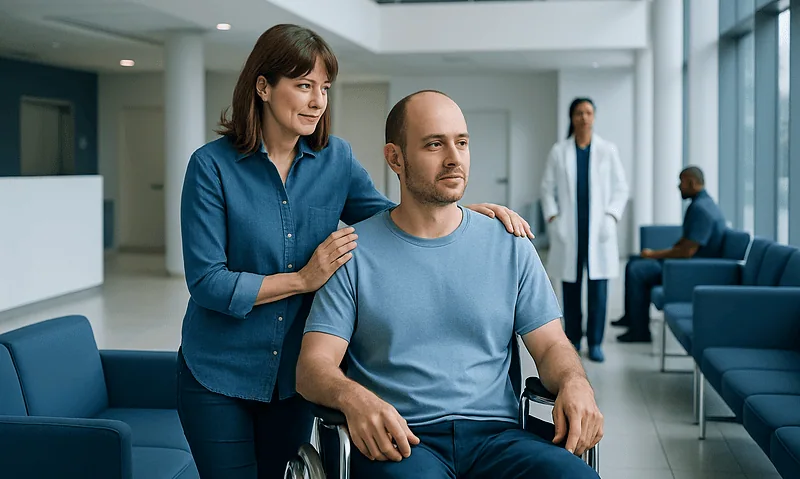
Medical Travel with a Companion: Who Should Come and Why
Medical travel with a companion can make treatment in Turkey easier by providing practical help, communication support and reassurance before and after…
8 min read
How to Prepare a Child for Medical Treatment in Turkey
Prepare a child for medical treatment in Turkey with age-appropriate explanations, travel planning, comfort items and family support in Istanbul.
8 min read
When to Bring a Family Member to Medical Appointments in Turkey
Bring a family member to medical appointments in Turkey when support, communication or care decisions may be needed.
8 min read
How Family Members Can Help Without Disrupting Recovery
Family support during recovery helps when you listen, organize practical tasks and follow the care plan without taking over, in Turkey or…
8 min read