

At Acibadem, How Your Discharge Summary and Medical Records Are Prepared

Before you leave an Acibadem hospital, your treating doctor confirms the medical details of your stay, your reports and prescriptions are compiled into a discharge file, and the international patient team helps you review the paperwork. You leave with a discharge summary plus supporting reports, and any results that finish later are shared through an agreed route.
You are packing, your flight is booked, and someone hands you a folder of papers. What is actually in it, and will your doctor at home be able to make sense of it?
Your discharge summary and medical records are what let you continue care safely once you are back home. At Acibadem, these documents are put together deliberately: they record what was done, what should happen next, and what information you need for travel, follow-up and any future treatment. This guide explains how your discharge summary and medical records are prepared, what the folder typically contains, and what to check before you leave the ward.
At a glance
- Best for: International patients who want to understand what documents they receive before flying home
- What you receive: A discharge summary plus relevant test reports, imaging reports, prescriptions and follow-up instructions
- Who prepares it: Your treating doctor confirms the medical content; ward staff and the international patient team compile and explain the file
- Language support: Interpreters and international patient coordinators can help you go through the paperwork before discharge
- Timing: Most documents are handed over on the day you leave; some results, such as certain pathology reports, may follow later through an agreed route
- Best moment to ask questions: Before discharge, while your care team can still clarify medicines, wound care and appointments face to face
How your discharge summary and medical records are prepared
Preparation starts before the paperwork does. Your treating doctor first reviews your recovery and confirms that you are ready to leave the hospital safely. Only then are the medical details of your stay written into a discharge summary: why you were admitted, what was found, what treatment or procedure you had, your condition at discharge, the medicines you are leaving with, and the follow-up your doctor recommends.
Around that summary, the rest of your file is assembled. Nurses and ward staff gather the reports that belong with your case — laboratory results, imaging reports, procedure notes — and the international patient team checks that the practical side is in order: that documents are complete, that you understand them, and that anything still pending has a clear route to reach you later.
Understanding how your discharge summary and medical records are prepared matters for a simple reason: the process is designed around continuity. A doctor in another country, working in a different health system, should be able to open your file and understand your care without guessing. That is the standard the documents are written to meet.
What your discharge summary is and why it matters
The discharge summary is the central document in your file. It condenses your hospital stay into a format another clinician can read quickly: admission reason, diagnosis, key findings, treatment given, discharge condition, medication list and next steps. It is not a full copy of your hospital chart — it is the working summary that makes the rest of the file usable.
If you are travelling internationally, this document does extra work. It helps the next doctor who sees you understand your care, and it can help you answer questions from airlines, travel insurers or healthcare staff if you need support during the journey home. A clear summary reduces the chance of repeated tests, misunderstood instructions or gaps in your medication history.
If you want a fuller breakdown of what a good summary contains item by item, see what your discharge summary should include before you fly home. The short version: if a stranger with medical training read only this one document, they should understand what happened to you and what should happen next.
What documents are usually prepared before you leave
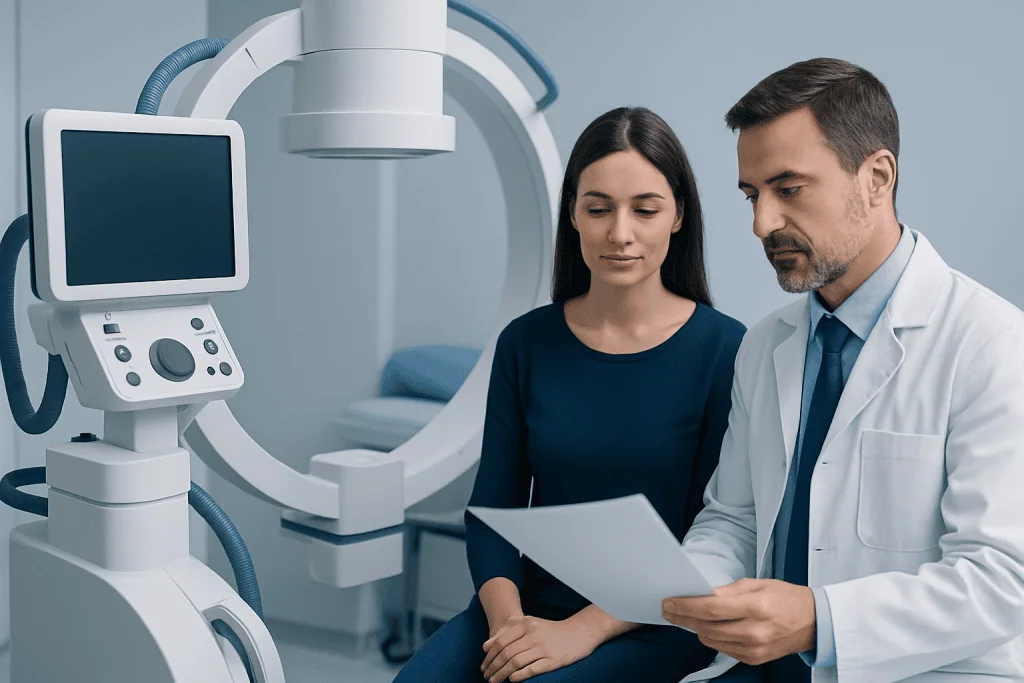
Your discharge file usually contains more than one document. The summary sits at the centre, but depending on your treatment you may also receive test reports, imaging reports, pathology results where available, prescriptions, medication instructions, implant or device information, and recommendations for follow-up appointments or rehabilitation.
| Document | What it covers | Why it matters at home |
|---|---|---|
| Discharge summary | Admission reason, diagnosis, treatment, discharge condition, next steps | Gives your local doctor the overview in one document |
| Medication list and prescriptions | What you are taking, doses and timing at discharge | Lets pharmacists and doctors continue or review your medicines accurately |
| Laboratory and imaging reports | Results relevant to your diagnosis and treatment | Reduces the need to repeat tests unnecessarily |
| Procedure or operation notes | What was done, technique and materials where relevant | Essential context if you ever need related treatment again |
| Implant or device documentation | Details of any implanted material or device | Needed for future imaging, airport security queries and follow-up care |
| Follow-up instructions | Wound care, activity limits, diet, appointment timing, warning signs to discuss with a doctor | Your day-to-day guide for the first days and weeks |
Not every patient receives the same set. Your file depends on the type of care you had, how long you stayed, whether you had surgery, and whether some results need extra processing time. If a report will be finalised after you leave — pathology is the common example — your team can tell you before discharge which documents you are taking with you and which will follow.
If you are unsure whether the folder is complete, ask before you leave the building. It is far easier to fix a gap while you are still on the ward than from an airport or another country.
How Acibadem prepares records for international patients
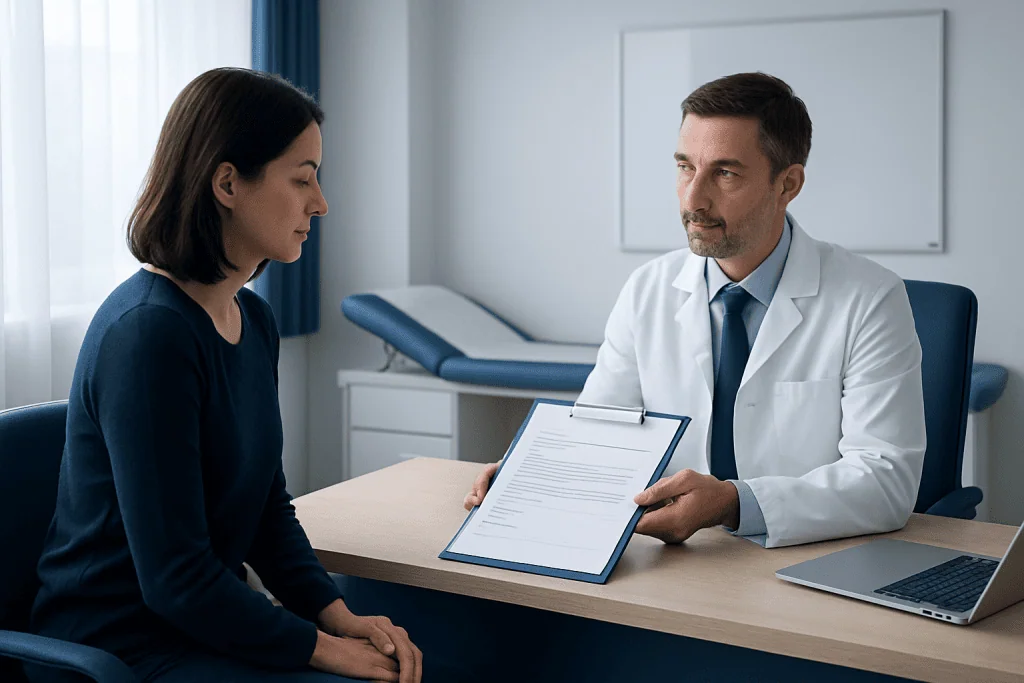
For international patients, record preparation is more than an administrative step. Your care may need to be understood by doctors in another country and often in another language context. Acibadem’s international patient teams coordinate this side of discharge so the documents are organised, legible and ready to support continuity of care abroad.
In practice, that means a few concrete things. Interpreters can sit with you while the paperwork is reviewed, so nothing important is lost between languages. Coordinators can explain which documents to keep in your hand luggage, which can travel digitally, and how later results will reach you. And because the teams work with cross-border patients every day, they know the questions that tend to arise at airports, transit points and first appointments back home.
This is also part of how your discharge summary and medical records are prepared with your home doctor in mind: the aim is a file that travels well, not just a file that satisfies internal hospital procedure. How your data is handled and shared along the way is governed by consent rules, which are explained in our guide to medical records privacy in Turkey.
Reports that may arrive after you leave
Some results are simply not ready on discharge day. Pathology reports, certain specialised laboratory tests and some genetic analyses take days or weeks to complete. Leaving hospital before they are finalised is normal and does not mean anything has gone wrong with your file.
What matters is the handover route. Before you leave, confirm three things: which reports are still pending, roughly when they are expected, and how they will reach you — through the international patient team, a secure digital channel, or your local doctor. If a pending result may change your follow-up plan, ask your treating doctor how that will be communicated as well.
When later reports do arrive, add them to the same folder as your discharge summary rather than letting them scatter across email inboxes. Our guide on keeping your medical records organized during treatment in Turkey covers a simple filing habit that continues to pay off after you are home.
What to check before discharge
You do not need to read every medical line in detail. You do need to confirm that the practical information is complete and understandable. Before you leave, you should be able to say what your diagnosis was, what treatment was performed, what medicines you are taking, and when your next review is expected.
Then check the identifying details: your full name spelt as it appears in your passport, your date of birth, your file number if one is used, and the dates of admission and discharge. Small errors here can cause real friction later — with insurers, with local health systems, with future record requests — and they are trivial to correct while you are still on the ward.
Finally, look at the instructions that will shape your first days: travel guidance, wound care, activity and bathing restrictions, diet, and the timing of medicines. If you had surgery or a complex treatment plan, ask your team to point out the instructions that matter most for the first 24 to 72 hours and for the first week. Ask who to contact if a question about your paperwork or plan comes up after you have left — knowing the route in advance is calmer than searching for it later.
How to use your records after leaving the hospital
Keep your discharge summary and key reports somewhere easy to reach. During the journey home, carry a printed copy in your hand luggage, especially if you recently had surgery, are taking medication, or may be asked about your condition in transit. A digital backup — a scan or clear photos stored on your phone and in your email — protects you if the paper copy is lost.
At your first appointment back home, hand over the discharge summary first. It gives your local doctor the overview in minutes and helps them decide which of the attached reports they need to read in full. This is the single habit that most reduces repeated tests and crossed wires between health systems.
If your plan includes remote follow-up with your Acibadem doctor, the same records keep those conversations precise: you can refer to specific results, dates and instructions rather than memory. And if you ever need to send documents back for review, the secure methods described in how to send medical records securely from abroad apply in both directions.
Questions worth asking if anything feels unclear
It is normal to have questions at discharge, especially when you are tired, recovering and thinking about a flight. Focus on the practical layer: medicine names and timing, dressing changes, what activities to avoid and for how long, eating and drinking, and which symptoms your instructions say should prompt medical advice.
If a section of the paperwork is unclear — an abbreviation, a report you cannot place, an instruction that seems to contradict another — say so while you are still in the building. Your care team and coordinator can walk through it with you, and interpreters can bridge any language gap. Documents are most useful when you understand them, and the ward is the easiest place to reach that understanding.
One caution worth stating plainly: your discharge summary describes the plan your treating doctor set. Any change to that plan, including anything about your medicines, belongs to a doctor who is looking after you — not to the paperwork, and not to your own reading of it.
Step by step
- Your doctor finalises the medical plan. Before discharge, your treating doctor reviews your recovery and current condition and confirms you are ready to leave safely. They set the medical content that will appear in your discharge summary and follow-up instructions.
- Your reports and treatment details are compiled. Relevant findings from your stay are gathered into one file: procedure details, test results, imaging reports, prescriptions and aftercare recommendations, matched to the care you actually received.
- Discharge instructions are written for daily use. Your team organises the guidance you need for the first days and weeks — medicines, diet, mobility, wound care, appointment timing and the points your instructions say warrant medical advice.
- The international patient team reviews the paperwork with you. If you are visiting from abroad, coordinators and interpreters help you go through the documents, confirm what travels with you, and explain how any pending results will follow.
- You ask questions and confirm next steps. This is the best moment to clarify medication timing, activity limits, correction of personal details, and who to contact if a paperwork question arises later.
- You leave with the records you need for home care and travel. Keep the folder organised and accessible. It supports your recovery, briefs your local doctors, and makes any remote follow-up with your Acibadem team more precise.
Your checklist
- Check that your full name, date of birth and admission dates are correct on every document
- Make sure you understand why you were admitted and what treatment was performed
- Confirm your medication names, doses and timing with your care team before leaving
- Ask which pending reports will follow later, and through which route
- Request copies of important test and imaging reports where relevant to your ongoing care
- Keep printed copies in your hand luggage and digital backups on your phone or email
- Note who to contact after discharge if a question about your documents arises
- Hand your discharge summary to your local doctor at your first appointment home
Key takeaways
- Your discharge summary is the central record of your hospital stay: diagnosis, treatment, discharge condition, medicines and next steps.
- Around it, your file may include prescriptions, test and imaging reports, procedure notes, implant information and follow-up instructions.
- Preparation follows a sequence: the doctor confirms the medical content, the reports are compiled, and the international team helps you review everything before you go.
- Some results, particularly pathology, may be finalised after discharge; confirm how they will reach you before you leave.
- Check names, dates and medication details on the ward — corrections are easy there and awkward from another country.
- Carry printed copies while travelling, keep digital backups, and give your local doctor the summary first.
Frequently asked questions
What is included in a discharge summary at Acibadem?
A discharge summary usually includes the reason for your admission, the diagnosis, the treatments or procedures performed, your condition at discharge, your medication list and follow-up recommendations. Depending on your case, it is supported by additional reports such as laboratory, imaging or pathology results.
Will I receive all of my medical records before I leave Turkey?
You will usually receive the key documents needed for ongoing care and travel on or before the day of discharge. Some results, such as certain pathology or specialised reports, take longer to finalise. Your team can tell you what is pending and how those documents will be shared with you afterwards.
In what language are the documents prepared?
International patient files are prepared so that doctors abroad can use them, and interpreters and coordinators can help you understand the content before you leave. If you need clarity on the language or format of a specific document, raise it during the discharge review so it can be addressed while you are still at the hospital.
Why do I need to keep my discharge summary after I go home?
It lets your local doctor understand your treatment in Turkey quickly and accurately. That supports safer follow-up, reduces confusion about medicines and recovery instructions, and lowers the chance of repeating tests. It is also useful if you need medical support while travelling.
Should I carry my records while travelling after discharge?
Yes. Keep the essential documents in your hand luggage, especially if you recently had surgery, are taking medication or have an implant or device. A printed copy plus a digital backup on your phone or email is the most practical combination.
What if I notice a mistake or something unclear in my records?
Raise it before leaving the hospital whenever possible. Your care team or coordinator can review the document with you, explain unclear sections and correct practical details such as personal information, dates or instructions. Corrections are far easier to make on the ward than from abroad.
Will my doctor at home be able to use these records?
In most cases, yes. The discharge summary is written as an overview another clinician can follow, and the attached reports provide the detail behind it. If your local doctor needs more information, further records can be requested through appropriate channels with your consent.
How long should I keep my discharge file?
Indefinitely, as part of your personal health record. Procedure notes, implant documentation and imaging reports can matter years later if you need related treatment, further imaging or a review of your history. Keeping a scanned copy alongside the paper file protects against loss.
Add us as a Preferred Source to see more of our trusted health content across Google Search, AI Overviews and Discover.

Update history
- PublishedJune 25, 2026
- Medical review approvedAugust 31, 2026
- Last content updateAugust 31, 2026
References2
- Personal Health Records — MedlinePlus — medlineplus.gov
- CDC Travelers' Health — wwwnc.cdc.gov
More Patient Guides

Choosing Between Inpatient and Day-Case Treatment in Turkey
Inpatient and day-case treatment in Turkey differ mainly in overnight monitoring, recovery needs and travel planning. Learn how to choose safely.
8 min read
At Acibadem, How We Manage Unexpected Changes to Your Treatment Plan
Unexpected changes to your treatment plan at Acibadem are managed through clear explanations, safety checks, and practical support in Turkey.
9 min read
Need More Than One Specialist in Turkey? How Multidisciplinary Care Is Coordinated
Multidisciplinary care in Turkey means your specialists coordinate tests, opinions and treatment plans so you can move through care with fewer delays.
9 min read
How to Compare Hospitals in Turkey for Complex Treatment
Compare hospitals in Turkey for complex treatment by checking accreditation, specialist teams, ICU support, coordination, and follow-up.
9 min read