

How to Compare Hospitals in Turkey for Complex Treatment

To compare hospitals in Turkey for complex treatment, judge the systems around your care rather than headline claims. Look at accreditation, specialist depth, intensive care and imaging access, multidisciplinary review, communication quality and follow-up planning. Send each hospital the same records and questions, ask for a written plan and a named coordinator, and choose the centre whose answers are clearest and most realistic.
You have a complex diagnosis, several hospital names in front of you, and no easy way to tell them apart from another country. Websites look similar. Claims sound similar. What you need is a method.
The most reliable way to compare hospitals in Turkey for complex treatment is to look at the systems around your care, not just the treatment itself. That means accreditation, specialist depth, intensive care capability, coordination between departments, communication quality, and what happens before you travel and after you return home. This guide walks through each of those points and gives you a repeatable process you can apply to any shortlist.
At a glance
- Best for: Patients comparing hospitals for cancer care, major surgery, neurology, cardiology, transplant-related evaluation, or any multi-step treatment plan
- What to compare: Accreditation, specialist teams, ICU and imaging access, multidisciplinary review, case coordination, international patient support, and follow-up planning
- Ask for: A written treatment plan, a realistic timeline, a named contact person, and a clear list of included and possibly additional services
- Good sign: One hospital can organise consultations, diagnostics, treatment and recovery support in a coordinated way, and states plainly what can only be confirmed in person
- Red flag: Vague answers, no clear coordinator, or no explanation of risks, alternatives and aftercare
Start with the needs of your case, not the hospital marketing
When you compare hospitals in Turkey for complex treatment, the most useful first step happens before you contact anyone: define what your case actually requires. “Complex” usually means one or more of the following. More than one specialist may be involved. Advanced imaging or pathology may be needed. Treatment may happen in stages over weeks or months. You may need close monitoring before, during or after a procedure. Or you have other conditionsdiabetes, heart disease, kidney problems, a history of clotting: that change how any treatment must be planned. A hospital that is perfectly suitable for a straightforward procedure may not be the right fit for a high-risk or multi-department case.
Write down your non-negotiables. These might include a disease-specific specialist team, on-site intensive care, the ability to manage your existing conditions alongside the main treatment, or practical support for a companion travelling with you. If your journey may involve surgery, oncology and rehabilitation in sequence, favour hospitals that can coordinate those services within one system rather than sending you between unrelated facilities in an unfamiliar city.
Your medical records matter at this stage more than anything else. Recent reports, scans, pathology results and a brief medical summary let hospitals respond accurately instead of generically. A serious centre will normally want to review your documents before suggesting a pathway, because complex cases cannot be assessed responsibly from a short message alone. If a hospital offers a confident, detailed plan without seeing anything, treat that confidence with caution.
Check accreditation, safety systems, and hospital capability
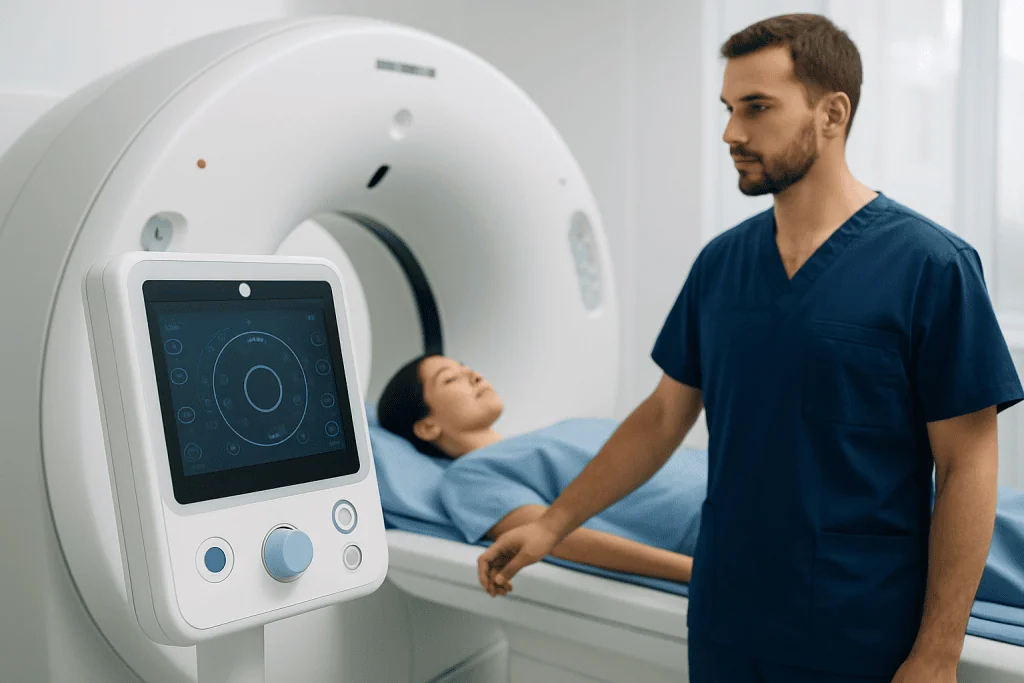
Accreditation is not the whole picture, but it is one of the clearest external checks available when you cannot visit a hospital in person. Many international patients researching Turkish hospitals look for internationally recognised accreditation, such as JCI, because those standards audit areas that matter most in complex care: patient safety processes, infection control, medication management, patient identification and quality monitoring. When your treatment spans several departments and involves medication changes and careful monitoring, those background systems do a lot of quiet work. If you want to see how one such system works in practice, our guide to patient identification checks in Turkish hospitals explains a routine you will encounter repeatedly during any admission.
Beyond accreditation, ask practical capability questions. Does the hospital have advanced imaging on site, or are patients sent elsewhere for scans? Is there 24/7 laboratory support? Is there an adult or paediatric intensive care unit if your case might require one? If an unexpected problem arises mid-treatment, a cardiac issue during cancer therapy, for example, can other specialties respond within the same building? For complex cases, these answers are more informative than any brochure. A hospital that can explain its safety processes, inpatient monitoring, specialist access and escalation pathways clearly and in writing is showing you how it thinks, not just what it offers.
Do not be embarrassed to ask these questions directly. Well-run hospitals answer them routinely and without defensiveness. Hesitation, vagueness or irritation in response to a capability question is itself useful information.
Look closely at the specialist team and how they work together

For complex treatment, the real question is rarely “who is the doctor?” on its own. It is “how does the team around the doctor work?” Difficult cases usually need input from more than one discipline: oncology with radiology and pathology, cardiology with cardiac surgery and anaesthesia, orthopaedics with rehabilitation and pain management. A hospital with genuine multidisciplinary practice tends to make your journey smoother because decisions are made with the full picture in view, rather than one specialty at a time.
Ask each hospital whether your case will be reviewed by a multidisciplinary team and how those decisions reach you. You should know who your lead specialist is, but you should also understand which other departments may be involved, whether they can review your records before you travel, and how appointments are sequenced so you are not shuttling back and forth unnecessarily. This matters even more when your time in Turkey is limited and every day of your stay counts.
Coordination is where hospital groups differ most. At Acibadem, international patient services help organise consultations, testing and inpatient or outpatient scheduling so that patients are not repeating the same history to each new team. When comparing hospitals, ask whether they offer this kind of centralised coordination or whether they expect you to arrange each step yourself. Neither model is automatically wrong, but for a multi-department case, coordination reduces the number of things that can slip. Our overview of what international patients can expect across our network describes how this works in practice, and can serve as a benchmark for the questions you put to any hospital.
Evaluate communication, language support, and care coordination
Complex treatment is demanding even in your home country, in your own language. Abroad, communication quality becomes a genuine comparison point, not a soft extra. You should be able to ask clear questions, receive answers you understand, and know exactly who to contact if plans change. A useful rule: a hospital that communicates well before you travel is far more likely to communicate well once you arrive. The pre-travel exchange is your free preview of the whole relationship.
Ask specifically about interpreters, a dedicated case coordinator, help with appointment sequencing, and support with admission and discharge paperwork. If English is not your first language, ask whether support is available in your preferred language and whether consent discussions and key instructions will be explained carefully rather than handed over as paperwork. Cultural and practical needs count too, many Turkish hospitals can accommodate them, and our guide to religious, cultural and quiet space support in Turkish hospitals shows what is reasonable to ask for.
Also test how each hospital handles updates. Will one named person send you a consolidated plan? Can they help collect missing records before arrival? Will they say plainly which parts of the plan can only be confirmed after an in-person evaluation? The strongest centres avoid overpromising and give you a realistic outline with its limits stated. For a complex case, that honesty is one of the most reliable positive signals you will find.
Compare the full patient journey: before travel, during treatment, and after you return home
Many patients focus on the treatment day itself, but your experience is shaped by the entire journey, and the handoffs between stages are where weak coordination shows first. Compare what happens before you leave home, what support you receive in Turkey, and what follow-up looks like afterwards.
Before travel: ask how your records will be reviewed, whether some tests are likely to be repeated in Turkey (this is common, and often sensible for recency and consistency), and how many days you should realistically plan to stay. If location matters to you, proximity to an airport, a particular city, family nearby, our guide on how to choose the right hospital location in Turkey covers the practical trade-offs.
During treatment: ask about inpatient versus outpatient phases, companion arrangements, mobility support, and who handles day-to-day logistics. If your plan may include rehabilitation, nutrition guidance or repeated imaging, ask whether these can be arranged within the same system rather than at separate facilities.
After treatment: ask what documents you will take home, discharge summary, operative notes, imaging on disc or digital transfer, whether remote follow-up is available, and how your home doctor will be updated. A hospital that plans confidently beyond discharge is usually a hospital that has thought seriously about complex care as a whole, not as a single event.
Understand costs in a practical way without choosing on price alone
It is natural to compare estimates, but for complex treatment the cheapest quote is often the least informative one. What matters is structure. A good quote should explain what is included, what depends on your in-person assessment, and which items may become additional if your case changes. Without that detail, two quotes cannot be compared meaningfully: you may simply be looking at two different levels of honesty about the same underlying journey.
Ask for a written breakdown wherever possible: consultations, hospital stay, procedure-related items, imaging, pathology, medications during admission, and interpreter or coordination support. Then ask each hospital the same question: what most commonly causes a plan like mine to change? Reasonable answers include extra tests, a longer hospital stay, an additional specialist opinion, or extended post-procedure monitoring. Our guide on comparing medical quotes from hospitals in Turkey without missing hidden differences goes through this line by line.
Note one counter-intuitive point: reliable hospitals are often more cautious about pricing complex cases, precisely because the final plan depends on your actual condition after examination. That caution is a good sign, not evasiveness. Compare clarity, completeness and honesty rather than the lowest figure.
Use a short list and ask the same questions to each hospital
Once you have two or three serious options, compare them in a structured way. Send each one the same medical summary and the same set of questions, so you are judging answers against each other rather than against your own hopes. This is the fairest test of how organised, responsive and transparent each hospital really is.
| Comparison point | What a strong answer looks like |
|---|---|
| Case review | Named lead specialist; multidisciplinary review confirmed in writing |
| Capability | On-site ICU, imaging and 24/7 laboratory confirmed for your specific needs |
| Timeline | Realistic day-by-day outline from arrival to discharge, with stated uncertainties |
| Coordination | One named contact who handles scheduling, records and updates |
| Estimate | Itemised, with inclusions, exclusions and common change scenarios explained |
| Follow-up | Clear plan for documents, remote review and updating your home doctor |
Where possible, favour hospitals that can deliver the key services on one campus or within one coordinated group; in Istanbul and other major Turkish cities this can significantly reduce the strain of a multi-appointment week. If you receive two full written plans, our guide on how to compare treatment plans from two hospitals in Turkey shows how to read them side by side.
Finally, trust the quality of the process as much as the content of the answers. When you compare hospitals in Turkey for complex treatment, a centre that is clear, realistic and easy to communicate with before you travel is showing you what the care journey will feel like. If replies are vague, inconsistent or rushed, it is entirely reasonable to keep looking.
Step by step
- Define what makes your treatment complex. Write down your diagnosis, current symptoms, past treatments, and any other conditions that may affect planning. Note what you think you may need: surgery, oncology review, ICU backup, rehabilitation, or several specialist opinions.
- Collect and organise your medical records. Gather recent test results, imaging reports, pathology reports, a medication and allergy list, and a short medical timeline. Keep everything in one digital folder so every hospital reviews identical information.
- Shortlist hospitals with suitable capability. Look for recognised accreditation, strong specialist departments in your condition, and experience coordinating international patients. Favour centres that can provide diagnostics, treatment and aftercare within one system.
- Ask the same comparison questions to each hospital. Who will review your case? Is a multidisciplinary team involved? Which tests may be repeated? How long should you stay in Turkey? Who is your named contact, and how is follow-up handled after you return home?
- Review each treatment plan and estimate carefully. Read for clarity, not speed. Understand what is confirmed, what depends on examination in Turkey, what the estimate includes, and which situations commonly create extra steps.
- Check travel and stay logistics before deciding. Ask about airport transfers, interpreter availability, companion support, nearby accommodation, and expected mobility after treatment. Practical details matter enormously when care is intensive or spread across days.
- Choose the hospital that is clearest and best coordinated. The strongest choice usually combines demonstrated medical capability with organised support and honest communication about limits. A hospital that can explain both the clinical pathway and the logistics around it makes a complex journey far easier to manage.
Your checklist
- A clear diagnosis or reason for referral, if available
- Recent imaging, pathology, blood tests, and consultation notes
- A current medication and allergy list
- Questions about accreditation, ICU access, and multidisciplinary review
- A named international patient coordinator or main contact at each hospital
- Written information on what each estimate includes and excludes
- Expected length of stay in Turkey and recovery-related travel considerations
- A follow-up plan for when you return home, including documents you will take with you
Key takeaways
- To compare hospitals in Turkey for complex treatment, judge hospital systems and team coordination, not individual names or headline claims.
- Accreditation, ICU availability, advanced diagnostics and multidisciplinary review are the core quality checks for multi-department care.
- A dedicated international patient service makes communication, scheduling and travel logistics substantially easier to manage.
- Written treatment plans and itemised, honest estimates are the only fair basis for comparing hospitals against each other.
- The right hospital is the one that can manage your whole journey, before, during and after treatment in Turkey, and says plainly what it cannot yet confirm.
Frequently asked questions
What counts as complex treatment when comparing hospitals in Turkey?
Complex treatment usually means your care may involve several specialists, advanced imaging or pathology, major surgery, intensive monitoring, or multiple treatment stages. It can also mean you have other health conditions that increase risk or change how any treatment must be planned.
Is JCI accreditation enough on its own to choose a hospital?
No. International accreditation is a strong quality and safety indicator, but it should be one part of your decision. Also weigh specialist depth in your specific condition, ICU capability, communication quality, case coordination, and how follow-up is organised after you go home.
Why is multidisciplinary care so important for complex cases?
Complex conditions rarely fit neatly into one specialty. A multidisciplinary review lets different experts assess your case together, which supports better planning, fewer delays, and easier coordination of the treatment steps that follow.
Should I choose the hospital with the lowest estimate?
Not necessarily. For complex treatment, a low estimate may simply be incomplete, or may not reflect what happens after in-person evaluation. Compare how detailed, realistic and transparent each hospital is about inclusions, exclusions and what may change: that comparison is far more meaningful than the number alone.
How can I compare hospitals in Istanbul fairly?
Send the same records and the same list of questions to each hospital, then compare the answers on safety systems, specialist access, timeline, coordination, international patient services and follow-up support. Identical inputs make the differences between hospitals visible.
What support should an international patient team provide?
A capable team helps with record collection, appointment scheduling, interpreter support, admission and discharge guidance, and practical travel planning. This coordination becomes especially valuable when your care involves more than one department or extends over several visits.
Will I know my final treatment plan before I travel to Turkey?
Often only partly. A hospital may outline a likely pathway after reviewing your records, but complex cases frequently need an in-person consultation or repeat tests before the plan is confirmed. A trustworthy hospital will say this openly rather than presenting a provisional outline as final.
Do Turkish hospitals repeat tests I have already had at home?
Sometimes, yes. Repeating imaging or laboratory work is common when previous results are older, incomplete, or produced with different protocols, because up-to-date and consistent results support safer planning. Ask each hospital which of your existing results they can use and which they would expect to repeat.
Add us as a Preferred Source to see more of our trusted health content across Google Search, AI Overviews and Discover.

Update history
- PublishedAugust 4, 2026
- Medical review approvedSeptember 1, 2026
- Last content updateAugust 31, 2026
References1
- CDC Travelers' Health: Medical Tourism wwwnc.cdc.gov
More Patient Guides

Choosing Between Inpatient and Day-Case Treatment in Turkey
Inpatient and day-case treatment in Turkey differ mainly in overnight monitoring, recovery needs and travel planning. Learn how to choose safely.

At Acibadem, How We Explain Surgical Risks and Safety Checks Before You Travel
Surgical risks and safety checks before travel means understanding your personal risk, required tests, and travel timing before coming to Turkey.

At Acibadem, What to Check Before Comparing Treatment in Turkey With Care at Home
Comparing treatment in Turkey with care at home starts with safety, records, follow-up, travel timing and total support in Istanbul.

At Acibadem, When to Bring a Companion for Treatment in Turkey
Bring a companion for treatment in Turkey when you may need help with travel, mobility, language, or recovery planning in Istanbul.