

At Acibadem, How We Explain Surgical Risks and Safety Checks Before You Travel

Before you travel, Acibadem's clinical teams review your records, medications and medical history, then explain which surgical risks matter most in your specific case and which safety checks still need to happen after you arrive. Travel dates should follow that review, not precede it, because a new finding, in your file or at the in-person examination, can change the timing or the plan itself.
You have chosen a procedure, looked at flights, and now one question remains: is it actually safe for you to travel on those dates? That question deserves a proper answer before you commit to anything. This guide sets out how we explain surgical risks and safety checks before you travel, so you know what gets reviewed, what still has to happen in person, and why a plan sometimes changes after you arrive.
None of this is meant to alarm you. It is meant to replace vague reassurance with something more useful: a clear picture of the process, its limits, and the questions worth asking before you book.
At a glance
- Best for: Patients planning surgery in Turkey who want to understand how risks and safety checks are discussed before booking travel
- What you will learn: How risk explanations should be personalised, which checks happen before and after arrival, and what can delay or change a plan
- Key point: Travel dates should be set after your medical file has been reviewed and any remaining pre-operative checks are clear, not before
- Who is involved: Your surgeon, the anaesthesiology team, nursing staff and Acibadem international patient coordinators
- Common documents: Recent test results, imaging, specialist reports, a full medication and supplement list, and a summary of past conditions and operations
Why we explain surgical risks and safety checks before you travel
When you arrange treatment abroad, the natural focus is on dates, flights and accommodation. The more important question sits underneath: is this timing medically appropriate for you? A proper pre-travel discussion covers not only the planned operation, but also the factors that could raise risk, delay treatment, or change the plan after you land.
Surgical risk is not one number, and it is not the same for two people having the same operation. Your age, general health, previous surgeries, allergies, current medications, heart or lung conditions, smoking status, body weight, infection history and any recent illness all shape how a team plans your care. This is why an experienced hospital does not simply confirm a date without reviewing your health information first.
At Acibadem, planning for international patients involves coordination between clinical teams and patient services before you travel. The purpose is practical as much as medical: to identify missing records, to explain how we assess surgical risks and safety checks before you travel, and to make sure you know what still needs confirming in person before the operation can safely go ahead. It also protects your money and your leave from work: a trip built on an unreviewed file is a trip built on assumptions.
How your surgical risks are usually explained
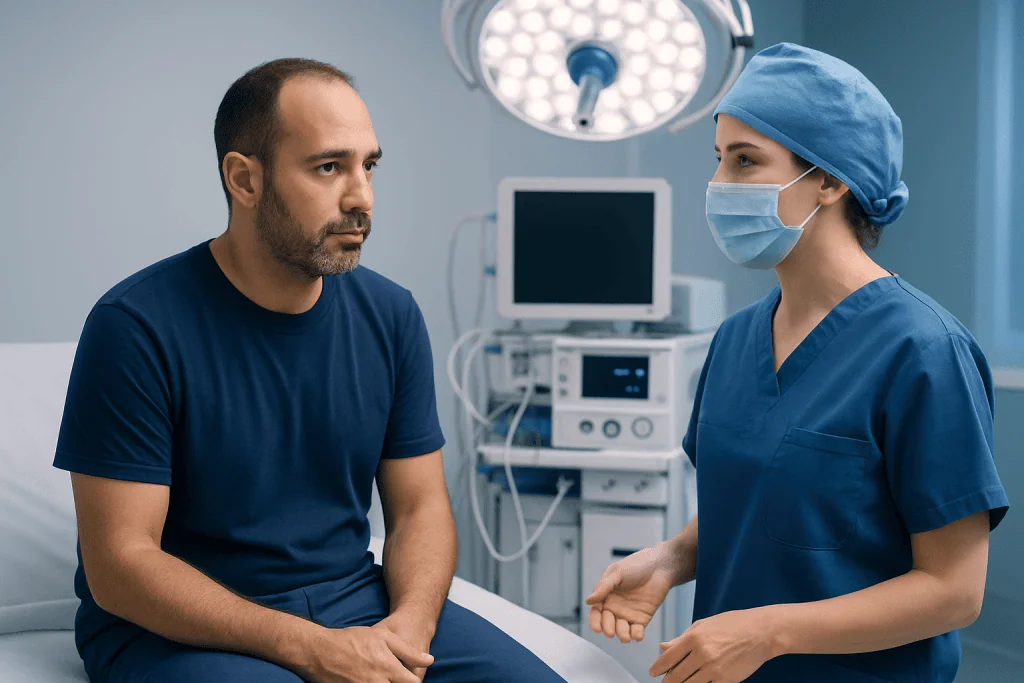
A good risk explanation feels personal, not generic. Rather than reciting a standard list of possible complications, the surgeon should tell you which concerns matter most in your case, whether your history makes bleeding, infection, anaesthesia issues, blood clots, delayed healing or a longer hospital stay the points worth spending time on.
Three categories, not one list
You should also hear the difference between common side effects, uncommon complications, and rare but serious risks. Patients often leave consultations remembering one or two alarming words without any sense of context. A useful conversation separates what is expected and manageable from what is unlikely but taken seriously, and explains the safety steps used to prevent, monitor and manage each. The safety and consent checklist in our companion guide lists specific questions you can put to the surgeon during this discussion.
What could change the plan
It is entirely reasonable to ask what could alter the plan before you agree to it. Sometimes surgery is confirmed exactly as expected. In other cases the surgeon may recommend further tests, better control of an existing condition first, a modified procedure, a short delay, or, occasionally, no surgery at all if the risk appears too high. Honest care includes naming those possibilities before you board a plane, not after. A team that acknowledges this openly is usually a team you can trust with the rest.
What safety checks may happen before and after you arrive

Before travel: the file review
Safety checks begin with your records. Before travel, you may be asked to share imaging, blood tests, specialist reports, a medication list and details of previous operations. Depending on your condition and the planned procedure, the team may also need information about implanted devices, allergies, sleep apnoea, diabetes control, heart history or any recent emergency care. Some conditions call for additional pre-travel tests done at home before a date is even discussed.
After arrival: confirmation in person
Once you arrive, further checks are often still necessary. These may include repeat blood work, updated imaging, a physical examination, an anaesthesiology review and confirmation that nothing new has developed since your file was first assessed. If the examination finds a cough, fever, uncontrolled blood pressure, active infection or an unresolved medication issue, the team may pause rather than proceed. That can feel inconvenient after a long flight. It is also exactly what safe care looks like.
Checks you will not always see
Hospitals with structured safety systems also run process checks that patients rarely notice. These follow the same logic as the World Health Organization’s surgical safety checklist and the widely used “five steps to safer surgery”: a team briefing before the list begins, a sign-in before anaesthesia, a time-out before the first incision, a sign-out before the patient leaves theatre, and a debriefing afterwards. In practice this means identity verification, consent confirmation, medication reconciliation, surgical site marking where relevant, infection prevention steps and multidisciplinary case review, layered so that a single missed detail does not become a missed safeguard.
- File review before travel
- Pre-anaesthesia assessment
- Updated tests after arrival where needed
- Medication and allergy review
- Team briefing, sign-in, time-out, sign-out and debriefing around the operation itself
- Final fitness confirmation before surgery
Our separate patient safety checklist before surgery in Turkey walks through these stages from the patient’s side of the process.
How a travel risk assessment fits alongside the surgical one
People searching this topic often ask how to do a travel risk assessment. For medical travel, it has two halves, and they are assessed by different people.
The clinical half asks whether you are fit to fly and fit for the planned procedure on the proposed dates. Long-haul flights involve prolonged sitting, lower cabin oxygen and dehydration, factors that matter more for some conditions and some operations than others, and that also shape when you can safely fly home afterwards. Our guide to medical fitness to fly explains when formal clearance is needed before travel.
The practical half covers the precautions any careful traveller takes: valid documents, appropriate travel insurance that you have read rather than skimmed, arrival with a buffer before surgery rather than the night before, a realistic return date set by recovery rather than by the cheapest fare, and, for major surgery, a companion who can help during the early days. Checking whether your expected length of stay matches your booking is part of the same exercise. Coordinators can help with the logistics, but the timing itself should follow medical advice rather than convenience.
Questions worth asking before you finalise the trip
If you are weighing whether to travel now or wait, direct questions make the decision easier. Ask whether your current records are sufficient for a meaningful review, whether any condition needs better control before surgery, and whether there is any realistic scenario in which the operation would be postponed after arrival. It is better to ask early than to assume everything is fixed.
Ask about anaesthesia planning, the expected hospital stay, likely recovery restrictions, and whether your history means you might need intensive monitoring, blood products or input from another specialty. If you take blood thinners, insulin, immunosuppressants or regular pain medication, ask when and by whom those medicines will be reviewed, any adjustment is a decision for your treating doctors, never something to change on your own.
For international patients, logistics are part of safety too. Ask how many days before surgery you should arrive, whether flying soon after your particular procedure is restricted, and how long you are likely to stay in Turkey before you are fit to travel home. This is one of the areas where the answer genuinely varies by procedure and by person, so a specific answer is worth more than a general one.
What can delay surgery even after careful planning
Many patients assume a delay means the hospital misjudged their case. In reality, delays usually happen because medicine is dynamic. A test may reveal anaemia, an infection, abnormal blood sugar, a heart rhythm finding or something else that deserves attention before an operation. A recent long-haul flight, dehydration or a medication problem can also change the immediate picture.
Another common reason is that the in-person examination shows something not fully visible in records sent from abroad. Imaging may need updating, the surgeon may want a second specialty opinion, or the anaesthesiology team may identify grounds for extra monitoring. These checks can be frustrating when you have already travelled. They exist to protect you, not to create barriers.
If a change is recommended, three questions cut through the frustration: what exactly is the concern, is it temporary or longer term, and what next step would make surgery safer? A trustworthy team can answer all three in plain language and give you a practical path forward. Interpreters and international patient services are there so that language never stands between you and a full understanding of the decision.
How to prepare so your pre-travel review is accurate
The quality of your risk assessment depends heavily on the quality of the information you supply. Send recent reports rather than summaries from memory, and include the dates of every test and scan. If a document is not in English, ask whether a translation is needed or whether the original plus a short summary is acceptable for initial review. Our guide on organising your test results before travel covers a practical filing method.
Be especially thorough about medications, supplements and previous reactions to anaesthesia or antibiotics. Patients remember prescriptions but often forget herbal products, weight-loss injections, nicotine use or over-the-counter painkillers, all of which can matter for bleeding, healing or anaesthesia planning. Mention if you use CPAP, have implanted devices, or have ever needed intensive care after a procedure. Nothing on this list is embarrassing; everything on it is useful.
Keep your own complete folder even after you have shared everything. Bring printed and digital copies, your passport, and contact details for your regular doctor at home in case clarification is needed. Good preparation makes the review more accurate, the conversation faster, and the whole process less stressful.
What realistic reassurance looks like
Reassurance does not mean being told there is nothing to worry about. No surgery is free of risk, and a team that pretends otherwise is not doing you a favour. Trustworthy reassurance sounds more balanced: your information has been reviewed, the main concerns have been named, safety checks are in place, and there is a clear plan for what happens if something changes.
By the time you travel, you should understand the likely timeline, your main personal risks, the kinds of findings that could lead to a delay, and how updates to your health are handled between the review and your departure. The review does not close when the video call ends: a new illness or medication change before your flight can affect anaesthesia and surgical planning, which is why the file stays open until the final fitness confirmation before surgery.
That is what it means for us to explain surgical risks and safety checks before you travel: not a promise that nothing will change, but a clear account of what has been reviewed, what still needs confirming, and how each remaining check protects you. Patients who travel with that picture in hand tend to travel calmer.
Step by step
- Share your medical file early. Recent reports, imaging, blood results, medication lists and a summary of past procedures give the clinical team time to identify gaps and reduce the chance of surprises after arrival.
- Ask for a personalised risk explanation. Request a discussion focused on your own health, not just general consent language. You should come away knowing which risks matter most in your case and what the team does to reduce them.
- Clarify which checks must happen in Turkey. Some assessments can be completed from records; others must be repeated or confirmed in person. Knowing which is which lets you plan your schedule realistically.
- Review medications and recent health changes with your doctors. Prescriptions, supplements, injections, allergies, nicotine use and recent illness can all affect anaesthesia, bleeding risk or timing. Any change to what you take is a decision for the treating doctor.
- Plan travel around medical timing, not only convenience. Confirm how many days before surgery to arrive and how long you may need to stay afterwards. The return flight follows recovery and clearance, not the calendar.
- Prepare for the possibility of a change in plan. Safe care sometimes means postponing, modifying or avoiding surgery when new information appears. Ask in advance what kinds of findings could trigger this and what the next step would be.
- Keep your information current until departure. The pre-operative review stays open until surgery, so ask your team how health updates are handled between the record review and your flight, and follow the process they set out.
Your checklist
- Passport and travel documents
- Recent medical reports and imaging, on paper and as digital copies
- Complete medication and supplement list with doses
- List of allergies and past anaesthesia reactions
- Contact details for your doctor at home
- Notes of your questions about risk, anaesthesia and recovery timing
- Travel insurance documents, read in full, if applicable
- An arrival plan with a buffer before surgery, not a landing the night before
Key takeaways
- Surgical risk should be explained specifically for your health, not only as a generic list.
- Pre-travel safety planning includes record review, medication assessment and anaesthesia-related screening; some checks can only happen in person.
- Structured process checks, briefing, sign-in, time-out, sign-out and debriefing, run around the operation itself, largely out of the patient’s sight.
- Even after arrival, repeat tests or a short delay may be the right decision if new findings appear.
- Arrival dates, length of stay and the return flight should follow medical guidance rather than convenience.
Frequently asked questions
What are the 5 steps of a surgical safety checklist?
The widely used “five steps to safer surgery” model, built around the World Health Organization checklist, consists of a team briefing before the operating list begins, a sign-in before anaesthesia, a time-out before the first incision, a sign-out before the patient leaves theatre, and a team debriefing afterwards. Each step confirms identity, procedure, site, equipment and concerns before moving on.
Is it safe to travel internationally before surgery?
It depends on your condition, the procedure and the flight itself. Long flights involve prolonged sitting, lower cabin oxygen and dehydration, which matter more for some patients than others. This is exactly what the pre-travel medical review assesses, and it is why travel dates should follow that review rather than precede it.
How do I do a travel risk assessment for medical travel?
Cover two halves. The clinical half, fitness to fly and fitness for the procedure on the proposed dates, is assessed by the treating doctors from your records and history. The practical half is yours: documents, insurance you have actually read, arrival with a buffer before surgery, a return date set by recovery, and a companion for major procedures.
What safety precautions matter most when travelling for surgery?
Carry complete medical records in printed and digital form, bring a full medication and allergy list, arrive with time to spare before the operation, avoid booking an early return flight, keep travel insurance documents accessible, and stay hydrated and mobile on long flights. Above all, let medical advice set the timetable.
Should I book flights before my medical review is complete?
It is usually wiser to wait until your records have been reviewed and you know whether extra tests or stabilisation are needed first. If you must book early for practical reasons, choose flexible tickets and refundable accommodation wherever possible.
Why might surgery be postponed after I have already arrived?
A delay can happen if new test results show a concern, if the in-person examination differs from the records sent earlier, or if the anaesthesiology team identifies a reason for further evaluation. Frustrating as it is, this reflects a safety system working as intended rather than a planning failure.
Who explains anaesthesia-related risks to me?
The anaesthesiology team. They review your medical history, medications, allergies and previous anaesthesia experiences, and explain matters such as airway considerations, nausea risk, pain control, monitoring needs and any reasons for extra caution in your particular case.
What documents are most important to bring with me?
Your passport, all recent reports, imaging discs or links where available, blood test results, and a detailed medication and supplement list. Notes on allergies, previous operations and your home doctor’s contact information are also worth carrying in both printed and digital form.
Add us as a Preferred Source to see more of our trusted health content across Google Search, AI Overviews and Discover.

Update history
- PublishedAugust 4, 2026
- Medical review approvedSeptember 13, 2026
- Last content updateSeptember 13, 2026
More Patient Guides

Choosing Between Inpatient and Day-Case Treatment in Turkey
Inpatient and day-case treatment in Turkey differ mainly in overnight monitoring, recovery needs and travel planning. Learn how to choose safely.

How to Compare Hospitals in Turkey for Complex Treatment
Compare hospitals in Turkey for complex treatment by checking accreditation, specialist teams, ICU support, coordination, and follow-up.

At Acibadem, What to Check Before Comparing Treatment in Turkey With Care at Home
Comparing treatment in Turkey with care at home starts with safety, records, follow-up, travel timing and total support in Istanbul.

At Acibadem, When to Bring a Companion for Treatment in Turkey
Bring a companion for treatment in Turkey when you may need help with travel, mobility, language, or recovery planning in Istanbul.