

Choosing Between Inpatient and Day-Case Treatment in Turkey

Neither setting is automatically better. Day-case treatment means you leave hospital the same day after recovery checks; inpatient treatment means at least one night under hospital care. Your specialist and anaesthesia team recommend the setting based on your procedure, anaesthesia plan, medical history and the support available to you after discharge, and that recommendation can still change after your pre-treatment assessment.
Should you book your hotel for one night, or five? It is one of the first questions international patients ask, and it is often the wrong place to start. The honest answer: the setting of your care is a clinical decision, and it usually cannot be settled until your team has reviewed your case properly.
Choosing between inpatient and day-case treatment in Turkey depends on your procedure, your anaesthesia plan, your health history, your expected recovery and the support you will have after discharge. Travel convenience matters, but it comes second. This guide explains how the decision is actually made, what can change it at short notice, and how to plan flights, accommodation and companions around either outcome.
At a glance
- Day-case treatment: You arrive, are treated and go back to your accommodation the same day, after meeting discharge criteria.
- Inpatient treatment: You are admitted to a hospital bed for at least one night of observation, treatment or recovery.
- Who decides: Your specialist and the anaesthesia team, after reviewing your records and pre-treatment assessment.
- What can change the plan: Test results, medication concerns, slower anaesthesia recovery or a need for closer monitoring.
- Travel planning: Keep your itinerary flexible and do not book tight onward travel until your team confirms the plan.
Choosing between inpatient and day-case treatment in Turkey: what the terms mean
Day-case treatment, also called ambulatory, same-day or outpatient surgery, means you arrive at the hospital, have your planned procedure or treatment, spend a monitored period in a recovery area, and return to your accommodation later that day once discharge criteria are met. You do not occupy a hospital bed overnight.
Inpatient treatment means you are formally admitted and remain under hospital care for at least one night. Your team can monitor your vital signs continuously, manage pain, fluids and medication, support your first attempts at walking, run follow-up tests and respond quickly if anything needs closer attention.
Neither option is inherently better, and a shorter stay is not a marker of a simpler case or a lighter procedure. Some significant treatments are routinely done as day cases; some apparently minor ones justify an overnight stay because of a patient’s individual health profile. If your treatment involves an operation, the practical trade-offs are covered in more detail in our guide on how to choose between inpatient and day surgery in Turkey.
How the decision is actually made
International patients sometimes assume the setting is fixed by the procedure name. In practice, two identical procedures can be planned differently for two different patients. The recommendation is built from several layers of information:
- The procedure itselfhow invasive it is, how long it takes, and what kind of monitoring, drains, dressings or intravenous treatment it typically needs afterwards.
- The anaesthesia planlocal anaesthetic, sedation, regional block or general anaesthesia each carry different recovery requirements.
- Your medical historyconditions such as sleep apnoea, heart or lung disease and diabetes, along with your current medicines, allergies and any previous reaction to anaesthesia.
- Your recovery environmentwhether a responsible adult can stay with you, how far your accommodation is from the hospital, and how you would return there.
- Your travel plansa long journey home shortly after treatment can shift the recommendation towards observation first.
This is why the final answer often comes only after your consultation, pre-treatment tests and anaesthesia assessment, not at the enquiry stage. A preliminary plan is normal; a fixed one before anyone has examined you is not something a careful hospital offers. The clinical and practical factors behind the recommendation are explored further in what affects the decision between outpatient and inpatient treatment in Turkey.
When day-case treatment may be appropriate
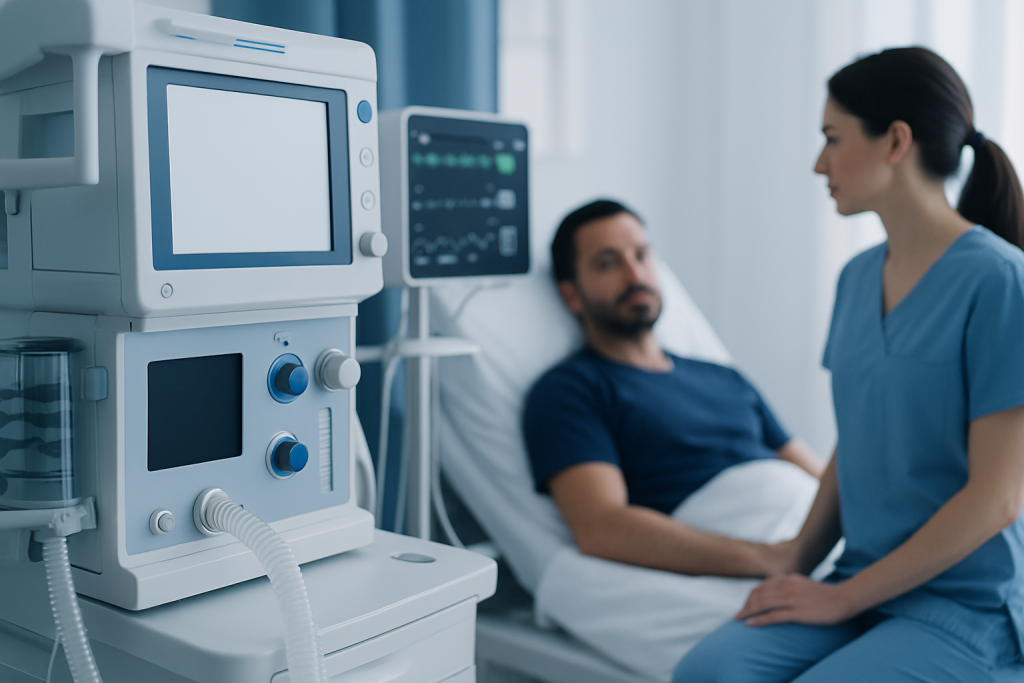
Day-case care can suit many planned investigations, minor procedures and treatments where recovery is expected to be straightforward. Before discharge, teams typically check that your vital signs are stable, your pain and nausea are controlled, you can drink when appropriate, you can move safely at your expected level, and, where required, a responsible adult is available to support you afterwards.
Even when a procedure is commonly performed as a day case, your own plan may differ. Sleep apnoea, heart or lung conditions, diabetes, certain medicines, a previous difficult anaesthesia experience, reduced mobility or a long journey back to your accommodation can all tilt the recommendation towards admission.
Same-day discharge also does not mean a same-day return to normal life. Plan for quiet time, not an itinerary:
- Confirm who will collect you and stay with you after discharge, if a companion is required.
- Choose accommodation close enough for a short, comfortable return journey.
- Keep the first evening and the following day free of sightseeing, meetings and long transfers.
- Ask in advance how long you should remain locally before flying or travelling long-distance.
When an inpatient stay may be safer or more practical

An inpatient stay may be advised when a treatment is more extensive, requires ongoing medication or monitoring, or is expected to affect your mobility, comfort or ability to eat and drink normally. It is also common where your team wants to observe you after anaesthesia, manage a drain, dressing or intravenous treatment, or coordinate reviews by several specialists.
Your personal profile matters as much as the procedure. Admission may be recommended if you have complex medical needs, need close management of existing medicines, carry a higher risk of postoperative symptoms, or are staying too far from the hospital to return safely the same day. The recommendation is about a safe recovery, not the label attached to the procedure.
For international patients, inpatient care can also simplify logistics. Instead of managing transport straight after treatment, you recover in a clinical setting while your team reviews your progress and prepares your discharge plan. If admission is likely, it helps to know what happens from admission to discharge during an inpatient stay in Turkey and what to bring for an inpatient stay before you pack.
Day case and inpatient side by side
For anyone still weighing the two settings, this is how choosing between inpatient and day-case treatment in Turkey typically compares in practical terms:
| Aspect | Day-case treatment | Inpatient treatment |
|---|---|---|
| Where you sleep that night | Your own accommodation, usually nearby | A hospital bed, for one or more nights |
| Monitoring after treatment | A recovery area until discharge criteria are met | Continuous nursing care and scheduled reviews |
| Companion role | Often required to collect you and stay with you, especially after sedation or anaesthesia | Helpful but the hospital provides overnight care; companion stay may be possible depending on the room |
| Schedule flexibility needed | High: a day case can become an overnight stay | Moderate, discharge timing depends on your recovery |
| Typical follow-up | May include a review before you are cleared to travel | Discharge plan usually includes follow-up and travel guidance |
What each option means for your travel plans
The care setting shapes almost every logistical decision: how long you stay in Turkey, where you book, and when you can sensibly fly home. Choosing between inpatient and day-case treatment in Turkey is therefore also a scheduling question, and the safest approach is to plan around the longer scenario and treat an earlier release as a bonus.
Do not book a return flight for the evening of a day-case procedure. Even a smooth same-day discharge can be followed by a required review, a wound check or simple advice to rest locally before a long journey. The safe timing of a flight depends on the treatment, the anaesthesia used and how your recovery progresses: it is individual advice, not a standard number of days.
If your treatment plan involves separate assessment and treatment phases, the setting also affects whether everything fits into a single visit. Our guide on choosing between a one-trip and two-trip treatment plan in Turkey covers how to structure that decision.
How the setting affects cost, without the numbers
You will find figures online claiming to state what a hospital day in Turkey costs. Treat them with caution: no genuine quote can be produced before a hospital knows your diagnosis, the planned procedure, the anaesthesia, the expected length of stay and your room preferences. What we can explain honestly is the structure.
An inpatient plan generally includes elements a day case does not: the bed and room itself, overnight nursing, inpatient medication, meals and any additional monitoring or tests during the stay. Room category, standard, private or suite, also affects the total. A day case avoids those elements but may add local costs of its own, such as extra nights of nearby accommodation while you recover outside the hospital.
When you receive a quote, useful questions include: what the quoted figure covers, how an unplanned overnight admission would be handled, whether follow-up reviews before travel are included, and what documentation you will receive for your insurer. A clear, itemised answer is a better sign than a low headline figure.
Questions to ask before you confirm your plan
Ask about admission status early, but expect the plan to be refined after your consultation, pre-treatment tests or anaesthesia assessment. The setting can change if new information emerges: an abnormal test result, a medication concern, an unexpected finding or a need for additional monitoring.
- Is my planned treatment usually a day case or an inpatient stay, and what could change that?
- What recovery milestones must I meet before discharge?
- If my day case becomes an overnight admission, how is that handled practically?
- What should my companion do during the first 24 hours after discharge?
- When can I fly, drive, use public transport or travel long distances?
- What documents will I receive for my insurer, employer or onward doctor?
- Can prescriptions be collected before I leave, and whom do I contact outside normal hours after discharge?
For international patients, the practical questions matter as much as the medical ones. Write the answers down or ask for them in your discharge paperwork; the day of treatment is a poor time to rely on memory.
Planning accommodation, companions and transport
Your accommodation should fit your expected recovery, not your sightseeing plans. After day-case treatment, many patients find it reassuring to stay near the hospital for at least the first night, particularly when sedation or anaesthesia was involved. Look for easy bathroom access, a lift if stairs may be difficult, reliable phone coverage and a quiet room. Our guide on choosing accommodation near your hospital in Turkey goes into the details.
If a companion is required, arrange this before travelling. They may need to receive discharge instructions with you, accompany you by car rather than public transport, help collect medication and remain available overnight. If you are travelling alone, mention this during planning, so support options can be considered before your treatment date rather than after it.
Plan transport that does not depend on you: you should not drive yourself after sedation or anaesthesia, and a pre-arranged car is easier than negotiating a taxi while tired. Keep your phone charged and save the hospital’s contact details before your appointment day.
How Acibadem approaches the decision
At Acibadem, the setting of your care is confirmed by the people responsible for it: the relevant specialist, the anaesthesia team and, where appropriate, other members of a multidisciplinary team. They review your planned treatment, your health information and your recovery needs before recommending day-case or inpatient care, and they can revise that recommendation if your assessment reveals something new.
International patient services support the practical side: interpreters can help you follow key discussions, and coordinators can help you understand your schedule, documents and the transition from hospital to accommodation. These services complement, but never replace, a companion where one is clinically required.
The safest plan is built on complete information. Recent medical records, a current medication list, allergy details, previous operations, any past problems with anaesthesia, an honest picture of who will be with you afterwards and when you hope to travel home, every one of those details shapes whether day-case or inpatient care is the right recommendation.
Step by step
- Gather your health information early. Collect the medical reports, scans, test results and medication list your care team requests, so they can be reviewed before you travel. Include allergies, chronic conditions, previous operations and any past problems with sedation or anaesthesia.
- Discuss the proposed care setting. Ask whether your treatment is expected to be a day case or an inpatient admission, and what could change that. Expect refinement after examination, testing and anaesthesia assessment.
- Plan for the possibility of change. A same-day discharge can become an overnight stay for clinical reasons, including slower recovery from anaesthesia. Keep your schedule flexible and understand in advance how an unplanned admission would be handled.
- Book accommodation for recovery, not tourism. Choose somewhere with a short, simple return journey from the hospital, and avoid committing to hotel changes, long transfers or intensive activity immediately after treatment.
- Confirm companion arrangements. If a responsible adult is required after discharge, make sure they are available for the full recommended period, know how to reach the hospital and understand the basic discharge instructions.
- Prepare transport and communication. Arrange a safe journey back to your accommodation without driving yourself, keep your phone charged, and save the hospital and international patient service numbers before your appointment.
- Follow discharge and travel advice. Leave hospital only when your team confirms you are ready, and follow their guidance on medication, food and drink, activity, warning signs and the timing of flights or longer journeys.
Your checklist
- Passport, travel documents and hospital appointment confirmation
- Recent medical records, scans and laboratory results requested by your team
- A complete list of medicines, supplements, doses and allergies
- Contact details for your regular doctor and an emergency contact
- Comfortable loose clothing and supportive footwear for discharge
- A companion’s confirmed availability, if one is required
- Accommodation near the hospital with easy bathroom access and a lift where needed
- A transport plan from hospital to accommodation that does not involve driving yourself
- A flexible itinerary in case follow-up, observation or an extra night is needed
Key takeaways
- Day-case and inpatient care are chosen on safety grounds, not convenience, and neither is inherently better.
- The procedure, anaesthesia plan, medical history and post-discharge support all shape the recommendation.
- The setting is usually confirmed after assessment, and it can still change for clinical reasons on the day.
- Plan accommodation, companions and transport around the longer scenario, not the shortest one.
- Keep flights flexible until your team gives you individual advice on when it is safe to travel.
Frequently asked questions
What is the main difference between day-case and inpatient treatment?
Day-case treatment is planned so you leave hospital the same day, once recovery checks are complete. Inpatient treatment involves at least one overnight stay, giving your team scope for ongoing observation, medication and recovery support. Which is right depends on your procedure, your health and the support available to you afterwards, not on which sounds more convenient.
How do doctors decide between inpatient and day-case care?
The decision combines the nature of the procedure, the anaesthesia planned, your medical history and medicines, your mobility, and the practical picture after discharge, companion availability, accommodation distance and travel plans. It is confirmed by your specialist and anaesthesia team after reviewing your records and pre-treatment assessment, which is why a definitive answer rarely comes at the first enquiry.
Could my day-case booking become an overnight stay?
Yes, occasionally. If recovery takes longer than expected, because of pain, nausea, mobility, a test result or slower anaesthesia recovery, your team may recommend observation overnight. It is a precaution, not a complication in itself. Building flexibility into your accommodation booking and onward travel makes this far less stressful if it happens.
How much does it cost to be hospitalised in Turkey?
There is no honest single figure. The total depends on the diagnosis, the procedure, the anaesthesia, the number of nights, the room category and any additional tests or medication during the stay. Quotes are prepared individually after a clinical review of your case. When comparing quotes, ask exactly what is included and how an unplanned overnight admission would be handled.
Do I need someone with me after day-case treatment?
For some treatments, particularly those involving sedation or anaesthesia, you may be required to have a responsible adult collect you and stay with you for a specified period. Your care team will confirm the requirement for your situation. Hospital coordinators can help with logistics, but they do not substitute for a clinically required companion.
When can I fly after a day-case procedure or inpatient stay?
It depends on the treatment, the anaesthesia, your recovery and the length of the journey, so the answer is individual. Tell your treating team about all planned flights, including connections and long-haul segments, before you finalise onward travel, and follow the guidance in your discharge paperwork rather than a general rule of thumb.
Is Turkey good for medical treatment?
Turkey has a large hospital sector that treats international patients across many specialties, but the meaningful question is narrower: whether a specific hospital and team regularly manage your condition, communicate clearly before travel, and assess your case properly before recommending a plan. Judge the specific provider and how carefully they handle your information, not the country as a label.
Add us as a Preferred Source to see more of our trusted health content across Google Search, AI Overviews and Discover.

Update history
- PublishedAugust 21, 2026
- Medical review approvedSeptember 13, 2026
- Last content updateSeptember 12, 2026
References3
- MedlinePlus: Outpatient surgery medlineplus.gov
- NHS: General anaesthesia nhs.uk
- CDC Travelers' Health: Medical Tourism wwwnc.cdc.gov
More Patient Guides

How to Compare Hospitals in Turkey for Complex Treatment
Compare hospitals in Turkey for complex treatment by checking accreditation, specialist teams, ICU support, coordination, and follow-up.

At Acibadem, How We Explain Surgical Risks and Safety Checks Before You Travel
Surgical risks and safety checks before travel means understanding your personal risk, required tests, and travel timing before coming to Turkey.

At Acibadem, What to Check Before Comparing Treatment in Turkey With Care at Home
Comparing treatment in Turkey with care at home starts with safety, records, follow-up, travel timing and total support in Istanbul.

At Acibadem, When to Bring a Companion for Treatment in Turkey
Bring a companion for treatment in Turkey when you may need help with travel, mobility, language, or recovery planning in Istanbul.