

At Acibadem, When to Bring a Companion for Treatment in Turkey

Bring a companion when your treatment involves surgery, sedation or anaesthesia, when recovery may limit your mobility or energy, or when you would find travel, paperwork and consultations hard to manage alone. Patients having short, less invasive treatments who travel confidently can often come alone, provided transfers, accommodation and follow-up are planned in advance. The decision rests on how independent you will be in the first days after treatment.
Should you travel to Turkey for treatment on your own, or ask someone to come with you? It is one of the first practical questions international patients face, and there is no single right answer.
For some treatments, travelling alone is entirely workable. For others, a second person makes the difference between a manageable trip and an exhausting one. This guide explains when to bring a companion for treatment in Turkey, what that person can realistically do for you, when solo travel is a reasonable choice, and how to plan properly if two of you are coming.
At a glance
- Best for: Patients weighing up whether to travel alone or with support for treatment in Turkey
- Main question: Will you need practical or emotional support before, during, or after your treatment?
- A companion can help with: Airport transfers, hospital paperwork, note-taking in consultations, daily tasks, and steady reassurance
- Especially worth considering for: Surgery, sedation or anaesthesia, multi-day treatment plans, older adults, and patients with limited mobility
- Often optional for: Short, less invasive treatments where you stay mobile and alert throughout
- What to confirm early: Accommodation, companion room policies, transport arrangements, and follow-up logistics
How to decide when to bring a companion for treatment in Turkey
Working out when to bring a companion for treatment in Turkey starts with an honest look at two things: what the treatment will take out of you, and how confident you are handling international travel on your own. Neither factor decides the question by itself. A confident traveller having major surgery still benefits from support; a nervous traveller having a simple diagnostic visit may cope perfectly well alone once transfers are arranged.
Think beyond the treatment itself. Your trip will also include an airport, a hotel check-in, local transport, pre-treatment tests, consent discussions, and possibly several days of recovery when you feel more tired and less independent than usual. Walk through each of those stages in your mind and ask how you would manage them the day after your procedure, not just the day before it. If any part of that picture feels stressful or unrealistic, that is a strong signal.
Your habits at home matter too. If you normally rely on someone for help with walking, remembering instructions, handling documents or making decisions under pressure, that need does not disappear when you travel: it usually grows. Patients who live alone and manage everything independently often adapt more easily to a solo medical trip than patients who are used to daily support.
At Acibadem, international patient services can coordinate many practical details, including interpreter support and travel-related guidance. That support genuinely reduces the load. Even so, some patients still prefer the reassurance of a familiar person beside them throughout the journey, and that preference is a legitimate reason on its own. For a broader look at how to choose the right person, see medical travel with a companion: who should come and why.
When bringing a companion is especially helpful
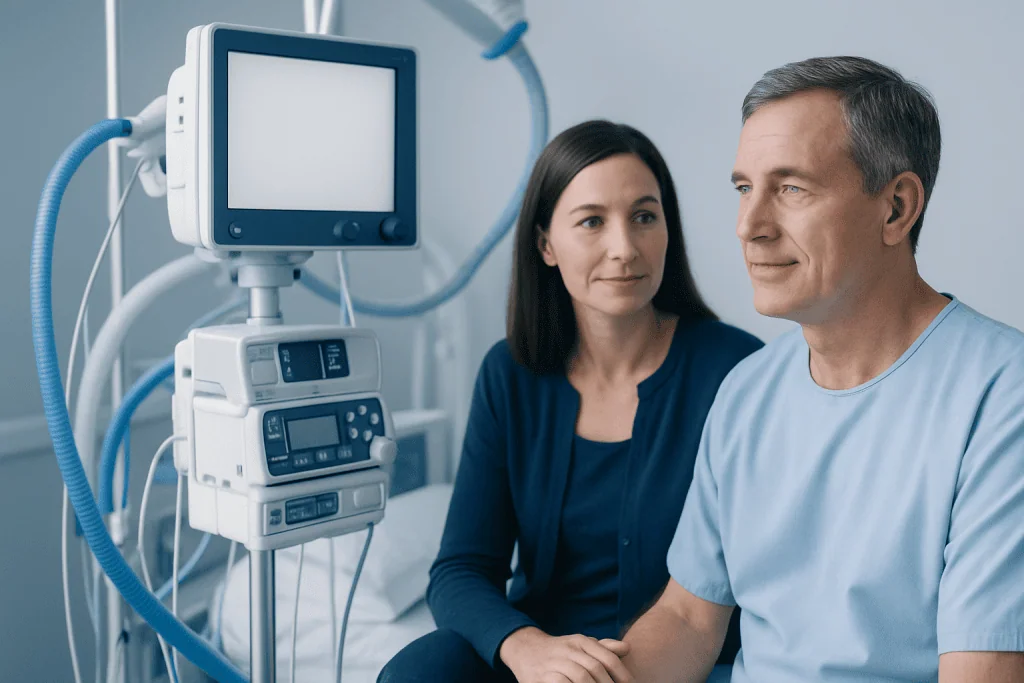
Certain situations tip the balance clearly towards travelling with someone. If your plan includes surgery, anaesthesia, sedation, or any treatment that may leave you weak, sleepy, uncomfortable, or restricted in movement afterwards, it is sensible to plan for support. Hospitals commonly expect patients to have an escort after sedation, and even where it is not required, managing luggage, prescriptions and a taxi ride on your own within hours of a procedure is harder than most people expect.
A companion is also worth serious thought if you are an older adult, have reduced mobility, are travelling with a chronic condition, or tend to feel anxious in unfamiliar environments. For some patients the value is not physical help at all. It is emotional steadiness: another person who can listen in consultations, take notes, and help you absorb information at a moment when you are processing a great deal.
Language is another factor. Acibadem provides interpreter services for international patients, so communication with your care team does not depend on a companion. But interpreters work within the hospital setting; they are not with you at the pharmacy, in the hotel, or during a long evening when you want to talk something through. If you do not speak English confidently, or you are uneasy about navigating a city you have never visited, a trusted companion fills those gaps in a way a service cannot.
| Situation | Why a companion helps |
|---|---|
| Surgery, sedation or anaesthesia | You may be drowsy, sore or unsteady afterwards and need someone for the journey back and the first night |
| Multi-day treatment plans | Someone to manage meals, transport and rest between appointments so you can focus on treatment |
| Reduced mobility or fatigue | Help with walking safely, luggage, dressing and getting to follow-up visits |
| Complex consultations | A second set of ears to take notes and keep track of questions and instructions |
| Anxiety or unfamiliarity with travel | Familiar reassurance that no hospital service can fully replace |
- After any procedure involving sedation or anaesthesia
- If you expect limited mobility, pain or heavy fatigue during recovery
- If you are likely to feel anxious or overwhelmed by new surroundings
- If you need help remembering instructions or organising medicines
- If your treatment plan spreads several appointments across multiple days
If several of these apply to you at once, treat that as your answer. When to bring a companion for treatment in Turkey stops being a difficult question the moment more than one of these factors stacks up.
What a companion can realistically help you with

Your companion does not need medical knowledge to be useful. In most cases their role is practical and supportive, not clinical. They can travel with you to the airport, help with check-in, stay with you between appointments, keep your phone charged, manage small purchases, and make sure water, snacks and essentials are within reach when you cannot fetch them yourself.
They can also be a second set of ears in consultations. Even when a care team explains everything clearly, it is hard to retain details if you are nervous, jet-lagged or tired. A companion can take notes, help you review discharge instructions afterwards, keep track of follow-up times, and make sure the questions you meant to ask do not get lost in the moment.
During recovery, the small tasks matter most. Your companion may help you move around your room carefully, collect medications from the pharmacy, organise clothing, keep family at home updated, or arrange transport to your hotel and follow-up visits. If you are staying in Istanbul for several days, this day-to-day help reduces strain and lets you concentrate on resting. On the day of the procedure itself, their role has its own rhythm, waiting periods, handovers, discharge instructions, which is covered in detail in what your companion can do on procedure day in Turkey.
It is equally worth being clear about what a companion is not. They are not a substitute for the care team, they should not be making medical decisions on your behalf while you are able to make them yourself, and they cannot carry the whole trip alone. At Acibadem, patient coordinators handle much of the hospital and travel logistics; a companion adds the familiar, personal layer on top. The best companions are calm, organised, and comfortable helping without taking over.
When you may be able to travel alone
Plenty of patients travel alone comfortably, particularly when the treatment is less invasive, the stay is short, and they are used to managing international travel independently. If you can communicate comfortably, expect to remain mobile and alert throughout the visit, and are not facing a recovery period with physical restrictions, a companion may be a preference rather than a necessity.
Solo travel also becomes more realistic when the surrounding logistics are firm. If your transfers, accommodation and appointment schedule are arranged before you fly, the parts of the trip that most often overwhelm solo patients, arrivals, transport, timing, are largely handled. Many patients find that a well-organised solo trip feels easier than a poorly organised trip with company.
If you decide to come alone, plan with more care than usual. Keep your documents organised in one placethis guide to admission documents for international patients lists what belongs in that folder. Save key contacts in your phone, confirm exactly how you will travel between the airport, hotel and hospital, and ask in advance whether there is any stage of your treatment after which you should not be alone. That last question is the most important one; the answer depends on your specific plan, and it should come from your treating team, not from general reading.
Travelling alone does not mean handling everything without help. Interpreters, coordinators and care teams guide you through appointments and practical steps. The task is simply to match your level of independence to the real demands of your treatment and recovery, honestly, not optimistically.
How to plan the trip if you are bringing someone
Once you have decided, involve your companion early. Share your appointment schedule, the expected length of stay, and any concerns about mobility, energy or recovery. It works far better when they understand their role before departure rather than improvising once you land, especially if you will need support with transport, meals or communication after treatment. A fuller pre-departure plan for two travellers is set out in bringing a companion to Turkey for treatment: what to plan before you travel.
Confirm the practical details well in advance. Ask about accommodation options near the hospital, visitor policies, and whether your companion can stay in your room at certain stages of an inpatient stay, companion room arrangements vary and are worth checking early, as explained in booking a companion room in Turkey. Clarify what transport arrangements exist between the airport, hotel and hospital, and build slack into the schedule so neither of you is rushing between commitments.
Plan the finances structurally too. A second traveller means a second flight, extra meals, possibly extra nights, and local transport for two. None of this needs to be complicated, but it should be thought through before booking rather than discovered mid-trip; this guide to budgeting for a companion walks through the categories to consider.
Finally, your companion should pack for themselves, not only for you. They may spend long hours in waiting areas, move between locations, and need to stay flexible when timings shift. Comfortable clothing, chargers, identification, local payment options and their own regular medications are easy to overlook and awkward to be without.
Questions to settle before you finalise your decision
Before deciding, put a few direct questions to your care team. Will you be able to return to your accommodation alone after the planned treatment? Are restrictions on walking, lifting, bathing or stairs likely? Should someone be nearby for the first night or two? The answers are specific to your treatment plan, and they turn a vague decision into a clear one.
Ask what support is already in place through the hospital as well. International patient departments assist with interpreters, scheduling, transfers and general coordination, which may reduce how much you need from a companion. Knowing what is covered helps you avoid both overplanning and underplanning.
Then weigh your own preferences. Some patients feel calmer with family present; others rest better alone and prefer updates by phone. Neither instinct is wrong. The right choice is the one that supports your safety, comfort and peace of mind, and if you remain genuinely unsure, planning slightly more support than you expect to need is the safer direction. A companion may not be essential at every step, but having one available makes unexpected tiredness, delays or schedule changes far easier to absorb.
Step by step
- Review the treatment and its recovery demands. Establish how the treatment may affect your energy, mobility, alertness and independence in the first days. If there is any realistic chance you will need help walking, getting back to your hotel, or following discharge instructions, treat a companion as the default rather than the exception.
- Assess your comfort with solo travel honestly. Consider airports, long journeys, paperwork and being in an unfamiliar city while preparing for treatment. If managing travel alone normally stresses you, that stress will be amplified around a medical trip, and a trusted person smooths it considerably.
- Find out what hospital support exists. Check what interpreter services, patient coordination, transfer guidance and accommodation support are available for your trip. These services reduce the load, but they operate around appointments: they do not replace continuous personal company.
- Choose the right person, not just the nearest person. Bring someone calm, dependable and adaptable when plans change. The best companion is not necessarily your closest relative but the person most able to support you with patience, organisation and clear communication.
- Plan the logistics for two. Book flights, accommodation and transfers with enough flexibility around appointments and recovery. Make sure your companion knows where to be, how to reach the hospital, and what each treatment day is likely to involve.
- Agree a simple support plan before you fly. Decide who carries documents, who tracks appointment times, who collects medications, and who updates family at home. Clear roles prevent confusion during the busiest moments of the trip.
- Confirm discharge and follow-up arrangements in advance. Ask before treatment whether you should avoid being alone afterwards and how soon follow-up visits are likely. This tells you whether your companion should stay for the full trip or only the most important days.
Your checklist
- Ask whether your treatment involves sedation, anaesthesia or short-term mobility limits
- Confirm whether you can safely travel between hospital and hotel alone after treatment
- Decide whether you want help with language, paperwork or note-taking in consultations
- Choose a companion who is calm, practical and available for the full key period
- Check accommodation options and companion room or visitor policies in advance
- Share your itinerary, passport details and key contacts with your companion
- Pack chargers, regular medications, comfortable clothing and easy-to-carry essentials for both of you
- Clarify follow-up appointment timing and whether support is expected after discharge
Key takeaways
- A companion matters most when treatment may affect your mobility, alertness or confidence during the trip.
- Their role is practical and emotional support, travel help, note-taking, daily tasks, not medical care.
- Solo travel is reasonable for short, less invasive treatments when transfers, accommodation and follow-up are arranged in advance.
- Interpreter and international patient services reduce the load but do not fully replace continuous personal support.
- If you bring someone, plan early: accommodation, room policies, transport, budget for two, and discharge arrangements.
Frequently asked questions
Do I always need to bring a companion for treatment in Turkey?
No. Many patients travel alone without difficulty, particularly for shorter or less invasive treatments. The decision depends on the demands of your treatment plan, your confidence with international travel, and how independent you will realistically be in the first days after treatment.
When is it strongly recommended to travel with a companion?
When your treatment involves surgery, sedation or anaesthesia, when recovery is likely to limit your mobility or energy, or when you expect to feel anxious managing the trip. A companion is also valuable if you may need help with transport, medication organisation, or remembering instructions after treatment.
Can hospital interpreters replace the need for a companion?
Interpreters solve the communication side, and international patient teams handle much of the logistics. What they do not provide is continuous personal support outside appointments, during travel, at the hotel, and through daily routines. For many patients that continuous layer is exactly what a companion is for.
What if I want support but cannot bring a family member?
A friend or another trusted adult works just as well, provided they are reliable and organised. If travelling alone is your only option, plan more carefully than usual: arrange transfers and accommodation in advance, keep documents in one place, and ask before travel whether any stage of your treatment requires someone to be with you.
Should my companion stay for the whole trip?
Not necessarily. Some patients need support only on arrival, on procedure day, and through the first part of recovery, while others benefit from company for the full stay. Asking your care team how quickly you are expected to feel independent again helps you decide how long your companion should remain.
What should my companion expect during the trip?
Waiting periods, occasional schedule changes, and a role built around practical tasks rather than medical decisions. The trip goes smoothly when they stay flexible, keep documents and timings organised, and offer calm support when you are tired or stressed.
Does the type of hospital room affect whether a companion can stay with me?
It can. Whether a companion can stay overnight depends on the room type and the stage of your treatment, so it is worth confirming room and visitor arrangements when your stay is being planned rather than on arrival.
How does Acibadem support patients who bring a companion?
Acibadem’s international patient services help with coordination, interpreter support, and practical guidance around travel and stay arrangements. This makes planning for two people simpler, particularly when you are managing several appointments in an unfamiliar city.
Add us as a Preferred Source to see more of our trusted health content across Google Search, AI Overviews and Discover.

Update history
- PublishedAugust 4, 2026
- Medical review approvedSeptember 13, 2026
- Last content updateSeptember 12, 2026
References2
- Medical Tourism: CDC Travelers' Health wwwnc.cdc.gov
- Foreign travel advice: Turkey: GOV.UK gov.uk
More Patient Guides

Choosing Between Inpatient and Day-Case Treatment in Turkey
Inpatient and day-case treatment in Turkey differ mainly in overnight monitoring, recovery needs and travel planning. Learn how to choose safely.

How to Compare Hospitals in Turkey for Complex Treatment
Compare hospitals in Turkey for complex treatment by checking accreditation, specialist teams, ICU support, coordination, and follow-up.

At Acibadem, How We Explain Surgical Risks and Safety Checks Before You Travel
Surgical risks and safety checks before travel means understanding your personal risk, required tests, and travel timing before coming to Turkey.

At Acibadem, What to Check Before Comparing Treatment in Turkey With Care at Home
Comparing treatment in Turkey with care at home starts with safety, records, follow-up, travel timing and total support in Istanbul.