

Religious, Cultural, and Quiet Space Support in Turkish Hospitals

Turkish hospitals can usually support prayer or reflection areas, dietary notes, interpreter access, modesty and gender-preference requests, and quieter rest routines. Share your needs with International Patient Services before you travel, repeat them at admission, and speak to your ward nurse for daily arrangements. Some requests depend on your medical plan, infection control, or department rules, so ask early and ask what is flexible.
Where can you pray? Will the kitchen understand your diet? Can you ask for a female nurse for personal care? These are the questions many international patients hesitate to raise, and they are exactly the ones worth asking early. When you receive care away from home, feeling respected in your faith, culture, language, and daily routines makes a hospital stay calmer and easier to manage.
This guide explains how religious, cultural, and quiet space support in Turkish hospitals usually works: what you can ask for, when to ask, who to speak to, and which requests may depend on your medical plan. It also explains how Acibadem International can help you prepare these details before you travel.
At a glance
- Best time to share needs: Before arrival, and again at admission
- Common support available: Prayer or reflection areas, interpreters, dietary notes, privacy and modesty requests, quieter rest routines
- Who to contact first: International Patient Services before travel; your ward nurse or coordinator once admitted
- Important reminder: Medical safety may affect fasting, food, visitors, timing, or personal items
- Helpful to bring: A short written list of preferences, small religious items, emergency and community contacts
Why religious and cultural comfort matters during care
Hospital stays interrupt normal life. Your routines change, your family may be far away, and you may have to explain needs that feel personal in a language that is not your own. Religious practice, cultural expectations, modesty, food, language, and quiet time are not extras. They are part of how you stay grounded, and they affect how well you rest, communicate, and cope with treatment.
The good news is that you do not need to wait for a problem before speaking up. In Turkish hospitals, international patients are generally encouraged to state these needs plainly. It is entirely appropriate to ask where you can pray, whether your diet can be recorded, how to request an interpreter, or whether quieter periods can be arranged for rest and reflection. Religious, cultural, and quiet space support in Turkish hospitals works best when staff know what you need before the busy moments arrive, before surgery day, before a fasting period, before family decisions need to be made.
At Acibadem, the patient journey is supported by International Patient Services, interpreters, nursing teams, and hospital staff who care for people from many countries. Their role is practical: to help you receive care with dignity while keeping your medical plan safe and on schedule. If you want to prepare these conversations in detail before you fly, the guide on planning for prayer, modesty, and cultural needs during care in Turkey is a useful companion to this one.
Prayer rooms, worship needs, and quiet reflection areas
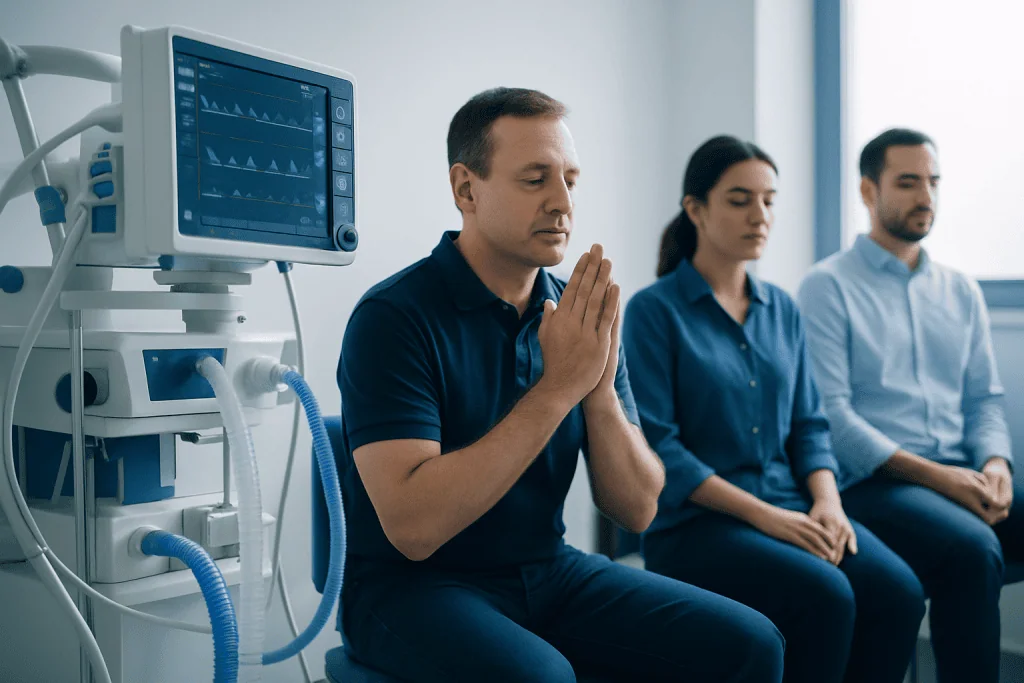
Many hospitals in Turkey provide designated prayer or reflection spaces, and staff can usually direct you to the nearest suitable area. The location, size, and access times vary by hospital building and department, so do not assume the arrangement will match what you have seen elsewhere. Ask at admission, or ask your international patient coordinator before you arrive, so you know exactly where to go on your first day.
If you pray at set times, tell your nurse as early as possible. The care team can often explain when tests, medication rounds, meals, or physiotherapy are planned, which lets you organise your day with less stress. If your condition requires monitoring, an intravenous line, or bed rest, staff can discuss safe alternatives, praying in your room, adapting your position, or shifting non-urgent care so it does not clash with prayer times. These adjustments are normal requests, not special favours, and asking for them will not be seen as difficult.
Small personal religious items are usually welcome: prayer beads, a prayer mat, a small text, a head covering, or another meaningful object. Keep them easy to identify and avoid bringing anything valuable: the guide on managing valuables and personal belongings in a Turkish hospital explains why and what to do instead. Ask staff before using candles, incense, oils, electrical devices, or anything scented. These are often restricted for fire safety, allergy, or infection-control reasons, and it is far better to check first than to have an item removed later.
Modesty, privacy, gender preferences, and personal boundaries

Modesty expectations differ from person to person, and yours are valid whatever they are. You may prefer certain clothing, a same-gender staff member for personal care where possible, minimal exposure during examinations, or a clear explanation before anyone enters your room or touches you. All of these can be raised with your care team, and raising them early works better than raising them in the moment.
Be aware of the honest limit here: hospitals balance privacy requests against staffing, clinical urgency, and safety standards. Not every preference can be met at every moment, in an emergency, the nearest qualified person acts. Outside emergencies, however, telling staff in advance gives them a real chance to plan. They may knock before entering, provide extra gowns or sheets, tell you in advance who will be present, or schedule non-urgent care at a time that feels more comfortable.
If a concern feels too sensitive to explain face to face, use two tools. First, request an interpreterinterpreter support in Turkish hospitals covers exactly when and how to ask. Second, write it down. A short note works well: “I prefer additional covering during examinations.” “Please explain before touching my body.” “If possible, I prefer a female staff member for personal care.” Calm, written requests are easy for staff to record in your file, so you do not have to repeat them at every shift change.
Food, fasting, and dietary restrictions
Food is one of the most common areas where religious and cultural needs meet hospital routine. You may follow halal, vegetarian, vegan, kosher-style, no-pork, no-alcohol, or fasting practices, or avoid specific ingredients for cultural reasons. Tell the hospital before arrival if you can, then repeat the information at admission so it is recorded in your file rather than remembered informally. For a fuller picture of how hospital catering works, see what international patients can expect from meals in Turkish hospitals.
One point matters more than any other: medical instructions sometimes take priority over usual eating patterns. You may be asked not to eat or drink before anaesthesia, imaging, blood tests, or certain procedures. If you plan to fast for religious reasons during your stay, speak with your doctor or nurse first, especially if you have diabetes, are pregnant, are recovering from surgery, or take medicines that your doctor has told you to take with food or water. Your team can explain the risks in your specific situation and discuss what is safe. Do not adjust any medicine yourself around a fast; that decision belongs to your treating doctor.
Practical steps that make mealtimes easier:
- Ask whether your dietary request has actually been noted in your hospital file, not just mentioned verbally.
- Confirm whether family-provided food is allowed in your department before anyone brings it.
- Ask whether any of your medicines contain ingredients you are concerned about, such as gelatine or alcohol-based components.
- Report allergies separately from religious or cultural preferences: they are handled differently and allergies are a safety matter.
- Ask your care team before using supplements, herbal teas, or traditional remedies, as some can interact with treatment.
Acibadem International teams can help you raise dietary questions before travel. During hospitalisation, final decisions rest with your doctor’s instructions and the hospital’s safety policies, which is exactly as it should be.
Language, interpretation, and culturally clear communication
When you are unwell, understanding medical information in a second language becomes harder, not easier. Even if your English or Turkish is strong in daily life, you may want an interpreter for consent discussions, treatment planning, discharge instructions, or conversations about pain, symptoms, and personal needs. This is not a weakness; it is how careful patients protect themselves from misunderstandings.
Professional interpretation is generally better than relying on children, relatives, or friends for sensitive medical content. Your companion can still sit with you and support you emotionally: the roles simply differ. At Acibadem, interpreter support and International Patient Services help patients communicate with doctors, nurses, and administrative teams throughout the stay; the guide on how Acibadem hospitals support international patients in their own language explains what to expect and how to arrange it.
You can make every conversation smoother by preparing a short document before admission. Include your preferred language, your emergency contact, your religious and cultural requests, dietary restrictions, allergies, and any topics you would rather discuss privately. Keep it on your phone and, ideally, as a printed copy for admission. Staff can then transfer the key points into your record once, instead of you explaining them repeatedly.
Family, companions, visitors, and community support
For many international patients, family involvement is central to both decision-making and emotional wellbeing. Turkish hospital culture is generally familiar with close family participation, so you will not need to justify wanting relatives involved. What varies is the detail: visiting hours, companion overnight stays, intensive care access, paediatric policies, and infection-control measures all differ by department and by your condition.
If you need a companion of a specific gender, a family member present during discussions, or time to consult relatives before decisions, say so early. Staff can then tell you what is possible and where safety or privacy rules set limits. In shared rooms and corridors, remember that other patients need rest, quiet, and confidentiality too: a consideration that runs in both directions. For the practical side of accommodation, transfers, and daily logistics for the people travelling with you, see how families and companions are supported during treatment travel.
If a spiritual leader, community elder, or religious representative matters to you, ask whether a visit can be arranged or whether a phone or video call is more practical. Hospitals may need to coordinate timing, visitor identification, and unit rules, and intensive care or isolation areas apply stricter limits. Plan this ahead of time if you expect surgery, a long admission, or recovery far from your usual community: a scheduled call at a known time is often more sustaining than an uncertain visit.
Creating calm: quiet spaces, rest, and emotional wellbeing
Hospitals are busy. Monitors sound, staff make rounds, cleaning happens, visitors come and go. A hospital can never be completely silent, anyone who tells you otherwise is not being straight with you, but small adjustments genuinely help, and staff can only make them if you ask.
Tell your nurse or patient coordinator if you are sensitive to noise, need time for meditation or reflection, or simply want a calmer environment. You can ask about quieter visiting times, whether your door can be partially closed when it is safe, and how to reduce avoidable interruptions during planned rest periods. Earplugs, an eye mask, prayer audio or calming music through headphones, and breathing exercises are all reasonable, provided they do not interfere with monitoring or with staff being able to reach you. Make sure you know how to reach staff too, learning how the nurse call system works is worth two minutes of your attention on the first day.
Emotional comfort is part of care, not separate from it. If you feel anxious, homesick, overwhelmed, or unable to sleep, say so plainly. Your team can explain what is common during a hospital stay, when extra support may help, and how to involve family, interpreters, or patient services in a way that respects your preferences. Quiet space is not only a room; it is also a routine your team can help you protect.
Step by step
- Share your preferences before you travel. Send your religious, cultural, dietary, language, and privacy needs to your international patient contact in writing before arrival. This gives the team time to record requests, advise you on what to bring, and be honest about what depends on medical safety or department rules.
- Repeat key needs at admission. Even if you have already emailed everything, state your needs again when you arrive. Admission is when meals, interpreter arrangements, companion plans, and room preferences are practically confirmed, and repetition prevents details from being lost between systems.
- Ask who your main contact is on the ward. Once you are in your room or unit, find out which nurse or coordinator handles everyday concerns. One known contact means you stop repeating your story and can raise prayer access, quiet time, or family questions quickly.
- Clarify what is flexible and what is medical. Some requests adjust easily; others are limited by surgery timing, pre-procedure fasting, medication schedules, infection control, or emergencies. If something cannot be arranged as you hoped, ask for the reason: a clear explanation usually makes the limit easier to accept.
- Use interpreter support for sensitive topics. For consent, symptoms, modesty, pain, diet, or family decisions, request interpretation whenever there is any uncertainty. Clear communication protects both your comfort and your safety.
- Keep personal items simple and safe. Bring meaningful religious or comfort items, but leave valuables at home or use safekeeping options. If you are unsure about oils, scents, electrical items, food, or textiles, ask staff before using them in your room.
- Review your discharge plan with your routines in mind. Before leaving, ask how medicines, diet, wound care, follow-up, travel, and rest fit with your normal religious and cultural practices. If you are returning to another country, confirm the instructions are clear in a language you fully understand.
Your checklist
- Preferred language and whether you need an interpreter
- Religious practices that affect daily timing, privacy, or clothing
- Dietary restrictions, allergies, and any planned fasting
- Modesty preferences and gender-related care requests
- Companion and visitor needs, including family decision-making preferences
- Small religious or comfort items you plan to bring
- Emergency contacts plus spiritual or community contacts
- Questions about prayer rooms, quiet spaces, or visiting hours
- Any supplements, herbal products, or traditional remedies you use
Key takeaways
- Asking for religious, cultural, and quiet space support in Turkish hospitals is appropriate, and expected, both before and during your stay.
- Prayer rooms or reflection areas are common in Turkish hospitals, but access and timing vary by building and department, so ask early.
- Medical safety, infection control, and urgent care can override preferences around food, fasting, visitors, personal items, or scheduling; your team should explain why when they do.
- Interpreter support is especially valuable for consent, symptoms, discharge instructions, and sensitive personal requests.
- Acibadem International can coordinate many practical needs before and during travel, from communication support to guidance on what each hospital can arrange.
Frequently asked questions
Do Turkish hospitals usually have prayer rooms?
Many hospitals in Turkey have prayer or reflection areas, but location, access rules, and opening times vary by building and department. Ask your international patient coordinator, ward nurse, or reception team on arrival. If you cannot leave your room for medical reasons, ask what can be arranged safely at the bedside.
Can I request halal, vegetarian, or other religious meals?
Yes. Share dietary restrictions before admission and again when you arrive, so they are recorded in your file. The hospital considers your request alongside your medical diet, allergies, and any procedure-related fasting instructions. If family-provided food matters to you, ask whether your unit allows it before anyone brings it in.
What if I need to fast for religious reasons during treatment?
Speak with your doctor or nurse before fasting during hospitalisation. Some medicines, tests, anaesthesia plans, or recovery needs require food or fluids at specific times. Your team can explain the risks in your situation and discuss what is safe; any change to how medicines are taken must come from your treating doctor.
Can I ask for a female or male staff member?
You may express a gender preference for personal care or examinations. Hospitals try to accommodate reasonable requests when staffing and clinical timing allow, but urgent or highly specialised care may limit what is possible. Raising the preference early, and in writing, gives the team the best chance to plan respectfully.
Will interpreters help with cultural or religious concerns, not just medical conversations?
Interpreter support often covers practical and personal topics as well as medical ones, diet, privacy, visiting arrangements, prayer needs, and discharge instructions. At Acibadem, International Patient Services can guide you on language support throughout your care journey, including for sensitive requests you would rather not explain in gestures.
Can a spiritual leader or community member visit me?
Often yes, depending on hospital policy, department rules, your condition, and visiting hours. Ask staff in advance so they can advise on identification, timing, and whether an in-person visit or a video call is more suitable. Intensive care, isolation rooms, and infection-control precautions carry stricter rules.
What should I do if the hospital environment feels too noisy or overwhelming?
Tell your nurse or patient coordinator that you need help building a calmer rest routine. They may suggest quieter periods, reduce avoidable interruptions, or help you use safe comfort items such as headphones, an eye mask, or earplugs. If anxiety or sleep problems persist, tell your medical team: it is part of your care.
Should I bring my own religious items to the hospital?
Small personal items that support prayer or comfort, prayer beads, a text, a head covering, a prayer mat, are usually fine. Avoid valuables, open flames, strong scents, or anything that could interfere with hygiene or equipment. When in doubt, ask your ward team before using an item in your room.
Add us as a Preferred Source to see more of our trusted health content across Google Search, AI Overviews and Discover.

Update history
- PublishedJune 8, 2026
- Medical review approvedAugust 30, 2026
- Last content updateAugust 30, 2026
References1
- CDC Travelers' Health: Medical Tourism wwwnc.cdc.gov
More Patient Guides

When a Hospital Stay in Turkey Becomes Longer Than Planned: What to Arrange
If your hospital stay in Turkey is longer than planned, arrange medical updates, accommodation, travel changes, insurance and support for your companion.

Waiting for Test Results in Turkey: How to Use Time Between Appointments
Waiting for test results in Turkey is easier with a clear plan for appointments, rest, records, questions and support in Istanbul.

Unexpected ICU Stay in Turkey: What Patients and Families Should Expect
Unexpected ICU stay in Turkey: learn what patients and families can expect, from communication and visiting to care updates and travel support.

How to Manage Special Diets During Medical Travel in Turkey
Special diets during medical travel in Turkey are easier to manage when you share your needs early, confirm meals and carry safe…