

Need More Than One Specialist in Turkey? How Multidisciplinary Care Is Coordinated

When you need more than one specialist in Turkey, multidisciplinary care means your case is reviewed by several departments working from the same records, with appointments sequenced so results feed the next decision. Coordination usually starts before you travel: records are reviewed, relevant specialties are identified, and consultations and tests are grouped. A coordinator and interpreter typically manage scheduling and communication throughout the visit.
If your condition touches more than one body system, or your diagnosis is still being worked out, a single consultation rarely settles things. You may need a surgeon, a physician, imaging, laboratory work and rehabilitation input — ideally within one trip. This guide explains what multidisciplinary care actually involves in Turkish hospitals, how the coordination happens behind the scenes, and what you can do to make it work efficiently.
At a glance
- Best for: Patients with complex, unclear or multi-system health concerns, or those weighing several treatment decisions at once
- What it means: Several specialists review your case from the same records and align on one connected plan
- Main benefit: Fewer delays, less duplication and one consistent set of recommendations
- Who coordinates: International patient teams, care coordinators and interpreters, working alongside the clinical departments
- What to prepare: Medical records, imaging files, medication list, a short symptom timeline, your questions and your travel dates
What it means when you need more than one specialist in Turkey
If you need more than one specialist in Turkey, how multidisciplinary care is coordinated matters more than almost anything else about your trip. Multidisciplinary care means your case is treated as one complete picture rather than a string of separate appointments. The specialists involved see the same records, compare findings and, where needed, discuss your case together before recommendations reach you. You are not the courier carrying results between departments, and you are not left to reconcile two opinions that never met each other.
The alternative — booking individual appointments in isolation — tends to produce exactly the problems international patients most want to avoid: repeated explanations, duplicated tests, conflicting advice and days lost waiting for one department to hear what another already knows.
For a visitor with a fixed travel window, coordination is also a scheduling tool. A hospital that plans multidisciplinary care properly can group consultations and diagnostics over a few days, run tests in-house, and hold review appointments once results are ready. That compresses a process that might otherwise take weeks of back-and-forth into a single structured stay. If you want the detail of how consultations can be clustered, see our guide to how combined appointments work in Turkey.
When you may need more than one specialist
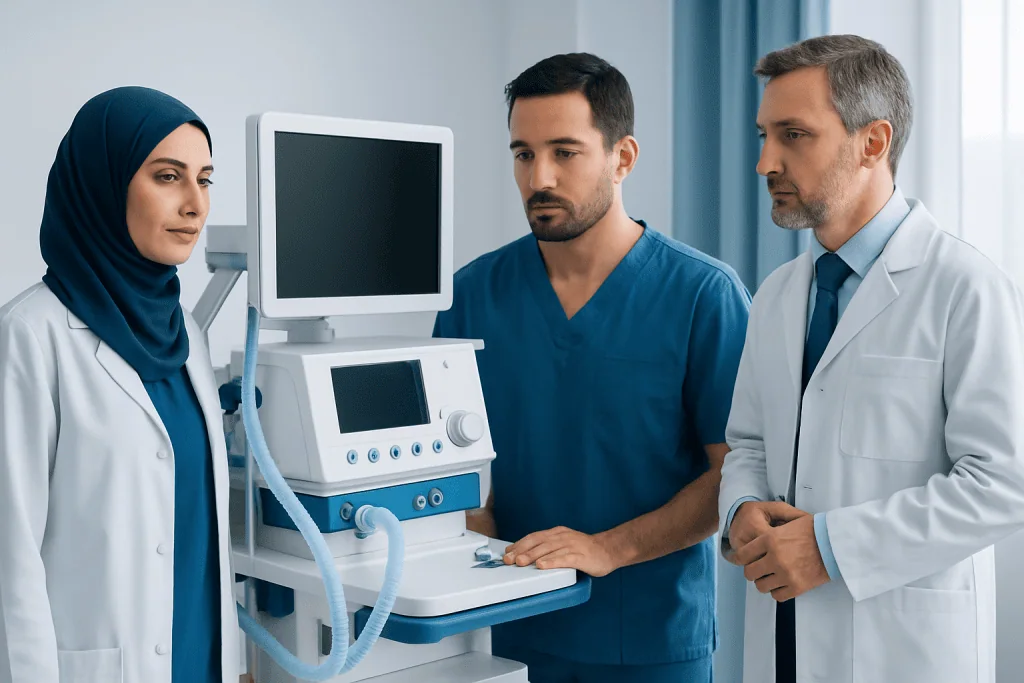
Some situations almost always involve several departments. Cancer care typically draws on surgery, medical oncology, radiation oncology, radiology and pathology. Cardiovascular conditions in a patient who also has diabetes or kidney disease require the treating cardiologist to plan alongside internal medicine. Orthopaedic surgery often needs rehabilitation planning from the start, not as an afterthought. Digestive complaints may need endoscopy, imaging and a medical review before anyone can say what the problem is.
Multidisciplinary review is also useful in less obvious circumstances:
- More than one diagnosis is possible and different specialties would investigate it differently
- You already have other medical conditions that limit or change treatment options
- A planned procedure needs imaging, laboratory work, anaesthesia review or rehabilitation input first
- Previous opinions at home have differed and you want them reviewed together rather than adding a third disconnected voice
- You are not sure which specialist you should even start with
That last point is worth stressing. In an uncoordinated system, choosing the wrong entry point costs you an appointment and a referral cycle. In a coordinated one, the initial record review directs you to the right department in the right order, and the entry consultation exists partly to route your case correctly.
Who is actually on a multidisciplinary team?
People often ask about “the four members” of a multidisciplinary team. There is no fixed universal list, but the core roles usually fall into four groups: the treating specialists (one or more doctors from the relevant departments), nursing staff, allied health professionals such as physiotherapists, dietitians or psychologists where relevant, and a coordinator or case manager who keeps the plan and the schedule connected. Diagnostic specialists — radiologists and pathologists — sit behind many team decisions even if you never meet them in person.
There is likewise no correct number of people. A straightforward surgical case might involve two specialists and an anaesthetist. A complex cancer or neurological case might be discussed by six or more clinicians in a case conference. The honest answer is that the team should be as large as the decision requires and no larger; adding departments that have nothing to contribute only slows the plan down. What matters to you is not the headcount but whether the people involved are working from the same information and produce one consistent recommendation.
For international patients, one further role belongs on the list: the interpreter. If you do not speak Turkish, interpretation is not a courtesy extra. It is the mechanism by which you understand your options and give informed consent, and it should be planned into every consultation, not improvised.
How coordination usually works in a hospital setting

In a well-run system, coordination starts before you board a plane. You share your recent medical reports, scan files, pathology results if relevant, a medication list with doses, and a short summary of your symptoms and previous treatments. The hospital’s international patient team reviews what you have sent, identifies which specialties should be involved, and flags anything missing — an imaging study in an unreadable format, a pathology report without the slides, a test that is too old to rely on.
From that review, a draft schedule takes shape. Appointments are sequenced clinically as well as practically: an initial specialist consultation, then imaging or laboratory work, then review appointments once results are ready. Where several departments are involved, the sequence is built so each opinion has what it needs before it is given. A surgical opinion issued before the imaging exists is not an opinion; it is a guess that will need revising.
Within larger hospital groups, this is supported by shared digital records, so a specialist in one department can open the imaging ordered by another, and by case discussions between departments when a decision genuinely needs more than one perspective. Patient coordinators track the schedule and adjust it when a result arrives early, late, or points somewhere unexpected. You can read a more detailed account of the internal process in our guide to how Acibadem coordinates care when you need more than one specialist.
One limit worth stating plainly: coordination reduces friction, but it cannot remove clinical dependency. If a treatment decision depends on a biopsy result, no amount of scheduling skill makes the laboratory finish faster. A good coordinator will tell you which parts of your timeline are fixed by biology and which are genuinely flexible.
How the healthcare system in Turkey is structured
It helps to understand the landscape you are entering. Turkey runs a universal public health system, funded through a national social security scheme, alongside a large private hospital sector. Turkish residents use both; international patients travelling for treatment are almost always seen in private hospitals or private hospital groups, paying directly or through international insurance where their policy allows it.
The private sector is where multidisciplinary coordination for visitors is concentrated, because large private groups operate multiple specialties, diagnostics and international patient services under one roof. When you compare providers, the practical question is not public versus private — that choice is usually made for you by your visitor status — but whether the hospital you choose genuinely operates as one connected system or as a building full of independent clinics.
What consultation costs depend on — without the numbers
We do not publish fee figures in guides, because any number would be wrong for most readers. What we can explain is the structure. The cost of seeing a doctor in Turkey as an international patient depends on the specialty, the seniority of the physician, whether the consultation includes diagnostics or only the clinical review, and whether you are paying per appointment or receiving an itemised plan for a whole evaluation. Multidisciplinary evaluations are usually quoted as a package of consultations plus the tests the team expects to need, with anything unexpected quoted separately as it arises.
Ask any hospital for a written, itemised quote before you travel, and ask what happens to the price if the plan changes after arrival. It is entirely reasonable to compare providers first — our guide on getting more than one medical quote in Turkey explains how to do this without slowing your planning down.
What you can expect during your visit
Good multidisciplinary care should feel organised, understandable and calm. At any point during your stay you should be able to answer four questions: which appointments are planned, what each one is for, how long results will take, and who your contact is if something changes. If you cannot answer those, ask your coordinator — that is precisely what the role exists for.
Expect the stay to be short and intensive if consultations and tests are grouped over a few days. Build in flexibility. Sometimes one result leads to another recommended test or opinion, and a specialist may prefer to wait for a final report before committing to a treatment decision. That is not a warning sign; it is usually careful planning. Repeat testing after arrival is also common and has practical consequences worth understanding in advance — see how additional tests after arrival can affect timing and cost.
Alongside the clinical schedule, international patient teams typically help with the surrounding logistics: interpreters, hospital navigation, documentation, and guidance on accommodation and transport. If prayer facilities, modesty preferences or dietary needs matter to you, mention them when the schedule is being built rather than on the day.
How to prepare so the team can work efficiently
The completeness of your records determines how fast and how accurately several specialists can review your case. Before you travel, gather:
- Recent reports and test results, translated into English where possible
- Imaging on disc or via a secure digital link — original image files, not just the written report
- Pathology reports, and slides if the hospital requests them
- A medication list with doses, plus allergy information
- A one-page timeline of your symptoms and previous treatments
- Your questions, written down in order of importance
It also helps to define your goal in one sentence. Are you seeking a diagnosis, confirmation of a plan made at home, surgical planning, or a second opinion? Different goals produce different schedules. If your travel window is tight, say so early, so the most decision-critical steps are placed first and anything deferrable is identified as such.
Keep practical documents — passport, insurance papers if applicable, emergency contacts, hotel details — in one place, and brief your travelling companion on the schedule. Long clinic days and back-to-back tests are tiring, and it helps if someone else also knows where you need to be.
Signs of good coordination — and questions worth asking
When you need more than one specialist in Turkey, you do not need to manage every detail yourself — but a few questions keep you in control. Ask who your single main contact is. Ask which specialists are expected to be involved and why. Ask how results will be shared between departments, and whether your case will be discussed jointly if opinions need to be reconciled. Ask what the written summary at the end of your stay will contain.
Good coordination shows up in small, observable ways: your doctors have read your reports before you sit down; appointments are grouped sensibly rather than scattered across a week; instructions from different departments do not contradict each other; and at every stage you know what happens next. You should never feel that you are the only channel of communication between two specialists treating the same body.
Coordination also should not end at discharge. Ask before you travel how follow-up will work once you are home — which reviews can happen remotely, which would need another visit, and who reads the test results you send from abroad. Our guides on ongoing follow-up support for international patients and how many follow-up visits you might need cover this stage in detail.
Step by step
- Records go to the hospital before you travel. Recent reports, scans, pathology if relevant and your medication list are reviewed in advance, so the right specialties are identified and missing documents are flagged before your arrival, not after it.
- Your goals for the visit are confirmed. Diagnosis, treatment planning, a second opinion or a surgical decision each shape the schedule differently. Clear priorities let the team place the most important steps first.
- A coordinator owns the schedule. For complex care you should have one point of contact who explains the order of consultations, tests and reviews, and adjusts the plan if timings change.
- Consultations run from a shared record. Bring your written symptom timeline and questions. Every specialist should be working from the same information, so you focus on decisions rather than repetition.
- Tests happen in the planned sequence. Some opinions depend on imaging or laboratory results existing first. Following the recommended order reduces repeat visits and produces a more confident plan.
- The combined plan is reviewed before you leave. Expect a written summary of findings, recommendations, any prescribed medications and next steps, with a clear split between remote follow-up and anything that would need another in-person visit.
Your checklist
- Passport and travel documents
- Recent medical reports and test results
- Imaging files on disc or secure digital link
- Medication list with doses and allergies
- One-page summary of symptoms and timeline
- List of questions for each specialist
- Insurance documents if applicable
- Companion contact details and accommodation information
Key takeaways
- Multidisciplinary care means several specialists review your case as one connected plan, working from the same records.
- It is most valuable for complex diagnoses, second opinions, and conditions involving more than one body system or competing treatment decisions.
- There is no fixed team size; the core roles are treating specialists, nursing, allied health professionals and a coordinator — plus an interpreter for international patients.
- Coordination starts before travel: record review, specialty selection and a clinically sequenced schedule compress the visit into days rather than weeks.
- Costs are structural, not fixed — get a written, itemised quote and ask what changes if the plan changes after arrival.
- Complete records, a clear goal and one named contact person are the three things that most improve how a multidisciplinary visit runs.
Frequently asked questions
What are the four members of the multidisciplinary team?
There is no single official list, but the core roles usually fall into four groups: treating specialists (doctors from the relevant departments), nursing staff, allied health professionals such as physiotherapists or dietitians, and a coordinator or case manager. Radiologists and pathologists often contribute behind the scenes, and for international patients an interpreter is effectively a fifth essential role.
How many people should be in a multidisciplinary team?
There is no correct number. The team should include every specialty the decision genuinely needs and none it does not. A straightforward surgical case may involve two or three clinicians; a complex cancer or neurological case may be discussed by six or more. What matters is that they share the same information and produce one consistent recommendation.
How is the healthcare system structured in Turkey?
Turkey has a universal public health system funded through a national social security scheme, alongside a large private hospital sector. International patients travelling for treatment are almost always seen in private hospitals, paying directly or through international insurance where a policy allows it. Multidisciplinary coordination for visitors is concentrated in large private groups that run multiple specialties and diagnostics under one roof.
How much does it cost to see a doctor in Turkey?
Fees vary too widely to quote usefully. What a consultation costs depends on the specialty, the physician’s seniority, whether diagnostics are included, and whether you are paying per appointment or receiving an itemised quote for a full evaluation. Ask any hospital for a written, itemised quote before travelling, and ask how the price changes if the plan changes after arrival.
Can my appointments be arranged close together during one trip?
Often, yes — especially if your records are shared in advance so the necessary departments are identified early. Scheduling depends on the clinical sequence, test availability and how quickly results can be reviewed, so keep some flexibility in your travel plans.
Will I need to repeat tests in Turkey?
Sometimes. If earlier tests are outdated, incomplete, performed with different protocols, or unavailable in a format the treating team can review directly, repeating them may be recommended for accuracy. This is common and usually reflects careful planning rather than a problem with your original care.
Who helps coordinate care for international patients?
Larger hospitals in Turkey have international patient services teams that organise appointments, communication and practical details. At Acibadem, these teams work alongside the clinical departments and can also arrange interpreters, help with hospital navigation and support travel-related logistics so the care pathway stays manageable.
Can follow-up happen after I return home?
In many cases parts of follow-up can continue remotely, depending on your condition and the treatment provided. Before leaving Turkey, ask for a written summary and clear instructions on which updates can be shared online and which situations would require an in-person review.
Add us as a Preferred Source to see more of our trusted health content across Google Search, AI Overviews and Discover.

Update history
- PublishedAugust 14, 2026
- Medical review approvedSeptember 1, 2026
- Last content updateSeptember 1, 2026
References1
- NCI Dictionary of Cancer Terms: multidisciplinary — cancer.gov
More Patient Guides

Choosing Between Inpatient and Day-Case Treatment in Turkey
Inpatient and day-case treatment in Turkey differ mainly in overnight monitoring, recovery needs and travel planning. Learn how to choose safely.
8 min read
At Acibadem, How We Manage Unexpected Changes to Your Treatment Plan
Unexpected changes to your treatment plan at Acibadem are managed through clear explanations, safety checks, and practical support in Turkey.
9 min read
How to Compare Hospitals in Turkey for Complex Treatment
Compare hospitals in Turkey for complex treatment by checking accreditation, specialist teams, ICU support, coordination, and follow-up.
9 min read
At Acibadem, How We Explain Surgical Risks and Safety Checks Before You Travel
Surgical risks and safety checks before travel means understanding your personal risk, required tests, and travel timing before coming to Turkey.
9 min read