

At Acibadem, What Safety and Quality Checks Support Your Hospital Care

Your hospital care is supported by layered checks: repeated identity confirmation, careful review of records and medicines, structured consent, infection prevention routines, regular monitoring, and a planned discharge with written instructions. Acibadem hospitals work within internationally recognised standards, including JCI accreditation, and international patient services add interpreters and coordination so those checks keep working across languages and borders.
Travelling abroad for treatment, you may find yourself wondering who is checking that everything is done correctly, and how anyone would notice if something were missed. It is a fair question, particularly when you are far from home and managing appointments in another language.
This guide explains what safety and quality checks support your hospital care at Acibadem: the practical checks you will see, the ones that run in the background, the teams responsible for them, and the standards they work within. It also answers the questions patients most often search for, what quality indicators hospitals track, what improvement tools they use, and what safe nursing practice looks like day to day.
At a glance
- Best for: International patients who want to understand how hospital safety and quality processes actually work
- Covers: Accreditation and standards, quality indicators, identity and medication checks, infection prevention, nursing practice, and discharge planning
- Applies to: Before admission, during treatment, and after you leave
- Support available: International patient services, interpreters, and travel coordination
- What to do: Bring complete records, answer questions accurately, and ask when anything is unclear
What safety and quality checks support your hospital care, and what they mean
Hospital safety is not one test or one form. It is a series of connected checks built into your care so that the right patient receives the right treatment, at the right time, with the right information. When people ask what safety and quality checks support your hospital care, the honest answer is that most of them are small, repeated and deliberately unglamorous: wristband checks, medication reviews, hand hygiene, structured handovers between shifts, and written discharge instructions. Individually, each one seems minor. Together, they form the system that protects you.
It helps to define the terms. In healthcare, quality means care that is effective, timely, people-centred and based on sound evidence. Safety is the part of quality concerned with reducing avoidable harm, preventing errors, catching problems early, and learning from anything that goes wrong. The World Health Organization describes patient safety as a discipline in its own right, because avoidable harm in healthcare is a recognised global problem and preventing it requires organised systems, not just careful individuals.
At Acibadem, these processes are designed with international patients in mind, people who may be managing travel, language differences, family arrangements and treatment decisions at the same time. In practical terms, that means your identity is confirmed repeatedly, your records are reviewed before decisions are made, your medicines and allergies are checked at several points, and the different teams involved in your care coordinate with each other so fewer details are missed.
Accreditation, standards, and why they matter to you
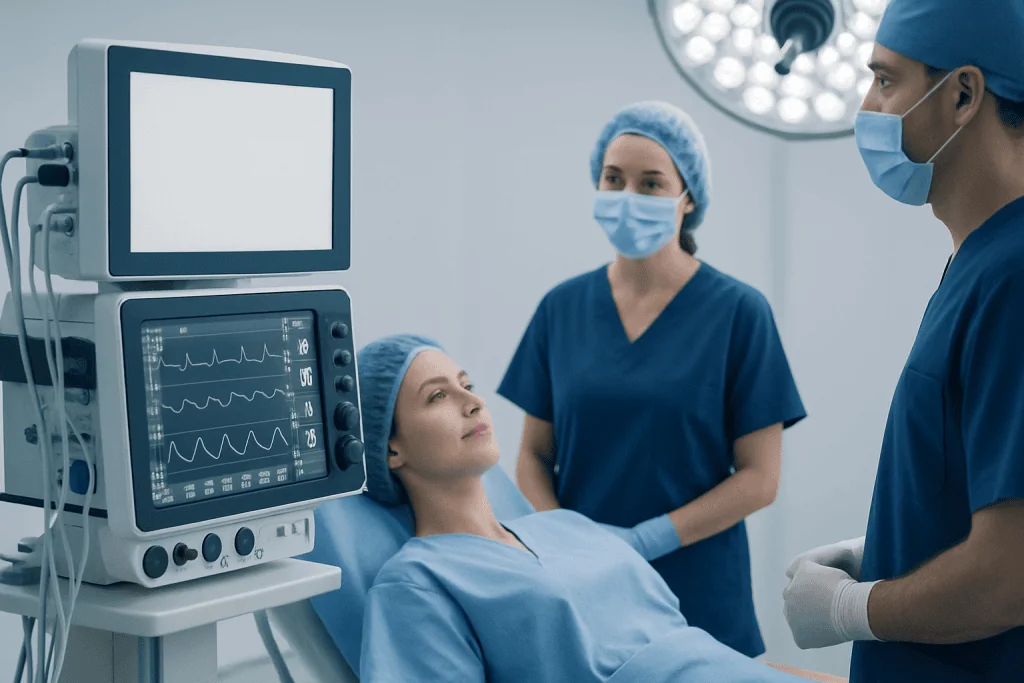
One of the simplest ways to judge a hospital’s quality framework is to look at its accreditation and governance. Acibadem is a healthcare group with JCI-accredited hospitals, meaning those hospitals are assessed by an independent body against internationally recognised standards for patient safety, clinical processes and continuous quality improvement. You can read more about what that assessment involves in our guide to how JCI accreditation supports patient safety at Acibadem.
Be clear about what accreditation does and does not do. It does not guarantee any particular outcome, no honest hospital would claim that. What it does mean is that the hospital is expected to work within defined standards for documentation, staff training, infection control, medication management and incident review, and that an external assessor periodically checks whether those standards are being applied. It replaces informal routines with structured, auditable systems. If you are weighing hospitals against each other, our guide on how to compare hospital quality and safety standards in Turkey explains what to look for.
The quality indicators hospitals actually track
Patients often ask which quality indicators matter most. There is no single official list, but hospitals with structured quality programmes typically monitor a common core:
- Healthcare-associated infectionssurveillance of infections linked to care, such as surgical site or line-related infections, so trends are spotted and acted on.
- Medication safety eventsnear-misses and errors involving medicines, tracked so processes can be redesigned rather than blamed on individuals.
- Unplanned readmissions and returns to theatresignals that discharge planning or a procedure may need review.
- Falls and pressure injuriesclassic nursing-sensitive indicators that reflect how closely patients are assessed and monitored.
- Patient experience and complaintsstructured feedback, because how care felt to you is itself a quality measure.
You will not usually see these dashboards as a patient, and this guide will not quote figures from them. What matters for you is that they exist: a hospital that measures these things systematically has a mechanism for noticing problems and correcting them.
The seven basic quality tools working behind the scenes
Quality teams in healthcare borrow a set of classic improvement tools, often called the seven basic quality tools: flowcharts (to map a process step by step), check sheets (to record how often something happens), cause-and-effect or “fishbone” diagrams (to trace the roots of a problem), Pareto charts (to identify which few causes create most of the trouble), histograms, scatter diagrams and control charts (to see whether a process is stable or drifting). You will never be handed a Pareto chart on a ward round, but these tools are how hospitals turn incident reports and audit data into changed practice, which is what continuous improvement actually means.
How your identity, information, and treatment plan are checked

The most visible safety measure in hospital is repeated identification. You may be asked to state your name and date of birth several times, before a blood test, before a medicine is given, before you enter theatre, even by staff who clearly know who you are. This is deliberate. Using at least two identifiers, checked against your wristband and records at each step, reduces the risk of mix-ups during admissions, tests, medication rounds and procedures. It can feel repetitive. That repetition is the point.
Your records are the second layer. Before treatment, your team reviews your diagnosis, previous reports, imaging, blood results, allergies, regular medicines and relevant health conditions. For international patients, this often includes translating or clarifying records produced elsewhere, so the team is working from an accurate history rather than a partial one.
Consent and planning are quality checks too. Before any significant investigation or treatment, you should be told what is planned, why it is recommended, what the realistic risks and alternatives are, and what preparation is needed from you. If anything is unclear, ask for it in plainer language or with an interpreter present: a consent discussion you did not understand has not done its job. If your treatment involves an operation, our guide to what safety checks support surgery and inpatient care goes deeper into the checks specific to theatre and the ward.
- Bring a current medication list, including supplements and herbal products.
- State any allergies or previous reactions clearly, even if they seem minor.
- Carry copies of imaging reports and laboratory results where available.
- Tell the team if there is any chance of pregnancy, where relevant to your care.
Infection prevention, hygiene, and the hospital environment
Infection prevention is one of the most consequential parts of hospital safety, and much of it is visible if you know what to look for: hand hygiene stations at ward entrances and bedsides, staff cleaning their hands before and after contact with you, protective equipment used for specific tasks, scheduled room cleaning, and clear rules for visitors. These are not courtesies. They form a system for reducing healthcare-associated infections, and hand hygiene in particular is one of the most effective single measures known in hospital care.
You have a role here too. Follow any instructions about bathing before a procedure, wound care, mask use or fasting. It is entirely reasonable to expect anyone examining you to have cleaned their hands, and staff working in a good safety culture will not be offended by the observation. If a dressing loosens, a drip site becomes uncomfortable, or something in your room concerns you, tell your nurse promptly, small issues reported early stay small.
What safe nursing practice looks like day to day
Many searched-for “quality and safety practices in nursing” are things you will actually witness at the bedside:
- Hand hygiene at defined momentsbefore touching a patient, before a clean procedure, after contact with body fluids, after touching the patient or their surroundings.
- Two-identifier checks before every medicine, transfusion or sample is taken.
- Structured handovers between shifts, using standard formats so critical information does not depend on memory.
- Falls and pressure-injury risk assessments, with repositioning schedules and mobility plans for patients who need them.
- Early-warning observation scoresroutine vital signs combined into a score that triggers escalation if you begin to deteriorate.
Medication safety, monitoring, and everyday checks
Medication safety involves far more than receiving a prescription. Your team reviews what you already take, whether anything interacts with the planned treatment, whether there are allergy concerns, and whether doses need adjusting for your condition or test results. Any decision to pause, change or restart a medicine belongs to your treating doctor: your part is to give a complete picture and make sure you understand the plan. If you travel from abroad, mention brand names as well as generic names, because the same medicine is often sold under different names in different markets.
During your stay, nurses confirm your identity, the medicine, the dose, the route and the timing before each administration, often supported by barcode scanning or electronic prescribing. This formality is a core safeguard against wrong-patient, wrong-dose and duplicate-medication errors. Alongside it runs routine monitoring: blood pressure, pulse, oxygen levels, temperature, pain scores, blood tests, fluid balance, mobility and wound status as your situation requires. These observations are how the team notices change early and decides whether the plan needs adjusting. Much of this is supported by digital records and monitoring systems; our guide to what technology supports your care explains that side in more detail.
If a medicine, symptom or instruction does not make sense to you, say so. Ask what the medicine is for, when to take it, and which effects should be reported. A good safety culture treats patient questions as part of the system, not an interruption to it.
Communication, interpreters, and coordination for international patients
For international patients, communication is itself a safety mechanism. Even excellent treatment can be undermined by misunderstandings about timing, fasting, medicines, consent or follow-up. That is why Acibadem’s international patient services include interpreters, scheduling coordination and practical help with travel logistics, organisational work that keeps the clinical checks functioning across a language barrier. Our guide to how interpreters support your care at every step explains when and how that support works.
You can help communication run smoothly: keep one main contact number active, check appointment messages promptly, and tell the team which family member should receive updates if you want someone else involved. If you do not understand something, pause and clarify early. Guessing is where errors start.
- Ask for interpreter support if you prefer discussing health matters in your own language: this is normal, not an imposition.
- Keep digital copies of reports and identity documents accessible during your trip.
- Confirm fasting instructions, medication instructions and transport plans the day before key appointments.
Discharge, follow-up, and what good quality looks like after you leave
Safety does not stop at the hospital door. A proper discharge process tells you, in writing, what treatment you had, which medicines to take and how, which activities to avoid, which warning signs need attention, and when your next review is due. If you are flying home soon after treatment, practical guidance on travel timing and mobility should be part of that conversation before you leave the ward, not after.
Before discharge, make sure you have your reports, prescriptions, imaging copies where needed, and any medical travel documents relevant to your journey. Complete records make the handover to a doctor in your home country far easier. If your recovery will need wound checks or dressing changes while you are still in Turkey, our guide to arranging wound checks and dressing changes in Turkey covers the practicalities. Good quality care should leave you feeling informed about what happens next, not uncertain once the stay ends.
Step by step
- Prepare your health information early. Gather previous reports, imaging, your medication list and allergy details well before you travel, and have them translated or summarised if they are not in English. Complete information lets any clinical team review your case properly and reduces last-minute confusion on arrival.
- Confirm your treatment plan and logistics. Before admission, make sure you understand the schedule, fasting instructions and which documents to bring. If you are travelling to Turkey, also confirm transfers, accommodation and whether a companion is advisable.
- Expect repeated identity and safety checks. During admission, testing and treatment, staff will ask you the same details several times and check them against your wristband. This repetition is a standard safeguard, not a sign of disorganisation.
- Use interpreter and coordinator support when anything is unclear. Clear communication is one of the strongest safety tools available to international patients. Clarifying is always better than guessing.
- Review your medicines carefully with the team. Declare everything you take, including over-the-counter products, vitamins and herbal supplements. Before you leave, make sure you understand your doctor’s plan for each medicine and exactly how to follow it.
- Check your discharge pack before leaving. Ask for written information on warning signs, wound care where relevant, activity limits, follow-up timing and out-of-hours contact details. If you are flying home, confirm any travel-specific advice while you are still in hospital.
Your checklist
- Passport or ID and hospital registration documents
- Current medication list, including supplements
- Written list of allergies and past reactions
- Copies of recent reports, scans and test results
- Emergency contact and companion details
- Questions you want to ask about treatment or recovery
- Travel and accommodation confirmation if coming from abroad
- A note of your preferred language and interpreter needs
Key takeaways
- Hospital safety is built from many small, repeated checks across the whole care journey, not a single inspection.
- JCI accreditation supports structured, externally assessed quality processes, but no accreditation guarantees an outcome, and you should stay involved in your own care.
- Hospitals track indicators such as infections, medication events, readmissions, falls and patient feedback, and use classic improvement tools to act on them.
- Identity checks, medication verification, hand hygiene, structured handovers and routine monitoring are the everyday safeguards you will actually see.
- Clear communication, including interpreter support, is a safety measure in its own right for international patients.
- Before discharge, make sure you understand your medicines, warning signs, follow-up timing and who to contact after you leave.
Frequently asked questions
Why does the hospital keep checking my name and date of birth?
Using at least two identifiers before every test, medicine or procedure is a standard international safety measure. It confirms that the right patient receives the right intervention, and it works precisely because it is repeated at every step, even by staff who already know you.
What is healthcare quality and safety?
Quality means care that is effective, timely, people-centred and based on evidence. Safety is the part of quality focused on preventing avoidable harm, designing processes so errors are less likely, caught earlier, and learned from when they occur. The two work together: safe care is a precondition for good care.
What are the most important quality indicators in a hospital?
Commonly tracked indicators include healthcare-associated infections, medication safety events, unplanned readmissions or returns to theatre, falls and pressure injuries, and patient experience feedback. Well-run hospitals monitor these systematically and use the results to change practice, rather than treating them as paperwork.
What are the seven basic quality tools used in hospitals?
Flowcharts, check sheets, cause-and-effect (fishbone) diagrams, Pareto charts, histograms, scatter diagrams and control charts. Quality teams use them to map processes, find the root causes of problems, and see whether a process is stable, turning incident reports and audit data into concrete improvements.
What are examples of quality and safety practices in nursing?
Hand hygiene at defined moments of care, two-identifier checks before medicines and samples, structured shift handovers, falls and pressure-injury risk assessments, and early-warning observation scores that trigger escalation if a patient’s condition changes. These are the bedside practices you are most likely to see during a stay.
What does JCI accreditation mean for me as a patient?
It means the hospital is periodically assessed by an independent body against international standards for safety, documentation and quality improvement. It does not promise any particular outcome, but it does indicate the hospital works within structured, externally checked systems rather than informal routines.
How can I help make my own care safer?
Bring complete information, medicines, supplements, allergies and previous reports, and answer questions as accurately as you can, even when they are repeated. Ask for clarification whenever an instruction is unclear, especially around fasting, medicines, consent and discharge, and use interpreter support rather than guessing.
What should I ask before I leave the hospital?
Ask what medicines to take and how, which symptoms need attention, what activity limits apply, and when your follow-up is due. Request written copies of your reports and prescriptions, and if you are flying home soon after treatment, ask whether any travel-specific precautions or documents apply to you.
Add us as a Preferred Source to see more of our trusted health content across Google Search, AI Overviews and Discover.

Update history
- PublishedJune 25, 2026
- Medical review approvedSeptember 13, 2026
- Last content updateSeptember 12, 2026
References2
- Patient safety: World Health Organization fact sheet who.int
- Patient Safety: MedlinePlus medlineplus.gov
More Patient Guides

At Acibadem, How We Explain Expected Clinical Outcomes and Treatment Success Information
Expected clinical outcomes at Acibadem are explained in clear, realistic terms so you understand likely benefits, limits, risks, and next steps in…

At Acibadem, How Families and Companions Are Supported During Treatment Travel
At Acibadem, family support during treatment travel in Turkey includes interpreters, planning help, visitor guidance, and practical support for companions.

At Acibadem, How Our JCI-Accredited Hospitals Support Safe International Care
JCI-accredited hospitals at Acibadem support safe international care in Turkey with standardized quality, interpreters, coordination and follow-up.

At Acibadem, What Our International Patient Package May Include Before You Travel
International patient package at Acibadem may include medical planning, travel help, interpreters, and stay support in Turkey before you travel.