

How JCI Accreditation Supports Patient Safety at Acibadem

JCI accreditation supports patient safety by requiring a hospital to run structured, auditable systems: patient identification checks, standardised consent, medication verification, infection prevention routines, and formal handovers between teams. It does not guarantee any medical outcome. It means an external body has assessed how the hospital organises care, manages risk, and works to improve, which is useful information when you cannot inspect a hospital yourself.
Choosing a hospital in another country raises one honest question: how do you know your care will be handled safely when you cannot walk the corridors first? Accreditation is one way to answer it. It will not tell you everything, but it tells you something specific: that an external organisation has examined how the hospital runs its safety systems, not just how it presents itself.
This guide explains how JCI accreditation supports patient safety in practical terms: what the standards actually assess, what you will notice during a stay at an Acibadem hospital, and, just as importantly, what accreditation does not mean. Read it as background for your own decision, not as a substitute for the conversations you will have with your treating team.
At a glance
- Best for: International patients who want a plain explanation of what hospital accreditation does and does not tell them
- What JCI is: Joint Commission International, an independent body that assesses hospitals against published international standards for quality and patient safety
- What the standards cover: Patient identification, communication, medication safety, safe surgery, infection prevention, fall prevention, and how the hospital learns from errors
- What you may notice: Repeated identity checks, structured consent, medication verification, formal handovers between teams
- What it is not: A guarantee of any particular result, accreditation assesses systems, not outcomes for individual patients
- At Acibadem: JCI-accredited hospitals, multidisciplinary teams, and coordination support for patients travelling from abroad
How JCI accreditation supports patient safety
Joint Commission International, usually shortened to JCI, is an independent accreditation body. It publishes detailed standards for hospitals, then sends surveyors to check whether a hospital actually meets them, by reviewing records, tracing individual patients through the system, watching processes on wards, and interviewing staff. A hospital that passes is accredited for a fixed period and must be re-surveyed to keep the status.
The honest way to describe it: JCI accreditation supports patient safety by forcing a hospital to run on written, repeatable systems rather than on individual habit. When staff check your wristband before every medication, that is not personal caution alone: it is a required process that surveyors have verified. When two departments hand you over with a structured summary rather than a quick word in a corridor, that is the same principle. Accreditation makes safe behaviour the default rather than the exception.
For you as a patient, the value is practical rather than abstract. It shows up as clearer identification checks, more consistent consent conversations, better documentation, verified medication handling, and a stronger expectation that teams communicate formally when your care moves between them. If you want a broader look at what this status means specifically for patients treated in Turkey, see what JCI accreditation means for patients in Turkey.
The JCI International Patient Safety Goals
At the centre of the JCI framework sit the International Patient Safety Goals: a short list of areas where errors in hospitals worldwide are most common and most preventable. Every accredited hospital must show working systems for each goal. In plain language, they cover:
- Identifying patients correctly. Using at least two identifiers, typically your full name and date of birth, before any medication, test, procedure, or blood product. This is why you are asked the same questions repeatedly.
- Improving effective communication. Structured methods for handing over information between staff, including read-back of verbal orders and critical test results.
- Improving the safety of high-alert medications. Extra controls on medicines that can cause serious harm if given incorrectly, such as concentrated electrolytes and certain injectables.
- Ensuring safe surgery. Verifying the correct patient, correct procedure, and correct site before an operation begins, including a marked surgical site and a final team check before incision.
- Reducing the risk of healthcare-associated infections. Hand hygiene compliance and infection prevention routines across every clinical area.
- Reducing the risk of harm from falls. Assessing each patient’s fall risk and putting specific precautions in place for those who need them.
Notice what these goals have in common: none of them depends on a brilliant individual. They are all systems that catch ordinary human error before it reaches you. That is the core of how JCI accreditation supports patient safety: it treats mistakes as predictable and builds routines to intercept them.
What JCI accreditation standards actually assess
Beyond the safety goals, the full JCI hospital standards run to hundreds of measurable requirements. They fall broadly into two groups. Patient-centred standards look at how you experience care: access and assessment, patient and family rights, informed consent, anaesthesia and surgical care, medication management, and patient education. Organisational standards look at the machinery behind that care: governance and leadership, staff qualifications and training, facility safety, infection prevention programmes, and quality measurement.
Two features of the standards matter most from a patient’s point of view. First, they require documentation: a hospital cannot simply say it checks allergies; it must show where and how each check is recorded. Second, they require the hospital to measure its own performance and act on what it finds. Accredited hospitals track safety indicators, investigate incidents, and are expected to demonstrate improvement between surveys. The standards themselves are periodically revised and republished, so an accredited hospital is being held to a framework that tightens over time rather than a certificate earned once.
How accreditation supports safety before treatment begins
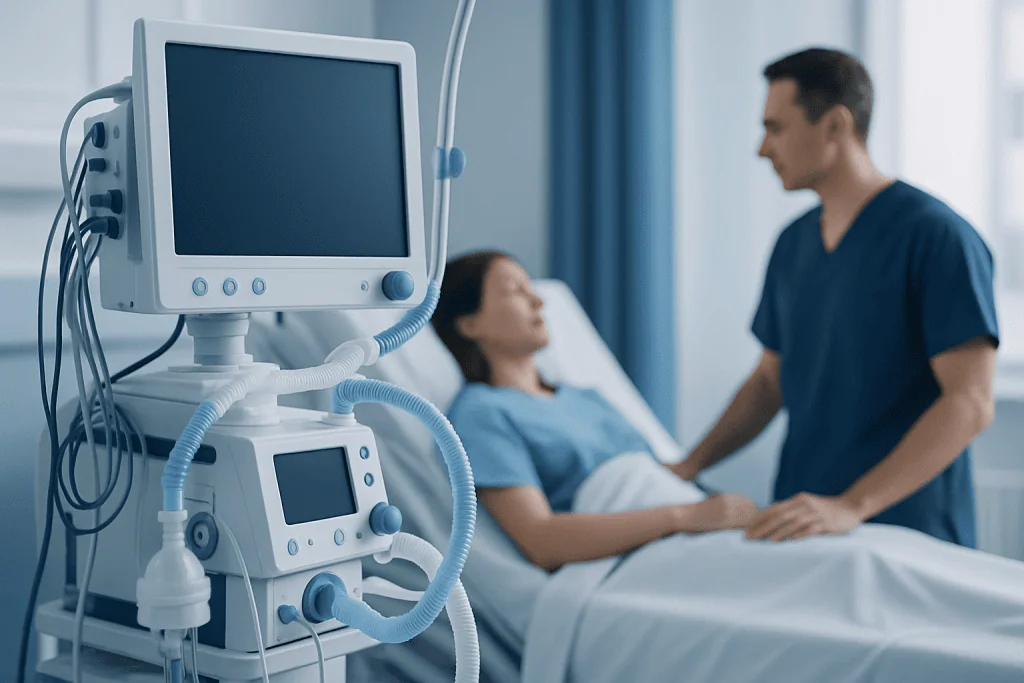
Patient safety starts well before admission. A hospital working to accreditation standards uses structured intake processes: your medical history, current medications, allergies, previous surgeries, and test results are gathered and reviewed so the clinical team plans with a full picture rather than fragments. For international patients this stage carries extra weight, because a gap discovered after you have flown is far harder to fix than one caught while you are still at home.
You will also notice an emphasis on informed decision-making. Accreditation standards require that consent is a genuine explanation: the proposed treatment, its material risks, the alternatives, and what preparation involves, delivered in a way you can understand, with interpreter support where language is a barrier. If you want to think through this stage in more detail before you commit, the guide to questions to ask before surgery in Turkey works through consent and safety checks question by question.
At Acibadem, international patient services coordinate documents, appointments, and communication before arrival, with interpreter support available so that preparation instructions, fasting, timing, what to bring, are understood rather than guessed at. Practical points that genuinely reduce risk at this stage:
- Sharing a complete medication and supplement list in advance helps the team identify interactions and preparation issues early.
- Providing previous scans and reports before travel reduces duplicate imaging and last-minute delays.
- Confirming preparation instructions in writing lowers the chance of same-day cancellations or changes.
Safety checks you may notice during your hospital stay

Many of the most important safety steps are the visible, repetitive ones. Staff will ask your full name and date of birth more than once, check your wristband against your chart, confirm the planned test or procedure aloud, and verify allergies before medications are given. If you are having surgery, expect the surgical site to be marked while you are awake and able to confirm it, and expect a final team pause before the procedure starts. The repetition is deliberate: each check is a chance to catch an error the previous check missed.
You will also see structured handovers whenever your care moves, from a ward to imaging, from a procedure area to recovery, from recovery back to your room. Accreditation standards require that the right information travels with you: diagnosis, treatment plan, mobility needs, pain control plan, and any special instructions. Formal handover is one of the least glamorous and most protective things a hospital does.
You can take part in these checks rather than simply endure them. Answer identification questions fully each time, even when the same nurse asked five minutes ago. Mention changes in how you feel. Ask for clarification when something is unclear: a question at the bedside is itself a safety check. If you are preparing for an operation, the patient safety checklist before surgery in Turkey lists the checks worth understanding in advance.
Medication safety, infection prevention, and communication
Three areas dominate patient concerns, and accreditation standards give all three heavy weight. Medication safety means verifying the right patient, medicine, dose, route, and time at every administration, documenting allergies where every prescriber can see them, and applying extra controls to high-alert medicines. Any changes to what you take remain decisions for your treating doctor: the system’s job is to make sure those decisions are recorded accurately and carried out exactly. The guide to medication safety during a hospital stay in Turkey explains what these routines look like from the bedside.
Infection prevention is mostly invisible to you: hand hygiene protocols, equipment sterilisation, environmental cleaning schedules, isolation procedures where needed, and surveillance that tracks infections across the hospital. Accreditation requires these to be organised programmes with named responsibility and measured compliance, not informal habits. You will see fragments of it, staff cleaning their hands before touching you, single-use equipment opened in front of you, and you are entitled to expect it consistently.
Communication is the third pillar, and for international patients often the decisive one. If you do not fully understand Turkish, interpreter support changes the quality of everything else: consent discussions, test explanations, discharge instructions, medication guidance. Acibadem provides language support so that key information at each stage is understood, not merely delivered. A consent form you could not really read protects no one.
Why coordination matters more when you travel for care
When you travel for treatment, safety is not confined to the procedure room. It depends on how well the whole journey is coordinated: records review before you fly, assessment on arrival, treatment, recovery, and a discharge plan that accounts for the fact that you will soon be on an aircraft, far from the team that treated you. A hospital may have excellent clinicians, but your experience is safer when the system around them works, and that system is precisely what accreditation examines.
JCI-style standards push hospitals towards coordination: organised scheduling, documentation that follows the patient, timely escalation of concerns, and discharge planning that starts early rather than on the last morning. For international patients this reduces the specific risks of cross-border care, instructions lost in translation, follow-up left vague, fitness to fly assumed rather than assessed. Acibadem pairs its clinical teams with international patient coordinators and interpreters, and can assist with travel and accommodation logistics. These services do not replace medical care; they remove the friction around it so the clinical plan can proceed as designed.
What JCI accreditation does not mean
Be clear-eyed about the limits. JCI accreditation does not mean a hospital is free of risk, and it does not guarantee any treatment result. All medical care carries uncertainty, and how things go for you depends on your condition, your history, the treatment chosen, and how your recovery progresses, none of which any accreditation body can promise. A hospital that suggested otherwise would be telling you something accreditation itself does not claim.
What accreditation does mean is narrower and still valuable: an external body has verified that the hospital runs structured systems for safety and quality, measures its own performance, investigates when things go wrong, and works to improve between survey cycles. It is evidence about process, not a prediction about outcome. Treat it as one strong signal among several, and weigh it alongside the hospital’s experience with your specific condition and its arrangements for follow-up after you go home.
You also remain part of the safety system. Ask questions, share complete health information, keep your medication list current, and speak up if something seems inconsistent. Accredited hospitals are required to have channels for concerns; the guide to how to report a safety concern in a Turkish hospital explains how those channels work in practice.
Using accreditation when comparing hospitals
If you are comparing hospitals, accreditation should be one input, not the whole decision. Check that the status is current: JCI maintains a public directory of accredited organisations, and the guide to how to verify hospital accreditation in Turkey walks through the verification step by step. Then look at what accreditation cannot show you: how experienced the hospital is with international patients, whether complex cases are reviewed by multidisciplinary teams, how follow-up is handled after you return home, and how communication works in your language.
Useful questions to raise during your own planning: How will my records be reviewed before I travel? Who coordinates my appointments? Is interpreter support available throughout, including at discharge? What happens if the treatment plan changes after assessment on arrival? How will discharge instructions and medicines be explained before I leave the country? The quality of the answers tells you as much as the certificate does.
Step by step
- Verify the accreditation status. Confirm that the hospital you are considering is currently JCI accredited, using JCI’s public directory rather than the hospital’s own marketing alone. Current status matters more than a logo, because accreditation runs in fixed cycles and must be renewed.
- Assemble your health information early. Gather your medical reports, imaging, medication and supplement list, allergy details, and previous treatment records well before travel. Early review by the receiving clinical team allows safe planning and flags any extra tests or timing issues while you can still adjust your trip.
- Understand the full journey, not just the procedure. Ask how the pathway works from arrival to discharge: who coordinates appointments, how interpreter support is arranged, and how documentation moves between departments. At Acibadem, international patient services exist to make this pathway explicit rather than assumed.
- Confirm preparation details in writing before admission. Double-check fasting instructions, arrival time, what documents to bring, and any preparation your doctors have specified. Small practical details determine whether treatment proceeds safely and on schedule.
- Take part in bedside safety checks. Expect repeated identity questions, wristband checks, and verification of your planned procedure. Answer fully every time, and mention new symptoms, allergies, or concerns so the team is always working from accurate information.
- Leave with instructions you actually understand. Before discharge, make sure your medicines, activity limits, warning signs, and follow-up plan are clear to you. If English is not enough for full clarity, use interpreter support so the instructions you carry home are ones you can follow with confidence.
Your checklist
- Passport or ID and hospital registration documents
- A full, current list of medications and supplements
- Written details of allergies and past reactions
- Copies of previous reports, scans, and lab results
- Emergency contact details and companion information
- Your questions about consent, interpreter support, and discharge
- Comfort items for your stay, including chargers and essentials
- A plan for transport, accommodation, and return travel timing
Key takeaways
- JCI accreditation supports patient safety by requiring written, repeatable systems that are externally verified, not by promising results.
- The International Patient Safety Goals cover the errors most worth preventing: misidentification, poor handovers, high-alert medications, wrong-site surgery, infections, and falls.
- For patients, accreditation shows up as visible routines: identity checks, structured consent, medication verification, and formal handovers.
- International patients gain most when accredited systems are combined with interpreters, coordinators, and early records review, all part of how Acibadem organises cross-border care.
- Verify accreditation status yourself, then ask practical questions about communication, planning, and follow-up before deciding.
Frequently asked questions
What are the JCI International Patient Safety Goals?
They are a set of priority requirements every JCI-accredited hospital must meet: identifying patients correctly, improving effective communication between staff, improving the safety of high-alert medications, ensuring safe surgery through site marking and pre-procedure verification, reducing the risk of healthcare-associated infections, and reducing the risk of patient harm from falls. They target the errors that hospitals worldwide find most common and most preventable.
What do JCI accreditation standards cover?
The standards fall into two groups. Patient-centred standards cover access and assessment, patient rights, informed consent, anaesthesia and surgical care, medication management, and patient education. Organisational standards cover governance, staff qualifications and training, facility safety, infection prevention programmes, and quality measurement. Surveyors verify compliance through document review, direct observation, and tracing real patients through the hospital’s systems.
What are JCI-accredited hospitals?
They are hospitals that have been surveyed by Joint Commission International and found to meet its published standards. Accreditation lasts for a fixed cycle and must be renewed through re-survey, so a hospital’s status reflects an ongoing commitment rather than a one-time award. JCI maintains a public directory where anyone can check whether a hospital’s accreditation is current.
What are the 7 pillars of patient safety?
There is no single official list; the phrase usually refers to the seven pillars of clinical governance used in some health systems: clinical effectiveness, risk management, patient experience and involvement, communication, resource effectiveness, strategic effectiveness, and a learning culture. JCI’s framework covers similar ground but organises it differently, through its International Patient Safety Goals and detailed hospital standards.
Does JCI accreditation guarantee better treatment results?
No. Accreditation assesses how a hospital organises and monitors care; it cannot promise any individual outcome, and no responsible hospital would claim it does. Its value is as evidence of verified systems, for identification, medication safety, infection prevention, and communication, that reduce avoidable risk in how care is delivered.
Why does JCI matter more if I am travelling from abroad?
When you travel for treatment, you rely heavily on the hospital’s systems because you may face language differences, unfamiliar logistics, and limited local support. Accreditation tells you those systems have been externally examined, records review, structured consent, interpreter provision, coordinated handovers, which is harder for you to assess from a distance on your own.
Can I ask questions about safety procedures without seeming difficult?
Yes. Accredited hospitals expect and welcome patient questions, particularly around identity checks, medications, consent, and discharge instructions. Asking for clarification is itself part of a working safety culture, not an interruption to it.
Add us as a Preferred Source to see more of our trusted health content across Google Search, AI Overviews and Discover.

Update history
- PublishedJune 22, 2026
- Medical review approvedSeptember 13, 2026
- Last content updateSeptember 13, 2026
References1
More Patient Guides

Medical Chaperones in Turkey: When Patients Can Request One
Medical chaperones in Turkey can be requested for sensitive exams or when you want added reassurance during care in Istanbul.

Medical Interpreter or Family Member: Who Should Help During Appointments in Turkey?
Medical interpreter or family member in Turkey? Use a trained interpreter for clinical communication and keep family involved for support and notes.

How to Plan for Prayer, Modesty, and Cultural Needs During Care in Turkey
Prayer, modesty, and cultural care needs in Turkey can be planned in advance by sharing your preferences with your care team and…

Interpreter Support in Turkish Hospitals: When to Request Help
Interpreter support in Turkish hospitals helps you understand appointments, consent and discharge clearly in Turkey or Istanbul.