

At Acibadem, What Technology Supports Diagnosis, Surgery, and Treatment Planning

Acibadem hospitals use advanced imaging (MRI, CT, PET/CT, ultrasound), laboratory diagnostics, digital surgical planning, minimally invasive and robotic-assisted platforms, intraoperative imaging and navigation, computerised radiotherapy planning, and shared electronic records. These tools help specialists see a condition clearly, plan procedures precisely, and coordinate care across departments. Technology informs decisions; the decisions themselves remain with your treating doctors.
Which scans will be repeated? How long does planning take? Can anything happen before you fly? If you are comparing hospitals from another country, these are usually the real questions behind a broader one: what technology supports diagnosis, surgery, and treatment planning once you arrive.
This guide answers that question in practical terms. It explains the imaging and laboratory tools used to reach a diagnosis, the planning and precision systems that support surgery, the computerised planning used in treatments such as radiotherapy, and the digital records that keep departments working from the same information. It also explains something equally important: technology informs your doctors. It does not replace their judgment, and it does not decide anything on its own.
At a glance
- Best for: International patients who want to understand how hospital technology actually shapes their diagnosis, surgery, and treatment plan
- Covers: Diagnostic imaging, surgical planning and precision systems, radiotherapy planning, digital records, and travel logistics
- Helpful to know: Technology supports clinical judgment; it never substitutes for it, and no system predicts an individual outcome
- International support: Interpreter services, appointment coordination, and pre-travel record review may be arranged
- Practical point: Prior scans and reports reviewed in advance often reduce duplicate testing and shorten planning time on the ground
What this question really asks
When patients ask what technology supports diagnosis, surgery, and treatment planning at Acibadem, they are rarely asking for a list of machines. They are asking three practical things. First: will the hospital see my condition clearly enough to make a sound recommendation? Second: if I need a procedure, what will make it precise and controlled? Third: how will everything be organised so that my time in Turkey is used well?
Those three concerns map onto three layers of hospital technology. Diagnostic tools gather detailed information about your body. Planning and surgical platforms turn that information into a specific, rehearsed approach. Coordination systems make sure every specialist involved is looking at the same, current version of your case. None of these layers works alone, and none of them works without clinicians interpreting the data.
For a broader look at how these systems fit into a full patient journey, the companion guide on what technology supports your care covers the same territory from the point of view of your day-to-day experience in hospital.
Technology that supports diagnosis
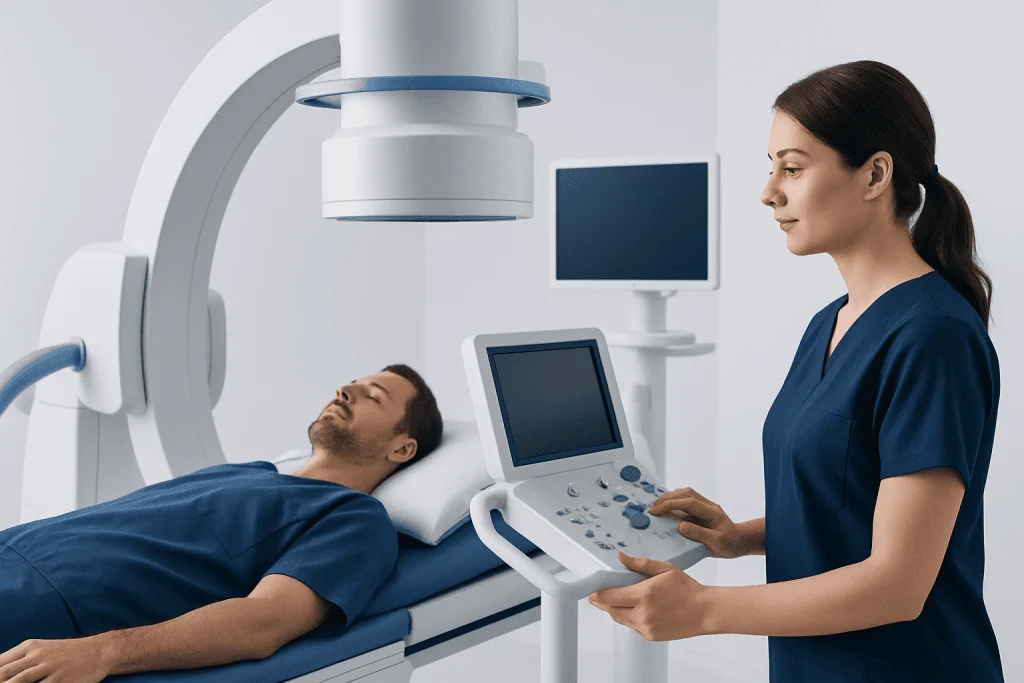
Diagnosis begins with information: your symptoms, medical history, previous reports, blood work, and imaging. Acibadem hospitals use a range of imaging systems, MRI, CT, ultrasound, mammography, and PET/CT where clinically appropriate, alongside laboratory and pathology services. Each modality shows something different. MRI gives detailed soft-tissue views. CT shows structure quickly and in fine slices. PET/CT adds information about metabolic activity, which matters in some cancer assessments. Ultrasound is often the first look at organs, vessels, and blood flow.
The exact tests depend on your condition, and combining several kinds of information is frequently more useful than relying on one scan. What matters most is not the scanner but the interpretation: your images are reviewed alongside your examination findings, your history, and any records you bring from home. A radiologist’s report, a pathologist’s findings, and a specialist’s clinical assessment carry different pieces of the picture, and treatment planning waits until those pieces agree or until the disagreement is understood.
If you are travelling to Istanbul or another city for care, prior reports and image files reviewed in advance help the medical team judge what is usable as-is and what needs repeating, for image quality, timing, or protocol reasons. Some tests must follow a specific technical protocol before they can be used for treatment planning, so a repeat is not a sign that your earlier care was poor. It usually means the plan requires data the earlier scan was never designed to provide.
- Keep prior scan reports and, where possible, the image files themselves on CD, USB, or a secure link, reports alone are less useful than images.
- Ask whether older tests are recent enough for planning; imaging that is months old may no longer reflect the current situation.
- Keep a written list of medications, allergies, implants, and previous surgeries ready before any imaging appointment.
How surgery is planned and supported
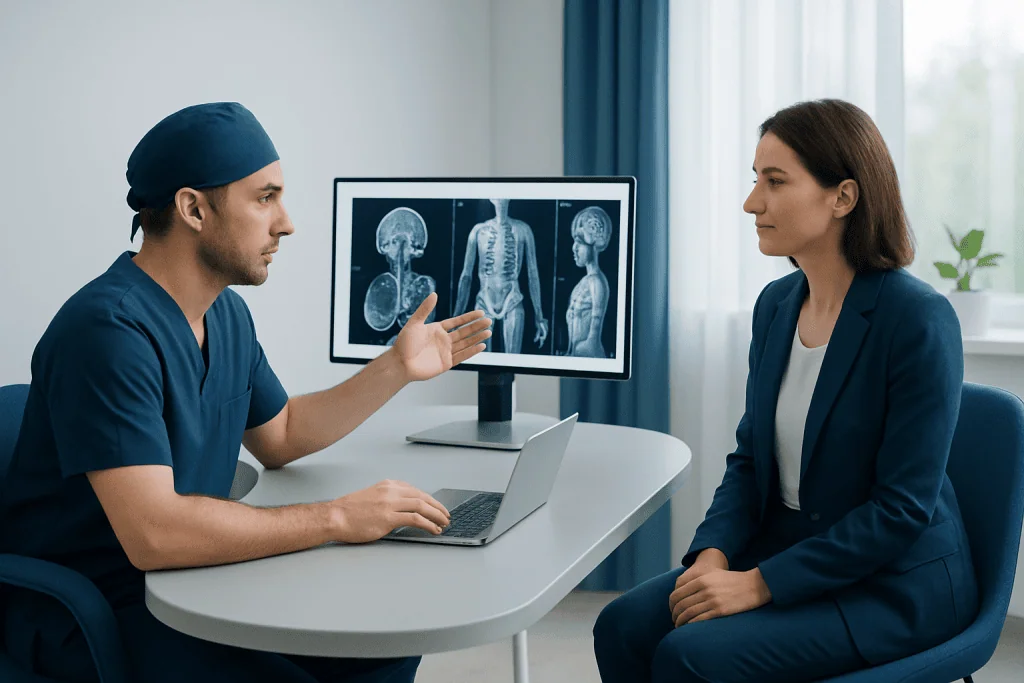
When surgery is under consideration, technology contributes before, during, and after the operation. Before surgery, the team may use imaging-based planning, digital measurements, and anaesthesia assessment tools to map anatomy, anticipate the surgical pathway, and account for complicating factors such as previous operations, implants, or a difficult tumour location. In some fields, including oral and maxillofacial surgeryplanning can be highly digital, with three-dimensional reconstructions built from scans so the surgeon can study the approach before the first incision.
During surgery, the tools depend on the case and the hospital site. They may include minimally invasive platforms, robotic-assisted systems, intraoperative imaging, surgical navigation, and continuous precision monitoring. The practical benefit for you is not that a machine operates. A robotic system, for instance, translates the surgeon’s hand movements into instrument movements inside the body, every action remains the surgeon’s. What the technology adds is magnified visualisation, steadier instrument control, access through smaller incisions where appropriate, and live data that supports careful decisions in real time.
Navigation and intraoperative imaging matter most where millimetres matter. In neurosurgery, navigation systems can help the surgeon track instrument position against pre-operative scans. In cardiovascular surgery, detailed imaging before and during procedures supports work around vessels and valves. These are examples of a general principle: the more precisely a condition can be located, the more precisely the intervention can be confined to it.
A central part of surgical planning at Acibadem is multidisciplinary review. Surgeons, radiologists, anaesthesiologists, pathologists, and, where relevant, medical and radiation oncologists may contribute to complex cases. If your case is complex, it is reasonable to ask whether your plan will go through a multidisciplinary meeting, and whether the hospital expects the major steps to happen in one trip or across several visits.
What makes surgery more precise
Precision in modern surgery comes from a chain of technologies rather than a single device. It starts with high-resolution imaging that defines the target and its surroundings. Digital planning then turns those images into a mapped approach. In theatre, navigation keeps the surgeon oriented against that map, intraoperative imaging confirms progress as it happens, and robotic-assisted or minimally invasive instruments allow fine, controlled movements through small openings. Monitoring systems watch physiology throughout. Break any link in that chain and precision drops, which is why hospitals invest in the whole sequence, not just the operating platform.
Where surgical technology is heading
Patients often ask about the newest techniques. The honest answer is that most recent progress in surgery is incremental refinement of the same themes: smaller access, better visualisation, and better planning. Robotic-assisted platforms continue to extend into more specialties. Virtual surgical planning, rehearsing an operation on a digital model of the patient’s own anatomy, is increasingly common in reconstructive, orthognathic, and complex orthopaedic work. Intraoperative imaging is becoming faster and more integrated with navigation. Software support, including machine-assisted image analysis, is used in some settings to help clinicians review data, though decisions remain human. Whether any of these applies to you depends entirely on your diagnosis and anatomy; the newest technique is not automatically the right one for a given patient.
Treatment planning beyond surgery
Not every treatment plan involves an operation, and technology is just as central in oncology, cardiology, neurology, fertility care, and rehabilitation. Radiotherapy is a clear example: planning uses detailed imaging and computerised dose mapping so that the intended area is targeted while surrounding tissue is spared as far as the anatomy allows. That planning stage can take days, because physicists and radiation oncologists calculate and verify the plan before the first session.
In cancer care, treatment planning may combine pathology findings, molecular or genetic testing where clinically indicated, imaging, and specialist opinion. This shapes more than one procedure: it can determine sequence: whether medication comes before surgery, whether radiotherapy follows it, or whether a decision should wait for further information. Sequencing decisions like these are exactly where multidisciplinary review earns its place.
Digital planning also has a logistical use. Once a clinical plan exists, coordinators can map consultations, tests, treatment days, expected recovery time, and follow-up needs against a calendar. For international patients, that translates the medical plan into an answer to the questions that actually shape a trip: how long to stay, whether travelling alone is realistic, and when flying home is reasonable. The guide on when to arrive before surgery in Turkey covers the timing side of this in more detail.
How digital systems coordinate your care
Hospital technology is not confined to scanners and operating theatres. Electronic records and coordination systems are just as consequential for your experience. They keep departments working from the same up-to-date file, which reduces the chance that an allergy note, a medication detail, or a key report is missed as you move between consultation, testing, admission, surgery, and discharge.
In practice, this shows up as an organised journey: appointments scheduled in a sensible order, results available to the next specialist without you carrying paper between floors, and interpreter support arranged for consultations where results and options are discussed. International patient teams typically handle scheduling, document flow, and practical planning around admission and discharge so that the clinical plan and the travel plan stay aligned.
Stay actively involved even so. Keep your own copies of prior records, your medication list, insurance documents if relevant, and contact details for your home doctor. Well-coordinated systems still move faster for patients who keep their information at hand.
Questions worth asking before you travel
When any hospital mentions advanced technology, the useful move is to ask what it means for your specific case rather than treating it as a general reassurance. Practical questions get practical answers: Which tests are likely after arrival? Which existing scans can be reviewed beforehand? Will the case need multidisciplinary input? Is the realistic timeline a same-week decision, a surgery date after further testing, or a longer planning period?
Ask equally about what surrounds the technology. If imaging or surgery requires fasting, sedation, contrast safety checks, or implant review, when will you be told? If pathology review or radiotherapy planning takes several days, should your accommodation be flexible? Will an interpreter be present when scan results are explained? These questions are not medical trivia: they determine whether your itinerary works.
- Ask whether existing records can be reviewed before travel, and in what format.
- Confirm whether to arrive with image files, pathology slides, or original medication packaging.
- Clarify the expected length of stay for testing, planning, treatment, and early recovery, and build in slack.
- Check how and when follow-up results will be shared once you are home.
A balanced way to think about medical technology
Advanced equipment is reassuring, but it is one component of good care, not a substitute for it. Outcomes also depend on the experience of the clinical team, the appropriateness of the chosen treatment, nursing, infection prevention, rehabilitation, and how well follow-up is organised. The sharper question is not whether a hospital owns sophisticated systems but how those systems are woven into decision-making, whether imaging feeds planning, whether planning is reviewed by more than one specialist, and whether the record follows the patient.
If you are deciding whether to travel, judge fit rather than hardware. The right hospital for you is one that can explain which technologies are relevant to your case, what they can and cannot tell your doctors, which decisions still rest on clinical review, and how the pathway will run from first assessment to follow-up. A hospital that states these limits plainly is telling you something more useful than any equipment list.
Step by step
- Gather your records early. Previous reports, scan summaries, pathology results, a medication list, and a short medical history collected in advance let a hospital decide what can be reviewed remotely and what will likely need repeating after arrival.
- Ask which technology is relevant to your case. Rather than requesting a list of machines, ask which imaging, planning, or surgical support systems matter for your diagnosis and why. The answer tells you what the hospital expects to do and how long planning may take.
- Confirm whether your case needs multidisciplinary review. Complex cases, particularly in oncology, neurosurgery, cardiac care, and advanced orthopaedics, often benefit from input across specialties. Ask whether your plan will be discussed by a team and when a final recommendation is expected.
- Plan your stay around decision points, not just dates. Some decisions come quickly; others wait on additional scans, pathology, or anaesthesia assessment. Build flexibility into your travel so you are not forced to leave before planning is complete.
- Prepare for the practical requirements around scans and procedures. Some tests require fasting, contrast safety checks, or review of implants and allergies. Ask for written preparation instructions in advance.
- Know what international patient support exists. Language support, hospital transfers, accommodation planning, and document coordination are typically part of an international patient service; needs raised early keep the clinical schedule and the travel schedule in step.
- Clarify the follow-up plan before discharge. Before leaving hospital or flying home, confirm how results, reports, and future recommendations will reach you. This matters most when treatment began in Turkey and ongoing care continues in your home country.
Your checklist
- Passport and travel documents
- Previous medical reports and image files
- Medication list with dosages
- Allergy history and implant information
- Insurance or payment documents if applicable
- Questions about expected tests after arrival
- Planned length of stay with some flexibility
- Contact details for your home doctor or referring physician
Key takeaways
- At Acibadem, technology supports diagnosis, surgery, and treatment planning through advanced imaging, digital planning, precision surgical platforms, and shared electronic records.
- Surgical precision comes from a chain, imaging, digital planning, navigation, intraoperative imaging, and minimally invasive or robotic-assisted instruments, not from any single device.
- Radiotherapy and other non-surgical treatments rely on computerised planning that can take several days; timelines should allow for it.
- Records reviewed in advance and case-specific questions reduce repeat testing and travel uncertainty.
- Technology informs clinical judgment; it does not replace it, and no system predicts an individual outcome.
Frequently asked questions
What technology enables surgery to be more precise?
Precision comes from a sequence: high-resolution imaging that defines the target, digital planning that maps the approach, navigation systems that keep the surgeon oriented during the operation, intraoperative imaging that confirms progress, and minimally invasive or robotic-assisted instruments that allow fine, controlled movements through small openings. Each element supports the surgeon’s hands and judgment rather than replacing them.
What are the latest surgical innovations?
Recent progress is mostly refinement of established themes: robotic-assisted platforms extending into more specialties, virtual surgical planning that rehearses operations on digital models of a patient’s own anatomy, faster intraoperative imaging integrated with navigation, and software support for reviewing images and data. Whether any of these is relevant to you depends on your diagnosis and anatomy: the newest technique is not automatically the appropriate one.
Does advanced technology mean I will not need repeat tests after I arrive?
Not always. Even with existing scans and reports, some tests may be repeated because of timing, image quality, technical format, or because treatment planning requires a specific protocol. Records reviewed in advance reduce unnecessary duplication, but that does not remove the possibility of repeat testing entirely.
Is robotic or minimally invasive surgery used for every operation?
No. These approaches suit some patients and some procedures, not all. Your surgeon weighs your diagnosis, anatomy, previous surgeries, overall health, and treatment goals before deciding whether a robotic-assisted, minimally invasive, or open approach is most appropriate. Sometimes the conventional approach remains the safer choice.
Can I get a treatment plan before traveling to Turkey?
A preliminary opinion is often possible based on shared records, but a final plan usually depends on in-person assessment, image review, examination, or additional tests. Treat pre-travel planning as a genuine first step rather than a finished decision.
How should I prepare if my treatment depends on imaging or digital planning?
Bring all prior reports, image files where available, and a clear medication and allergy list. Ask in advance whether fasting is needed, whether contrast may be used, and whether implants, pacemakers, or previous surgeries could affect the test or the planning process.
Does hospital technology tell me what outcome to expect?
No. Technology improves the quality of the information used for diagnosis and planning, but it does not predict individual outcomes. Your doctors will explain what the findings mean, which options are reasonable, and what risks and limitations still apply in your specific situation.
Add us as a Preferred Source to see more of our trusted health content across Google Search, AI Overviews and Discover.

Update history
- PublishedJune 25, 2026
- Medical review approvedSeptember 13, 2026
- Last content updateSeptember 12, 2026
References3
- Robotic surgery: MedlinePlus Medical Encyclopedia medlineplus.gov
- MRI Scans: MedlinePlus medlineplus.gov
- Radiation Therapy to Treat Cancer: National Cancer Institute cancer.gov
More Patient Guides

At Acibadem, How We Explain Expected Clinical Outcomes and Treatment Success Information
Expected clinical outcomes at Acibadem are explained in clear, realistic terms so you understand likely benefits, limits, risks, and next steps in…

At Acibadem, How Families and Companions Are Supported During Treatment Travel
At Acibadem, family support during treatment travel in Turkey includes interpreters, planning help, visitor guidance, and practical support for companions.
At Acibadem, How Our JCI-Accredited Hospitals Support Safe International Care
JCI-accredited hospitals at Acibadem support safe international care in Turkey with standardized quality, interpreters, coordination and follow-up.

At Acibadem, What Our International Patient Package May Include Before You Travel
International patient package at Acibadem may include medical planning, travel help, interpreters, and stay support in Turkey before you travel.