

At Acibadem, Which Hospital Campus Fits Your Treatment Plan

The campus that fits your treatment plan is usually the one where your lead specialist team works, your diagnostics run, and your procedure, inpatient stay and early follow-up can all happen with the fewest transfers. Specialty match, imaging needs, expected length of stay and travel logistics matter more than distance from a hotel. A quote tied to the full pathway makes the comparison concrete.
You are looking at a list of Acibadem locations and trying to work out which one to plan around. Most people start by measuring distance from a hotel. The better starting point is fit: your specialty, your tests, whether surgery is involved, how long recovery takes, and who is travelling with you.
This guide explains how to compare campuses in a practical way, what actually drives the decision, and how campus choice connects to the quote you receive. It does not tell you which campus to pick — that depends on your records and your plan — but it shows you how the matching process works, so nothing about it feels opaque.
At a glance
- Best for: International patients comparing Acibadem campuses for treatment, surgery, diagnostics or follow-up
- Main decision factors: Specialty match, lead doctor’s base campus, imaging and lab needs, inpatient and intensive care capability, expected length of stay, travel logistics
- What to establish: Where each step of your pathway happens and whether it can happen at one site
- Cost angle: Campus choice affects a quote indirectly, through the number of visits, hospital nights and support services in the plan — not through a fixed campus premium
- International support: Interpreters, appointment coordination, and guidance on transfers and accommodation are arranged around the campus, not the other way round
What “which hospital campus fits your treatment plan” really asks
The question of which hospital campus fits your treatment plan sounds like a geography question. In practice, it is a pathway question. A treatment plan is rarely a single event. It is a sequence: consultation, imaging, laboratory work, sometimes an anaesthesiology review, the procedure itself, inpatient care, and then follow-up before you fly home. The campus that fits is the one where that sequence runs with the fewest transfers, the fewest repeated appointments, and the least uncertainty about who is coordinating what.
This matters more for international patients than for local ones. If your plan involves same-week tests, a multidisciplinary review, surgery and a short recovery stay, being in the right place from day one keeps your trip compact. Being in the wrong place means crossing a large city between appointments, sometimes while you are tired, in discomfort, or responsible for a companion.
It also helps to know how the matching usually happens. Campus recommendations are normally based on a review of your recent records: the specialty involved, the complexity of the case, the diagnostics required, and where the relevant team is based. You do not have to work out which hospital campus fits your treatment plan from a map. Your job is different — to understand the reasoning behind the recommendation, and to check it against your own practical constraints. That is what the rest of this guide covers. If you are still deciding between cities rather than campuses, the broader comparison in which hospital city and campus may fit your treatment needs covers that earlier step.
How your treatment plan influences campus choice
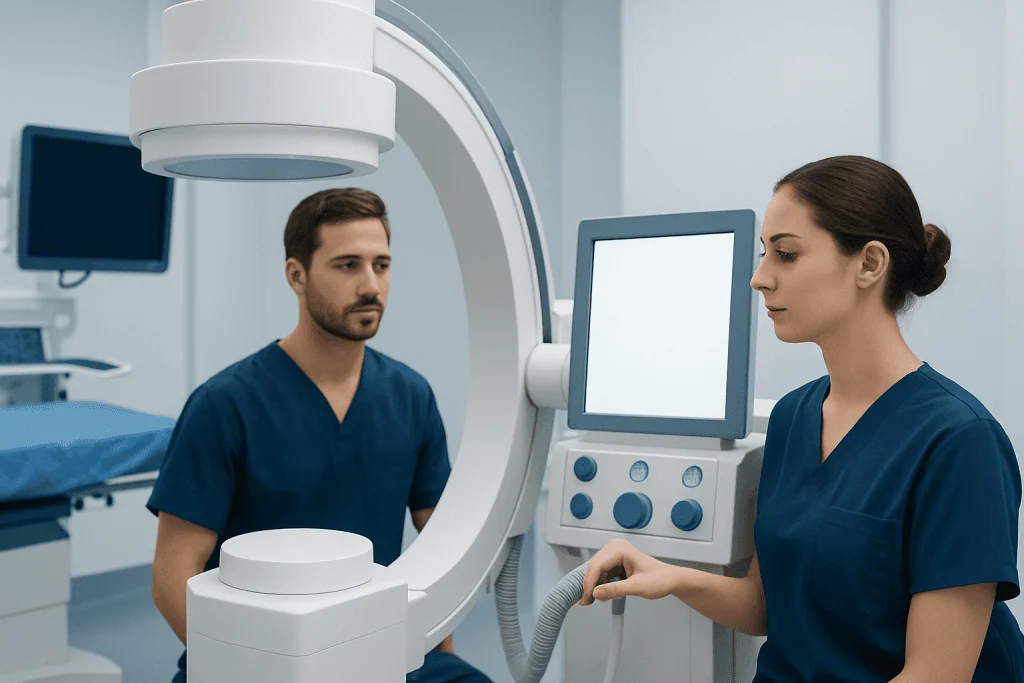
Your diagnosis or planned procedure is the first filter. Some cases are straightforward and can be managed comfortably at more than one campus. Others benefit from a site structured for a specific kind of work: complex surgery, advanced imaging, oncology coordination, cardiac care, neurosurgery, orthopaedics, fertility treatment or rehabilitation. The aim is not to choose the largest campus by default. It is to choose the campus that supports the exact steps in your plan.
Think in terms of the full timeline, not the main treatment day. A plan can include a pre-treatment consultation, blood tests, an anaesthesiology assessment, pathology coordination, imaging such as MRI or PET/CT, inpatient monitoring, and follow-up with another specialist before departure. The more of these steps your plan contains, the more it matters whether one campus can hold most or all of them.
Consider, too, whether your plan might change after the first consultation. People sometimes travel for one intended treatment and then need further investigations or input from a second department. Larger, more comprehensive campuses absorb that kind of change more easily, because the additional specialists and equipment are already on site. A campus that fits your plan on paper but cannot absorb a plausible change may create exactly the transfers you were trying to avoid.
- Establish whether your case needs a single specialist or a multidisciplinary team.
- Confirm where your core tests will be done and how results are typically reviewed.
- Check whether surgery, the inpatient stay and follow-up happen at the same campus.
- Find out whether rehabilitation or physiotherapy is a likely part of the aftercare.
How different types of treatment shape the decision
The weight of the campus decision varies enormously by treatment type, and it helps to be honest about which end of the spectrum you are on.
At one end sit highly complex programmes. Fields such as organ transplantation or bone marrow transplant depend on specific teams, specific facilities and structured long-term follow-up. For these, the campus question largely answers itself: your care goes where the programme is. Your comparison work shifts to logistics — accommodation for a longer stay, companion arrangements, and how follow-up will be handled after you return home.
In the middle sit surgical and inpatient cases — orthopaedic, cardiac, oncological, neurological — where more than one campus may be technically capable, but where imaging capability, intensive care availability and the lead surgeon’s base narrow the field. Here the questions in this guide do the most work.
At the other end sit shorter, more standardised procedures. Treatments such as an FUE hair transplant or dental work usually involve fewer facility constraints, so convenience, scheduling and recovery comfort can legitimately carry more weight in the decision. Even then, the same logic applies at a smaller scale: fewer sites, fewer transfers, clearer coordination.
| Treatment type | Who usually decides the campus | What you should focus on |
|---|---|---|
| Complex programmes (transplant, complex oncology) | The programme’s location decides | Length of stay, companion plans, long-term follow-up |
| Surgical and inpatient care | Specialist team and facility needs narrow it | Where tests, surgery and recovery each happen |
| Shorter elective procedures | More flexibility; logistics can lead | Scheduling, recovery comfort, review before flying |
The practical logistics that matter most

Even when two campuses can both provide the treatment you need, logistics can make one clearly easier. Travel time from the airport, traffic within the city, the number of separate hospital visits, your mobility, and the comfort of your companion all count. A campus that is technically suitable but demands repeated long transfers is a poor fit if you are in pain, recovering from surgery, or travelling with children or elderly relatives. Istanbul in particular rewards careful planning: distances that look short on a map can take a long time in traffic, which is why the campuses there deserve their own comparison — covered separately in which Istanbul hospital campus may suit your treatment needs.
Length of stay is the other big variable. For a one-day assessment, speed and easy access dominate. For surgery with several nights in hospital, room arrangements, companion support, nearby accommodation for family, and the simplicity of returning for review appointments matter more. Public health bodies that advise on medical travel consistently make the same point: build the whole trip around the care, including recovery time before flying, rather than fitting the care into a travel itinerary.
Two logistics questions are worth settling before anything is booked. First, how many separate visits does your plan actually involve — one long admission, or several appointments spread across days? Second, where will you and your companion be between those visits? The answers change which campus is genuinely convenient, as opposed to nominally close.
Questions worth asking before a campus is confirmed
A reliable way to compare campuses is to put the same short list of questions to each option. This keeps the decision anchored to your real needs rather than to general impressions or marketing photographs. You do not need technical depth — you need a clear picture of where your journey happens and who coordinates it.
Start with the essentials: which campus your lead specialist works from, where your diagnostic tests will run, and whether the procedure and recovery happen in the same building. Then move to timing: how many days to plan for in Turkey, when flying home is typically considered reasonable for your kind of treatment, and whether a review appointment is expected before departure. If you are travelling with someone, cover their arrangements too.
It is also fair to ask how communication works in practice: how records are shared, whether interpreters are available for your language, and how schedule changes are handled. For many patients, the coordination arrangements matter as much as the treatment slot itself.
- Which campus handles my type of case, and why that one rather than another?
- Will all key tests and the procedure happen at one site?
- How many separate hospital visits should I expect?
- What is the estimated length of stay — in hospital, and in Turkey overall?
- Is interpreter support available for appointments and for written documents?
- If the plan changes after evaluation, how is that coordinated across departments?
A limitation worth stating plainly: some of these answers are provisional until you are examined in person. A responsible plan says so, and distinguishes clearly between what is confirmed and what depends on findings after arrival.
How costs and quotes relate to campus choice
This is a costs-and-packages question, so it deserves a structural answer. Campus choice influences your budget, but usually not through a simple campus-by-campus price difference for the procedure itself. The influence is indirect, through the shape of the pathway around the procedure: the number of consultations, the tests included, inpatient nights, intensive care monitoring if needed, rehabilitation sessions, transport within the city, and companion accommodation.
That is why the most useful quote is one tied to your actual pathway rather than to a headline procedure name. A pathway-based quote should make clear what is included — consultations, imaging, theatre and anaesthesia, materials or implants where relevant, hospital nights, follow-up before departure — and, just as importantly, what remains conditional on findings after you arrive. Quotes for international treatment are estimates built on the records available at the time; they firm up after in-person evaluation, and a plan that admits this is more trustworthy than one that does not.
Campus fit can also prevent hidden practical costs. A campus that keeps diagnostics, surgery and recovery in one place removes the transfers, repeated appointment days and potential stay extensions that a fragmented plan can generate. When you compare options, ask for the treatment plan summary alongside the quotation, so you are comparing the medical pathway and the practical footprint together — expected visits, hospital nights and support services, not just a bottom-line figure. The general guide to which hospital fits your treatment plan looks at this comparison from the hospital side in more detail.
What coordination support usually covers
You do not carry the campus decision alone, and it is worth knowing what the coordination layer around it normally includes. For international patients, that layer typically covers review of medical reports and imaging before travel, identification of the campus where the relevant specialist team is based, appointment sequencing so that tests and consultations fall into a workable order, interpreter arrangements for appointments, and practical guidance on transfers and accommodation.
Interpreting deserves particular mention. When your history — previous surgery, medications, allergies, prior imaging — is translated accurately before you travel, the clinical team can assess the case properly, and the campus recommendation that comes back reflects your real situation rather than a partial picture. Clear records in, clear recommendation out.
Finally, keep the goal in proportion. “Best campus” is not a universal ranking; it is the answer to a personal question shaped by your diagnosis, mobility, travel dates, companion situation and tolerance for moving around a large city. A good outcome of the planning stage is simple: you know where you are going, you understand why that campus was chosen, and you know what happens at each step.
Step by step
- Gather your records early. Collect recent reports, scans, medication lists and your main questions before you travel. A campus recommendation is only as good as the information behind it, and early record review determines whether you need a consultation-only visit, further tests, or a pathway suited to a specific campus.
- Establish which specialty team should lead your case. The most suitable campus is usually the one where your lead team works together most efficiently. Find out whether your case needs one doctor or input from several departments — imaging, surgery, oncology, cardiology, rehabilitation, anaesthesiology.
- Map the full patient journey. Do not decide on the procedure day alone. Confirm where consultation, tests, admission, treatment, recovery and follow-up each happen, so you can plan your stay in Turkey with confidence and avoid unnecessary transfers.
- Compare logistics, not location names. Weigh airport access, traffic time, mobility needs, number of visits, and where your companion stays. A campus that looks farther on the map can still be the easier choice if it keeps most of your care in one place.
- Request a quote linked to the plan. An estimate that reflects the expected tests, hospital stay and follow-up — and states what remains conditional — gives a more realistic picture than a headline procedure figure, and lets you compare campus options fairly.
- Confirm the coordination details in writing. Interpreter availability, appointment sequence, transfer arrangements and the expected review before flying home should all be settled before you book travel, not after you land.
Your checklist
- Recent medical reports and imaging ready to share
- List of current medications and allergies
- Your main diagnosis or suspected condition written clearly
- Questions about tests, surgery, recovery and follow-up prepared
- Estimated travel dates and flexibility noted
- Companion plans and accommodation needs considered
- Mobility or accessibility needs communicated in advance
- Quote request linked to the proposed treatment plan
- Interpreter preference confirmed if needed
Key takeaways
- The campus that fits is the one that holds your full pathway — consultation, tests, procedure, recovery, follow-up — not just the procedure itself.
- Specialty match, diagnostics, surgical needs and recovery planning outweigh hotel distance.
- Complex programmes largely dictate their own campus; shorter elective treatments leave more room for logistics to lead.
- Campus choice affects budget indirectly, through visits, hospital nights and support services — a pathway-based quote shows this; a headline figure hides it.
- A good plan states plainly which parts are confirmed and which depend on in-person evaluation.
Frequently asked questions
How is the right Acibadem hospital campus identified for a specific patient?
Recommendations are normally built from a review of recent records: the specialty involved, the complexity of the case, the diagnostics required, and where the relevant team is based. The right fit is usually the campus where the specialist team, tests, procedure and early recovery can be coordinated with the fewest transfers.
Does every campus offer the same services?
Not in exactly the same way for every case. Different campuses are structured around different specialties, complexity levels, imaging capabilities and rehabilitation resources. That is why the useful question is not which campus is best in general, but which one handles your type of case most appropriately.
Should I choose the campus closest to my hotel or the airport?
Convenience counts, but it should not decide alone. If another campus keeps more of your tests and treatment in one place, it often saves more time and energy overall — especially when several appointments or a recovery period are expected. Book accommodation around the campus, rather than choosing the campus around accommodation.
Can consultation happen at one campus and treatment at another?
Sometimes, yes. It can be manageable, but it adds transport time and scheduling complexity, so it is worth understanding in advance whether your case can be streamlined at a single site before travel plans are fixed.
How does campus choice affect the cost of treatment?
Mostly indirectly. Campus choice shapes how many tests happen in one place, how many hospital nights are needed, whether extra transfers arise, and which support services are involved. A quote linked to the full treatment pathway shows these effects; a single headline figure does not.
What should a treatment quote for international patients include?
A useful quote lists what is covered — consultations, imaging, the procedure, anaesthesia, hospital nights, follow-up before departure — and states which elements remain conditional on findings after in-person evaluation. Quotes built from records are estimates by nature, and a clear quote says so.
If my diagnosis changes after I arrive, do I start over?
Not necessarily. First consultations and new tests sometimes lead to adjustments, and multi-campus hospital systems are structured to manage that: additional specialists or investigations can often be added within the same site or coordinated across the group. Understanding in advance how changes are handled gives a clearer sense of what to expect.
Add us as a Preferred Source to see more of our trusted health content across Google Search, AI Overviews and Discover.

Update history
- PublishedJune 22, 2026
- Medical review approvedAugust 31, 2026
- Last content updateAugust 31, 2026
References1
- CDC Travelers' Health — Medical Tourism — wwwnc.cdc.gov
More Patient Guides

Private MRI, CT and Check-Up Costs in Turkey: How Scans Are Priced
How private MRI, CT, PET-CT and full check-up packages are priced in Turkey — modality, region, contrast, reporting — and what a…

Cataract Surgery Cost in Turkey: Per-Eye Prices and Lens Options
Cataract surgery in Turkey is priced per eye and the lens decides the quote. Biometry, both eyes on one trip, and what…

Lip Filler Cost in Turkey: Per-ml Prices Explained
Lip filler in Turkey is priced per millilitre with licensed hyaluronic acid brands and physician injectors. Volume, product, dissolving, safety and what…

Botox Cost in Turkey: Per-Area and Per-Unit Prices
How Botox is priced in Turkey — per area or per unit, brand, physician injectors, medical indications — and what a serious…