

At Acibadem, Which Hospital City and Campus May Fit Your Treatment Needs

The right Acibadem city and campus depends on your treatment pathway, not on city reputation. Match the campus to the specialty involved, the diagnostics and intensive care support your case may need, and the recovery and follow-up you expect. Istanbul offers the widest concentration of campuses and flight connections, but a smaller city can suit a focused, shorter treatment plan. Compare medical fit first, logistics second.
Trying to work out which hospital city and campus may fit your treatment needs is one of the most common places international patients get stuck. There is no single correct answer, and anyone who tells you otherwise is simplifying. The honest answer depends on four things: what your treatment pathway looks like, how you will travel, how you want to recover, and what support you and any companion will need while you are in Turkey.
This guide walks through those four things in order. It explains what actually differs between campuses, which comparisons matter for safety, and which ones are simply about comfort, so that by the end, you can weigh the options with a clear head rather than a map and a guess.
At a glance
- Best starting point: Match the campus to your treatment pathway, not to the city’s reputation
- What matters most medically: The right specialist team, on-site diagnostics, intensive care support and a realistic follow-up plan
- What matters most practically: Airport access, interpreter availability, accommodation nearby and companion logistics
- City choice: Istanbul usually offers the broadest range of specialties and travel connections; smaller cities can suit focused, shorter treatment plans
- Safety check: Ask directly about accreditation, emergency coverage and how multidisciplinary care is coordinated on site
Which hospital city and campus may fit your treatment needs: how the decision actually works
When you first look at hospitals in Turkey, it is tempting to choose by the best-known city or the shortest flight. In practice, working out which hospital city and campus may fit your treatment needs runs in the opposite direction: you start from the care you are likely to receive, then narrow down which locations can deliver it smoothly. That order matters most when your plan involves several stages, consultations, imaging, surgery, observation, rehabilitation, because each stage adds a requirement the campus has to meet.
Acibadem operates multiple hospital campuses, and they are not interchangeable. Campuses differ in the depth of certain specialty teams, the range of diagnostics on site, the size of their intensive care capacity, and how convenient they are for someone arriving from abroad with luggage, jet lag and a companion. International patient teams exist precisely to explain those differences, so a reasonable expectation before you travel is a clear answer to one question: why this campus, for this case?
A useful rule: if your case is straightforward, several campuses may be equally appropriate, and logistics can decide. If your case is complex, involves more than one specialty, or requires close monitoring, the right campus is usually the one with the broadest on-site resources, even when it is not the one that looks easiest on the map.
Start with your medical needs, not the destination
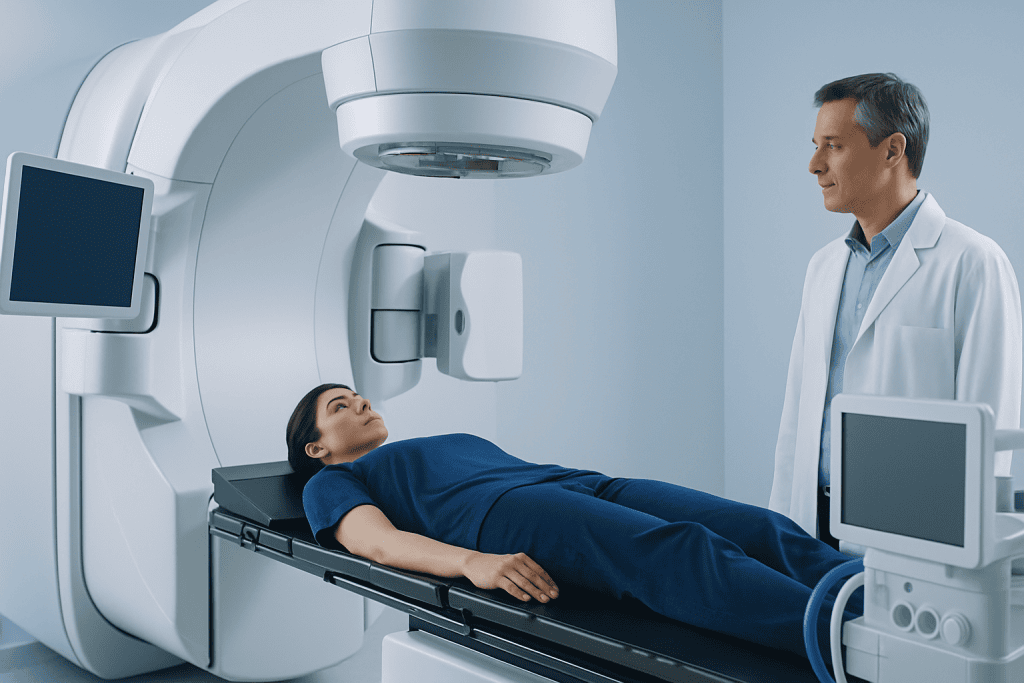
The most useful first question is: what kind of care pathway do you need? Some patients need a single consultation or one diagnostic test. Others need surgery, opinions from more than one specialist, repeated imaging, pathology review, rehabilitation, or a period of post-treatment observation. A campus that fits the first pattern perfectly may be an awkward fit for the second, and this is where the question of which hospital city and campus may fit your treatment needs stops being abstract.
For complex care, the thing to look for is coordination in one place. That means surgeons, medical specialists, imaging departments, laboratories, intensive care and rehabilitation teams working on the same site or in close connection. When those services sit together, your consultations and tests can happen within a realistic timeframe, results move between departments without you carrying them, and a change in the plan does not mean a change of city.
It also helps to arrive prepared. Campus recommendations are only as good as the information behind them, so gathering your diagnosis, recent reports, scans and medication list before the planning conversation begins gives the clinical team enough context to suggest a campus based on your likely pathway rather than general preference. If tests are part of your plan, it is worth knowing which medical tests to complete before flying to Turkey and which are better done on site.
- Establish whether your visit is a single consultation, a diagnostic work-up, a procedure, or a multi-stage plan
- Check whether imaging, laboratory work, surgery and recovery services sit on the same campus
- Ask whether more than one specialist is likely to be involved during the same visit
- Find out what follow-up arrangements are realistic before you return home
Why Istanbul is often considered first

Istanbul is the starting point for many international patients because it combines broad medical capacity with practical travel advantages: major international flight connections, a wide range of accommodation, and several Acibadem campuses serving different specialties and patient profiles. If your treatment plan may evolve after the first consultation, a common situation in complex cases, being in a city with multiple well-equipped campuses in the same group makes any adjustment far easier.
The main benefit is concentration. Advanced imaging, intensive care availability, subspecialists and rehabilitation planning are all reachable without changing healthcare groups or cities. Istanbul’s scale also brings a wider choice of hotels and serviced apartments at every distance from the hospital, which matters more than people expect during recovery. Because Istanbul itself contains more than one option, there is a separate guide to choosing the right Acibadem campus within Istanbul.
Istanbul is not automatically the right answer, though. It is a large, busy city with real traffic, and a cross-city transfer at rush hour is a genuine consideration for someone recovering from surgery. If your treatment is focused, your stay is expected to be short, or you prefer a quieter environment for recovery, a campus in another city may feel more manageable without any medical compromise.
When a city outside Istanbul makes sense
Acibadem operates hospitals in several Turkish cities beyond Istanbul, and for the right case these can be the better fit. The pattern is consistent: the more contained and predictable your treatment plan, the more freedom you have to choose by logistics and comfort. A defined procedure with a clear recovery timeline, a follow-up visit, or a treatment led by a single specialty travels well to a smaller city.
What you are checking in a non-Istanbul city is not whether the hospital is “good enough”: it is whether the specific services your pathway needs exist on that campus, and what the plan is if something unexpected requires a broader team. Direct flight availability from your home airport is also worth checking early, because a convenient hospital behind an inconvenient connection can undo its own advantage. A fuller comparison of the group’s locations is in the guide to Acibadem hospital locations in Turkey.
What to compare between campuses besides specialty
Once you know which campuses are medically appropriate, the remaining comparison is practical. The table below separates the factors that affect safety from the ones that affect comfort, both matter, but they should not be weighed equally.
| Factor | Why it matters | What to check |
|---|---|---|
| Intensive care and emergency readiness | Determines how well the campus handles complications in higher-risk procedures | ICU availability, after-hours cover, blood bank access |
| On-site diagnostics | Keeps imaging, laboratory and pathology results within one team and one timeline | Whether your likely tests happen on the same campus |
| Multidisciplinary coordination | Complex cases often need more than one specialty in the same conversation | Whether the relevant departments work on the same site |
| Airport transfer and traffic | Shapes arrival day and every follow-up trip, especially post-surgery | Realistic transfer time, not map distance |
| Accommodation nearby | Affects your companion daily and your comfort between appointments | Hotel and serviced-apartment options within a short ride |
| Language and coordination support | Reduces error risk and stress when nothing around you is in your language | Interpreter availability for your language; a named coordinator |
Large campuses bring their own practical challenge: finding your way between departments on treatment day. If you have not visited a big hospital site before, the guide on how to navigate a large hospital campus in Turkey is worth ten minutes of your time.
How accreditation and safety fit into your decision
Safety standards should be one of your main filters, and accreditation is the most visible signal of them. Accreditation means an independent body has assessed a hospital against published standards for quality processes, patient safety systems, documentation and continuous improvement. It does not replace personal medical advice, and it does not tell you which surgeon or department is right for your case, but it does tell you the institution submits itself to external scrutiny, which is a reasonable baseline for anyone receiving care in another country.
The practical step is to ask directly: which accreditations does this specific campus hold, what do they cover, and when were they last assessed? Ask, too, how quality oversight works day to day, how infection control is managed, how medications and allergies are documented, and what happens if your case becomes more complex than expected.
Some safety questions are personal rather than institutional. Who coordinates your medications during your stay? How are your allergies recorded and flagged? What is the after-hours arrangement on the ward? How is discharge planned when the patient is flying home afterwards? A good campus fit is not just about the treatment itself; it is about whether the whole care environment feels organised, responsive and safe for your particular situation.
Outpatient, day-case and inpatient care: why the distinction changes your choice
A surprising amount of hospital care never involves a bed overnight. The main hospital-based outpatient services are specialist consultations, diagnostic imaging, laboratory testing, day procedures and minor surgery, and rehabilitation or therapy services, and worldwide, outpatient clinics are the most commonly used type of healthcare facility by a wide margin. If your entire visit fits this pattern, almost any appropriately equipped campus can serve you, and convenience can lead the decision.
Inpatient care changes the calculation. Once your plan involves anaesthesia, an overnight stay or a period of observation, the depth of the campus matters: ward capacity, intensive care backup, and how quickly other specialties can be brought in. Day-case procedures sit in between: you leave the same day, but you want the fuller infrastructure behind the door in case it is needed. Knowing which of these three patterns your treatment follows tells you how heavily to weight the medical columns of the comparison over the practical ones.
Think about recovery, companions and follow-up from the start
Patients tend to focus on where treatment happens and less on the days immediately after, yet recovery planning strongly influences which campus is suitable. If you may need several days of observation, mobility support, dressing changes or return visits, choose a location that makes those steps easy. For many people that means staying close to the hospital rather than in the sightseeing districts; there is a dedicated guide on when to stay near the hospital instead of the city centre, and another comparing a recovery hotel versus a serviced apartment for longer stays.
If someone is travelling with you, their needs belong in the decision too. Where will they stay, how far is it from the ward, how will they receive updates, and what are visiting arrangements like? A companion who can rest properly and manage transport easily makes your own experience considerably calmer.
Finally, look past discharge. Some patients need only a discharge summary and medication instructions to hand to their doctor at home. Others need pathology results forwarded, remote review of healing, or rehabilitation guidance that continues after the flight back. Knowing which of these applies to you, and confirming the campus can support it, is part of choosing well, not an afterthought.
Questions that help you decide with confidence
You do not need to master the medical detail yourself. What helps most is asking focused questions and checking the answers against your priorities. Be honest about what worries you: if it is language, ask specifically about interpreter access for your language. If it is mobility, ask about entrances, walking distances and wheelchair assistance. If it is time pressure, ask how quickly consultation, testing and scheduling are usually coordinated.
- Why is this city and campus recommended for my case specifically?
- Which services will I need on site before, during and after treatment?
- Will I need to move between campuses at any point in the plan?
- What accreditation does this campus hold, and what does it cover?
- How will my companion be supported during the stay?
- What follow-up is expected after I return home, and how is it delivered?
By the time you decide, three things should feel settled: the campus suits your medical needs, the travel and stay are manageable, and the safety and support systems are ones you understand. When those three areas are covered, the choice of city usually resolves itself.
Step by step
- Gather your medical information early. Your diagnosis, recent reports, scans and current medication list are what campus recommendations are built on. Having them organised before planning begins means the suggestion you receive reflects your actual pathway, not a generic one.
- Define your care pathway. Work out whether your visit is a consultation, a diagnostic work-up, a day procedure, or a multi-stage plan with surgery and recovery. This single distinction determines how heavily medical infrastructure should outweigh convenience.
- Ask for the reasoning behind the campus suggestion. Do not ask only where the procedure can happen. Ask where consultation, diagnostics, treatment, observation and follow-up can be coordinated most smoothly, especially if more than one specialty may be involved.
- Compare logistics honestly. Flight connections, realistic airport transfer times, traffic, nearby accommodation and how the area will feel when you are tired all belong in the comparison. A longer flight can still be the right choice when the medical setup is stronger.
- Verify safety and support services. Check accreditation and what it covers, emergency and ICU readiness where relevant, how medications and allergies are documented, and whether interpreter support exists for your language.
- Plan for your companion and for follow-up. Decide where a companion will stay and how they will commute, then confirm what documents, results and remote review you can expect after discharge. A campus that supports the weeks after treatment is a better fit than one that only supports treatment day.
Your checklist
- My medical reports, scans and medication list are organised and ready
- I know which treatment or specialty I need first
- I have asked why a specific city and campus is recommended for my case
- I have checked whether diagnostics and treatment happen on the same site
- I understand flight options, airport transfer times and accommodation nearby
- I have confirmed interpreter support exists for my language
- I know where my companion will stay and how they will receive updates
- I have asked about accreditation, emergency support and follow-up arrangements
Key takeaways
- Your treatment pathway, not city reputation, should determine which hospital city and campus fits your needs.
- Istanbul offers the broadest concentration of specialties, campuses and flight connections; other cities suit focused, shorter treatment plans.
- Complex or multi-specialty cases point towards the campus with the deepest on-site resources, even at some cost in convenience.
- Verify accreditation, intensive care backup and interpreter support directly rather than assuming them.
- Recovery, companion logistics and follow-up belong in the decision from the start, not after booking.
Frequently asked questions
How do I know which Acibadem hospital campus is right for me?
Start from your medical need: the specialty involved, the tests you are likely to have, and whether more than one department may take part in your care. Once the medically suitable campuses are identified, compare them on safety infrastructure, travel convenience, recovery arrangements and the support available to international patients. If your case is simple, logistics can decide; if it is complex, on-site depth should decide.
Is a medical campus a hospital?
A medical campus is the wider site: it usually contains a hospital plus connected facilities such as outpatient clinics, imaging and laboratory buildings, and sometimes rehabilitation units. For a patient, the useful question is not the label but whether the services your pathway needs sit together on one site, so you are not travelling between locations mid-treatment.
What are the main hospital-based outpatient services?
Five broad groups cover most outpatient care: specialist consultations, diagnostic imaging, laboratory testing, day procedures and minor surgery, and rehabilitation or therapy services. If your entire plan fits within these, you have more freedom to choose a campus by convenience, because no overnight infrastructure is involved.
Which hospital has the best healthcare?
There is no single best hospital, in Turkey or anywhere else, and rankings rarely reflect what your specific case needs. A hospital that excels in one specialty may be an ordinary choice for another. The better question is which campus has the right team, diagnostics and support systems for your particular treatment pathway: that answer differs from patient to patient.
Is Istanbul always the best choice for international treatment?
No, although it is often a strong option because of its flight connections, range of specialties and multiple campuses within the same group. If your treatment is focused and your stay short, a smaller city may be quieter, easier to move around, and just as suitable medically. The decision balances your condition, expected length of stay and how much flexibility your plan may need.
Why does accreditation matter when choosing a hospital in Turkey?
Accreditation shows that an independent body has assessed the hospital against recognised standards for quality, patient safety, infection control and documentation. It does not choose your campus for you, but it is a reasonable baseline filter, and it is fair to ask any campus which accreditations it holds, what they cover and when they were last reviewed.
Do I need to think about follow-up when choosing a campus?
Yes. Follow-up shapes how smooth your recovery feels once treatment is over. Before choosing, establish what review appointments may be needed, which documents and test results you will take home, and whether remote check-ins are possible after you return. A campus that handles this well is a better fit than one that only covers treatment day.
Add us as a Preferred Source to see more of our trusted health content across Google Search, AI Overviews and Discover.

Update history
- PublishedJune 22, 2026
- Medical review approvedSeptember 13, 2026
- Last content updateSeptember 12, 2026
References1
- Medical Tourism: CDC Travelers' Health wwwnc.cdc.gov
More Patient Guides

When to Delay Travel for Treatment in Turkey Because of Cold, Flu, or Fever
Delay travel for treatment in Turkey if you have fever, worsening flu symptoms, or breathing difficulty; contact your care team before flying.

Traveling to Turkey for Treatment While Pregnant: Safety Questions to Ask First
Traveling to Turkey while pregnant can be safe with medical clearance, airline checks and a tailored care plan. Ask these key safety…

When to Seek Urgent Help After Leaving the Hospital in Turkey
When to seek urgent help after leaving the hospital in Turkey: act fast for breathing trouble, chest pain, heavy bleeding, high fever,…

At Acibadem, How We Handle Consent, Privacy, and Patient Decision-Making
Consent, privacy, and patient decision-making at Acibadem in Turkey are handled with clear information, confidentiality, interpreters, and respect for your choices.