

When to Stay Near the Hospital in Turkey Instead of the City Center

Stay near the hospital when your schedule includes early starts, repeated visits, fasting tests or a recovery period, proximity removes traffic risk and saves energy for treatment. Choose the city center only when your medical plan is light, gaps between appointments are long, and you feel well enough to travel. Many patients split the stay: hospital area during treatment days, city center afterwards.
You have shortlisted two hotels: one a few minutes from the hospital, one in the middle of the city near the restaurants and the sights. Which one will actually make your treatment days easier? Usually, the one closer to the hospital, but not always, and the exceptions are worth understanding before you book.
The honest answer comes down to three things: your appointment schedule, your mobility, and how much rest you will need between visits. This guide works through each of them so you can decide whether to stay near the hospital in Turkey instead of the city center, or whether a more central base genuinely suits your plan. It is written with Istanbul in mind, because that is where most international patients are treated, but the logic applies in Ankara, Izmir and other treatment cities too.
At a glance
- Best for a hospital-area stay: early appointments, several visits over consecutive days, fasting tests, limited mobility, or a recovery window after a procedure
- Best for a city-center stay: one or two appointments, long gaps between visits, good mobility and energy
- The deciding factor: how easily and reliably you can travel between your room and the hospital at the exact hours you need to
- Istanbul note: traffic can turn a short map distance into a long journey, especially at peak hours and across the Bosphorus
- Useful middle ground: a split stay, hospital area during treatment days, city center once follow-up is complete
Why “close on the map” and “close in real life” are different things
When you plan treatment abroad, the hospital, the doctor and the flights get most of your attention. Where you sleep tends to be decided last, and often on tourist logic: reviews, breakfast, view, neighbourhood. That logic works for a holiday. It works less well for a medical trip, because the thing that shapes a treatment day is not the quality of the breakfast: it is the journey between your bed and the hospital door.
In Istanbul especially, distance and travel time are only loosely related. A hotel eight kilometres from the hospital can be twenty minutes away at midday and well over an hour at rush hour. Crossing between the European and Asian sides adds another layer of unpredictability. If you are rested and free all day, that variability is a nuisance. If you are fasting before a blood test, sore after a procedure, or due at the hospital before eight in the morning, it becomes a genuine source of stress.
This is why the decision to stay near the hospital in Turkey instead of the city center is really a decision about how much uncertainty you can afford. A dense or changeable medical schedule leaves little room for traffic surprises. A light schedule with generous gaps leaves plenty. Match the accommodation to the itinerary, not to the guidebook, and most of the decision makes itself.
When staying near the hospital is usually the better choice
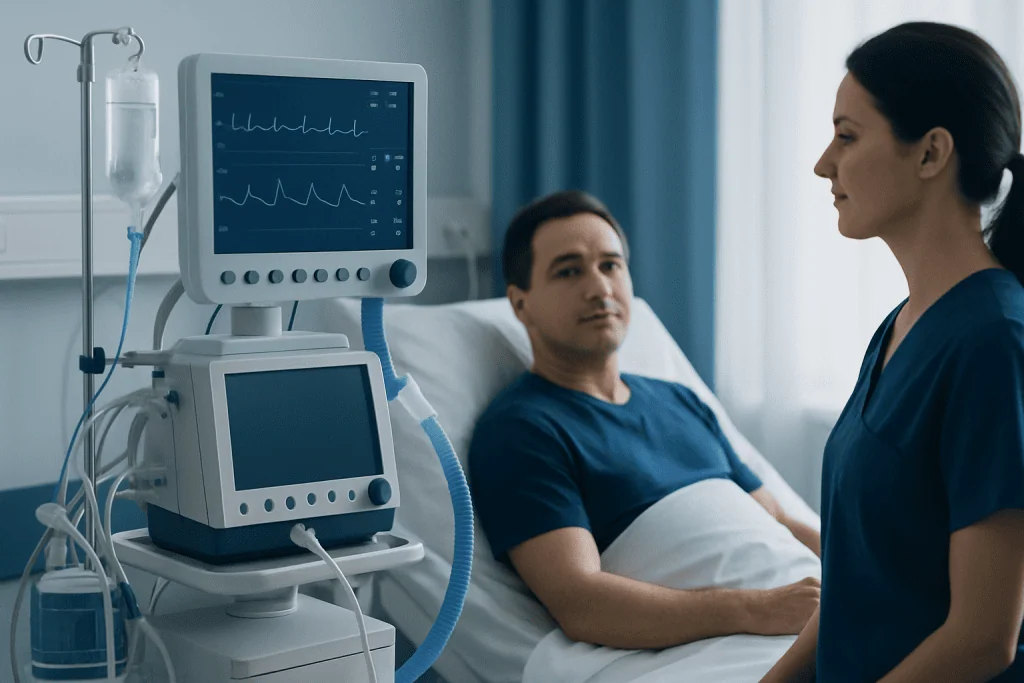
Proximity earns its keep whenever the hospital is the fixed point of your day. Early starts are the clearest example. Many tests and admissions begin in the morning, sometimes after overnight fasting, and arriving late can mean rescheduling. From a nearby hotel, the morning is a ten-minute walk or a short taxi ride. From a central hotel on the far side of the city, it is an alarm set painfully early and a journey whose length you cannot fully control.
Repeated visits are the second case. If your plan involves scans, blood tests, dressing changes or reviews on several consecutive days, every extra kilometre gets multiplied. A round trip that feels tolerable once becomes draining by the fourth day. The same applies if your schedule might change: test results sometimes prompt an additional scan or an earlier review, and plans shift at short notice more often than first-time medical travellers expect. Our guide on handling unexpected test or treatment changes covers this in detail; the short version is that flexibility is far easier to absorb when you are ten minutes away.
Choosing to stay near the hospital in Turkey is usually the calmer option if any of the following describe you:
- You expect appointments on several consecutive days, or same-day tests are possible
- You will be discharged after a procedure and asked to remain nearby for observation or follow-up
- You may have temporary limits on walking, lifting, or sitting comfortably in a car
- You are travelling alone, or with one companion who is also managing bags, paperwork and communication
- You do not know Istanbul and would rather not add navigation to an already full day
None of this requires you to be seriously unwell. Jet lag, fasting, waiting-room hours and ordinary anxiety all reduce stamina. Proximity is simply a way of spending that limited energy on treatment rather than on transport. If your plan includes an inpatient period, it also helps to know roughly what affects how many nights you might spend in hospital, because the answer shapes how long a nearby base needs to be booked for.
When the city center can still be the right option

A central stay is a reasonable choice when the hospital is an occasional destination rather than the centre of your trip. If you are coming for a consultation and a set of diagnostics, with one or two hospital visits and free days in between, a well-located city hotel gives you more to do with the empty hours: cafés, walking, shops, and the parts of Istanbul that make the trip feel like more than a medical errand.
It also works better for families. If your companions include people who will not be at the hospital with you, a spouse plus children, for example, a central base gives them a fuller day while you attend appointments. Central districts offer a wider range of accommodation styles, from serviced apartments to large hotels, and more choice for eating out.
Be honest with yourself about two things before you commit. First, check the real journey time to the hospital at the hours you will actually travel, not the optimistic midday estimate a map app shows you. Second, imagine the return leg on your worst plausible day: the appointment overran, you had sedation, you are tired and it is raining. If that journey still feels acceptable, the city center is a fair choice. If it does not, it is telling you something useful.
Can foreigners use hospitals in Turkey, and what does a visit cost?
Two questions come up constantly from people researching this topic, so it is worth answering them plainly. Yes, foreigners can be treated in hospitals in Turkey. Private hospital groups, including Acibadem, treat international patients routinely and run dedicated international patient offices that handle scheduling, interpreting and practical coordination in multiple languages. You do not need Turkish residency or Turkish insurance to be seen; you attend as a private international patient.
Cost is a different kind of question, and the honest answer is that no article can give you a meaningful figure, because the price of a hospital visit depends on what happens during it. A single consultation is priced differently from a consultation plus imaging, which is priced differently from a procedure with an inpatient stay. What you can expect structurally is this: international patients typically receive a written quote or treatment estimate before travelling, based on the doctor’s review of their records; the quote sets out what is included; and anything added later, an extra test, an additional night, is itemised separately. If your own insurer covers treatment abroad, confirm with them in writing what they will reimburse before you travel. The reliable way to know your cost is a written estimate for your specific case, not a general figure from the internet.
The same logic applies to accommodation. Hotel pricing near hospitals versus in the city center varies by district, season and standard, so compare live prices for your actual dates rather than assuming either area is automatically cheaper.
Which part of Turkey, and which part of Istanbul, should you stay in?
For a treatment trip, the right part of Turkey is simply the city where your hospital is. Most international patients are treated in Istanbul, which has hospitals on both the European and Asian sides; others travel to Ankara or Izmir. Coastal resort towns are pleasant, but choosing a beach area and commuting to a major-city hospital rarely works: the distances are too great for a schedule with fixed appointment times.
Within Istanbul, the tourist answer and the patient answer diverge. Visitors are usually pointed towards Sultanahmet for the historic sights or the Beyoğlu and Taksim area for restaurants and nightlife, and those districts are genuinely enjoyable. But Istanbul is a very large city, and hospitals sit in many different districts on both continents. A hotel in Sultanahmet is only a good medical base if your hospital happens to be reachable from it quickly at your appointment times. The patient answer, therefore, is: find out exactly which hospital campus you will attend first, then choose the neighbourhood around it. Our companion guide on how to choose the right area near your hospital walks through that process district by district.
Transport, companions and recovery days
Transport deserves more attention than it usually gets. Taxis and ride apps are widely available in Istanbul, and many hospitals can arrange transfers for international patients, but every journey is still subject to the city’s traffic. The practical question is not “is transport available?”: it is “can I rely on this journey at 7:30 on a weekday morning?” For a hospital-area hotel, the answer is almost always yes. For a central hotel across the city, the answer depends on the day.
If you are travelling with a companion, proximity lightens their load as much as yours. A companion on a medical trip is quietly managing luggage, paperwork, meals, pharmacy runs and communication while trying to stay calm for you. Every kilometre between hotel and hospital adds moving parts to their day. A short, repeatable route, the same walk, the same entrance, the same café, reduces friction for both of you.
Recovery days tilt the decision furthest towards the hospital area. After a procedure, even a minor one, you may want nothing more than a quiet room a few minutes away, easy bathroom access, room service and the reassurance that a follow-up check does not require a commute. If a recovery period is part of your plan, read our guides on when to stay near the hospital after treatment and choosing a hotel that suits recoverythe second one covers the details that matter most, such as lifts, step-free access and quiet floors.
Questions to ask before you book
The best accommodation decisions come from a handful of concrete questions rather than a general feeling. Work through these before paying for anything:
- How many hospital visits do I expect, and how early does the first one start each day?
- Could same-day tests, next-day reviews or schedule changes realistically happen?
- What is the true door-to-door time at my appointment hours, including peak traffic?
- Will I need to return to the hospital more than once in a single day?
- How will I feel on the journey back after my longest or hardest appointment?
- Does the hotel have a lift, step-free access, quiet rooms and room service, if I might need them?
- Is my booking flexible, in case my treatment dates shift?
Flexibility is worth paying attention to. Book refundable or amendable rates where you can, because medical schedules move more often than holiday schedules do. It also helps to pack with a possible schedule change in mind: our international patient packing checklist covers what to keep with you on treatment days.
A simple way to make the final decision
Strip the decision down to your main goal. If it is rest, reliability and easy access to care, stay near the hospital in Turkey instead of the city center: that is the right fit for early appointments, repeated visits, uncertain schedules, or any doubt about how you will feel after treatment. If your main goal is flexibility and neighbourhood life, the city center is defensible, but only when the medical plan is genuinely light and your energy is genuinely good. Base the choice on your actual itinerary, not on optimism about how you will feel.
And remember that you do not have to choose one style for the whole trip. Many international patients split the stay: a practical hotel near the hospital for the treatment-heavy days, then a move to a central district once follow-up is complete and the schedule loosens. That way the city is a reward at the end of the trip rather than an obstacle in the middle of it.
Step by step
- Confirm which hospital campus you will attend. Large hospital groups have multiple locations across a city, and the right neighbourhood depends entirely on which one is yours. Get this in writing before comparing hotels.
- Map your appointment pattern. Count the likely visits, note the earliest start times, and ask whether same-day tests or short-notice changes are possible. A dense or changeable schedule points firmly towards a nearby stay.
- Be realistic about your energy. Factor in jet lag, fasting, waiting-room hours and anxiety, not just the treatment itself. If you might want a short, simple journey after appointments, plan for one.
- Check real travel times, not distances. Look up the door-to-door journey at the exact hours you will travel, including morning peak. In Istanbul, the honest answer at 8:00 can be very different from the answer at 14:00.
- Consider your companion’s day. Whoever travels with you will be managing transport, meals, paperwork and communication. A short, repeatable route makes their job, and therefore your trip, easier.
- Match the hotel to recovery needs, not tourist appeal. Lifts, step-free access, quiet rooms, flexible meals and easy bathroom access matter more on a treatment trip than a rooftop view.
- Book flexibly and consider a split stay. Choose amendable rates where possible, stay near the hospital for treatment days, and move to the city center later if you want to, once follow-up is done and your energy is back.
Your checklist
- Know your first appointment time and how often you may need to return
- Ask whether schedule changes or extra tests are possible
- Check real door-to-door travel times at likely traffic hours
- Confirm which hospital campus you will attend before booking anything
- Choose accommodation that matches your mobility and comfort needs
- Plan who handles transfers, bags and communication each day
- Keep the hospital’s contact details and your coordinator’s number handy
- Book flexible rates and consider a split stay: hospital area first, city center later
Key takeaways
- Stay near the hospital in Turkey if you expect early appointments, repeated visits, limited mobility or a recovery period.
- A city-center hotel works when the schedule is light, the gaps are long and you feel well enough to travel.
- In Istanbul, traffic and timing matter far more than map distance, and crossing the city at peak hours is unpredictable.
- Your companion’s workload and your recovery needs should shape the choice as much as your own preferences.
- A split stay, hospital area during treatment, city center afterwards, gives you both simplicity and the city.
Frequently asked questions
Can foreigners go to hospital in Turkey?
Yes. Private hospitals in Turkey routinely treat international patients, and larger groups run dedicated international patient offices that handle scheduling, interpreting and practical coordination in multiple languages. You attend as a private patient; Turkish residency or Turkish insurance is not required.
How much does a hospital visit cost in Turkey?
There is no single figure, because cost depends on what the visit involves: a consultation alone is priced differently from a consultation with imaging or a procedure with an inpatient stay. International patients normally receive a written estimate before travelling, based on their records, with any later additions itemised separately. A written quote for your specific case is the only reliable number.
Which part of Turkey is best to stay in for treatment?
The city where your hospital is, most often Istanbul, sometimes Ankara or Izmir. Staying in a resort town and commuting to a major-city hospital rarely works, because the distances are too great for a schedule with fixed appointment times.
What is the best area in Istanbul for tourists to stay?
For sightseeing, visitors usually choose districts such as Sultanahmet for the historic sites or the Beyoğlu and Taksim area for restaurants. For a treatment trip, the better question is which district sits near your hospital campus, because Istanbul is very large and hospitals are spread across both the European and Asian sides.
Is it better to stay near the hospital in Turkey after treatment?
Often, yes. If you may feel tired, need follow-up checks or want the option of returning quickly, a nearby stay is usually more comfortable and less stressful. It makes discharge day and the first days of recovery far more manageable, especially in heavy traffic.
When is a city-center hotel a reasonable choice?
When your plan is light, one or two appointments with long gaps between them, and you feel well enough to travel comfortably at the required hours. Check the real journey time at your appointment times before committing, not the midday estimate.
Should I stay near the hospital if I am travelling alone?
Usually, yes. A nearby hotel reduces navigation stress, keeps journeys short when you are tired, and makes it easier to manage if your schedule changes. With no companion to share the practical load, a simple daily route is worth a great deal.
Can I change hotels during my medical trip?
Yes, and many patients do. A split stay is often the best of both options: a practical base near the hospital for tests, treatment and early follow-up, then a move to a central district once your schedule is lighter and your energy has returned.
Add us as a Preferred Source to see more of our trusted health content across Google Search, AI Overviews and Discover.

Update history
- PublishedAugust 21, 2026
- Medical review approvedSeptember 13, 2026
- Last content updateSeptember 12, 2026
References2
- CDC Yellow Book: Medical Tourism wwwnc.cdc.gov
- UK Government: Foreign travel advice: Turkey gov.uk
More Patient Guides

When a Hospital Stay in Turkey Becomes Longer Than Planned: What to Arrange
If your hospital stay in Turkey is longer than planned, arrange medical updates, accommodation, travel changes, insurance and support for your companion.

Waiting for Test Results in Turkey: How to Use Time Between Appointments
Waiting for test results in Turkey is easier with a clear plan for appointments, rest, records, questions and support in Istanbul.

Unexpected ICU Stay in Turkey: What Patients and Families Should Expect
Unexpected ICU stay in Turkey: learn what patients and families can expect, from communication and visiting to care updates and travel support.

How to Manage Special Diets During Medical Travel in Turkey
Special diets during medical travel in Turkey are easier to manage when you share your needs early, confirm meals and carry safe…