

How to Navigate a Large Hospital Campus in Turkey

To navigate a large hospital campus in Turkey, confirm the exact campus, building, department and arrival time before you leave your accommodation, then go straight to your instructed first stop, often the international patient desk or registration. Ask staff for written directions at each step, keep your documents together, use interpreter support for important conversations, and confirm your next destination before leaving any desk.
You have an appointment in a hospital you have never seen, in a city you may not know, and the campus map, if there is one, is in another language. That worry is common, and it is solvable. Learning to navigate a large hospital campus in Turkey is mostly a matter of preparation: confirming your exact destination before you set out, knowing who to ask once you arrive, and keeping your paperwork in one place. This guide walks you through a full hospital day, from leaving your hotel to collecting your reports at the end, so the campus works for you rather than against you.
At a glance
- Best first step: Confirm the campus, building, department, floor and arrival time before you leave your accommodation, not when you arrive.
- Who can help: International patient desks, interpreters, clinic receptions, information desks, security staff and floor coordinators.
- What to carry: Passport, appointment confirmation, medical records, medication list, payment or insurance documents, phone and charger.
- Timing tip: Arrive early for first visits, laboratory tests, imaging and admissions, registration and security take time.
- Companion advice: Agree a fixed meeting point, save each other’s numbers, and keep the hospital address written down as well as saved on your phone.
Why you need a plan to navigate a large hospital campus in Turkey
A large hospital campus in Turkey can include several connected buildings: outpatient clinics, diagnostic imaging, laboratories, inpatient wards, operating floors, pharmacies, cafés, payment offices and international patient service points. Some campuses work like small medical cities, with specialties spread across different floors or blocks. This layout is efficient for care, because most of what you need sits within one site. It can still feel unfamiliar when you are tired, fasting for a test, or reading signs in a language you do not speak.
The most useful thing to understand before you arrive: you are not expected to work it out alone. At Acibadem, international patient teams routinely help with appointment flow, interpretation, transfers and practical questions during your stay. You will also notice structured identification steps, staff may ask you to confirm your name, date of birth or passport details several times as you move between departments. This repetition is a safety process, not a sign that something has gone wrong.
Give yourself permission to move slowly. A hospital day involves waiting, walking, checking in, repeating information and changing floors. Patients who plan extra time and ask for help early almost always find the day more manageable than those who try to rush through it. If you have not yet decided where you will be treated, it also helps to read about how to choose the right Acibadem campus in Turkey before your plans are fixed, because the campus you choose shapes how much moving around your treatment will involve.
Before you leave your hotel or accommodation
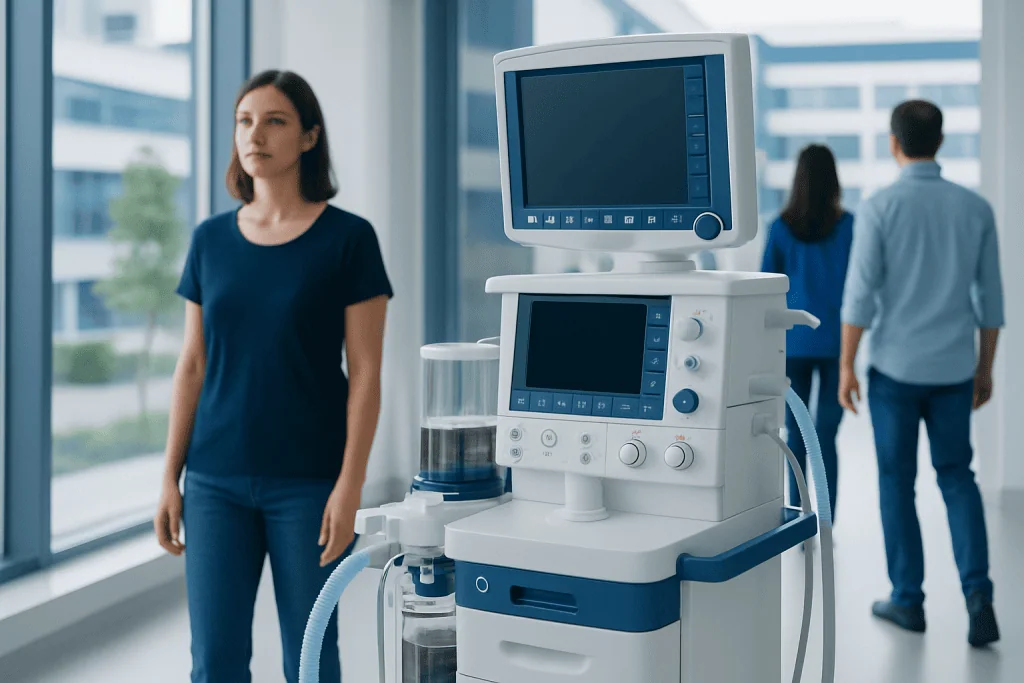
Your hospital day starts at your accommodation, not at the hospital door. Read your appointment message carefully and confirm five things: the hospital name, the campus, the building or block, the department or clinic, and the time you are expected to arrive, which may be earlier than the appointment itself. In large cities such as Istanbul, more than one facility may carry a similar name, and one hospital group may operate several campuses across the city. Check the exact address and, where given, the exact entrance. If you are still comparing locations within the city, the guide on choosing the right Acibadem campus in Istanbul explains how the campuses differ.
If you are supported by an international patient coordinator, ask one direct question the day before: “Where is my first stop?” The answer may be the international patient desk, a registration counter, a clinic reception, the laboratory or an imaging department, and it changes how you enter the building. If transport has been arranged, keep the driver’s name, contact number and pickup time visible on your phone, and take a screenshot in case you lose signal.
Pack a small hospital bag rather than carrying heavy luggage. Include your passport, appointment confirmation, insurance or payment documents, previous medical records, your medication list, glasses, a phone charger, and a light layer of clothing, hospital waiting areas can be cool. If you are fasting for blood tests, imaging or surgery, follow the fasting instructions your care team gave you exactly, and do not eat or drink unless they have told you it is safe. Bring your medical records in the form your team requested; if you have large scan files, it is worth reading about sharing large imaging files with your doctor in Turkey before your visit, so your images are already with the team when you arrive.
Arriving on campus: entrances, security and first check-in

When you arrive, pause before walking through the first door you see. Large campuses usually have several entrances: a main entrance, sometimes a dedicated international patient entrance, an outpatient entrance and an emergency entrance. Use the one named in your instructions. If you arrive by taxi or hospital transfer, ask the driver to stop at that entrance specifically. If you are unsure, show your appointment message to the security or reception staff at the door: they will point you to the correct building.
Many Turkish hospital campuses have security screening near the entrance, similar to an airport but faster. This is normal and protects patients, visitors and staff. You may be asked to show your passport, your appointment details or a visitor badge, particularly if you are heading to an inpatient ward or accompanying an admitted patient.
Your first check-in usually involves registration: confirming your identity and contact details, signing forms, sometimes receiving a patient wristband, and possibly being directed to a payment or insurance desk before your clinical appointments begin. Two rules protect you here. First, never sign a form you do not understand, say, “Could I please have language assistance?” and the process will pause while an interpreter is arranged. Second, keep every paper, barcode and receipt you are given. On a large campus, a barcode from registration is often what the laboratory or imaging department needs to find you in the system.
Reading signs, using maps and asking staff
Signage on major campuses is often in Turkish and English, but smaller signs may be Turkish only. A handful of words will make the campus far easier to read:
- Danışmainformation desk
- Kayıtregistration
- Poliklinikoutpatient clinic
- Radyolojiradiology / imaging
- Laboratuvarlaboratory
- Eczanepharmacy
- Acilemergency department
- Asansörlift / elevator
- Katfloor
- Çıkışexit
Do not rely on memory after receiving directions. Ask staff to write down the building, floor and room number, or photograph the campus map if one is displayed. When you are sent to another department, always confirm whether you should return to the same desk afterwards or go directly to your next appointment: this single question prevents most wasted walking.
Support points you can use at almost any large hospital campus in Turkey include:
- International patient services or guest relations desks
- Clinic reception counters on each floor
- Information desks near main entrances
- Security staff at building doors and lift areas
- Interpreter meeting points or coordinator offices
If you become lost, stop at the nearest staffed desk rather than continuing to walk. Show your appointment details and say where you are trying to go. Staff on these campuses redirect patients all day; you will not be the first person to ask, and you will not be the last.
Moving between appointments, tests and consultations
A single hospital day may include registration, blood tests, imaging, a specialist consultation, an anaesthesiology assessment, a payment confirmation and a pharmacy stop, and these steps rarely all happen in one area. You may be sent from an outpatient clinic to a diagnostic floor and back again. This is normal workflow, not disorganisation, but it does mean you should treat each desk as a checkpoint.
At every checkpoint, ask two questions: “Where do I go next?” and “Do I need to come back here afterwards?” If you are handed a printed form, test request, barcode or receipt, keep it in your folder until staff confirm it is no longer needed. Blood samples and imaging often need to be processed before your consultation, which is one reason the order of your day matters and why arriving early protects the whole schedule.
Waiting times vary because clinical work is prioritised by medical need and daily volume, not strictly by arrival order. If you have been waiting longer than expected, check in politely with the desk. Confirm that you are in the correct waiting area, ask whether your interpreter has been notified, and ask whether you have time to eat, use the bathroom or visit another department before your next step. It is far better to ask than to leave the area and miss your name being called.
Payments, paperwork and keeping documents together
On most campuses, payment and insurance matters are handled at dedicated desks, sometimes before a consultation or procedure and sometimes afterwards. What you are asked to pay, and when, depends on your treatment plan, whether an insurer or guarantee letter is involved, and what was agreed before your arrival, so bring every financial document you were sent, even if you think it has already been processed. If anything on a payment form is unclear, ask for an interpreter before signing, exactly as you would for a medical consent form.
Use one folder or zipped pouch for everything: passport, appointment papers, test requests, receipts, insurance documents and previous records. At the end of the day, ask how you will receive your results, reports, prescriptions or imaging discs, and whether anything will be sent to you electronically. Patients who keep one folder rarely lose anything; patients who spread papers across pockets and bags usually do.
Comfort, accessibility and companion planning
Large campuses involve more walking than most people expect. If you have limited mobility, breathlessness, pain, dizziness or fatigue, tell your coordinator or the nearest staff member early, ideally when the appointment is booked, and again on arrival. Wheelchairs, lifts, seating areas and assistance routes are generally available, but staff can only arrange them if they know what you need before your day becomes difficult. If you feel unwell while moving between departments, sit down and ask the nearest staff member for help rather than pushing on to the next desk alone; you are in the best possible place to be assisted quickly.
If you are travelling with a companion, agree a backup plan before you separate. Pick one fixed meeting point, the main information desk, the international patient desk or a named café, and make sure you both have charged phones, each other’s numbers and the hospital address saved. If one of you has no mobile data in Turkey, connect to hospital Wi-Fi where available and keep key details as screenshots that work offline. Be aware that companions cannot follow you everywhere: imaging rooms, procedure areas, intensive care and operating floors usually restrict access for privacy and infection control. Ask staff where your companion should wait and how they will be updated.
Small comfort decisions add up over a long day: wear comfortable shoes, carry only essentials, keep medications in their original packaging where possible, and ask before eating or drinking if you have tests or a procedure scheduled.
When language, culture or stress makes navigation harder
Even confident travellers can feel overwhelmed in a hospital. Waiting for results, preparing for surgery or supporting a loved one makes simple directions harder to absorb: this is normal, not a personal failing.
Use professional interpreter support whenever the conversation involves symptoms, consent, medication instructions, test preparation, payment details or discharge planning. Family members are valuable for comfort, but professional interpreters reduce misunderstanding and make it easier to ask sensitive questions. Acibadem’s multilingual international patient support exists to carry part of this load; the team that helps match you with the right campus before you travel is also the team you can lean on once you are standing in it.
It is always acceptable to ask staff to slow down, repeat directions or explain the next step more simply. A useful sentence: “I understand the medical plan: I need help with where to go now.” Practical questions are part of safe care, and no one will think less of you for asking them.
Step by step
- Confirm your exact destination. Before leaving your accommodation, check the campus, building, department, floor and arrival time. If anything is unclear, contact your international patient coordinator or the hospital desk rather than guessing.
- Arrive earlier than you think you need to. For a first visit, allow extra time for traffic, security, registration and finding the department, especially before laboratory tests, imaging, pre-operative checks or payment paperwork.
- Go to your instructed first stop. This may be the international patient desk, registration, a clinic reception or a diagnostic area. Showing your appointment message at the entrance prevents you entering the wrong building.
- Ask for written or visual directions. Request the building, floor and room number in writing, or photograph the map. When sent elsewhere, confirm whether to return afterwards.
- Keep documents together. One folder for passport, appointment papers, test requests, barcodes, receipts, insurance documents and records. Discard nothing until staff confirm it is finished with.
- Use interpreter support for important conversations. Ask for language help before consent forms, medication instructions, symptoms, payment discussions or discharge plans. Pausing to clarify is always better than continuing with uncertainty.
- Check in if you are waiting a long time. Politely confirm you are in the correct waiting area, that your name is on the list, and whether anything else needs completing first.
- Plan your exit before you are tired. Ask where to collect prescriptions, reports, imaging discs or discharge papers, and confirm your pickup point or taxi location while you still have energy.
Your checklist
- Passport or official identification
- Appointment confirmation with hospital campus and department
- International patient coordinator contact details
- Previous medical records, imaging reports and medication list
- Insurance, payment or guarantee documents if applicable
- Phone, charger, power bank and offline screenshots of key details
- Comfortable shoes and a light jacket or scarf
- Glasses, hearing aids or mobility aids you normally use
- Written companion contact information and an agreed meeting point
- Snacks or water only if your care team confirms eating and drinking are allowed
Key takeaways
- The easiest way to navigate a large hospital campus in Turkey is to confirm your building, department and first check-in point before you set out.
- International patient services, interpreters, reception teams and security staff all exist to route you correctly, use them early.
- Keep documents, barcodes, test requests and receipts in one folder until your hospital day is fully complete.
- Arriving early protects your whole schedule, especially before first visits, diagnostic tests and admissions.
- At every desk, ask two questions: where do I go next, and do I need to come back here.
Frequently asked questions
Will there be English-speaking staff at a large hospital campus in Turkey?
Hospitals serving international patients generally have English-speaking staff and interpreter services, especially at international patient desks and major clinical areas. Availability can vary by department and time of day, so request language support in advance where possible. For medical, financial or consent discussions, ask for a professional interpreter rather than relying on casual translation.
How early should I arrive for my first appointment?
For a first visit, arriving 30 to 60 minutes early is often sensible, because you may need to register, confirm documents, pass security and find the correct department. If you have imaging, blood tests, admission paperwork or pre-operative checks, you may be asked to come earlier still. Always follow the specific arrival time your coordinator or care team gives you.
What should I do if I go to the wrong building or floor?
This happens on large campuses constantly, so do not worry. Go to the nearest reception, information desk or security point and show your appointment details. Ask staff to write down the correct building, floor and department so you can follow the directions without needing to remember them.
Can my companion come with me everywhere in the hospital?
Companions are usually welcome in public and outpatient areas, but some departments restrict access for privacy, infection control or safety. Imaging rooms, procedure areas, intensive care units and operating floors often have the strictest rules. Ask staff where your companion should wait and how they will be kept informed.
What if I have mobility problems or cannot walk long distances?
Tell your international patient coordinator or reception staff as early as possible, ideally when the appointment is arranged, and again on arrival. Wheelchair assistance, lifts and accessible routes are generally available, but requesting help before you are exhausted or running late makes the day far easier.
How do I manage several appointments on the same day?
Keep a written or digital schedule with times, departments and floors. At each desk, ask where to go next and whether you need to return after tests or consultations. If the schedule changes, ask staff or your coordinator to help you reorder the steps so nothing is missed.
Can Acibadem help with transport and accommodation logistics?
International patient services may assist with practical arrangements such as transfers, hotel coordination, interpreters and appointment guidance, depending on your care plan. Discuss these needs before you travel to Turkey, and keep all confirmed pickup points, times and contact numbers saved on your phone and as screenshots.
What should I check before leaving the hospital campus?
Before you leave, confirm that all planned appointments, tests, payments and paperwork are complete. Ask how you will receive results, prescriptions, medical reports or follow-up instructions, and check where your transport will meet you, especially if you are leaving from a different entrance than the one you arrived through.
Add us as a Preferred Source to see more of our trusted health content across Google Search, AI Overviews and Discover.

Update history
- PublishedJune 8, 2026
- Medical review approvedSeptember 13, 2026
- Last content updateSeptember 12, 2026
References1
- CDC Travelers' Health: Medical Tourism wwwnc.cdc.gov
More Patient Guides
When a Hospital Stay in Turkey Becomes Longer Than Planned: What to Arrange
If your hospital stay in Turkey is longer than planned, arrange medical updates, accommodation, travel changes, insurance and support for your companion.
Waiting for Test Results in Turkey: How to Use Time Between Appointments
Waiting for test results in Turkey is easier with a clear plan for appointments, rest, records, questions and support in Istanbul.
Unexpected ICU Stay in Turkey: What Patients and Families Should Expect
Unexpected ICU stay in Turkey: learn what patients and families can expect, from communication and visiting to care updates and travel support.

How to Manage Special Diets During Medical Travel in Turkey
Special diets during medical travel in Turkey are easier to manage when you share your needs early, confirm meals and carry safe…