

At Acibadem, Why Patients Choose Our Network Over Other Hospitals in Turkey

International patients tend to choose the Acibadem network for four practical reasons: JCI-accredited hospitals with formal safety processes, multidisciplinary specialist teams under one system, international patient services that handle language and logistics, and continuity of records and follow-up across a connected group of hospitals. None of this replaces careful comparison — but it explains what a network structure adds that a standalone clinic usually cannot.
You have a diagnosis, a shortlist of hospitals in Turkey, and no reliable way to tell them apart from your laptop at home. Websites look similar. Reviews contradict each other. In practice, the decision usually comes down to four things: safety standards, consistency, communication, and how well your care is organised from first enquiry to your return home. This guide explains why patients choose our network over other hospitals in Turkey — and, just as importantly, what you should still check for yourself.
At a glance
- Best for: Patients who want accredited hospitals, coordinated multi-specialty care, and structured international support
- Main reason patients choose it: A network approach that combines formal safety standards, connected specialist teams, and practical help with travel and logistics
- Accreditation focus: JCI-accredited hospitals and documented quality processes, reviewed against international standards
- International support: Interpreter coordination, record collection, appointment scheduling, travel and accommodation guidance, and follow-up planning
- Locations: Istanbul and other major centres within the Acibadem healthcare network
- What this guide does not do: It cannot tell you which hospital is medically right for your case — that depends on your records and an in-person assessment
What people really mean when they ask why patients choose our network over other hospitals in Turkey
When you compare hospitals abroad, you are not only comparing a building or a single doctor. You are comparing systems: how safety is monitored, how information moves between departments, how a foreign patient with a file written in another language is handled, and what happens when a plan changes mid-treatment. For most international patients, these operational questions matter as much as the treatment itself, because they determine whether the trip feels manageable or chaotic.
So when someone asks why patients choose our network over other hospitals in Turkey, the honest answer is rarely a single feature. It is the combination: recognised accreditation, specialist teams that already work together, and a patient-services layer built specifically for people arriving from abroad. Instead of connecting a surgeon, a laboratory, an interpreter and a hotel yourself, you deal with a system designed to hold those parts together.
That matters most in three situations: when your diagnosis is complex, when more than one specialty needs to be involved, and when you are travelling with limited time and cannot afford scheduling gaps. A network is not automatically better than a good standalone hospital — but it is structurally better placed to keep multi-step care coherent, because its processes are built to work across a larger system rather than depending on one department or one individual.
Why accreditation and safety standards matter
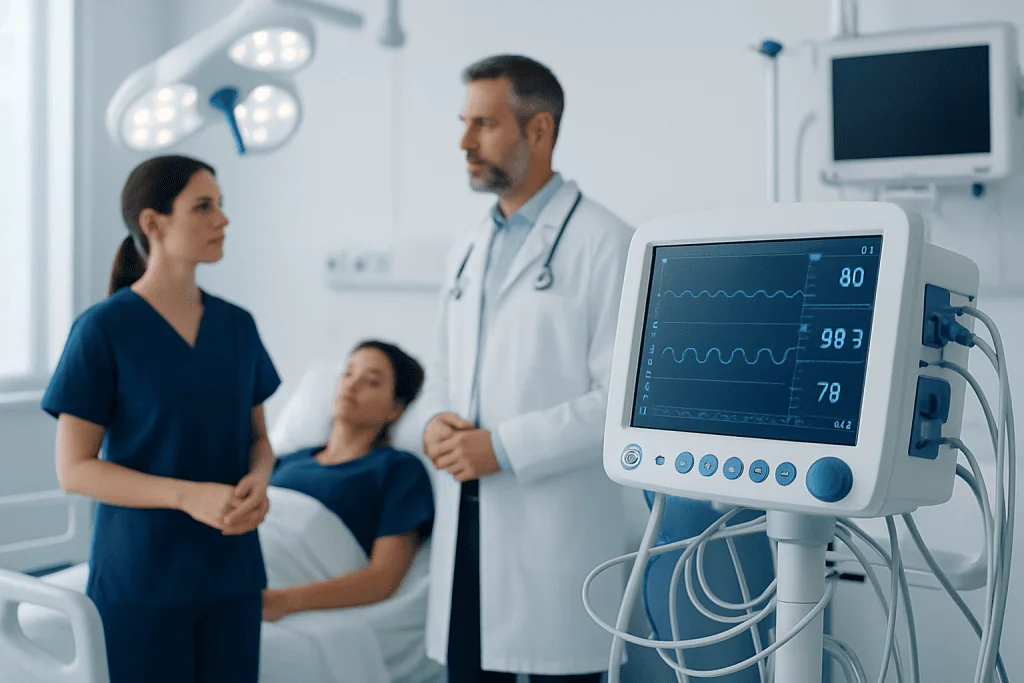
If you are travelling outside your home country for treatment, accreditation is one of the first things worth checking, because it is one of the few signals you can verify from a distance. Accreditation means a hospital is assessed against structured international standards covering patient safety, infection prevention, medication handling, surgical processes, documentation, consent, and continuous quality improvement. It converts “we take safety seriously” from a claim into something that has been examined.
Many patients choose Acibadem because its JCI-accredited hospitals show that quality is handled formally rather than informally. To be clear about the limits: accreditation does not guarantee any specific medical outcome, and no honest hospital will tell you otherwise. What it does show is that safety systems exist, are documented, and are periodically reviewed against a recognised external benchmark. That gives you a more reliable basis for comparison than marketing language or online reviews alone. If you want a fuller explanation of what accreditation covers and what it cannot promise, read why international patients choose our JCI-accredited hospitals.
Beyond the certificate itself, patients benefit from network-level consistency. In practical terms this can mean defined care pathways, standardised consent and documentation, and protocols that look the same whichever facility within the group you attend. When you are already managing travel, stress and medical decisions, that predictability is worth a great deal. Public health bodies that advise on medical travel, including the US CDC, consistently recommend checking accreditation status before choosing a facility abroad — it is a sensible habit regardless of which country or hospital you are considering.
- Verify accreditation status directly, not just from the hospital’s own website
- Ask how safety protocols are monitored and by whom
- Ask how records, consent forms and discharge documents are handled for foreign patients
- Ask how changes of plan or complications during a stay are managed
The value of a network instead of a standalone hospital

The first advantage of a network is access. If your case needs imaging, laboratory work, surgery, rehabilitation, or opinions from more than one specialty, a larger healthcare group can usually coordinate those parts under one system. You spend less time acting as your own project manager between separate providers, and more time understanding the actual treatment plan.
The second advantage is continuity of information. In a connected network, your imaging, test results and clinical notes travel with your file rather than with you. That reduces repeated tests, repeated explanations, and the risk that a detail gets lost between a clinic, a lab and a hospital that have no relationship with each other. It also means equipment and diagnostic capacity are shared across the group — you can see what that looks like in practice in our guide to the technology international patients find at Acibadem hospitals.
The third advantage is flexibility. If your case turns out to need a service concentrated at a different facility within the group — a specific rehabilitation unit, for example — a network can move your care internally without starting the whole process again. Because the Acibadem network operates hospitals in Istanbul and other major Turkish cities, location itself becomes part of the planning conversation rather than a constraint; our guide on how to choose the right Acibadem location explains how that decision usually works.
None of this means a standalone hospital cannot deliver excellent care. Many do. The difference is structural: a network absorbs complexity on your behalf, and for a patient managing treatment in a foreign country, that is often the deciding factor.
What hospitals in Turkey are actually like
People searching this topic often ask a broader question first: what are hospitals in Turkey like, and how good is the healthcare system? A fair summary is that Turkey has a mixed system — a large public sector alongside a substantial private hospital sector — and that the private hospitals serving international patients, particularly in Istanbul, Ankara and Izmir, are typically modern, high-volume institutions. Several Turkish hospital groups, including Acibadem, hold international accreditation and have built dedicated departments for patients arriving from abroad, with interpreters, coordinators and travel logistics as standard functions rather than add-ons.
The honest caveat is that quality is not uniform across any country’s hospital sector, Turkey included. The gap between a well-run accredited hospital and a small unaccredited clinic can be significant, which is exactly why international guidance on medical travel emphasises checking the specific facility and the specific clinical team rather than relying on a country’s general reputation. Turkey’s strong position in medical travel reflects its best institutions; your job as a patient is to make sure the provider you choose is one of them.
As for which hospital in Turkey is “the best” — there is no single defensible answer, and you should be sceptical of any provider that claims the title. The right hospital depends on your condition, the specialty involved, the complexity of your case, and the support you need as a foreign patient. The useful question is not “which is best” but “which is best equipped, and best organised, for my case” — and that is a question you can actually research.
How international patient services change the experience
A hospital can be medically excellent and still feel difficult if communication is poor. Language barriers, unclear next steps, and unfamiliar local logistics add stress precisely when you have the least capacity for it. This is why experienced medical travellers weigh international patient services almost as heavily as the clinical team.
Within the Acibadem network, international patient coordination runs before arrival, during the hospital stay, and after treatment. Depending on your situation, this can include collecting and organising your medical documents for clinical review, scheduling consultations and tests into a workable timeline, arranging interpreter support for appointments and consent discussions, and giving practical guidance on accommodation and transport. Interpretation deserves particular attention: consent conversations, anaesthesia briefings and discharge instructions are not moments to rely on gestures and goodwill. Our guide on how Acibadem hospitals support international patients in their own language covers what to expect and what to arrange in advance.
This support does not replace your own planning — you still need to prepare documents, understand your timeline and make your own travel decisions. What it changes is clarity: you know who your contact person is, what is needed at each stage, and what can only be decided after in-person assessment. It also helps whoever travels with you. When one team explains logistics clearly, your companion is far less likely to feel lost about visiting arrangements, hospital locations, or how to help during recovery and discharge.
Why multidisciplinary care can matter for your decision
Patients often focus on choosing one specialist, but many conditions are best managed by a team. Depending on your case, that team may include imaging specialists, surgeons, physicians, anaesthesiology staff, rehabilitation professionals, nurses and coordinators. When those people already work within one system, your experience is usually more efficient: the same case is reviewed from several angles, decisions are shared internally, and you are not the messenger carrying results between disconnected providers.
This is one of the concrete reasons patients choose our network over other hospitals in Turkey. Fragmented care generates friction — repeated tests, repeated histories, conflicting advice. Coordinated care reduces it. And when a treatment plan changes, as plans sometimes do after in-person assessment or new test results, a network can arrange additional opinions, further imaging or a revised pathway without sending you back to the start.
The same logic extends past discharge. Follow-up planning, physiotherapy during early recovery, and structured aftercare instructions are easier to organise when the departments involved sit within one system that will still hold your records after you fly home.
How cost and quotes fit into the comparison
Cost is part of every hospital comparison, and it is worth understanding how quotes work before you compare any numbers. A serious quote is built after clinical review of your records, and it depends on the scope of the procedure, the expected length of stay, room category, the tests and imaging required, any implants or materials involved, anaesthesia, and the follow-up included. Two quotes for the “same” procedure can describe genuinely different packages, which is why an itemised quote is always more useful than a headline figure.
Be cautious with any provider that gives you a firm, detailed price before anyone has reviewed your medical information — precision without assessment is a warning sign, not a convenience. When you have quotes in hand, compare what each one includes and excludes line by line; our guide on how to compare our quote with other hospitals walks through exactly that process.
What to look at when comparing Acibadem with other hospitals in Turkey
Comparing several providers before deciding is normal and sensible — no credible hospital objects to it. To make the comparison useful, move past general reputation and ask each provider the same specific questions: Is the hospital accredited, and by whom? How are international patients supported day to day? Can clinicians review your records before you travel? Will you have a named contact person? How are interpreters, transfers and follow-up organised? How does the provider handle a change of plan mid-treatment?
Then compare how each provider communicates. A trustworthy hospital distinguishes clearly between what can be said from your records and what can only be decided after in-person assessment. It tells you what information is still missing and what the realistic timeline looks like. Be wary of certainty that arrives too early — promises about results before anyone has properly examined you say more about the sales process than the clinical one.
Many patients conclude in Acibadem’s favour because the answer they receive is about process as much as treatment: an organised international pathway, accredited hospitals, and staff who state limits plainly. In a destination as busy as Istanbul, that operational reliability is what separates a manageable trip from a stressful one. If you want a structured framework for this exercise, use our guide on how to compare Acibadem with other hospitals in Turkey — it holds our own network to the same questions.
- Check accreditation and how safety standards are monitored
- Ask how specialist opinions are coordinated within the hospital
- Confirm interpreter availability in your preferred language
- Understand travel, stay and discharge planning in concrete terms
- Ask how follow-up works after you return home, and who answers questions then
Step by step
- Define what matters most to you. Before comparing hospitals, list your priorities: accreditation, specialty depth relevant to your condition, language support, recovery planning, or how much logistical help you want. Different priorities lead to different shortlists, and knowing yours keeps the comparison honest.
- Prepare your medical records. Gather recent reports, imaging, test results, a current medication list and, if possible, a short medical summary in English. Every serious hospital will want this material before offering a preliminary plan, and complete information early means fewer surprises later.
- Ask each provider about accreditation and coordination. Ask whether the hospital is accredited and how its quality standards are maintained. Ask who would coordinate your appointments and whether multiple specialists can review your case if it needs more than one opinion.
- Clarify the travel and arrival plan. Before booking anything, understand the likely sequence: consultation, testing, treatment, recovery, discharge. Ask what support exists for airport transfers, accommodation guidance and interpreter arrangements, and which parts you are expected to organise yourself.
- Confirm communication channels. Make sure you know who your main contact person is, how to reach them, and how quickly replies typically arrive. If English is not your preferred language, confirm interpreter arrangements in advance so consultations and consent discussions are fully understood.
- Understand follow-up before you leave Turkey. Before discharge, ask what documents you will take home, what your aftercare instructions cover, and how remote follow-up will work with the treating team. Well-organised aftercare planning is one of the clearest signs that a hospital thinks beyond the procedure itself.
Your checklist
- Verify whether the hospital is JCI-accredited
- Ask each provider for a clear outline of the patient journey before travel
- Prepare complete medical records for clinical review
- Confirm whether multidisciplinary review is available for your case
- Confirm interpreter support in your preferred language
- Ask for itemised quotes and compare inclusions, not headline figures
- Clarify estimated length of stay and discharge steps
- Understand accommodation and transport arrangements for you and any companion
- Ask how follow-up will be handled after you return home
Key takeaways
- Patients choose the Acibadem network in Turkey for verifiable safety standards, coordinated specialist teams, and structured international support — not for any single feature.
- JCI accreditation is a sign of formal quality and safety processes; it is checkable from abroad, but it is not a promise of outcomes.
- A network makes complex, multi-step care smoother by connecting specialists, tests, treatment and follow-up within one system.
- Turkey’s leading private hospitals are modern and internationally accredited, but quality varies across any country — assess the specific facility, not the national reputation.
- Serious quotes come after clinical review and arrive itemised; early certainty about price or results is a warning sign.
- When comparing hospitals, reward clarity and honest limits over broad promises.
Frequently asked questions
Why do international patients choose the Acibadem network in Turkey?
Most cite the combination rather than one factor: JCI-accredited hospitals with formal safety processes, specialist teams that coordinate within one system, and international patient services that handle records, appointments, interpreters and travel logistics. For care in a foreign country, that structure often matters as much as the treatment itself.
Which hospital in Turkey is considered the best?
There is no single “best” hospital, and no ranking that settles the question for every condition. The right hospital depends on your diagnosis, the specialty involved, the complexity of your case and the support you need as a foreign patient. Comparing accreditation, specialty depth and international services for your specific situation is far more useful than searching for a universal winner.
How good is Turkey’s healthcare system?
Turkey has a mixed public and private system, and its major private hospital groups — particularly in Istanbul, Ankara and Izmir — operate modern, high-volume facilities, many with international accreditation and dedicated international patient departments. As in any country, quality varies between institutions, so the sensible approach is to evaluate the specific hospital and team rather than rely on general reputation.
What are hospitals in Turkey like for foreign patients?
The large private hospitals that regularly treat international patients are typically modern facilities where interpreters, patient coordinators and travel logistics are standard functions. Expect structured admission processes, English-language documentation on request, and staff accustomed to working with foreign records. Smaller unaccredited clinics can be a very different experience, which is why facility-level checks matter.
What does JCI accreditation mean for a patient?
JCI accreditation means a hospital is evaluated against established international standards for quality and patient safety, covering areas such as infection prevention, medication handling, surgical processes and documentation. It does not guarantee any specific medical result, but it confirms that formal, externally reviewed systems are in place — something you can verify before you travel.
Is choosing a hospital network better than choosing a single clinic?
It can be, particularly if your care may involve more than one specialty, additional imaging, surgery, rehabilitation or structured follow-up. A network coordinates those services internally and keeps your records in one system, which reduces the burden on you to connect everything yourself. A good standalone hospital can still be an excellent choice for simpler, single-specialty care.
Will I know my treatment plan before I arrive in Turkey?
Usually you will receive a preliminary plan based on the records you provide, but some decisions can only be confirmed after in-person examination and updated tests. A trustworthy provider distinguishes clearly between what is known in advance and what depends on assessment on arrival — and is open about that distinction rather than promising certainty early.
Does international patient support also help my companion or family?
Yes. Clear guidance on appointments, hospital locations, visiting arrangements, transport and accommodation reduces stress for the person travelling with you, and helps them support you practically during recovery and discharge rather than spending their energy navigating logistics.
Add us as a Preferred Source to see more of our trusted health content across Google Search, AI Overviews and Discover.

Update history
- PublishedJune 22, 2026
- Medical review approvedAugust 31, 2026
- Last content updateAugust 31, 2026
References1
- CDC Yellow Book — Medical Tourism — wwwnc.cdc.gov
More Patient Guides

Need a Blood Transfusion in Turkey? What International Patients Should Know
Blood transfusion in Turkey is provided after blood typing, compatibility testing and clinical review, with international patient support available in Istanbul.
8 min read
When You May Need ICU Care After Surgery in Turkey
ICU care after surgery in Turkey may be planned for close monitoring or needed if recovery requires extra support. Learn what to…
8 min read
Medical Records Privacy in Turkey: Consent, Sharing, and Patient Rights
Medical records privacy in Turkey gives you rights to informed consent, confidential care, record access and controlled sharing during treatment in Istanbul.
8 min read
When to Delay Travel for Treatment in Turkey Because of Cold, Flu, or Fever
Delay travel for treatment in Turkey if you have fever, worsening flu symptoms, or breathing difficulty; contact your care team before flying.
8 min read