

Need a Blood Transfusion in Turkey? What International Patients Should Know

Blood transfusion in Turkey is provided after blood typing, compatibility testing and clinical review, with international patient support available in Istanbul.
If you need a blood transfusion while visiting or receiving treatment in Turkey, you can expect careful identity checks, blood-group testing, compatibility testing and close monitoring throughout your care. This guide helps you prepare, understand the safety steps and know how Acibadem International can support your medical and travel logistics.
At a glance
- Before transfusion: Clinical assessment, blood group and compatibility testing are required.
- What to bring: Passport, medical records, medication list, allergies and insurance details.
- Typical setting: Hospital inpatient unit, day-care unit, emergency department or outpatient infusion area.
- During transfusion: Your identity and blood unit are checked, and staff monitor you for symptoms.
- International support: Interpreter, care coordination and practical travel support may be available.
- When to seek urgent help: Breathing difficulty, chest pain, fever, chills, rash or severe back pain need immediate attention.
When you may need a blood transfusion in Turkey
A blood transfusion may be recommended when your clinical team believes it is the safest way to replace blood or blood components you need. This can happen because of significant blood loss, anaemia, a bleeding condition, cancer treatment, surgery, childbirth complications or certain long-term medical conditions. The decision is individual: your symptoms, test results, medical history and the reason for treatment all matter.
If you are travelling in Turkey and develop symptoms such as fainting, severe weakness, shortness of breath, active bleeding, chest discomfort or black or bloody stools, seek urgent medical assessment rather than trying to arrange transfusion independently. A transfusion is not a routine wellness treatment and should only be given after a doctor evaluates you and confirms that it is appropriate.
At Acibadem International, international patients can be directed to the appropriate service based on the urgency of their needs. If your transfusion relates to planned treatment, your coordinating team can help collect records in advance, arrange appointments and explain what to expect in a language you understand.
How blood safety checks work
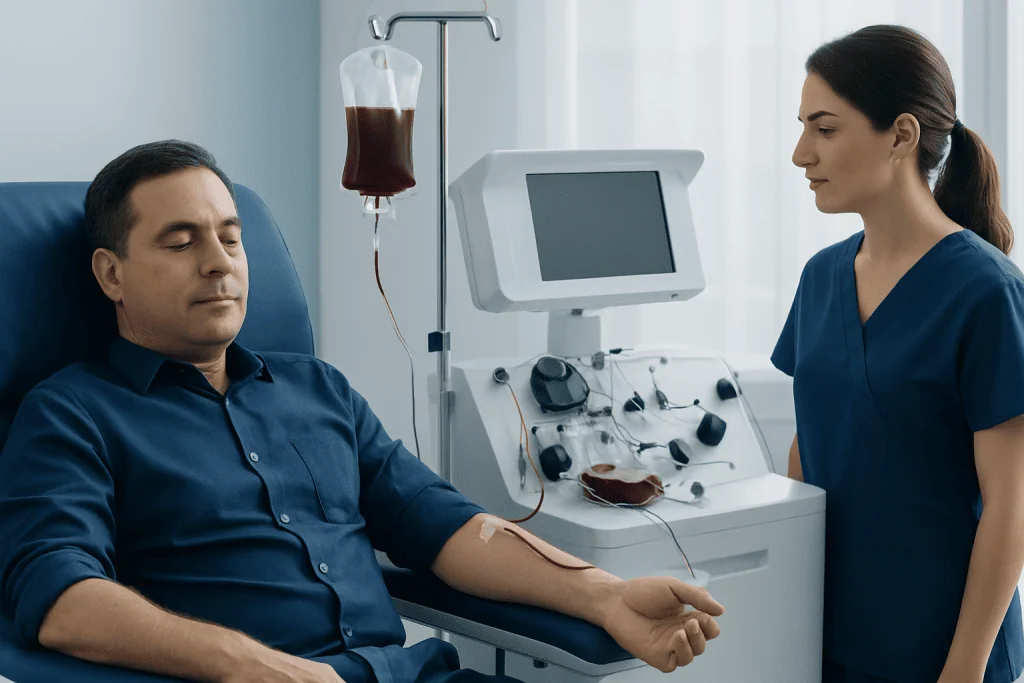
Blood transfusion safety relies on several checks, not just one. Before transfusion, your team confirms your identity, takes a blood sample when needed, identifies your blood group and performs compatibility testing between your sample and the intended blood component. These steps help reduce the risk of receiving an incompatible product.
Staff also review the reason for transfusion, relevant previous transfusions or pregnancies, known antibodies, allergies, medicines and any history of transfusion reactions. Depending on your condition, you may receive red blood cells, platelets, plasma or another blood component rather than whole blood.
Immediately before starting, trained staff verify your identifying details against the blood product and your medical documentation. You are observed during the transfusion, particularly at the beginning, and your vital signs may be checked at intervals. Do not hesitate to tell the nurse or doctor if you feel different, worried or unwell at any point.
- Bring any blood group card or prior transfusion records if you have them.
- Tell the team about past reactions, even if they happened many years ago.
- Ask what component you are receiving and why it has been recommended.
Preparing as an international patient

Bring your passport or government-issued identification, as accurate identification is an essential safety part of transfusion care. If possible, also bring recent laboratory reports, hospital discharge summaries, scans, specialist letters and a clear list of your medications, doses, supplements and allergies. Digital copies are useful, but keep originals or readable copies available too.
Let your care team know about relevant medical history, including heart, kidney, liver or lung conditions; clotting problems; pregnancy; previous surgery; and any prior transfusion. These details can affect the assessment, the type of blood component selected and how closely you are monitored.
If you do not speak Turkish, ask for language assistance early. Acibadem International patient services can help coordinate interpretation and communication around appointments, consent discussions and practical questions. An interpreter supports understanding, but you should still ask for clarification whenever something is unclear before you agree to treatment.
What happens on the day of your transfusion
On arrival, you will usually register, have your identity confirmed and meet the clinical team responsible for your care. They may repeat or update blood tests before proceeding, especially if your samples were taken elsewhere or if your condition has changed. A doctor or qualified clinician should explain the reason for transfusion, expected benefits, possible risks and alternatives that may be relevant in your situation.
The transfusion is generally given through a vein using an intravenous line. The amount of time varies depending on the component, your clinical needs and whether more than one unit is required. You may be asked to remain in the unit for observation after completion, particularly if you have had symptoms or medical conditions requiring closer review.
Wear comfortable clothing that allows access to your arm, and consider bringing a phone charger, water if permitted, and reading material. Follow the team’s instructions about eating, drinking and taking regular medicines. Do not leave the unit or disconnect equipment unless a member of staff tells you it is safe to do so.
Symptoms to report immediately
Most transfusions are completed without serious problems, but reactions can occur during or after a transfusion. Tell a nurse or doctor immediately if you develop fever, chills, itching, rash, flushing, nausea, dizziness, new pain, dark urine, swelling, shortness of breath, wheezing, chest pain or back pain. Even mild symptoms deserve prompt attention because the team may need to pause the transfusion and assess you.
If you have already left the hospital and develop concerning symptoms after a recent transfusion, contact the treating facility urgently or seek emergency care. Severe breathing difficulty, chest pain, confusion, fainting, severe allergic symptoms or signs of active bleeding require emergency assessment. Keep your discharge paperwork and transfusion information with you when seeking further help.
Your team will document any suspected reaction and advise you on future precautions. If a reaction is confirmed or suspected, make sure it is included in your personal medical records and tell future clinicians before you receive blood products again.
Planning your stay, travel and follow-up
Whether you can travel soon after a transfusion depends on why you needed it, how you feel afterwards and whether you have an underlying condition requiring ongoing care. Do not make flight plans based only on the transfusion itself; ask your treating doctor when travel is medically reasonable for you. You may need repeat blood tests, treatment for the underlying cause of anaemia or bleeding, or a period of observation.
If your care is planned, allow flexibility in your itinerary. Diagnostic testing, cross-matching, medical review and possible follow-up can take longer than expected, particularly when your case is complex or your medical records need translation. It is sensible to arrange accommodation close to the hospital if you may need more than one visit.
Acibadem International can help international patients navigate practical arrangements such as appointment coordination, interpreters and guidance on local accommodation or transport options. For continuity of care, ask for a clear discharge summary in English, copies of relevant test results and instructions for your doctor at home.
Step by step
- Contact a hospital or seek urgent assessment. If you have severe symptoms, active bleeding or feel acutely unwell, go to an emergency department or call local emergency services rather than waiting for a routine appointment. For planned care, contact the international patient team and share the reason you have been advised to consider transfusion.
- Send your medical information securely. Provide recent test results, diagnosis, discharge summaries and a current medication list when available. Include details of prior transfusions, pregnancies and any reactions, since these may be important for compatibility assessment.
- Complete your clinical review and testing. A clinician will assess whether a transfusion is appropriate and may request new blood tests. Your blood group and compatibility with the intended blood component must be confirmed before treatment.
- Discuss consent and practical arrangements. Ask why transfusion is being recommended, what alternatives may be suitable and what symptoms to report. Confirm whether you need a companion, how long you may be at the hospital and whether post-treatment observation is expected.
- Attend the transfusion with identification. Bring your passport or official ID and arrive with enough time for registration and safety checks. Tell staff immediately about any change in your symptoms, medicines or medical condition since your last review.
- Stay alert during and after treatment. Notify staff straight away if you feel feverish, itchy, breathless, dizzy or in pain. Before leaving, confirm who to contact after hours and obtain written information about follow-up and travel advice.
- Keep records for your doctor at home. Request a discharge summary and relevant laboratory information in English if needed. Share these with your regular doctor, especially if you need further testing or treatment after returning home.
Your checklist
- Passport or official photo identification
- Recent blood test results and medical reports
- List of medicines, supplements, doses and allergies
- Details of previous transfusions or transfusion reactions
- Information about pregnancies, if relevant to your medical history
- Travel insurance and insurer contact details, if applicable
- Emergency contact and companion details
- Comfortable clothing with easy access to your arm
- Phone charger and any approved personal comfort items
- Plan for safe transport and accommodation after your appointment
Key takeaways
- A blood transfusion in Turkey should follow clinical assessment, identity verification, blood typing and compatibility testing.
- Bring complete medical records and tell the team about previous transfusions, pregnancies, medications and any past reactions.
- Report fever, chills, rash, breathing changes, chest pain, back pain or dizziness immediately during or after treatment.
- Your need for follow-up and the timing of travel depend mainly on the condition that led to the transfusion.
- International patient services can help with interpreters, appointment coordination and practical support, while clinical decisions remain with your treating team.
Frequently asked questions
Can I arrange a blood transfusion in Turkey before I travel?
You can contact a hospital in advance to share your medical records and request an assessment, but a transfusion cannot be guaranteed solely from documents sent from abroad. A treating clinician will need to review your current condition and may repeat blood tests before deciding whether transfusion is appropriate.
Can a family member donate blood directly for me?
Policies on directed donation and blood donation eligibility can vary, and direct donation is not always necessary or appropriate. Ask the hospital’s transfusion service well in advance if this is important to you, as screening, compatibility and timing requirements may apply.
How long does a blood transfusion take?
The timing varies according to the type and amount of blood component, your condition and the monitoring required. Plan for assessment, checks, the transfusion itself and possible observation afterward rather than assuming it will be a short visit.
Will I need to stay overnight in hospital?
Some people receive transfusions in a day-care or outpatient setting, while others need admission because of the cause of their anaemia, bleeding or other medical needs. Your clinician will advise you based on your symptoms, test results and overall health.
What should I do if I feel unwell after leaving the hospital?
Follow the contact instructions on your discharge paperwork and seek urgent care if you develop serious symptoms such as breathing difficulty, chest pain, fainting, severe rash, fever with chills or severe pain. Tell the receiving team that you recently had a blood transfusion and show any documentation you have.
Can I fly after a blood transfusion in Istanbul?
There is no single answer because fitness to fly depends on the underlying reason for transfusion, your recovery and whether you need further monitoring or treatment. Ask your treating doctor for individual travel advice before changing or confirming your flight plans.
Can Acibadem International help if I do not speak Turkish?
Acibadem International patient services can help international patients access communication support and coordinate practical aspects of care. Ask about interpreter availability when you book, and bring any medical records in English or arrange translation where possible.
Add us as a Preferred Source to see more of our trusted health content across Google Search, AI Overviews and Discover.
More Patient Guides

When You May Need ICU Care After Surgery in Turkey
ICU care after surgery in Turkey may be planned for close monitoring or needed if recovery requires extra support. Learn what to…
8 min read
Medical Records Privacy in Turkey: Consent, Sharing, and Patient Rights
Medical records privacy in Turkey gives you rights to informed consent, confidential care, record access and controlled sharing during treatment in Istanbul.
8 min read
When to Delay Travel for Treatment in Turkey Because of Cold, Flu, or Fever
Delay travel for treatment in Turkey if you have fever, worsening flu symptoms, or breathing difficulty; contact your care team before flying.
8 min read