

Hospital Room Options in Turkey for International Patients
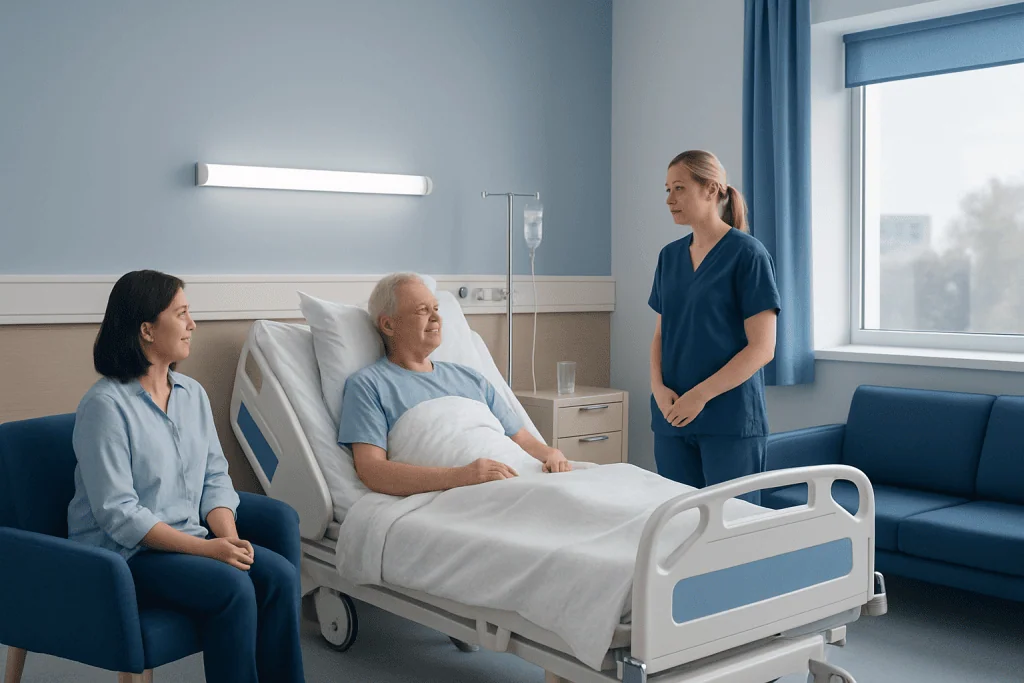
Most international patients in Turkish private hospitals stay in standard private rooms, with suite-style rooms available at some campuses for extra space. Intensive care, isolation and monitored units are assigned by medical need, not preference. A companion can often stay overnight in a private room, subject to hospital policy and your condition. Confirm your room category, companion rules and inclusions in writing before you travel.
Will your husband be able to sleep in the room with you? Is a suite worth the extra space, or is a standard private room enough for four nights after surgery? These are the questions most people ask once the treatment plan is settled, and they are worth asking earlier, while you can still adjust flights, hotel bookings and who travels with you.
Choosing a hospital room is part comfort, part logistics, and the two are easy to confuse when you are planning care in another country. This guide explains the main hospital room options in Turkey for international patients, what each one typically includes, which rooms you cannot choose, and exactly what to confirm in writing before you book anything. It is written for private hospital stays; public hospital arrangements differ and are not covered here.
At a glance
- Main room types: Standard private rooms, suite-style rooms, and clinically assigned areas such as intensive care, recovery, isolation and monitored units
- Companion stay: Often possible for one adult in private rooms, subject to hospital policy, the room layout and your medical condition
- What you can choose: Room category preferences, within availability, not intensive care, recovery or isolation placement, which follow medical need
- Best time to ask: Before you travel, while your treatment plan and estimated length of stay are being arranged
- Key support: International patient coordinators, interpreters, admission guidance and discharge coordination
- Important reminder: Clinical safety always comes first; room allocation can change if your medical needs change
Understanding hospital room options in Turkey for international patients
Hospital room options in Turkey vary by hospital campus, department, medical condition and availability on the day of admission. In private hospitals, international patients are commonly cared for in private rooms when this is clinically appropriate. These rooms are designed to give you privacy, space to rest, and a calmer environment for conversations with your care team, which matters more than usual when those conversations happen through an interpreter.
You may hear terms such as standard room, private room, suite, or VIP room. There is no single national definition of these categories, and the layout behind each label differs from one hospital to another. A “suite” at one campus may simply be a larger room; at another it may include a separate seating area. The practical rule is to ask for a current description of the specific room category quoted to you, rather than relying on general assumptions or photographs from a different building. At Acibadem, your international patient coordinator can explain the categories available at your planned hospital and what may be possible for a companion.
One distinction saves a lot of confusion: some hospital areas are never selected like hotel rooms. Intensive care units, post-anaesthesia recovery areas, newborn units, isolation rooms and certain monitored wards are assigned according to medical need and safety protocols. If your treatment may involve one of these areas, your team will explain what to expect and how family communication works while you are there. Our recovery room and ICU guide for international patients covers this in detail.
Can foreigners be admitted to hospital in Turkey?
Yes. Foreign nationals can be treated in Turkish hospitals, and private hospitals in the larger cities routinely admit international patients for planned procedures. Most maintain international patient departments that handle correspondence before you travel, arrange interpreter support, and coordinate admission and discharge paperwork. For planned treatment, the practical requirements are your passport, your medical records, and the payment or insurance arrangement agreed in advance, see our guide to the documents international patients should bring for hospital admission in Turkey.
For unplanned illness during your trip, hospitals also treat foreign visitors, but payment arrangements differ from planned care and travel insurance terms matter a great deal. If you are travelling for treatment, it is worth reading what your policy actually covers before departure, exclusions for planned treatment abroad are common, and discovering them at admission is the worst possible time.
Standard private rooms: what to expect
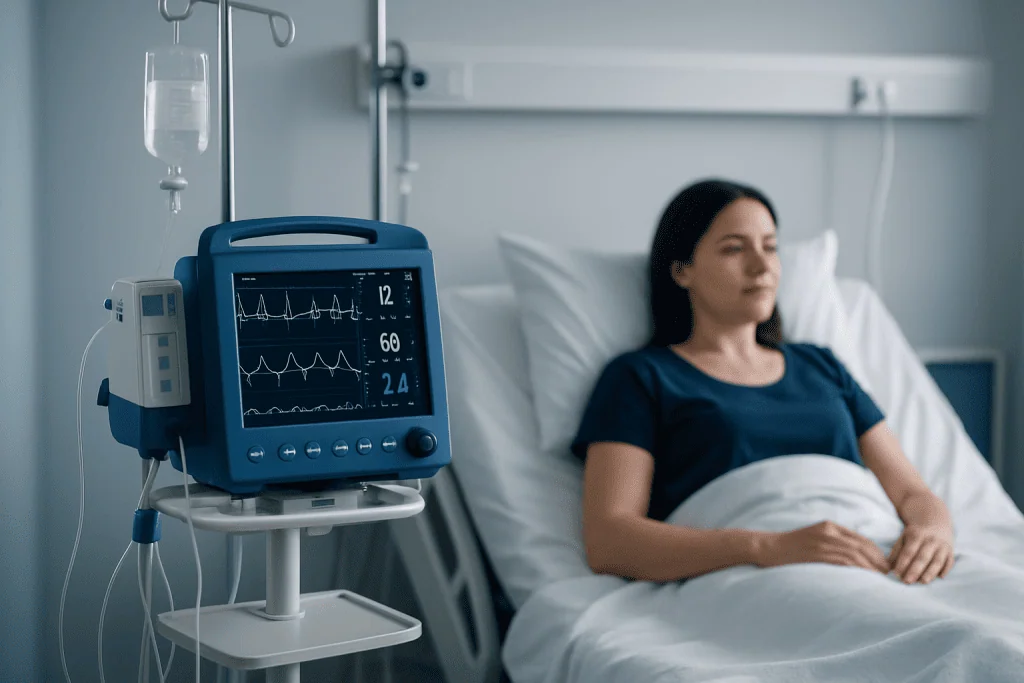
A standard private room is the most common setting for an international inpatient stay. It typically includes your own patient bed, an en-suite or directly accessible bathroom, a nurse call system, storage space and basic furniture. Many rooms also have a television, Wi-Fi access, adjustable lighting and a chair, sofa or fold-out bed where an approved companion can rest.
The value of a private room is not only comfort. It makes it easier to speak with doctors and nurses through an interpreter without an audience, to keep your belongings organised, to rest between nursing rounds, and to have one companion nearby if the unit permits it. For patients recovering from anaesthesia in an unfamiliar country, that quieter environment genuinely reduces stress.
Before confirming travel, ask what the room category in your quote actually includes. Useful questions: are companion meals included, is overnight companion stay allowed, how is laundry handled, and are there visitor restrictions on your unit? Getting these answers in writing means you arrive with accurate expectations rather than assumptions borrowed from hospitals at home.
Suites and upgraded rooms: comfort and family logistics
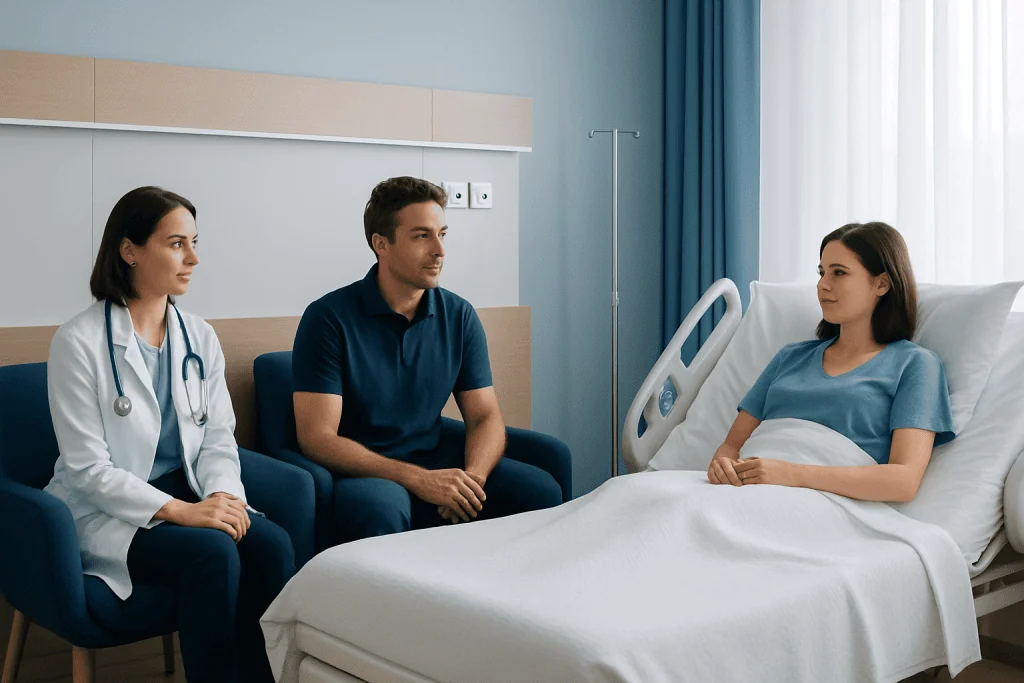
Some hospitals offer larger rooms or suite-style rooms for patients who want more space or expect a longer stay. Depending on the campus, these may provide a separate seating area, a more comfortable sleeping arrangement for a companion, additional storage or upgraded furnishings. Availability is limited, and allocation may depend on the building and the department where you are admitted.
Suites are most useful in specific situations: when a family member is coordinating your daily needs and speaking regularly with the international patient team; when your recovery involves several days of limited mobility and a companion staying throughout; or when you simply want a quieter setting after surgery. They are less useful for a one-night stay after a minor procedure, where you will spend most of your time asleep.
Treat an upgraded room as a comfort choice, not a medical one, unless your doctor specifically advises otherwise. Nursing standards, monitoring and clinical care follow the hospital’s protocols regardless of room category; what changes is space, amenities and companion convenience. If you are weighing the decision, ask for a side-by-side comparison of what each category includes at your specific hospital, and read our guide on choosing private room upgrades in Turkey for the questions that separate a worthwhile upgrade from a cosmetic one.
Room types compared
The table below summarises how the main hospital room options in Turkey for international patients are allocated, and who each type suits best.
| Room type | How it is allocated | Companion overnight | Best suited to |
|---|---|---|---|
| Standard private room | By preference and availability, when clinically appropriate | Often possible for one adult, subject to unit policy | Most planned inpatient stays |
| Suite-style / upgraded room | By request, subject to limited availability at some campuses | Usually the most comfortable companion arrangement | Longer stays, family involvement in recovery |
| Intensive care / monitored unit | By medical need only, never selected by the patient | No; visiting usually follows set times and strict rules | Continuous observation after major surgery or acute illness |
| Isolation room | By infection control protocol | Restricted; the care team will explain the rules | Infection precautions in either direction |
Companions, visitors and overnight stays
Many international patients travel with a spouse, adult child, parent or close friend, and in Turkish private hospitals one companion can often stay overnight in a private room. This is not automatic. Hospital policy, infection control rules, age limits, your medical condition and the room layout all affect what is allowed, and rules are typically stricter in intensive care, oncology, transplant and neonatal areas.
A companion’s role is practical as well as emotional: helping with personal items, keeping notes during doctor visits, and staying in touch with family at home. What a companion never does is take over clinical tasks. Medication, wound care and monitoring remain the responsibility of trained hospital staff, however capable your relative is.
Before admission, confirm:
- Whether one companion may stay overnight in your chosen room type
- Whether a companion bed, sofa or recliner is provided
- Meal arrangements for the companion, and whether they carry a separate charge
- Visiting hours and limits for additional family members
- Rules for children visiting or staying in the hospital
- Any restrictions after surgery, in intensive care, or during infection precautions
If your companion will stay several nights, the details matter more than the headline permission. Our guide to booking a companion room in Turkey lists what to check before you rely on the hospital as your companion’s accommodation.
Amenities, meals, internet and everyday comfort
Small details shape a hospital stay when you are far from home. Ask about Wi-Fi, room temperature control, the number and position of electrical sockets, television channels in your language, the bathroom layout, and drinking water. Turkey uses 220–230V power with European-style two-pin plugs, so patients from the UK, North America and the Gulf usually need an adapter. If you use a medical device from home, such as a CPAP machine for sleep apnoea, confirm compatibility in advance and tell the hospital before you travel: the team may want notice of any device you plan to use at the bedside.
Meals are provided according to the diet your medical team orders, which may change before and after a procedure, fasting before anaesthesia, then a staged return to normal food. If you have allergies, halal or other religious requirements, vegetarian preferences or texture needs, state them before admission and repeat them on arrival. Kitchens can accommodate most requests when told early; same-day surprises are harder.
Two everyday questions worth settling in advance: laundry and daily communication. For stays beyond a few nights, ask how personal laundry is handled, hospitals arrange this differently, and some services carry a separate charge. For communication, ask when interpreter support is available and how to reach your coordinator, so you are not working this out while tired, fasting or recovering from anaesthesia.
What room choice means for cost, and what to confirm in writing
This guide deliberately gives no figures, because any number quoted generically would mislead you. What a hospital stay in Turkey costs depends on the procedure, the hospital and campus, the room category, your expected length of stay, physician fees, operating theatre time, medications, tests, and whether intensive care is planned or becomes necessary. Room category is only one line in that estimate, usually a modest one compared with the clinical items, but it is the line you can most easily control.
Ask for a written treatment estimate that names the room category it is based on, then ask three specific questions: what an upgrade to the next category would add per night, how additional unplanned days are charged, and whether companion meals or bedding carry a separate fee. Never assume an amenity is included unless it is listed. If your quote and the room description arrive in separate messages, ask for them to be consolidated into one document you can refer to at admission.
Availability is the other practical constraint. Even when your preference is noted before travel, final assignment depends on occupancy and clinical priorities on the day you are admitted. If your preferred room is not free, ask your coordinator whether a transfer is possible later in the stay: this is often more realistic than it sounds, because rooms turn over daily. For the wider picture of expenses that catch patients out, see medical travel budget for Turkey: hidden costs patients often miss.
Special situations: intensive care, isolation, children and accessibility
Not every stay follows the standard room plan. After certain operations, or with specific conditions, you may spend time in an intensive care unit or a monitored recovery area before moving to your room. These areas run on continuous observation and strict infection control, so companion access is limited and follows set visiting arrangements. Knowing this in advance prevents the distress of discovering it at the bedside.
If you have mobility needs, hearing or vision impairment, bariatric requirements, oxygen needs or other accessibility concerns, share them before you travel. The international patient team can check room suitability, bathroom access, lift access and wheelchair or transfer arrangements. Raising these points early lets the hospital prepare; raising them at admission forces improvisation.
For children, room arrangements usually involve a parent or guardian staying close, but the rules vary by unit and by the child’s condition. In maternity, neonatal, oncology, transplant and other infection-sensitive areas, family access is more carefully controlled. Ask your coordinator to explain the rules for your specific department so the rest of the family can plan accommodation and visiting realistically.
Step by step
- Share your priorities before travel. Tell your international patient coordinator whether privacy, companion stay, extra space, accessibility or budget matters most. The more specific you are, the easier it is to match your preferences to what actually exists at your campus.
- Ask what room type is included in your estimate. Request a written description of the room category behind your quote, and confirm whether companion stay, companion meals and upgrade requests are included or charged separately.
- Confirm companion and visitor rules. If someone is travelling with you, establish whether they can stay overnight and what facilities exist for them, plus visiting arrangements for anyone else, especially after surgery or in monitored units.
- Prepare for admission day. Keep your passport, medical records, medication list, payment documents and hospital contacts in one place, and arrive at the advised time so admission, room assignment and interpreter support can be coordinated calmly.
- Check practical room details on arrival. Learn how to call the nurse, work the bed controls, connect to Wi-Fi, request an interpreter and order approved meals. Ask early rather than waiting until you are uncomfortable.
- Keep valuables and documents organised. Bring only essential valuables, keep documents in one folder, and ask about safe storage. Do not leave important items unattended in the room during procedures.
- Review discharge needs before leaving. Confirm prescriptions, wound care guidance where relevant, follow-up appointments, medical reports and travel advice. Have your companion listen with you if possible, instructions are easier to remember with two sets of ears.
Your checklist
- Written description of your planned room category, attached to your treatment estimate
- Confirmation of whether a companion can stay overnight, and on what bed
- Details of companion meals, bedding, laundry and visitor hours
- Accessibility needs shared before arrival
- Dietary restrictions, allergies and religious meal needs communicated in advance
- Passport, insurance or payment documents, and medical records packed together
- Phone charger, European plug adapter, comfortable clothing and basic toiletries
- Medication list and original prescription information available
- Discharge and follow-up questions written down before your final day
Key takeaways
- Private rooms are the norm for international patients in Turkish private hospitals, but exact amenities vary by campus and category, always ask for a current description.
- A companion can often stay overnight in a private room; the details depend on hospital rules, your clinical status and the unit you are in.
- Intensive care, recovery and isolation areas are assigned by medical need and cannot be chosen like a room category.
- Get the room category, inclusions and upgrade terms in writing before travel, and review room charges separately from your treatment estimate.
- Suites improve comfort and family logistics for longer stays, but they change space and amenities, not the standard of clinical care.
Frequently asked questions
Can foreigners go to hospital in Turkey?
Yes. Foreign nationals can be treated in Turkish hospitals, and private hospitals routinely admit international patients for planned procedures through dedicated international patient departments. For planned care you will need your passport, medical records and an agreed payment or insurance arrangement. For unplanned illness during a trip, hospitals also treat visitors, though payment terms differ and travel insurance conditions matter.
How much does it cost to be hospitalized in Turkey?
There is no single figure, and any number quoted without your details would mislead you. The cost depends on the procedure, hospital and campus, room category, length of stay, physician fees, operating theatre time, medications, tests and whether intensive care is involved. Request a written, itemised estimate that names the room category it is based on, and ask how extra days or an upgrade would be charged.
Which hospital in Turkey is best for medical tourism?
There is no objective single answer, and lists claiming one should be read cautiously. The right hospital depends on your condition, the department’s experience with your specific treatment, language support, and how well the international patient team communicates before you commit. Judge a hospital by the clarity and honesty of its answers to your written questions, including about rooms, companions and costs.
Do international-sounding hospital names mean international standards?
Some hospitals in Turkey carry “American” or other international words in their names, usually for historical reasons. A name alone tells you little about accreditation, standards or suitability for your treatment. Whatever hospital you consider, ask the same questions: which department will treat you, what room categories exist, what language support is available, and what your written estimate includes.
Can I choose my hospital room before arriving in Turkey?
You can share a preference before travel, and your coordinator can note it in your plan. Final assignment, however, depends on availability, your treatment schedule and clinical needs at admission. Ask which categories exist at your campus, which one your estimate is based on, and whether a transfer is possible if your preferred room is not free on day one.
Can my family member stay overnight with me?
Often, one adult companion can stay overnight in a private room, but permission depends on hospital policy, the room layout, infection control rules and your condition. Intensive care and monitored areas have stricter visiting arrangements. Confirm this in writing before booking flights, so your companion can arrange hotel accommodation for any nights they cannot stay in the hospital.
Do upgraded rooms change the medical care I receive?
No. Upgraded rooms affect space, privacy, amenities and companion convenience. Nursing standards, monitoring and your doctor’s treatment plan follow the hospital’s clinical protocols regardless of room category. If your safety requires a special unit, medical need will always take priority over your room preference.
Will I have an interpreter during my stay?
International patient departments commonly arrange interpreter support for key moments: admission, doctor visits, consent discussions and discharge instructions. Confirm the languages available and how to request an interpreter before you travel. At Acibadem, interpreter coordination is part of the support offered to international patients, but continuous bedside interpretation should not be assumed, ask how it works on your unit.
Add us as a Preferred Source to see more of our trusted health content across Google Search, AI Overviews and Discover.

Update history
- PublishedJune 8, 2026
- Medical review approvedSeptember 13, 2026
- Last content updateSeptember 12, 2026
References1
More Patient Guides

When a Hospital Stay in Turkey Becomes Longer Than Planned: What to Arrange
If your hospital stay in Turkey is longer than planned, arrange medical updates, accommodation, travel changes, insurance and support for your companion.

Waiting for Test Results in Turkey: How to Use Time Between Appointments
Waiting for test results in Turkey is easier with a clear plan for appointments, rest, records, questions and support in Istanbul.

Unexpected ICU Stay in Turkey: What Patients and Families Should Expect
Unexpected ICU stay in Turkey: learn what patients and families can expect, from communication and visiting to care updates and travel support.

How to Manage Special Diets During Medical Travel in Turkey
Special diets during medical travel in Turkey are easier to manage when you share your needs early, confirm meals and carry safe…