

Recovery Room and ICU Guide for International Patients

The recovery room and ICU are not the same. The recovery room (PACU) is short-term observation while anaesthesia wears off; the ICU provides longer, more intensive monitoring, sometimes planned in advance. Visiting is limited in both, updates go to a contact you nominate before surgery, and you move to a standard room once your team is satisfied you no longer need continuous observation.
Will my husband be allowed in? Who will call my family? What actually happens in the first hours after I wake up? These are the questions international patients ask most often before surgery, and they deserve straight answers. After an operation or a major procedure, the recovery room and the intensive care unit are the most closely monitored areas of the hospital. Their purpose is simple: to keep you safe while your care team watches your breathing, circulation, comfort and early healing.
This recovery room and ICU guide for international patients explains what happens in each area, who is allowed in, how updates reach your family, and what needs to happen before you move to a standard room. It also covers the practical side that matters when you are treated abroad: language support, where your companion waits, and how these areas appear in a treatment quote.
At a glance
- Main purpose: Close, continuous monitoring immediately after surgery, anaesthesia or serious illness
- Recovery room vs ICU: Not the same: the recovery room (PACU) is short-term observation after anaesthesia; the ICU is a higher, longer level of monitoring
- Who you may meet: Nurses, anaesthetists, ICU doctors, your surgeon, physiotherapists and interpreters
- Family access: Limited and structured in both areas, for privacy and infection control, not because something is wrong
- Communication: International patient teams and interpreters relay updates to a contact you nominate before surgery
- Typical next step: Transfer to a standard hospital room when monitoring needs decrease
Recovery Room and ICU: What Each Area Is For
Any honest recovery room and ICU guide for international patients has to start with the distinction, because the two areas are often confused and the confusion causes real anxiety in waiting rooms.
The recovery room, clinicians call it the post-anaesthesia care unit, or PACU, is where you go immediately after surgery or a procedure done under anaesthesia or sedation. Its job is short and specific: nurses and an anaesthesia team watch you as you wake, check your breathing and circulation, manage pain and nausea, and confirm that you are stable enough to move on. Almost every surgical patient passes through it. Most stays are measured in hours, not days, though your team decides the timing case by case.
The intensive care unit, or ICU, is a different level of care. It provides continuous monitoring and, when needed, specialised support for breathing, circulation or other organ functions. Some patients go to the ICU because a complication needs close management. Many others go because the stay was planned before surgerythe operation was long or complex, or an existing condition such as a heart or lung problem makes extra caution sensible for the first night. A planned ICU stay is a safety measure, not a sign that something has gone wrong.
Is the ICU and the recovery room the same?
No, and the differences matter for how you and your family should prepare:
| Recovery room (PACU) | Intensive care unit (ICU) | |
|---|---|---|
| Purpose | Short-term observation while anaesthesia wears off | Continuous monitoring and specialised support |
| Who goes there | Nearly all patients after anaesthesia or sedation | Patients who need extra observation, often planned in advance |
| Length of stay | Usually hours | Overnight or longer, depending on the plan |
| Visiting | Very limited; companions usually wait outside | Structured visiting times, often brief and limited in number |
| Next step | Standard room, or discharge for day cases | Standard room when monitoring needs decrease |
For international patients, both areas can feel unfamiliar because routines, visiting rules and communication habits differ from home. Acibadem’s international patient teams and interpreters help you and your companion understand where you are, why you are there, and what has to happen before you move on.
What You May Notice When You Wake Up
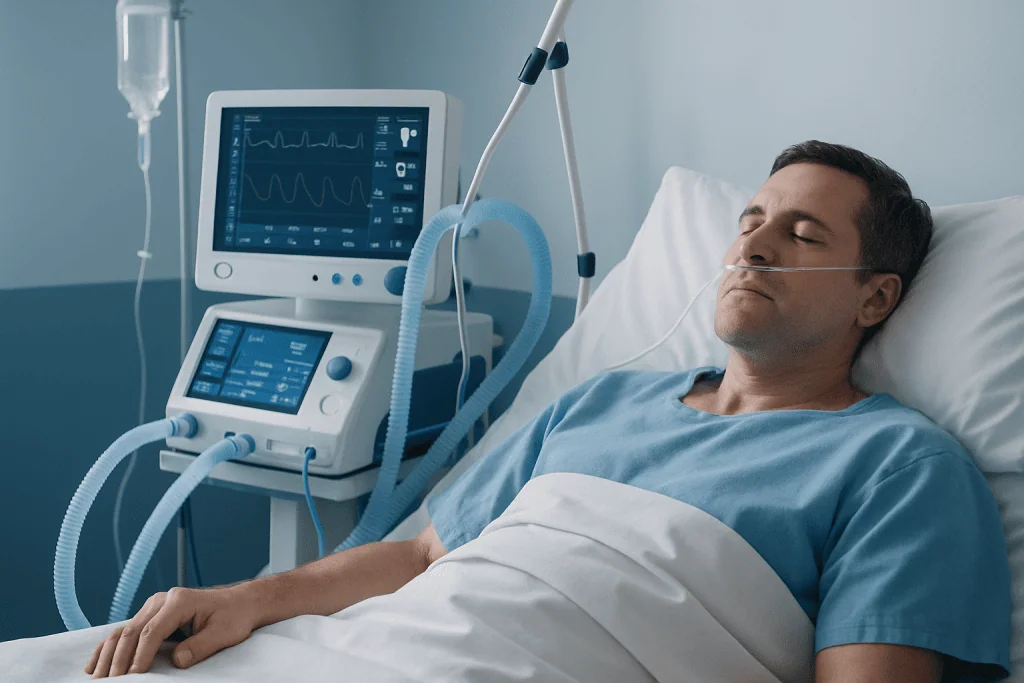
Waking from anaesthesia is rarely like waking from sleep. You may feel drowsy, cold, thirsty, disoriented or unexpectedly emotional. You may hear monitors, feel a blood pressure cuff inflating on your arm, and notice oxygen tubing, IV lines, drains or dressings depending on your procedure. None of this automatically means a problem. It is what routine observation looks like. We describe the first hour in detail in what happens in the recovery room after a procedure in Turkey.
Nurses will ask simple questions: your name, whether you have pain, whether you feel sick. They may check your surgical site, monitor urine output, encourage deep breathing or adjust your position. Nausea after anaesthesia is common and treatable; there is a separate guide on recovery room nausea and going back to your room if that worries you.
If you are not comfortable in Turkish or English, tell your coordinator before surgery so your language preference is documented. Interpreters help with important explanations, but in the immediate recovery period you may also be asked yes-or-no questions or invited to point at a pain scale. Your companion will not be beside you at every moment, so the written record of your language needs does real work here.
Who Is Allowed In: Family Visits, Updates and Privacy

The direct answer to “who is allowed in the recovery room” is: usually only clinical staff. Companions typically wait in a designated area until you are ready for transfer or until the team confirms a brief visit is possible. ICU visiting is more structured than a standard ward, set times, limited numbers of visitors, and hygiene rules such as hand sanitising before entering. These limits protect patient privacy across the whole unit, support infection control, and let nurses and doctors move quickly when they need to.
International families often find this the hardest part, because they have travelled far and cannot simply be at the bedside. Two things reduce the stress considerably. First, agree before surgery who will receive medical updates and in which language; hospitals follow confidentiality rules and will not share details with anyone you have not nominated. Second, ask your coordinator exactly where your companion should wait, how long the procedure is expected to take, and how the first update will arrive. Acibadem’s patient coordinators and interpreters can support communication between your family and the clinical team within those confidentiality rules.
If your companion will stay in the hospital once you reach a standard room, it is worth reading about booking a companion room in Turkey in advance, recovery and ICU areas do not accommodate overnight companions, but ward rooms often can.
Comfort, Pain Control and Emotional Reassurance
Pain control is part of safe recovery, not a luxury. Your team may ask you to rate pain from 0 to 10, say where it is, and describe whether it feels sharp, pressure-like or burning. Answer honestly rather than bravely: untreated pain makes it harder to breathe deeply, move safely and sleep, all of which matter in the first days. What to expect from pain management, and how to describe pain across a language barrier, is covered in pain control after surgery in Turkey.
You may also feel anxious, tearful or confused, particularly if you wake in an ICU with lights, alarms and unfamiliar equipment around you. Say so. A nurse explaining what a monitor does, or arranging a call to your interpreter or companion, often changes the experience more than any medication. Comfort measures can include repositioning, warming blankets, anti-nausea treatment, mouth care, breathing exercises and help with noise at night. Your team balances comfort against safety, because some comfort medications affect breathing, blood pressure or alertness.
One thing you should do before treatment, not after: make sure any previous reactions to anaesthesia, sedatives or pain medicines are recorded in your medical history. Decisions about starting, stopping or adjusting any medication belong to your treating doctors: your job is to give them a complete picture.
Monitoring, Safety Routines and How ICU Care Is Organised
People often ask what the guidelines for intensive care actually involve. In practice, ICU care is built on structured routines: continuous monitoring of heart rhythm, blood pressure, oxygen levels, temperature and breathing; regular review of laboratory results, fluid balance, wound drainage and medication response; higher nurse-to-patient attention than a standard ward; and strict infection control. You will notice staff confirming your identity repeatedly, checking allergy information, sanitising hands, using protective equipment and documenting everything. The repetition is deliberate. It is how errors are caught before they matter.
Alarms deserve a specific mention because they frighten visitors. ICU monitors alarm frequently, and most alarms are prompts for a nurse to check a reading, a sensor or a line, not emergencies. If a particular alarm worries you, ask what it is for. Staff answer this question all day and do not mind it.
You and your companion contribute to safety in small, practical ways: keep your ID wristband on, confirm allergies when asked, never adjust tubes or devices yourself, ask before getting out of bed for the first time, and follow visitor hygiene rules exactly. While you are in the unit, any change you notice, sudden chest discomfort, difficulty breathing, new weakness, heavy bleeding, severe pain, confusion, should go to the nurse immediately; that is precisely what the staffing is there for.
Moving from ICU or Recovery to Your Room
You transfer to a standard room when your team is satisfied that you no longer need continuous observation. There is no fixed clock. The decision rests on your vital signs, breathing, pain control, alertness, mobility, laboratory results and the overall plan your doctors made before surgery. It is entirely reasonable to ask, “What are you watching, and what milestones do I need to reach?”: you will usually get a concrete answer.
Before transfer, the recovery or ICU nurses give a structured handover to the ward team: your medications, allergies, drains or catheters, diet instructions, mobility precautions, wound care and anything specific to watch. Once you are settled, visiting becomes far more flexible. If you have preferences about privacy, space for a companion or bathroom accessibility, the guide to hospital room options in Turkey for international patients explains what to ask for and when.
The ward stage is quieter but recovery is still active: assisted walking, gradual eating, breathing exercises, sometimes physiotherapy, and the start of discharge planning. For international patients this is the right moment to raise fit-to-fly timing, translated reports, medication instructions for home and follow-up arrangements, not the day before your flight. If, after discharge, you develop sudden chest pain, severe breathing difficulty, heavy bleeding or new confusion, call your local emergency number or go to the nearest emergency department now.
How Recovery Room and ICU Time Appears in Your Quote
Patients searching from the United States sometimes ask whether there is a CPT code for the recovery room. CPT codes are an American billing and coding system; in US hospitals, recovery room time is generally bundled into the facility charge for the procedure rather than billed as a separate patient-facing item. Turkish hospitals do not bill international patients through CPT codes at all. Instead, your written quote typically covers the procedure as a package or as itemised components, and it should state plainly whether routine recovery room time is included and how a planned or unplanned ICU stay would be handled.
Rather than asking for a number here, ask structural questions before you confirm: Is a planned ICU night already part of my quote? If an unplanned ICU stay becomes necessary, how is it charged and communicated? What documentation would my insurer need? On that last point, review travel insurance for treatment in Turkey before you travel, because policies differ in how they treat complications of planned treatment abroad.
Practical Tips for International Patients and Companions
Most of the stress around recovery and ICU areas comes from surprise, and surprise is preventable. Before your procedure, confirm your preferred language, your emergency contact, your companion’s phone number, and any specific needs, hearing aids, glasses, religious preferences, mobility support, anxiety triggers. Ask which personal items are allowed into the unit and which should stay with your companion; clinical areas allow very little, and valuables should not enter them at all.
Pack for the hospital day lightly and deliberately: phone and charger, glasses case, a written medication list, copies of key medical documents, comfortable clothes for later, and a small notebook so your companion can record updates and questions.
- Ask exactly where your companion should wait during surgery and recovery.
- Confirm how medical updates will be shared, with whom, and in which language.
- Check whether ICU visiting hours differ from standard ward visiting: they usually do.
- Tell your coordinator about dietary, mobility, accessibility or religious needs in advance.
- Request translated discharge documents early if your doctors at home will need them.
This is where a recovery room and ICU guide for international patients earns its keep: the clinical care is the hospital’s job, but the communication plan is largely yours to set up, and it works far better when it is arranged before anaesthesia rather than after.
Step by step
- Share your medical and language needs before treatment. Give your coordinator and medical team a complete medication list, allergy history, previous anaesthesia reactions and significant health conditions. Confirm your preferred language and who should receive updates while you are in recovery or ICU.
- Prepare your companion for waiting and updates. They will probably not enter the recovery room or ICU immediately, so agree a clear plan: where to wait, which number the hospital should call, and what the visiting rules are.
- Expect monitors, lines and frequent checks. Oxygen tubing, IV fluids, dressings, drains and monitoring cables are routine equipment, not warning signs. Nurses will check on you often and encourage breathing and movement when it is safe.
- Speak up about pain, nausea or fear. Do not wait until symptoms feel unbearable. Early, honest feedback lets your team adjust comfort measures and explain what is happening.
- Follow safety and infection control instructions. Keep your wristband on, do not touch tubes or equipment, and ask before getting out of bed for the first time. Companions should follow hand hygiene and any mask or gown rules exactly.
- Ask about the criteria for transfer to your room. Your move depends on stability, monitoring needs and your care plan. Asking what the team is watching and what milestones you need is entirely reasonable.
- Plan early for discharge and travel home. Before leaving hospital, ask about warning signs, follow-up plans, fit-to-travel guidance and any reports or translations your doctors at home will need.
Your checklist
- Medication list, allergy history and previous anaesthesia reactions shared with the team
- Preferred language and interpreter needs confirmed before the procedure
- Main companion and emergency contact details recorded correctly
- Visiting rules for the recovery room and ICU explained to your family
- Written quote checked for how recovery room and ICU time is handled
- Phone charger, glasses, hearing aids and essential personal items prepared
- Valuables and unnecessary luggage kept out of clinical areas
- Pain, nausea, anxiety or confusion reported promptly to nurses
- Discharge reports, medication plan and follow-up instructions requested before travel
Key takeaways
- The recovery room and the ICU are different areas: short-term post-anaesthesia observation versus longer, more intensive monitoring.
- A planned ICU stay is a safety measure, not evidence that something went wrong.
- Limited visiting reflects privacy, infection control and clinical workflow, nominate your update contact before surgery.
- Report pain, nausea, anxiety and confusion early so your team can respond.
- Your quote should state plainly how recovery room time and any ICU stay are handled; ask before you confirm.
- Transfer to a standard room depends on stability and monitoring needs, not on a fixed schedule.
Frequently asked questions
Is the ICU and the recovery room the same?
No. The recovery room (post-anaesthesia care unit) is short-term observation that nearly every surgical patient passes through while anaesthesia wears off, usually for hours. The ICU is a higher level of care with continuous monitoring and specialised support, used when a patient needs longer or closer observation, sometimes planned before surgery, sometimes not.
Who is allowed in the recovery room?
Usually only clinical staff. Companions wait in a designated area until you are ready for transfer or until the team confirms a brief visit is possible. ICU visiting is structured, with set times and hygiene rules. Ask before your procedure exactly where your companion should wait and how the first update will reach them.
Does going to the ICU mean something went wrong?
Not necessarily. Many ICU stays are planned in advance because the surgery is complex or an existing condition makes closer monitoring sensible for the first night. Your team can tell you whether your ICU stay was expected and what they are watching.
What are the guidelines for intensive care unit care?
ICU care follows structured routines: continuous monitoring of vital signs, regular review of laboratory results and medication response, closer nursing attention than a standard ward, strict infection control and careful documentation. The repeated identity and allergy checks you notice are deliberate safety steps, not signs of disorganisation.
Is there a CPT code for the recovery room?
CPT codes belong to the American billing system, where recovery room time is generally bundled into the facility charge rather than billed separately. Turkish hospitals do not use CPT codes for international patients. Instead, check your written quote: it should state whether routine recovery room time is included and how a planned or unplanned ICU stay would be handled.
What if I wake up and cannot communicate well?
Temporary difficulty communicating is common after anaesthesia or sedation. Nurses assess comfort and safety through simple questions, observation, monitoring and pain scales you can point to. Confirm your language preference with your coordinator before the procedure so interpreter support is documented and ready.
When will I be moved to a normal hospital room?
When your team is satisfied you no longer need continuous observation. The decision depends on your vital signs, breathing, pain control, alertness, mobility, laboratory results and your overall care plan, not on a fixed schedule. Ask what milestones the team is looking for; you will usually get a specific answer.
What should I ask before flying home after an ICU or recovery stay?
Ask your doctor when travel is medically appropriate, which warning signs to watch for, and whether you need arrangements such as mobility help or follow-up tests. Request your discharge reports, medication instructions and any translations your doctors at home will need before you leave the hospital, not from the airport.
Add us as a Preferred Source to see more of our trusted health content across Google Search, AI Overviews and Discover.

Update history
- PublishedJune 8, 2026
- Medical review approvedSeptember 13, 2026
- Last content updateSeptember 12, 2026
References3
- Intensive care: NHS nhs.uk
- After Surgery: MedlinePlus medlineplus.gov
- Critical Care: MedlinePlus medlineplus.gov
More Patient Guides

When a Hospital Stay in Turkey Becomes Longer Than Planned: What to Arrange
If your hospital stay in Turkey is longer than planned, arrange medical updates, accommodation, travel changes, insurance and support for your companion.

Waiting for Test Results in Turkey: How to Use Time Between Appointments
Waiting for test results in Turkey is easier with a clear plan for appointments, rest, records, questions and support in Istanbul.

Unexpected ICU Stay in Turkey: What Patients and Families Should Expect
Unexpected ICU stay in Turkey: learn what patients and families can expect, from communication and visiting to care updates and travel support.

How to Manage Special Diets During Medical Travel in Turkey
Special diets during medical travel in Turkey are easier to manage when you share your needs early, confirm meals and carry safe…