

Hotel-to-Hospital Routine for Patient Companions in Turkey

A workable hotel-to-hospital routine for patient companions in Turkey has five fixed points: confirm the next day's plan the evening before, pack one consistent companion bag, leave with a traffic buffer, go straight to the agreed meeting point inside the hospital, and close each day by confirming instructions and the next appointment before returning to the hotel. Repeat the pattern; adjust the details.
Will you get your loved one to the hospital on time tomorrow morning, and do you know which entrance to use? As a patient companion, your day runs between the hotel, the hospital, the pharmacy, waiting areas and your own need for rest. This guide helps you build a calm, repeatable hotel-to-hospital routine for patient companions in Turkey, so you can support the person you came with without feeling lost in a system you did not grow up in.
It is written for family members, friends and paid carers accompanying an international patient. It does not ask you to act like a nurse. It asks you to become the day’s fixed point: the person who knows the time, the bag, the route and the next step. Everything medical stays with the treating team.
At a glance
- Best for: Family members, friends and carers accompanying an international patient in Turkey
- Daily focus: Transport, documents, interpretation, meals, waiting time and communication with the hospital team
- What to carry: Passports, appointment details, a current medication list, phone and charger, water and snacks for yourself
- Helpful support: International patient services, interpreters, hospital coordinators and hotel reception
- Main goal: One predictable daily pattern, evening confirmation, one bag, buffered departure, agreed meeting point, end-of-day check
Why a repeatable routine matters more than a perfect plan
When someone travels to Turkey for medical care, the companion often becomes the steady point in the day: the person who remembers the appointment time, checks the bag, follows up on meals and notices when the patient is tired or anxious. The hardest part of this role is not any single task. It is the accumulation of small decisions, when to leave, what to bring, who to call, where to wait, repeated every day in an unfamiliar city.
A good hotel-to-hospital routine for patient companions in Turkey removes most of those decisions. Instead of rebuilding the day from scratch each morning, you follow a pattern that stays the same while the medical details change. This matters most on days with early blood tests, imaging, surgery preparation or discharge planning, when the patient has the least energy to spare and you have the least room for error.
At Acibadem hospitals, international patients and companions can be supported by coordinators, interpreters and care teams who work with cross-border patients regularly. Use them early. Asking where to wait, how to reach your coordinator or what happens next is not a nuisance: it is exactly what these teams exist for, and a two-minute question in the morning often prevents an hour of confusion in the afternoon. You can read more about that support in our guide on how families and companions are supported during treatment travel.
If more than one relative has travelled with the patient, decide early who owns which part of the day, transport, documents, meals, messages home, and revisit the split every few days as the treatment plan changes. A clear division prevents both duplicated effort and quiet resentment.
How Turkish hospitals work for foreign patients: the honest basics
Before the routine itself, it helps to understand the ground you are standing on. Companions often arrive with questions the travel agent never answered, so here are the plain answers.
Can foreigners go to hospital in Turkey?
Yes. Foreign nationals can be seen in both public and private hospitals. In practice, most international patients who travel to Turkey for planned treatment use private hospitals, which typically have international patient departments, interpreter arrangements and staff used to handling foreign passports, overseas medical records and cross-border payments. You do not need Turkish residency to register as a patient.
Do tourists get free healthcare in Turkey?
No. Visitors are expected to pay for their care or have it covered by insurance or a pre-arranged treatment agreement. Emergency departments will assess and stabilise anyone with an urgent problem, but that treatment is not free for tourists, and follow-on care is billed. This is one reason travel insurance, and clarity about what your treatment arrangement covers, matters for companions as well as patients. If you are unsure what is included in your plan, ask your coordinator to explain it before the first hospital day, and read our guide on coordinating hotel, hospital and flight changes during treatment so you know how adjustments are handled.
What is the healthcare system like in Turkey?
Turkey runs a mixed system: a large public network funded through national social insurance for residents, alongside a substantial private hospital sector. International patients almost always move through the private side, where appointment scheduling, English-language coordination and companion support are structured around treatment travel. Large hospitals are often multi-building campuses, which is exactly why your routine needs a named entrance and a named meeting point, not just an address.
What do international patients commonly come for?
Commonly sought fields include dental treatment, hair restoration, eye surgery, aesthetic and reconstructive surgery, orthopaedics, cardiology, oncology and fertility treatment. Whatever brought you here, the companion’s day looks broadly the same: get there calmly, understand the instructions, protect the patient’s energy, get back safely.
Before leaving the hotel
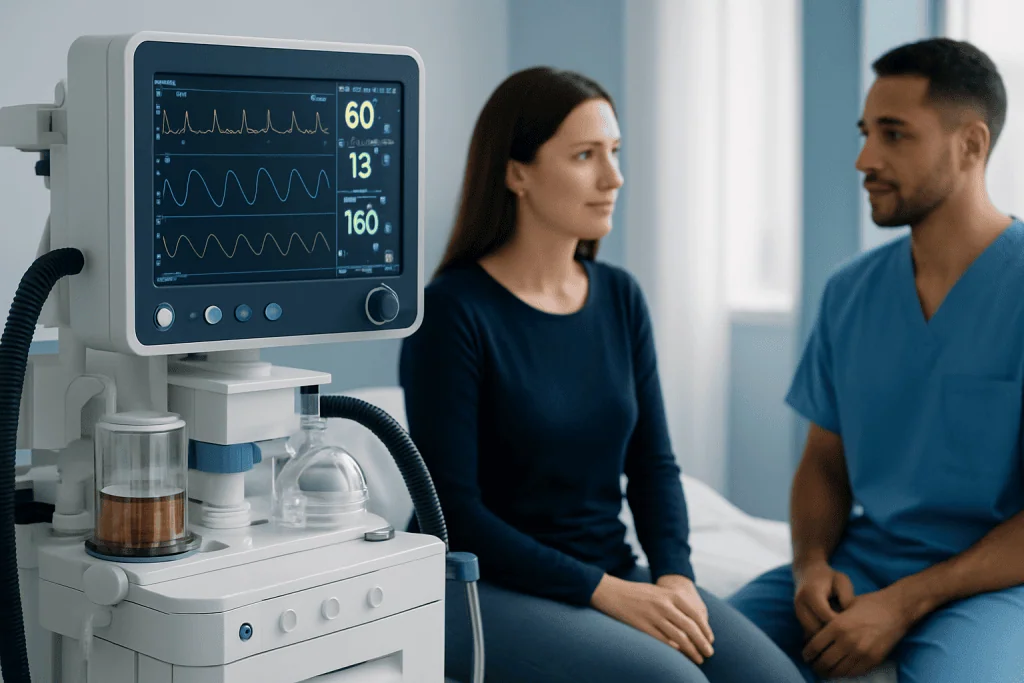
Your morning starts earlier than you think, especially on the first hospital day. Allow time for breakfast if the patient is permitted to eat, for personal care and bathroom needs, for mobility assistance, and for the possibility of traffic. If the patient has been told to fast, confirm the details with the care team the evening before, including whether morning medicines should be taken as usual. That decision belongs to the treating doctor, not to you, the hotel or the internet.
Keep one companion bag packed and by the door. The contents stay consistent so you never rebuild it from memory: identification, appointment details, medical papers, the current medication list, phone chargers, glasses or hearing aids, tissues, hand sanitiser, a light layer of clothing and any comfort item the patient uses. Our full guide on what companions should bring to hospital visits in Turkey goes item by item.
Before you walk out, check three things: the hospital location, the appointment or arrival time, and the name or number of your hospital contact. Hotels in Turkey are used to arranging taxis and transfers, but confirm the destination in writing anyway, hospital names can sound similar, and campuses can have several sites in one city. If your transfer has been organised through the hospital, keep the driver’s or coordinator’s number one tap away on your phone.
A rough morning timeline helps on early days:
| When | What happens |
|---|---|
| 90 minutes before departure | Wake, personal care, breakfast if permitted, dressing with mobility help if needed |
| 30 minutes before departure | Bag check against your list, documents confirmed, transport confirmed with reception or driver |
| Departure | Leave with a 15–30 minute traffic buffer on top of the estimated journey time |
| On arrival | Go directly to the agreed entrance and meeting point; call your contact if unsure |
Getting from hotel to hospital smoothly

Traffic in Istanbul, Ankara, Izmir and other large Turkish cities varies widely with the hour, the weather, public holidays and local events. For morning appointments, plan a buffer rather than aiming to arrive on the dot. A calm arrival is kinder to the patient than a rushed one, particularly before tests, anaesthesia preparation or oncology visits.
If you are using a taxi, a hotel-arranged car or a hospital transfer, show the hospital name and address in writing. Large healthcare campuses often have several entrances, main entrance, outpatient clinics, emergency department, international patient desk, sometimes separate towers. Knowing which one you need is worth more than knowing the address. When in doubt, call your coordinator before the vehicle reaches the gate rather than after you have been dropped at the wrong door.
During the ride, keep the patient comfortable rather than rehearsing medical questions aloud. Ask about the window, offer a quiet ride, help them sit in the position that suits them. If the patient uses a wheelchair or has limited mobility, tell the driver before boarding, ask for a vehicle with easy access, and allow extra minutes at both ends. If nausea, pain, dizziness or breathing difficulty develops on the way, contact the hospital team promptly and follow their guidance.
Arriving, checking in and finding your way
Inside the hospital, your first task is orientation, not paperwork. Find the international patient desk, the registration area or whichever meeting point was agreed with you. Staff can direct you to the correct department and, where needed, arrange interpreter support, ask for this at the start of the day rather than mid-consultation.
Keep documents easy to reach during check-in. You may be asked for the patient’s passport, appointment confirmation, medical reports, insurance or payment-related documents, consent forms or previous test results. Sort papers by date or type in one folder so you are never searching under pressure, and avoid handing over originals unless staff specifically need them.
Your most valuable contribution during check-in and consultations is listening and writing. Note where to go next, whether the patient may eat or drink, when results are expected, and who will call whom. If anything is unclear, ask before you leave the desk or the consultation room. “Could you please repeat the next step?” is always an acceptable sentence, in any language, at any point in the day.
During appointments and waiting periods
Hospital days include waiting. Tests need processing time, doctors coordinate with other specialists, treatment areas prepare between patients. Waiting does not mean you have been forgotten, but it is entirely reasonable to ask politely when and where the next update will come, and whether you can step away briefly.
Use the gaps deliberately rather than letting them drain you:
- Keep your phone on silent but visible, and your coordinator’s number saved under a name you will find instantly.
- Write down questions as they occur to you; they evaporate otherwise.
- Eat something light, drink water and take a short walk if the location allows.
- Update family only with the patient’s permission, and avoid detailed medical updates in group chats.
- Ask staff before taking photos or videos anywhere near clinical areas.
If several specialties are involved, surgery, oncology, cardiology, radiology, rehabilitation, expect some coordination time between them. Multidisciplinary care is a feature, not a fault, but it makes the day feel less linear. Your job is to hold the sequence in your notebook so the patient does not have to hold it in their head.
Meals, comfort and your own stamina
Companions routinely skip food, water and rest because the patient’s needs feel more urgent. Within a day or two this produces headaches, irritability and mistakes, none of which help the patient. A reliable routine budgets for you: breakfast when possible, a bottle of water in the bag, a snack, bathroom breaks and a few minutes away from screens.
For the patient, follow the medical team’s instructions about eating and drinking exactly. Some tests, anaesthesia plans and treatments require fasting; others allow a normal meal. Do not rely on general advice from friends or forums, confirm with the nurse, doctor or coordinator whenever you are unsure. If the family keeps particular dietary or prayer routines, our guide on planning prayer, diet and daily routine during treatment in Turkey shows how to fit these around hospital days.
Bring practical comfort items: a cardigan or scarf, comfortable shoes, reading glasses, a small notebook and any assistive device the patient uses. Hospital air-conditioning can feel cool and corridors are long. If the patient uses a wheelchair, walker, oxygen support or special seating, tell the care team in advance so the visit can be arranged around it rather than improvised on arrival.
Returning to the hotel and preparing for tomorrow
The return journey is part of the day’s care, not just transport. Before leaving the hospital, confirm the instructions for that visit: medication timing, warning signs to watch for, diet guidance, activity limits and the next appointment. If prescriptions or supplies are needed, ask whether to collect them before returning to the hotel. If the schedule includes repeat visits, our guide on hospital-to-hotel transfers for follow-up visits explains how those journeys are usually arranged.
Back at the hotel, settle the patient before you touch messages or paperwork. Place medicines, water, phone, the room phone, glasses and tissues within easy reach of the bed. If the patient needs help washing, walking or eating, go slowly, most companion accidents happen in the evening, when both of you are tired. If the stay includes post-operative recovery days, the hotel room setup checklist for recovery after surgery is worth reading before the first night.
Then spend ten minutes closing the loop for tomorrow: charge phones, repack the companion bag, set alarms, confirm transport, and write down any symptoms or questions that surfaced after leaving the hospital. This small evening ritual is the single habit that most reliably turns a stressful trip into a manageable routine.
Step by step
- Confirm the next hospital plan the evening before. Check the appointment time, the building and entrance, fasting instructions, medication guidance and the expected length of the visit. If anything is unclear, contact your coordinator or hospital contact before the morning rush, not during it.
- Prepare one companion bag and keep it consistent. Passports, appointment details, medical records, chargers, glasses, the medication list, water and snacks for you, a light layer. Same bag, same contents, every day.
- Leave the hotel with a time buffer. Plan for traffic, lifts, mobility needs and registration time. A 15 to 30 minute buffer is usually the difference between a calm arrival and a stressful one.
- Go first to the agreed meeting point. International patient desk, registration counter, clinic reception or a specific department. On a multi-entrance campus, call your contact rather than wandering with a tired patient.
- Write down each next step. During consultations, note instructions about tests, meals, medications, waiting locations and return times. Even with an interpreter present, keep your own simple notes.
- Protect the patient’s energy. Limit unnecessary walking, long conversations and repeated explanations. Ask staff about wheelchairs or assistance early if the patient tires.
- Close the day before leaving the hospital. Confirm prescriptions, warning signs, the next appointment and who to call after hours. Make sure you understand what should happen at the hotel that evening.
- Reset for tomorrow. Charge, repack, set alarms, note symptoms and questions. Ten minutes now buys a calm morning later.
Your checklist
- Patient passport and your own identification
- Appointment confirmation and hospital contact number
- Medical reports, imaging discs or digital access details if requested
- Current medication list, allergy information and dosage schedule
- Phone, charger, power bank and local data or roaming access
- Comfortable shoes, light jacket and any mobility aids
- Water and snacks for the companion, unless restricted in clinical areas
- Notebook or notes app for questions and instructions
- Payment, insurance or guarantee documents if relevant
- Hotel address written in Turkish or saved on your phone
Key takeaways
- A repeatable hotel-to-hospital routine for patient companions in Turkey reduces stress for both of you, same evening check, same bag, same buffer, same meeting point.
- Foreigners can be treated in Turkish hospitals, but tourists pay for care; know what your arrangement covers before day one.
- Confirm timing, fasting, medication questions, transport and documents the evening before, and direct all medication decisions to the treating doctor.
- Use international patient services and interpreters whenever instructions are unclear: that is what they are there for.
- Look after your own food, water, rest and phone battery; a depleted companion helps no one.
- Before leaving the hospital each day, confirm warning signs, prescriptions and the next appointment.
Frequently asked questions
Can foreigners go to hospital in Turkey?
Yes. Foreign nationals can be treated in Turkish hospitals without residency. Most international patients use private hospitals, which typically have international patient departments, interpreter arrangements and staff experienced with foreign documents and cross-border coordination. Bring the patient’s passport to every registration.
Do tourists get free healthcare in Turkey?
No. Visitors are expected to pay for their care or have it covered by insurance or a pre-arranged treatment agreement. Emergency departments will assess anyone with an urgent problem, but the treatment is billed. Companions should carry travel insurance for themselves too, and confirm with the coordinator exactly what the patient’s arrangement covers.
What is the healthcare system like in Turkey?
Turkey has a mixed system: a large public network funded through national social insurance for residents, alongside a substantial private sector. International patients almost always move through private hospitals, where scheduling, interpretation and companion support are organised around treatment travel. Large hospitals are often multi-building campuses, so always confirm the exact entrance and meeting point.
How early should we leave the hotel for the hospital?
It depends on the city, the distance and the patient’s mobility, but build in a 15 to 30 minute buffer on top of the estimated journey, and more for first visits, early morning appointments or large campuses. Registration and orientation take time. Your coordinator or hotel reception can estimate travel time for your specific route and hour.
Can I stay with the patient during appointments?
Often yes, in outpatient consultations, if the patient agrees and hospital policy allows. Some imaging areas, procedure rooms and sterile zones restrict companions for safety and privacy. Ask staff where you should wait and how you will be updated, and keep your phone charged and visible while you do.
What if we do not speak Turkish?
International patient services can usually arrange interpretation, especially for medical discussions, consent forms and discharge instructions. Do not rely on guessing or informal translation for anything that affects treatment decisions. Request interpreter support at the start of the day rather than mid-consultation, and still keep your own written notes of the practical next steps.
Should I bring all medical records every day?
Bring everything requested for first consultations or when meeting a new specialist. After that, ask which records are still needed and whether digital copies are acceptable. Keep documents in one sorted folder and avoid handing over originals unless staff specifically require them.
What if the patient feels worse after returning to the hotel?
Use the warning signs and after-hours contact instructions the hospital team gave you at discharge: this is why you confirm them before leaving each day. For severe or sudden symptoms such as heavy bleeding, chest pain, difficulty breathing or fainting, call your local emergency number or go to the nearest emergency department now. In Turkey, the emergency number is 112. Keep the hospital contact, hotel address and patient documents within easy reach every evening.
Add us as a Preferred Source to see more of our trusted health content across Google Search, AI Overviews and Discover.

Update history
- PublishedJune 8, 2026
- Medical review approvedAugust 30, 2026
- Last content updateAugust 30, 2026
References2
- CDC Travelers' Health: Medical Tourism wwwnc.cdc.gov
- UK Foreign Travel Advice: Turkey: Health gov.uk
More Patient Guides
Medical Travel with a Companion: Who Should Come and Why
Medical travel with a companion can make treatment in Turkey easier by providing practical help, communication support and reassurance before and after…

How Family Members Can Help Without Disrupting Recovery
Family support during recovery helps when you listen, organize practical tasks and follow the care plan without taking over, in Turkey or…
Need a Family Member to Travel With You? A Companion Decision Guide
A companion travel guide for treatment in Turkey: decide who should travel with you, plan practical support, and prepare for Istanbul care.

Unexpected Overnight Stay in Turkey: What Patients and Companions Should Be Ready For
Unexpected overnight stay in Turkey? Here is what patients and companions should prepare for, from essentials and updates to hospital logistics in…