

How to Plan a Buffer Day in Turkey Before Treatment Starts

Arrive at least one full day before your first hospital appointment. Use that day to rest, rehydrate, organise your documents and medicines, confirm your route to the hospital, and settle any small logistics. Consider two buffer days if your flight is long, you cross several time zones, you have mobility needs, or your first hospital day includes tests.
You can fly in the night before your first appointment. Most patients who do wish they had not. This guide shows you how to plan a buffer day in Turkey before treatment starts, one deliberately quiet day between landing and your first hospital appointment, used for rest, paperwork and route-checking rather than sightseeing. It is the single cheapest improvement you can make to a medical trip.
At a glance
- Best timing: Arrive one full day before your first hospital appointment; two days for long-haul journeys or early tests
- Main purpose: Rest, rehydrate, organise paperwork, and remove uncertainty from your first hospital morning
- Absorbs: Flight delays, lost luggage, jet lag, traffic, check-in problems and last-minute errands
- What to prepare: Passport, medical records, medications in original packaging, chargers, local contacts and your hospital schedule
- Arrange early: Airport transfer, hotel check-in, interpreter support and the exact route you will take on day one
Why plan a buffer day in Turkey before treatment starts?
A buffer day is a scheduling decision, not a medical one. You land in Turkey with a full day to spare before anything treatment-related happens. The idea sounds almost too simple to write a guide about, and yet the difference between patients who build one in and patients who do not is visible from the moment they arrive at registration.
Medical travel has more moving parts than a holiday. Flights get delayed. Bags arrive on the next plane. A transfer driver waits at the wrong terminal exit. None of these things is a crisis on an ordinary trip. When your first consultation is nine hours after your scheduled landing, each one becomes a genuine problem. When you plan a buffer day in Turkey before treatment starts, you convert all of these possibilities from problems into inconveniences.
There is also a quieter benefit. Your first hospital appointment usually involves conversations that matter, confirming what was agreed remotely, asking questions, going through consent paperwork. You do these things better rested than exhausted. If you have not yet read it, how a treatment plan is confirmed before you travel to Turkey explains what should already be settled before you board the plane, which in turn tells you what your first appointment will actually cover.
How early should you arrive in Turkey?
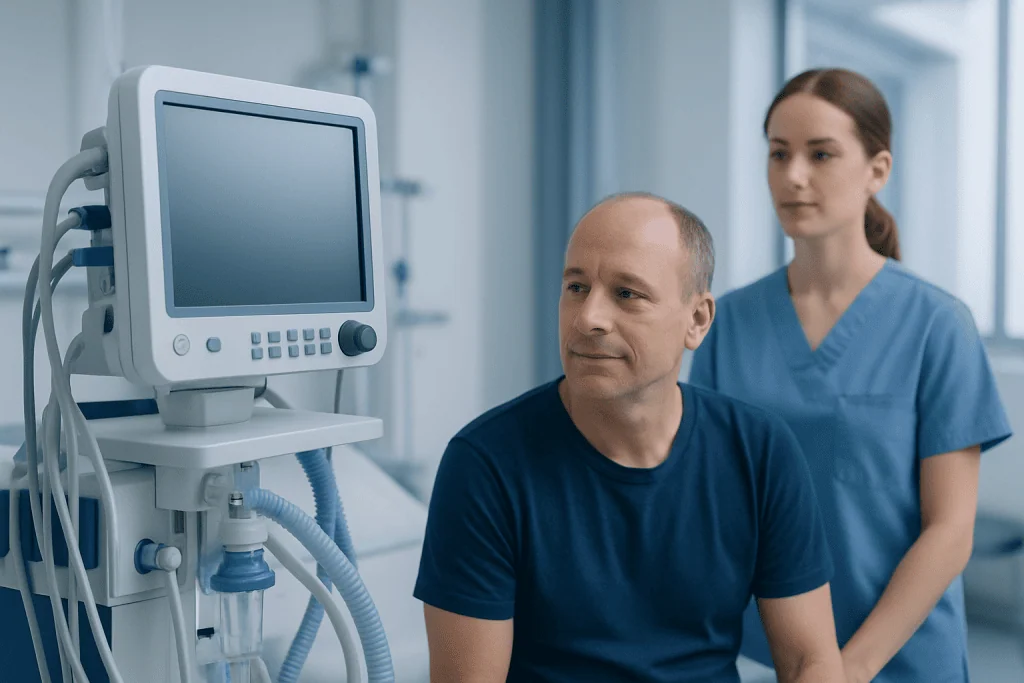
One full day before your first treatment-related appointment is a sensible minimum for most people. Note the wording: one full day. Landing at 23:40 the night before a 09:00 appointment is not a buffer day. It is a late arrival with a hotel in the middle.
Whether one day is enough depends on a few honest questions about yourself and your itinerary:
| Your situation | Reasonable buffer |
|---|---|
| Short direct flight, few time zones, straightforward first appointment | One full day |
| Long-haul flight or one or more connections | Two full days |
| First hospital day includes fasting tests, imaging or admission paperwork | Two full days |
| Reduced mobility, travelling with young children, or significant travel anxiety | Two full days, sometimes more |
| Travel during holiday peaks or winter weather season | Add a day to whatever you chose above |
The useful distinction is between the day you land and the day you can function well. Frequent flyers often overestimate themselves here, because a medical trip is not like a work trip: the schedule is less forgiving, and the conversations on day one deserve your full attention. If your treatment involves surgery, the timing question has extra layers, pre-operative assessments often need to happen on specific days, and when to arrive before surgery in Turkey walks through those in detail.
Istanbul deserves a specific mention. It is a very large city, and journey times between districts vary enormously with traffic. When you plan a buffer day in Turkey before treatment starts in Istanbul specifically, treat the journey from your accommodation to the hospital as something to be tested, not assumed. Ask your hospital coordinator what time you are expected and whether anything about the previous evening, fasting, paperwork, medication timing, needs planning around.
What to do on your buffer day

A good buffer day is boring on purpose. The temptation, especially in a city like Istanbul, is to treat it as a free tourism day. Resist that, or at least keep it small. The day works because it is empty enough to absorb whatever the journey threw at you.
Start with the basics on arrival. Check in, unpack only what tomorrow needs, put your phone on charge, and place your passport, hospital documents and medicines somewhere you can find them half-asleep. Then work through the practical items:
- Lay out clothes and documents for the next morning
- Check your appointment time and the route to the hospital, including how long it takes at that time of day
- Confirm any fasting or preparation instructions you were given, exactly as written
- Save your coordinator’s, hotel’s and driver’s numbers in your phone and on paper
- Buy small essentials, water, snacks, tissues, toiletries, so tomorrow needs no errands
- Eat something simple, drink water regularly, and go to bed early
Some patients like to do a dry run of the hospital journey during the buffer day, at least as far as seeing the building. If you have the energy, it is a genuinely useful use of an hour: you learn which entrance to use, where the taxi stops, and how the traffic behaves. If you do not have the energy, skip it. Rest outranks reconnaissance. A companion can do the dry run for you, which is one of several reasons the buffer day helps them too.
Light activity is fine if it relaxes you: a short walk, a meal out near your hotel. The test is simple: nothing on the buffer day should leave you more tired at 21:00 than you were at 15:00.
Logistics to sort out before treatment starts
Most of the value of a buffer day comes from removing uncertainty, and uncertainty clusters around three things: transport, paperwork and supplies.
Transport. Know how you will get from your accommodation to the hospital, how long it usually takes, and what your backup is if a driver is late or traffic is heavy. If your hospital has arranged a transfer, confirm the pick-up time the evening before rather than the morning of. If you are using taxis or public transport, save the hospital address in Turkish as well as English, and save the route offline in case mobile data misbehaves.
Paperwork. Build one folder, physical, with digital copies backed up, containing your passport, appointment confirmation, medical reports, scan discs or file links, payment or insurance documents if relevant, and a written list of your current medications with doses and allergies. If any records were translated, put the translations on top. Registration goes faster, and you feel in control rather than searched. If you travel with an implanted device, pacemaker card or medical equipment, there is dedicated preparation to do before you even fly; see flying to Turkey with medical devices or implants.
Supplies and surroundings. On the buffer day, find the nearest pharmacy, grocery shop and café. If you are staying more than a few days, check laundry options and whether your room genuinely suits you, steps, lift access, noise. These details are trivial now and tiresome later, once your days are structured around appointments.
Rest, food, hydration and jet lag: the overlooked basics
Travel fatigue is broader than jet lag. Cabin air is dry, airports involve far more walking than people register, meals happen at odd hours, and sleep is fragmented even on smooth flights. You can arrive without crossing a single time zone and still be well below your normal self for a day.
The remedies are unexciting and effective: water at regular intervals, simple familiar food, daylight exposure during local daytime, and an early night. If you have crossed several time zones, the adjustment takes longer than one day and is worth planning for specifically: the guide on jet lag before treatment in Turkey covers how to structure your first days around it.
Two boundaries are worth stating plainly. First, if your hospital gave you written instructions about eating, drinking or preparation before tests or procedures, those instructions win over anything in this guide; use the buffer day to plan around them. Second, keep your regular medicines in your hand luggage, in original packaging, and do not alter anything about them on your own initiative. Any question about medicine timing around travel or treatment belongs to your treating doctor, not to a travel guide.
Companions, children and extra support needs
If someone is travelling with you, the buffer day is theirs as much as yours. A companion who has already learned the hospital route, found food options and understood where they can wait supports you from a calm position instead of improvising under pressure. If you have not yet decided who should come or what their days will look like, bringing a companion to Turkey for treatment is worth reading before you book anything.
Travelling with children, or with accessibility needs, raises the value of the buffer day further. Wheelchair access, lift availability, stroller space, room configuration and step-free routes are all easier to sort when nobody is due at a hospital in two hours. Share special requirements with the hospital before you travel rather than on arrival, international patient teams can usually coordinate interpreters, transfers and general stay logistics, but they can only prepare for what they know about.
One honest note: coordination support does not replace the buffer day. Even with every transfer and interpreter arranged, your body still needs the recovery time, and your companion still needs the orientation time. The support and the spare day work together; neither substitutes for the other.
When one buffer day is not enough, and when it is too many
Take two days or more if any of these apply: a long-haul journey with connections, a complex treatment plan, mobility limitations, a history of heavy fatigue after flying, significant anxiety around the trip, or a first hospital day stacked with assessments. Peak travel seasons and winter weather add their own case for slack: a second buffer day absorbs a cancelled connection without touching your treatment schedule.
There is also such a thing as arriving too early. Many empty days before treatment can amplify anxiety rather than relieve it, cost more in accommodation, and use up leave you may want for recovery. The balancing act, enough slack to be safe, not so much that you are pacing a hotel room for a week, is the subject of arriving too early or too late for treatment in Turkey.
If you are genuinely unsure, ask your treating team what they recommend for your specific schedule; they know what your first days involve. As a rule of thumb, it is far easier to fill a quiet spare day with rest than to recover from a rushed arrival. In medical travel, a little spare time buys a lot of reassurance.
Step by step
- Choose your arrival date first. Before booking anything else, work backward from your first hospital appointment. To plan a buffer day in Turkey before treatment starts, land at least one full day earlier, two if the journey is long or day one includes tests.
- Book flexible travel where possible. If your route has connections or falls in a busy season, flexibility reduces stress. Avoid timings that force a late-night landing before an early hospital morning.
- Arrange first-night logistics before you fly. Confirm the airport transfer, accommodation check-in and the hospital’s exact address. Save your coordinator, hotel and driver contacts in your phone and on paper.
- Build a treatment-day folder. Passport, appointment details, medical records, medication list, and any consent or payment papers, with printed and digital copies in case internet access fails you.
- Keep the buffer day deliberately light. Rest, hydration, short errands, and confirming the next morning’s plan. No packed sightseeing, nothing physically draining.
- Confirm instructions the evening before. Check whether you need to fast, arrive early, or bring imaging discs or reports. Verify rather than assume: the goal is a morning with zero open questions.
- Leave early on the first hospital day. Even with a buffer day behind you, allow extra time for traffic, building navigation and registration, so your attention goes to the care itself rather than the journey.
Your checklist
- Passport and any visa-related documents
- Hospital appointment confirmation and contact numbers
- Printed and digital copies of medical records and scan results
- Current medications in original packaging, in hand luggage
- A written medication list, including doses and allergies
- Phone charger, power adapter and portable battery
- Comfortable clothes and shoes for travel and appointments
- Water, light snacks and basic toiletries for arrival day
- Hotel address and hospital route saved offline, in English and Turkish
Key takeaways
- One full day between landing and your first appointment is the practical minimum, build it into the trip before you book anything else.
- The day exists to absorb delays and remove uncertainty, rest, hydration, paperwork, route planning and small errands, nothing more ambitious.
- Long flights, multiple time zones, accessibility needs, children, or a test-heavy first day are all reasons to take two buffer days.
- Sort transport, documents, medicines and hospital contacts into one clear system before you sleep on night one.
- Hospital coordination support is useful, but it does not replace the recovery time only a spare day can give you.
Frequently asked questions
Is one buffer day enough before treatment in Turkey?
For many patients, yes, one full day is a practical minimum. Take two if you have a long-haul flight, connections, mobility needs, young children with you, or important tests scheduled on your first hospital day. A full day means a genuine day, not a late-evening landing before an early appointment.
Is it safe to go to Turkey for medical procedures?
Turkey has a large, established medical travel sector, and safety comes down to the same factors as anywhere: the specific hospital, the specific clinical team, and how carefully your treatment plan was assessed before you travelled. No destination and no procedure is entirely without risk. Check official travel guidance for Turkey, understand your written treatment plan fully before travelling, and build enough time into the trip, including buffer days, so that nothing clinical happens in a rush.
How much does medical treatment cost in Turkey?
There is no single answer, because cost depends on the procedure, the hospital, the length of stay, what the quote includes (tests, anaesthesia, accommodation, transfers) and what it excludes. The useful approach is structural: get a written, itemised quote based on your actual medical records, and ask what could change it. A clear quote should spell out exactly what is included and what would count as an extra.
Do Brits get free healthcare in Turkey?
No. Turkey is outside the scheme covered by the UK GHIC and EHIC cards, so those cards do not entitle you to state healthcare there, and the NHS does not fund planned treatment in Turkey. UK travellers pay for care themselves or through insurance, and travel insurance policies generally exclude complications of treatment you travelled abroad specifically to have, read your policy’s medical travel terms carefully before booking.
What are the most popular medical procedures in Turkey?
International patients most commonly travel to Turkey for dental treatment, hair transplantation, cosmetic and eye surgery, and increasingly for complex hospital care such as cardiac, orthopaedic and oncology treatment. The buffer-day principle applies across all of them: the more clinically significant the treatment, the more your arrival timing deserves deliberate planning rather than a tight connection.
What if my flight arrives late the night before my appointment?
Prioritise rest, and let the hospital’s coordination team know as early as you can if the timing of your first appointment may be affected. This scenario is exactly why the buffer day exists: with a spare day in the plan, a delayed flight costs you rest time rather than a clinical appointment.
Should I use my buffer day for sightseeing in Istanbul?
Keep it light if at all. A short walk or a relaxed meal near your hotel is fine; a full sightseeing schedule defeats the purpose. Save the tourism for after treatment, if your recovery plan allows it: you will enjoy it more then anyway.
What is the single most important thing to do on the buffer day?
Remove uncertainty from the next morning. Confirm your appointment time, your transport plan, your documents, and any preparation instructions the hospital gave you. If you go to bed with zero open questions, the buffer day has done its job.
Add us as a Preferred Source to see more of our trusted health content across Google Search, AI Overviews and Discover.

Update history
- PublishedJuly 6, 2026
- Medical review approvedSeptember 13, 2026
- Last content updateSeptember 12, 2026
References3
- Foreign travel advice: Turkey: GOV.UK gov.uk
- Medical Tourism: CDC Travelers' Health wwwnc.cdc.gov
- Jet lag: NHS nhs.uk
More Patient Guides

GHIC and EHIC in Turkey: Why They Do Not Cover You
The blue card that quietly covers you across Europe stops working at the Turkish border, and every summer, travelers discover this…

Do You Need Vaccinations for Turkey?
Here is the answer travel clinics give every day: no vaccinations are required to enter Turkey from anywhere in the normal course…

Flying With a Broken Leg or Cast: Airline Rules and Comfort
A broken leg does not cancel a flight, airlines carry passengers in casts every single day. What surprises travelers is that…

Travel Insurance After Cancer: What Patients Should Know
A cancer diagnosis changes how insurers read your name, but it does not end your traveling life. Thousands of people with…