

How to Plan Meals Around Surgery and Recovery During Your Stay in Turkey

Meals around surgery and recovery in Turkey should be simple, safe and timed to your care plan, with help from your hospital team in Istanbul or beyond.
Planning what you eat before and after surgery can make your stay in Turkey feel smoother, more comfortable and less stressful. With a few practical steps and guidance from your care team, you can manage meals safely while supporting recovery.
At a glance
- Best for: International patients planning surgery and recovery meals during a stay in Turkey
- Main goal: Keep eating simple, safe and aligned with your surgeon's instructions
- What matters most: Fasting times, hydration, gentle foods and medication-related meal timing
- Who can help: Your surgeon, anesthesiologist, ward nurses, dietitian and international patient team
- Special note: Diet needs vary by procedure, allergies, diabetes, digestive conditions and recovery speed
Why meal planning matters during a medical trip
When you travel for treatment, food becomes more than a comfort issue. What you eat and drink can affect your energy, digestion, hydration, medication tolerance and how comfortable you feel after surgery. Even small details, such as when you stop eating before anesthesia or whether you can tolerate a light breakfast after discharge, can make a real difference to your day.
Planning ahead helps you avoid last-minute stress in an unfamiliar place. You do not need a perfect diet or a complicated menu. What helps most is having a simple plan for the day before surgery, the fasting period, the first meals after your procedure and the early recovery days in your hotel or apartment.
If you are receiving care through Acibadem International, your care pathway may include support from international patient services, ward staff and, when needed, diet-related guidance from the clinical team. This is especially helpful if you have food allergies, diabetes, gastrointestinal sensitivities, religious dietary preferences or a companion who needs to organize meals while you rest.
Before surgery: keep meals simple and follow fasting instructions exactly

Your surgical team will tell you when to stop eating and drinking before your procedure. These instructions are not optional, and they may differ depending on the type of surgery, anesthesia plan, your age and your medical history. Always follow the fasting timetable given by your surgeon or anesthesiologist rather than general internet advice.
In the day or two before surgery, most patients do best with balanced, familiar foods rather than heavy restaurant meals. Aim for meals that are easy to digest and not overly spicy, greasy or unusually large. If you are prone to constipation, nausea or reflux, this becomes even more important.
It is also wise to limit alcohol and be cautious with supplements unless your doctors have approved them. Some vitamins, herbal products and over-the-counter remedies may need to be stopped before surgery. If you are unsure whether something counts as food, drink or medication during fasting, ask your nurse or patient coordinator directly.
- Choose simple meals you already know agree with you.
- Drink fluids as allowed until your cut-off time.
- Avoid experimental foods, oversized portions and late-night meals.
- Confirm fasting rules again if your procedure time changes.
Right after surgery: start gently and let your body set the pace
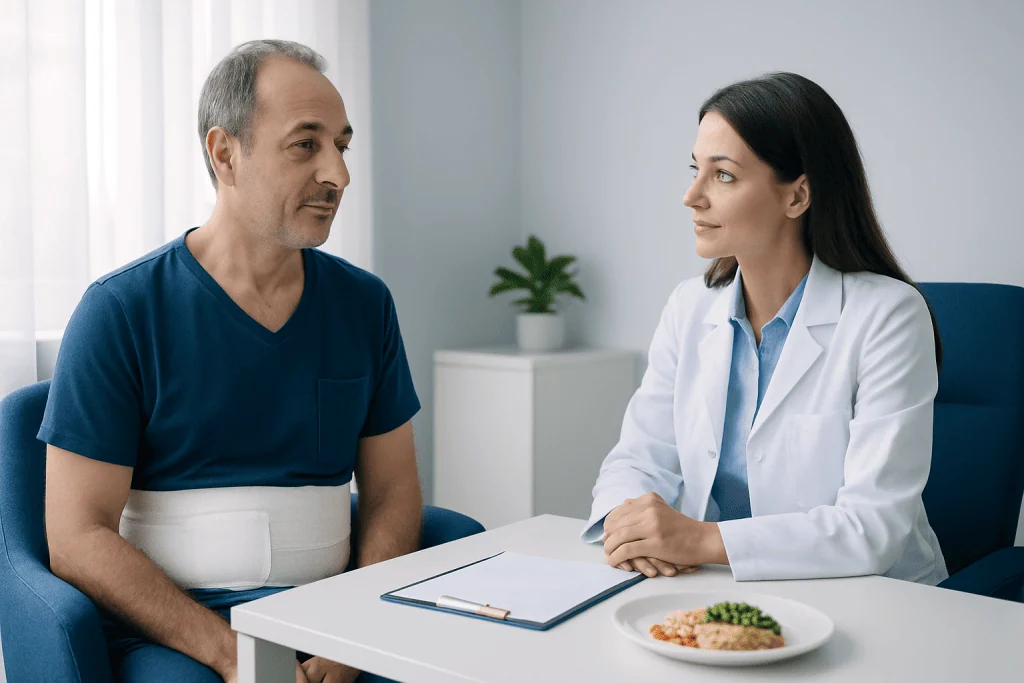
After surgery, your first meals will depend on the procedure you had, whether you received general anesthesia, and how your stomach feels. Some patients are allowed water first, then clear liquids, then soft foods. Others may need a more gradual plan, particularly after abdominal, bariatric, ENT or dental procedures.
Nausea, bloating, dry mouth and low appetite are common in the early hours after anesthesia. This does not necessarily mean something is wrong. It usually means you should begin with small sips and light foods, and only progress when your care team confirms it is safe. Trying to eat a full meal too quickly can make you more uncomfortable.
At Acibadem International hospitals, ward nurses and doctors can guide you on when to restart fluids and food. If you need special meal adjustments, language support or help explaining your restrictions to a companion, the international patient team can help make communication easier during the first recovery stage.
What to eat during early recovery in your hotel or apartment
Once you leave the hospital, your goal is usually comfort, tolerance and consistency rather than variety. Think soft, easy-to-manage foods, regular hydration and small meals spaced through the day. Good options often include soups, yogurt, eggs, oatmeal, mashed vegetables, rice, bananas, toast, grilled chicken or fish, depending on your specific instructions and appetite.
If your surgery affects chewing, swallowing or digestion, you may need softer textures for longer. If you are taking pain relief, antibiotics or iron, your stomach may feel sensitive or your bowels may slow down. In that case, gentle foods, enough water and fiber only as tolerated can help, but your own surgeon’s advice comes first if there are restrictions.
Many international patients find it useful to stock their room with a few practical basics instead of relying on restaurant meals at every sitting. Ask your companion or concierge support about nearby supermarkets, in-room dining, kitchen access or delivery options. If you are staying near an Acibadem facility, your coordinator may also help you think through practical meal logistics around follow-up appointments.
- Keep water and approved drinks nearby.
- Eat small portions every few hours if large meals feel difficult.
- Prioritize foods that are plain, soft and familiar.
- Stop and call your care team if vomiting, severe bloating or inability to drink develops.
Special situations: diabetes, allergies, bowel sensitivity and cultural preferences
If you have diabetes, meal planning around surgery needs extra care. Your fasting instructions, insulin or tablet timing, and the type of foods you restart afterward should be reviewed with your doctors. Do not assume your usual schedule will stay the same on the day of surgery, and do not change medication doses on your own unless you have been instructed to do so.
Food allergies and intolerances should be clearly communicated before admission and repeated on arrival. It helps to keep a written list on your phone in English, including what happens if you are exposed. If you have celiac disease, lactose intolerance, severe reflux, inflammatory bowel disease or a history of postoperative nausea, mention this early so the team can plan more appropriately.
Religious and personal dietary preferences matter too, especially during a longer stay. International hospitals in Turkey are used to caring for patients from many countries, and Acibadem International supports multilingual communication that can make these conversations easier. Still, it is always best to raise dietary needs well before your procedure so there is time to coordinate practical arrangements.
Eating safely in Turkey while you recover
Turkey offers excellent food, but recovery is not the time to be adventurous with your digestion. In the first days after surgery, choose reputable hotel kitchens, hospital-approved options or well-reviewed restaurants with clear food handling standards. Freshly cooked meals are usually safer than food that has been sitting out for long periods.
Be especially careful with raw or undercooked foods if your stomach is sensitive or your team has advised a cautious diet. Cold-chain foods, buffet items left at room temperature, and very rich desserts may not suit early recovery. Bottled water may be the easiest option while traveling between appointments, particularly if you are trying to monitor intake.
You should also think ahead about timing. If you have a morning check-up, dressing change or scan, plan a light meal that fits your instructions and travel time. Recovery days feel much easier when food is arranged around rest, medications and transport rather than left to guesswork when you are tired.
Step by step
- Ask for your procedure-specific food instructions early. As soon as your treatment dates are confirmed, ask what eating and drinking rules apply before and after your procedure. Request them in writing if possible, because fasting times and restart plans can vary significantly by surgery and anesthesia type.
- Build a simple meal plan for the first 3 to 5 days. Before you travel or soon after arrival, outline what you are likely to eat for the first recovery days. Keep it basic: breakfast options, light lunches, soups, snacks, drinks and backup foods in case your appetite is low.
- Shop or arrange delivery before you need it. If you will recover in a hotel or serviced apartment, organize essentials before surgery day if you can. Having water, plain crackers, yogurt, bananas, soup and other approved foods ready means you will not need to make decisions when you are groggy or uncomfortable.
- Match meals to medications and symptoms. Some medicines are easier on your stomach when taken with food, while others may need an empty stomach. Ask your nurse or pharmacist how to time each medication, and adjust meals if you notice nausea, constipation, bloating or reflux.
- Progress your diet slowly, not all at once. If you feel hungry, it can be tempting to return to normal meals quickly, but a gradual approach is usually more comfortable. Start with what your team approves, increase portions slowly and stop if a food clearly makes symptoms worse.
- Use your support team when eating becomes difficult. If language, appetite loss, food restrictions or practical logistics are creating stress, ask for help early. International patient services at Acibadem International can often help with communication, follow-up questions and practical coordination during your stay.
Your checklist
- Your fasting start time is confirmed in writing.
- You have shared allergies, diabetes and dietary restrictions with the hospital.
- You know what you can drink and when you must stop before surgery.
- Your first 3 to 5 recovery meals are planned.
- Water, light snacks and soft foods are arranged for after discharge.
- You know which medications should be taken with food.
- You have a contact number for postoperative questions.
- Your companion knows your meal instructions and warning signs.
Key takeaways
- Follow fasting instructions exactly and recheck them if your procedure time changes.
- After surgery, restart fluids and food gradually according to your team's advice.
- Keep early recovery meals plain, soft, familiar and easy to tolerate.
- Plan food logistics before surgery so you can rest instead of problem-solving later.
- Tell the hospital early about diabetes, allergies, digestive conditions and dietary preferences.
Frequently asked questions
What should you eat the day before surgery in Turkey?
Most patients do best with simple, balanced meals that are familiar and easy to digest. Avoid very heavy, greasy or unusually spicy foods unless your team has said otherwise, and follow any procedure-specific instructions you receive from the hospital.
Can you eat Turkish food while recovering from surgery?
Yes, but choose carefully during the early recovery period. Plain soups, yogurt, rice, soft breads, grilled proteins and cooked vegetables may be easier to tolerate than rich, spicy or fried dishes, depending on your surgery and your doctor's advice.
How soon can you eat after surgery?
This depends on your procedure, the anesthesia used and how you feel afterward. Some patients start with water and clear liquids first, while others move to soft foods more gradually, so always wait for approval from your care team.
What if you have diabetes and need to fast before surgery?
You should not guess how to manage fasting with diabetes medications. Ask your surgeon, anesthesiologist or pre-assessment team for a clear plan covering food, insulin or tablets, glucose monitoring and what to do if your surgery time changes.
Should you bring snacks for recovery in Turkey?
Yes, as long as they fit your medical instructions and are practical for your stay. Plain crackers, approved protein options, oatmeal cups or other gentle foods can be helpful, especially if your appetite is unpredictable or you return to your room at an unusual hour.
Who can help if you have food allergies or special dietary needs?
Tell the hospital before admission and repeat the information when you arrive. At Acibadem International, the clinical team and international patient services can help communicate important dietary restrictions and support practical arrangements during your stay.
Add us as a Preferred Source to see more of our trusted health content across Google Search, AI Overviews and Discover.
More Patient Guides

Managing Prescription Refills During a Treatment Stay in Turkey
Manage prescription refills during treatment in Turkey by bringing medication records, speaking with your care team early and using licensed pharmacies.
8 min read
Unexpected ICU Stay in Turkey: What Patients and Families Should Expect
Unexpected ICU stay in Turkey: learn what patients and families can expect, from communication and visiting to care updates and travel support.
8 min read
Choosing a Hospital Room in Turkey: Private Room, Companion Stay, and Practical Questions
Choosing a hospital room in Turkey is easier when you ask about privacy, companion stays, amenities, visiting rules and discharge planning early.
8 min read