

How to Plan Meals Around Treatment Appointments in Turkey
Start with your hospital timetable, not the menu. Note every appointment, confirm in advance which visits require fasting and which allow normal eating, then fit light, familiar meals into the gaps. Keep water and a simple snack with you for delays, plan your first meal after each appointment before you leave your hotel, and follow your care team's instructions whenever they conflict with your routine.
You have a scan at 9am, a consultation later the same day, and no idea whether breakfast is allowed. It is one of the most common worries international patients raise, and it is easier to sort out than it feels, once you plan around the schedule rather than the menu.
When you are balancing hospital visits, Istanbul traffic, and the ordinary tiredness of travel, food is easy to get wrong. You skip breakfast because you are not sure it is permitted, then sit through a long afternoon on an empty stomach. Or you eat a large hotel buffet and regret it in a waiting room. A simple routine, confirm the rules, keep meals light, carry a snack, removes most of that friction. This guide shows you how to plan meals around treatment appointments in Turkey, one day at a time.
At a glance
- Best for: Patients coordinating meals, hydration, and hospital schedules during a treatment trip to Turkey
- Main goal: Eat comfortably and safely around consultations, tests, and procedures without guessing about fasting
- Most important tip: Always confirm fasting and medication instructions with your care team before eating or drinking on appointment days
- Useful to prepare: A written daily timetable, a water bottle, two simple snacks, and a list of your usual medicines
- Good meal style: Light, familiar, easy-to-digest food rather than heavy, rich, or unfamiliar meals
- Support available: International patient teams can help clarify schedules, interpreters, and practical logistics
Start with your appointment schedule, not the menu
The simplest way to plan meals around treatment appointments in Turkey is to begin with your hospital timetable. Before you think about breakfast, lunch, or snacks, write down the exact time of each consultation, scan, blood test, and procedure, and the travel time between your hotel and the hospital on either side. Meal planning becomes straightforward once you can see where the long gaps sit and where fasting may apply.
Not every appointment affects eating. A routine consultation usually allows a normal day of meals. But blood tests, certain types of imaging, endoscopy, sedation, and anaesthesia often come with specific instructions about food, water, and sometimes medication in the hours beforehand. These instructions vary by test, by department, and by patient, so the only reliable rule is to follow what your treating team tells you rather than relying on what applied at home or on a previous trip. If you want more detail on how fasting works before specific investigations, the guide to planning meals around tests and procedures in Turkey covers that day type in depth.
If several appointments fall across one or two days, ask for the plan in writing. A written schedule matters more than it sounds: it lets you and your companion decide the night before when you can eat normally, when to keep a meal light, and when to stop eating altogether. It also prevents the common trap of fasting longer than necessary because you were not sure which appointment the instruction applied to. International patient teams can usually help confirm timings, and an interpreter can make sure nothing is lost between the clinical instruction and your understanding of it.
One honest caveat: schedules on a treatment trip are less fixed than schedules at home. A test can be added, a consultation can run long, a slot can move. Plan meals around treatment appointments in Turkey the way you would plan around a flight with a possible delay, with a main plan, a light backup, and no assumption that the day will run to the minute.
Know when to eat, when to keep it light, and when to fast
Most treatment-trip days fall into one of four patterns, and each has a sensible meal approach.
| Type of day | Sensible meal approach |
|---|---|
| Routine consultation | Eat normally, but keep the meal before the visit light rather than heavy |
| Blood tests or imaging | Confirm in advance whether fasting applies; some tests allow water, others restrict everything |
| Sedation or anaesthesia | Follow the fasting instructions exactly, including rules on water, chewing gum, and sweets |
| Long travel or transfer day | Prioritise hydration and small, simple snacks over large restaurant meals |
Consultation days
On days with routine consultations, a normal but measured meal pattern works well: a light breakfast, a manageable lunch, and a simple dinner. If your appointment is early, eating heavily beforehand can leave you uncomfortable during the transfer, the waiting time, and the examination itself. Toast, yoghurt, eggs, soup, or fruit are usually easier to sit with than a full hotel buffet. Turkish breakfasts are generous, cheeses, olives, breads, pastries, honey, and enjoyable, but a full spread is better saved for a day without an early appointment.
Test and procedure days
On days with tests or procedures, your instructions matter more than your appetite. If your care team tells you not to eat or drink after a certain time, follow that exactly, even if your appointment is scheduled for later in the day and even if the waiting room runs behind. Fasting instructions exist for clinical reasons, with sedation and anaesthesia, an empty stomach is part of keeping the procedure safe, and staff may need to postpone a procedure if the instructions were not followed. If you are unsure whether black coffee, tea, chewing gum, plain water, or your usual medicines are allowed, ask before the day of the appointment rather than assuming. “Fasting” does not mean the same thing for every test, which is exactly why guessing is unhelpful.
When eating is allowed
When you are permitted to eat before attending, choose food that is gentle and familiar. Rich pastries, very spicy dishes, large portions, and greasy fast food sit badly if you are anxious, travelling by car, or facing a long wait. A practical rule: if a meal usually feels heavy at home, it will feel heavier on a medical travel day.
Choose foods that travel well and are easy on your stomach
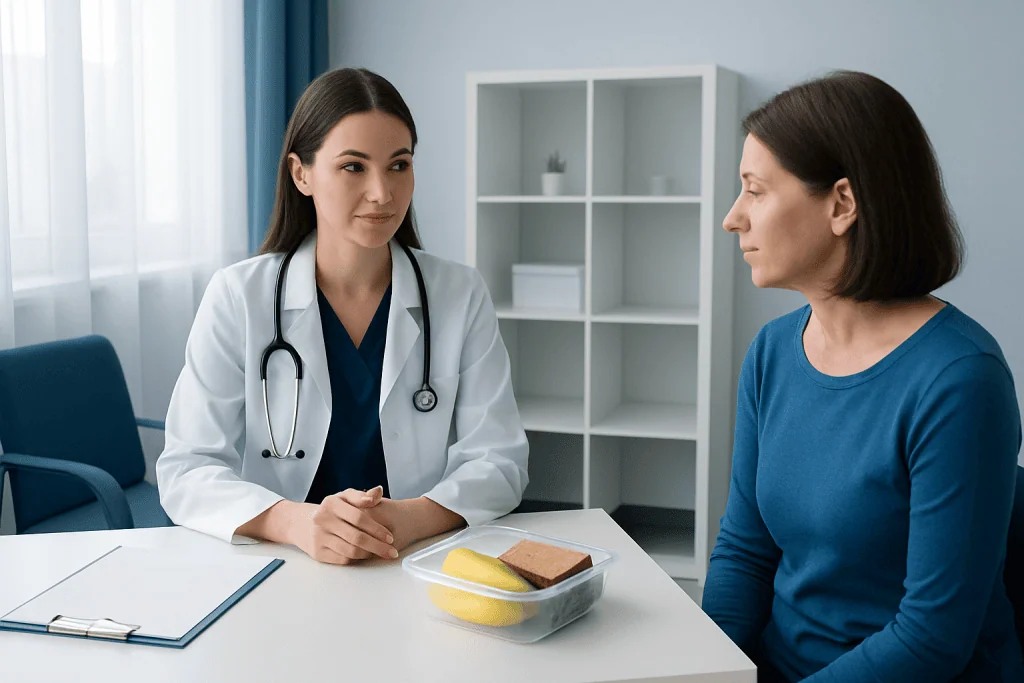
Treatment days involve waiting rooms, transfers, paperwork, and timing you do not control, so practical food beats ambitious food. Pack or buy items that carry well, keep at room temperature for a few hours, and are unlikely to upset your stomach: crackers, bananas, plain sandwiches, yoghurt, oat-based snacks, rice dishes, soup, and simple protein options. In Turkey, plain simit, ayran, packaged crackers, and fruit are easy to find near most hospitals and hotels, and they work well as bridge food between appointments.
If treatment or stress dulls your appetite, smaller and more frequent eating often feels better than three full meals. Even a few bites at the right moment can help you avoid the dizziness, headache, or flat energy that long empty stretches tend to produce, particularly if you take regular medicines that sit better with food.
If you live with allergies, diabetes, coeliac disease, kidney disease, or any other condition that shapes what you can safely eat, build the day around that first and fit everything else in afterwards. Carry a short translated note listing your dietary restrictions, in English and, if possible, Turkish, so you can show it at hotels, cafés, and the hospital. Interpreters and international patient staff can help you communicate dietary needs precisely when a menu or a label is unclear. As with anywhere you travel, apply ordinary food-sense: freshly cooked food served hot, washed or peeled fruit, and sealed bottled drinks are the low-risk defaults, and this matters more when you are already dealing with treatment.
Plan hydration and medication timing alongside meals
Hydration is the piece most people overlook when they focus on appointments, and it has an outsized effect on how the day feels. Flights, warm weather, air-conditioned buildings, stress, and long waits all quietly dehydrate you. Unless your doctor has told you to restrict fluids, some tests and conditions do require it, keeping a water bottle with you through the day is one of the simplest comfort measures available. Many visitors to Turkey prefer bottled water, which is inexpensive and sold everywhere.
Medication timing belongs in the same plan as meals, not in a separate one. Some medicines are taken with food, some on an empty stomach, and some may need adjusting around a test or procedure: a decision that belongs entirely to your treating doctor, never to a guide like this one. What you can do is keep a written list of everything you take, the usual times, and whether each item normally goes with food or water. That list lets you ask precise questions, “I take this at 8am with breakfast; what should I do if I am fasting until 11?”, and get precise answers before the day arrives.
After a procedure or a treatment session, you may not want a full meal straight away, and that is normal. Many patients do better starting with something light and returning to regular meals later, if the team agrees. Depending on what was done, your doctor may suggest soft foods, extra fluids, or avoiding alcohol and heavy meals for the rest of the day. If your trip includes an operation, the separate guide on planning meals around surgery and recovery in Turkey covers those days in more detail, because eating after surgery follows different rules from eating around outpatient appointments.
Make your hotel, transport, and local dining work for you
Your food plan should fit your route, not just your appetite. Hospital journeys in Istanbul can take longer than the map suggests, so do not rely on finding exactly the right meal at the last minute. Decide the night before whether you will eat in the hotel, order room service, stop at a café, or carry food with you, especially for early starts and back-to-back appointments. The guide to getting around Istanbul for hospital appointments helps you estimate those journey times realistically, which in turn tells you when your true meal windows are.
If your schedule is busy, accommodation with a kettle, minibar, or small fridge earns its keep. Being able to store yoghurt, fruit, bottled water, or leftovers makes a real difference on evenings when you return tired and past normal dinner hours. For stays of several days, identify one or two reliable food options near your hotel and one near the hospital, rather than researching from scratch each day. Most large hospitals in Turkey have on-site cafés or food options close by, worth confirming on your first visit.
Free days between appointments deserve a plan too. If you intend to explore the city, the guide on planning safe sightseeing around medical treatment in Turkey explains how to pace those days, and the same logic applies to food: eat before you set out, carry water, and do not schedule an adventurous dinner the night before a fasting morning. A companion helps enormously here, carrying snacks, checking labels, or ordering food while you concentrate on the appointment itself.
What to do if your day changes unexpectedly
Medical schedules shift. A consultation runs late, a scan is moved, or your team asks for an additional test the same day. So think in layers: the planned meal, the backup snack, and the fallback if you are delayed longer than expected.
If fasting is not required, keep one or two small snacks with you at all times. This is especially worthwhile if you are prone to low blood sugar or nausea, or you are accompanying an older adult. If fasting is required, keep the snacks in your bag for afterwards and ask staff when you will be able to eat again, so you can plan the recovery meal instead of guessing at it. If a delay stretches on, ask whether it changes the fasting instruction, sometimes it does, sometimes it does not, and only the team can say which.
Practical questions are always fair to ask: whether there is a café in the building, whether water is allowed after a test, when it will be safe to eat after a procedure, whether a rescheduled slot changes tomorrow’s plan. These are ordinary concerns, and clear answers prevent avoidable discomfort. The same layered thinking applies at the end of the trip too: the guide on planning return travel around medical clearance explains why the final days of a treatment stay benefit from the same flexibility you build into meal planning.
Step by step
- Map out the next 24 to 48 hours. Write down all appointment times, travel times, and expected return times to your hotel. Once you can see the full day, mark the realistic meal windows and any periods when food or drink may not be allowed.
- Confirm fasting and medication instructions early. Do not wait until the evening before to ask whether you can eat, drink water, or take your usual medicines. Raise it with your care coordinator or hospital team as soon as the schedule is set, and ask for the answer in writing if the days are complicated.
- Choose simple meals for appointment days. Favour familiar, easy-to-digest food over large or rich meals. Light meals sit better through transfers, waiting rooms, and examinations, especially if you are anxious or prone to nausea.
- Pack a small food and hydration kit. Bring water if permitted, plus two simple snacks for after appointments or long gaps. Include anything that is hard to find locally or that suits a specific dietary restriction.
- Coordinate food with your medicines. Keep a written list of what you take, when, and whether it goes with food, and check with your treating team how the schedule affects it. If the schedule changes, ask whether the medication plan changes with it.
- Plan your first meal after the appointment. Before you leave the hotel, know what and where your next proper meal will be. Deciding in advance spares you decisions at the moment you are most tired.
- Keep a backup for delays. Carry a snack if eating is allowed, and know the nearest suitable food option if the day overruns. If you must keep fasting, ask staff when you can eat again rather than assuming.
Your checklist
- Written appointment schedule with travel times either side
- Confirmed fasting instructions for each test or procedure
- List of medications, usual times, and whether each needs food
- Reusable or bottled water if fluids are allowed
- Two simple snacks for after appointments or delays
- Translated note for allergies or dietary restrictions
- Hotel plan for early breakfasts and late-return meals
- Companion briefed on your eating and medication plan
Key takeaways
- Build the meal plan around appointment times, travel times, and fasting requirements, in that order.
- Choose light, familiar food on treatment days; save heavy or adventurous meals for free days.
- Hydration and medication timing matter as much as the meals themselves, and both belong in the same daily plan.
- Carry simple backup snacks for delays whenever eating is allowed, and ask when you can eat again whenever it is not.
- Use international patient support and interpreters to pin down schedules and communicate dietary needs clearly.
Frequently asked questions
Can I eat before a hospital appointment in Turkey?
It depends on the appointment. Routine consultations usually allow normal eating, but blood tests, certain scans, endoscopy, sedation, and anaesthesia may require fasting for a set number of hours. The rules differ between tests, so follow the exact instructions your hospital team gives you for each appointment rather than a general rule.
What are the best foods to eat before a routine consultation?
A light, familiar meal works best: eggs, toast, yoghurt, fruit, soup, or a simple sandwich. Avoid very heavy, greasy, or spicy food if you have a long transfer, feel anxious, or expect a wait. Save the full Turkish breakfast spread for a day without an early appointment.
Does fasting before a test include water, coffee, and chewing gum?
Not always, and this is exactly where guessing goes wrong. Some tests allow plain water up to a certain time; others restrict everything, including gum and sweets. Ask your care team what your specific instruction covers before the day of the appointment.
What should I do if my appointment is delayed and I am hungry?
If you are not fasting, have a small snack and water if allowed. If you are fasting, do not eat without checking first, ask staff whether the delay changes the instruction and when you will be able to eat afterwards. Carrying a snack for later means the answer never leaves you stranded.
Should I bring my own snacks to the hospital?
Yes, when your appointment allows eating and drinking. Simple items such as crackers, bananas, plain biscuits, or a sandwich are useful after tests, during long waits, and on the journey back to your hotel. If fasting applies, keep them packed for afterwards.
How can I manage meals if I have diabetes or food allergies?
Tell your care team about diabetes, allergies, or any medically necessary diet as early as possible, because these affect fasting instructions, medication timing, and meal planning. Carry a written, ideally translated, list of your needs, and use an interpreter or the international patient team to communicate them precisely.
Is it easy to find suitable food near hospitals in Istanbul?
Usually yes, large hospitals tend to have on-site cafés and nearby shops, and simple options such as simit, ayran, fruit, and packaged snacks are widely available. Even so, do not rely on last-minute finds on a busy treatment day; identify one reliable option near the hospital and one near your hotel early in your stay.
Add us as a Preferred Source to see more of our trusted health content across Google Search, AI Overviews and Discover.

Update history
- PublishedJuly 6, 2026
- Medical review approvedSeptember 13, 2026
- Last content updateSeptember 12, 2026
References1
- CDC Travelers' Health: Food and Water Safety wwwnc.cdc.gov
More Patient Guides

When a Hospital Stay in Turkey Becomes Longer Than Planned: What to Arrange
If your hospital stay in Turkey is longer than planned, arrange medical updates, accommodation, travel changes, insurance and support for your companion.
Waiting for Test Results in Turkey: How to Use Time Between Appointments
Waiting for test results in Turkey is easier with a clear plan for appointments, rest, records, questions and support in Istanbul.

Unexpected ICU Stay in Turkey: What Patients and Families Should Expect
Unexpected ICU stay in Turkey: learn what patients and families can expect, from communication and visiting to care updates and travel support.

How to Manage Special Diets During Medical Travel in Turkey
Special diets during medical travel in Turkey are easier to manage when you share your needs early, confirm meals and carry safe…