

Laundry and Clothing Care During a Longer Treatment Stay in Turkey

Pack roughly a week of soft, washable, quick-drying clothing and plan to wash every few days rather than bringing a large suitcase. Hotels usually offer per-item laundry, many apartments have washing machines (dryers are less common), and neighbourhood wash-and-fold services exist in most Turkish cities. Keep one easy hospital-day outfit packed separately, and ask your international patient contact if logistics feel difficult.
How will you keep clothes clean when you are away for several weeks, moving between hospital, hotel and follow-up appointments? It is a small question that turns into a daily one. Laundry and clothing care during a longer treatment stay in Turkey is easier to manage than most patients expect, but only if you plan it before you pack.
This guide covers what to bring, where and how to wash clothes in Turkey, what to wear for hospital days, and how to keep everything organised when your energy is limited. It also answers the practical dress questions international patients ask most often, including what is appropriate to wear in public.
At a glance
- Best approach: Pack light, washable layers for about a week and wash every few days
- Laundry options: Hotel per-item laundry, neighbourhood wash-and-fold services, apartment washing machines, or a companion handling a load
- Drying reality: Tumble dryers are less common in Turkish apartments than in some countries; quick-drying fabrics matter
- Hospital days: Choose easy-change clothing — button fronts, elastic waists, slip-on shoes — kept in a separate pouch
- Dress code: Everyday Western clothing is normal in Turkish cities; head covering is only expected inside mosques
- Support: Acibadem International patient services can help you ask the right local questions, though laundry itself is provided by your accommodation or local services
Why laundry planning matters during a longer treatment stay in Turkey
When you travel for treatment, clothing stops being a packing detail and becomes part of your daily comfort. Over several weeks you may move between a hospital ward, a hotel room, a short-term apartment and outpatient appointments. Your energy will vary. Some days you will happily walk to a local laundry; other days carrying a bag of washing will feel like too much.
Planning laundry and clothing care during a longer treatment stay in Turkey means answering three questions before you fly: what will I wear on treatment days, where will my clothes be washed, and who will handle it on the days I cannot. Patients who answer these early tend to pack lighter, spend less time managing luggage, and have one less thing to think about during recovery.
There is also a practical medical angle. If you have dressings, drains, swelling, limited arm movement or sensitive skin after a procedure, some clothes become genuinely difficult to wear, and some washing products become irritating. A wardrobe of soft, loose, easy-wash items works with your treatment rather than against it. If your care team gives you specific instructions about clothing near a wound site, those instructions take priority over anything in this guide.
Acibadem’s international patient services team supports patients from many countries and is used to these everyday questions. They will not run your laundry for you, but they can help you communicate with your hotel, understand what is available near your accommodation, and time errands around your appointments.
What to pack: clothing that works hard for you
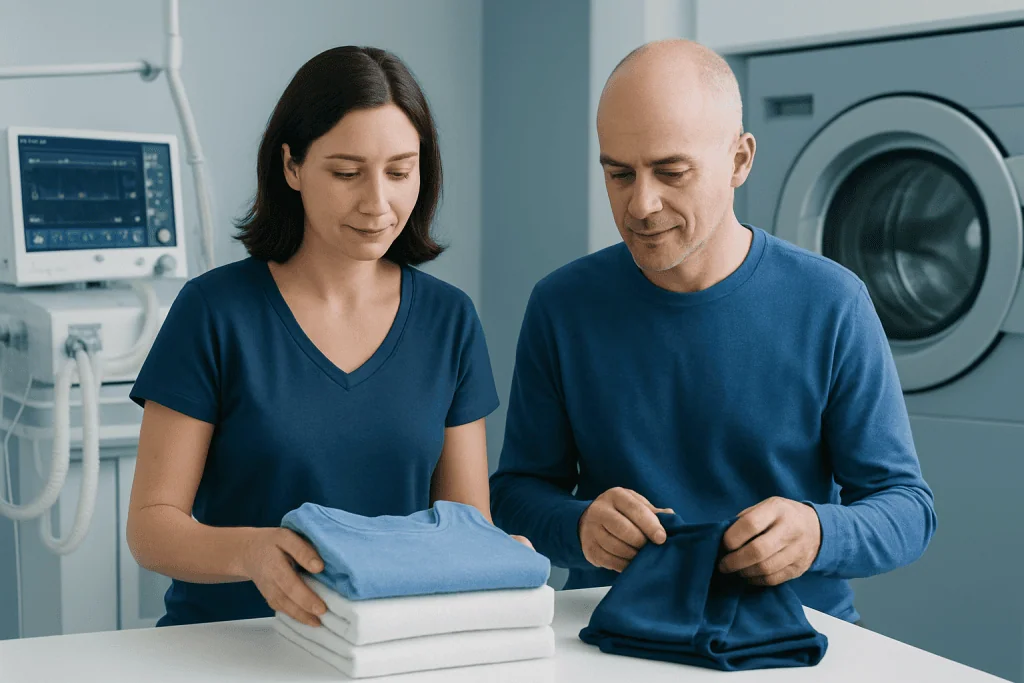
The single most useful packing rule for a treatment stay: pack for repetition, not variety. You will wear the same comfortable items again and again, and that is fine. Aim for about a week of clothing and plan to wash regularly rather than bringing a large case you have to drag through airports, hotel lobbies and hospital corridors.
Turkey has real seasons. Istanbul winters are cold and wet; summers in Istanbul, Ankara and coastal cities are hot. Hospitals, hotels and transfer vehicles are air-conditioned and can feel cooler than outdoors in summer and warmer in winter. Layers solve this without extra luggage: a T-shirt plus a cardigan or zip hoodie adapts to almost any indoor temperature.
Choose items that are simple to put on and take off. During a treatment stay you may face imaging, blood tests, dressing changes, physiotherapy or simply days when raising your arms feels tiring. Practical choices include:
- Button-front or zip-front tops rather than tight pullovers
- Elastic-waist trousers, leggings, loose dresses or skirts
- Slip-on shoes with stable soles, plus non-slip socks or slippers for indoors
- Underwear and socks for five to seven days
- Comfortable sleepwear and a lightweight robe for shared or clinical spaces
- One warm layer, even in summer, for air-conditioned rooms
Avoid heavy denim, scratchy fabrics, tight waistbands, complicated fastenings and anything labelled dry-clean only. Quick-drying synthetics and merino blends earn their place because — as explained below — you may be air-drying clothes on a rack rather than using a tumble dryer.
Add a small laundry kit: a breathable laundry bag, a few resealable bags for damp or stained items, a stain remover pen, and a travel supply of detergent sheets or capsules you already know your skin tolerates. Pack these away from your medicines and in line with airline rules. If you take regular medication, sorting that supply matters more than any clothing decision — see managing prescription refills during a longer stay in Turkey.
Laundry options in Turkey: what to expect

Your options depend on where you sleep. Here is what each accommodation type realistically offers.
Hotels
Most mid-range and upper-range hotels in Turkish cities offer laundry and pressing, usually charged per item and collected via a laundry bag and price list in your room. It is convenient and reliable, but per-item charging means it suits occasional pieces better than a weekly wash of underwear, socks and T-shirts. Ask reception three questions on arrival: how items are charged, the turnaround time, and whether an express or same-day option exists. Confirm whether laundry runs at weekends — some services pause or slow down.
Serviced apartments and rental flats
Many short-term apartments in Turkey include a washing machine. Tumble dryers are noticeably less common than in North America or northern Europe; clothes usually dry on a folding rack or balcony line. This is why quick-drying fabrics matter: a cotton hoodie can take a day or more to dry indoors in winter, while a synthetic top dries overnight. If a machine matters to you, filter for it when booking and ask the host whether detergent is provided and how the machine’s Turkish-language settings work. A photo of the control panel sent to the host usually gets you a quick explanation.
Neighbourhood laundries
Turkish cities have local laundry shops — look for the words çamaşırhane (laundry) or kuru temizleme (dry cleaning). Many offer wash, dry, fold and ironing by weight or by load, and some tourist-area laundries offer same-day service. Self-service launderettes exist in larger cities but are less widespread than staffed drop-off services. Handing over a bag in the morning and collecting folded clothes in the evening is often the least tiring option during recovery. Your hotel reception, apartment host or patient coordinator can point you to a reputable one nearby.
Hospital and inpatient periods
During an inpatient stay, the hospital manages gowns and linen as part of care. Your personal clothing remains your responsibility, which is where a companion helps: they can take a small bag to the hotel or a local laundry while you are on the ward. If your admission runs longer than expected, laundry becomes one of several practical arrangements to sort — the guide on what to arrange when a hospital stay in Turkey becomes longer than planned walks through the rest.
If you are wondering how travellers generally handle washing on long trips in Europe and nearby countries, the honest answer is the same everywhere: a small rotation of quick-drying clothes, sink-washing for emergencies, and a drop-off laundry every few days. Turkey follows that pattern, with the advantage that staffed wash-and-fold services are common and inexpensive relative to hotel per-item laundry.
Clothing for hospital visits and inpatient days
For outpatient appointments, dress for waiting, walking and quick changes. You may move between consultation rooms, imaging, blood-draw stations and administrative desks in one visit. Stable, easy-to-remove shoes help; so do tops with sleeves that roll up easily for blood pressure cuffs and blood tests. Leave valuable jewellery and complicated belts at your accommodation — anything you would have to remove repeatedly is a burden.
For inpatient periods, the hospital provides gowns where the care plan requires them, but your own robe, slippers, underwear and socks make the ward feel less clinical. Ask your care team what is appropriate for your specific situation, especially if you will have dressings, drains, casts, swelling or restricted movement — they can tell you, for example, whether a front-opening top will be needed after your procedure. For the broader picture of ward life, see how to stay comfortable during a multi-day hospital stay in Turkey.
Prepare a dedicated hospital clothing pouch, separate from your main luggage: one clean, loose outfit for discharge, spare underwear and socks, and an empty bag for used items. On a busy discharge day, your companion can grab one pouch instead of unpacking a suitcase. If you are travelling home soon after a procedure, choose that discharge outfit with your dressing in mind — the guide on wound care during the journey home explains why loose, non-rubbing clothing over a wound site matters in transit.
Keeping clothes clean, safe and organised
Over a multi-week stay, the real enemy is muddle: clean and worn items mixing in one bag, a damp towel sealed against tomorrow’s shirt, the discharge outfit buried at the bottom of a case. A simple system prevents all of it.
- Separate by pouch, not by memory. One pouch for clean underwear and sleepwear, one breathable bag for used laundry, one for the hospital-day outfit. Labelled packing cubes help if a companion is handling your washing.
- Never seal damp clothes in plastic for long. Use resealable bags only for transport, then air or wash items the same day. Mildew develops fast in a closed bag.
- Wash sweaty, wet or stained garments promptly. During recovery you may perspire more than usual; frequent small washes beat one overwhelming pile.
- Go mild on products. If your skin is sensitive or your medical team has advised caution, choose a mild, low-fragrance detergent and skip fabric softener. Bringing a small supply of a detergent you already tolerate is simpler than testing local brands during recovery.
- Ask, do not guess, about contaminated items. If clothing has contacted wound fluid, other body fluids or spilled medication, ask your care team how to handle it safely before washing it with everything else.
If a companion is doing most of this, remember that they are working too. Laundry runs, pharmacy trips and hospital visits add up — caregiver self-care during medical travel to Turkey is worth their ten minutes.
Dressing for comfort, modesty and local life in Turkey
International patients often ask what is acceptable to wear in Turkey, so here are plain answers.
Can women wear shorts in Turkey? Yes. In Istanbul, Ankara, Izmir, coastal resorts and around hospital districts, everyday Western clothing — shorts, T-shirts, dresses, jeans — is completely normal and worn by local women too. In conservative neighbourhoods and smaller inland towns you will see more covered dress, and many visitors simply choose knee-length options there out of courtesy, not obligation. No law restricts what visitors wear in public.
Do you have to cover your hair in Turkey? No — not on the street, in hospitals, hotels, restaurants or shops. Head covering is expected only when women enter a mosque, where shoulders and knees should also be covered for all visitors; major mosques usually lend scarves and wraps at the entrance. A light scarf in your bag covers this, and doubles as a layer in air-conditioned waiting rooms.
Inside Acibadem hospitals, practical comfort is the dress code. You will see patients and visitors in everything from tracksuits to traditional dress. If faith-based clothing, gender-sensitive care or prayer facilities matter to you, raise them with your coordinator before arrival — the guide on planning for prayer, modesty and cultural needs during care in Turkey covers what you can request.
One last point on dressing well during treatment: it is not vanity. A clean top for an appointment, fresh sleepwear after a shower, a soft cardigan in a waiting room — these small routines protect dignity and a sense of normal life while everything else revolves around treatment.
Step by step
- Build a small rotation wardrobe. Pack for about five to seven days in soft, quick-drying, mix-and-match pieces that never need ironing. Everything should survive a machine wash and an overnight air-dry.
- Confirm laundry access before you travel. Ask your hotel or apartment host what exists: in-room laundry bag, in-flat machine, or a wash-and-fold shop nearby. Check how charging works (per item versus per load), the turnaround time, and whether weekends are covered.
- Prepare a hospital-day clothing pouch. One easy outfit, spare underwear and socks, and an empty bag for used clothes, kept separate from your main luggage so a companion can find it in seconds.
- Separate clean, used and delicate items from day one. Packing cubes or labelled pouches stop the mid-stay muddle, especially if you change accommodation or someone else does your washing.
- Choose mild washing products. Bring a small supply of a detergent your skin already tolerates, or buy a mild, low-fragrance local option. Skip fabric softener if your skin is sensitive or you are recovering.
- Time laundry around treatment. Send hotel laundry or drop a bag at a local service the day before quiet days, so clothes are back before your next appointment. Let your companion handle it on days you need to rest.
- Ask for help when logistics feel heavy. If language, mobility or scheduling makes laundry difficult, tell your Acibadem International contact. They can help you communicate with your accommodation and understand nearby options — quietly removing one daily stress.
Your checklist
- Loose, washable, quick-drying tops and bottoms for five to seven days
- Underwear, socks and comfortable sleepwear, plus a lightweight robe
- Slip-on shoes with stable soles, non-slip slippers or socks
- One warm layer (cardigan or zip hoodie) and a light scarf or wrap
- Breathable laundry bag plus a few resealable bags for damp items
- Detergent sheets or a small supply of a skin-friendly detergent you know
- Stain remover pen
- Hospital-day pouch: one discharge outfit, spare underwear, empty bag for used clothes
- Labelled packing cubes if a companion will help with washing
- Host or hotel confirmation of laundry access, turnaround and weekend cover
Key takeaways
- Plan laundry and clothing care during a longer treatment stay in Turkey before you travel: a week of clothing plus regular washing beats a heavy suitcase every time.
- Hotels wash per item, apartments often have machines but rarely dryers, and neighbourhood wash-and-fold shops are common in Turkish cities.
- Keep a separate hospital-day pouch with one easy outfit, spare underwear and a bag for used clothes.
- Everyday Western clothing is normal in Turkey; head covering applies only inside mosques.
- Use mild detergents if your skin is sensitive, keep damp clothes out of sealed bags, and ask your care team about anything that has touched a wound.
- Your Acibadem International contact can help you navigate local laundry questions when language or energy runs short.
Frequently asked questions
Do hotels in Turkey have laundry?
Most mid-range and upper-range hotels offer laundry and pressing, usually charged per item with a laundry bag and list in your room. Ask reception about turnaround time, express options and weekend service on arrival. For frequent washing of everyday items, a nearby wash-and-fold laundry or an apartment washing machine is often more practical than per-item hotel laundry.
How do I do laundry while travelling for weeks at a time?
The same system works in Turkey as anywhere in Europe: pack a small rotation of quick-drying clothes, hand-wash small items in the sink when needed, and use a drop-off laundry every few days for a proper wash. In Turkish cities, staffed wash, dry and fold services (look for çamaşırhane) are common; self-service launderettes exist mainly in larger cities.
Can females wear shorts in Turkey?
Yes. In Istanbul, Ankara, Izmir and coastal areas, shorts, dresses and other everyday Western clothing are normal and worn by locals. In conservative neighbourhoods and smaller inland towns, many visitors choose knee-length options out of courtesy, but there is no legal restriction on what visitors wear in public. Inside mosques, all visitors cover shoulders and knees.
Do you have to cover your hair in Turkey?
No. Head covering is not required on the street, in hospitals, hotels or shops. Women are expected to cover their hair only when entering a mosque, and major mosques usually lend scarves at the entrance. Carrying a light scarf covers mosque visits and doubles as a layer for air-conditioned waiting rooms.
Should I bring enough clothing for my entire stay?
Usually no. Packing for about one week and washing regularly keeps your luggage manageable through airports, hotel changes and hospital days. The exception is anyone with very specific clothing needs after a procedure — ask your care team before you travel whether you should bring particular items, such as front-opening tops.
What clothing is best for hospital appointments?
Loose, comfortable clothing that is easy to remove or adjust: button-front tops, elastic waistbands, sleeves that roll up for blood tests, light layers and slip-on shoes. Leave valuable jewellery and complicated accessories at your accommodation, since anything you must remove repeatedly becomes a nuisance.
Do I need special detergent during treatment?
Not always, but mild, low-fragrance detergent is a sensible default, especially if your skin is sensitive or you are recovering from a procedure. Bringing a travel supply of a detergent you already tolerate avoids experimenting with unfamiliar products. If your care team gives specific instructions about skin care or handling clothing near a wound, follow those instructions.
Can Acibadem International help with laundry arrangements?
The team’s role is coordinating your healthcare journey, but they can also guide you on practical questions: how to ask your hotel about laundry, where services exist near your accommodation, and how to time errands around appointments. The laundry itself is provided by your hotel, apartment or local services rather than the hospital.
Add us as a Preferred Source to see more of our trusted health content across Google Search, AI Overviews and Discover.

Update history
- PublishedJune 8, 2026
- Medical review approvedAugust 30, 2026
- Last content updateAugust 30, 2026
More Patient Guides

When a Hospital Stay in Turkey Becomes Longer Than Planned: What to Arrange
If your hospital stay in Turkey is longer than planned, arrange medical updates, accommodation, travel changes, insurance and support for your companion.
8 min read
How to Handle Laundry During a Longer Treatment Stay in Turkey
Laundry during a longer treatment stay in Turkey is manageable with hotel services, local laundries and support from your patient coordinator.
8 min read
Waiting for Test Results in Turkey: How to Use Time Between Appointments
Waiting for test results in Turkey is easier with a clear plan for appointments, rest, records, questions and support in Istanbul.
8 min read
Unexpected ICU Stay in Turkey: What Patients and Families Should Expect
Unexpected ICU stay in Turkey: learn what patients and families can expect, from communication and visiting to care updates and travel support.
8 min read